This collective article presents a theoretical kaleidoscope, the multiple lenses of which are used to examine and critique citizen science and humanities in postdigital contexts and from postdigital perspectives. It brings together 19 short theoretical and experiential contributions, organised into six loose groups which explore areas and perspectives including Indigenous and local knowledge, technology, and children and young people as citizen researchers. It suggests that this collective approach is appropriate because both postdigital and citizen research are founded on and committed to collaboration, dialogue, and co-creation, as well as challenging the tenets and approaches of traditional academic research. In particular, it suggests that postdigital transformations in contemporary societies are both changing citizen science and humanities and making it more important.
The Coronavirus pandemic has caused significant disruption and change in most aspects of society, and there are concerns that disabled people may be particularly disadvantaged. This article, written by disabled activists and non‐disabled allies, shares data extrapolated from focus groups regarding the lived experiences of twelve disabled people and disability allies during the Covid‐19 pandemic, eleven of whom were based in the UK, and one based in Iraq. We describe the key issues and learning points from this data, arguing that the measures taken by the government and organisations to protect the public during the pandemic have instead brought to the fore long‐standing ableist narratives regarding which bodies are valuable in society. This ableist agenda has acted to control and silence the voices of disabled people by objectifying disability and defining “pre‐existing health conditions” as being more expendable, and therefore less worthy of attention during the pandemic. In presenting our position for change and call to action, we will argue that it is only when disabled people’s experiences and voices are heard in decision‐making that policymakers can begin to learn from the inequalities that have been demonstrated through the pandemic. Here, we will introduce our Wellcome Trust‐funded “We Are the People” Disability Research Collective programme (2021–2026). This programme develops a new disability activist‐led research network, whereby disabled people can conduct research into topics that are important to them.
There is on-going debate about the extent to which mainstream education is appropriate for children with profound and multiple learning difficulties (PMLD). Whilst the United Nations (2006) has declared that 'inclusive education' is a fundamental human right, proponents of special education have argued that the severe learning impairments of children with PMLD preclude them from meaningful participation in mainstream schools (Imray and Colley 2017). Despite strong views for and against the inclusion of children with PMLD in mainstream schools, there is very little research on the topic and there are no published studies that focus on early childhood education. This chapter addresses the status quo by presenting a project that explored how mainstream and specialist early years settings supported the social interaction of children with PMLD. The findings suggest that there can be parity between mainstream and specialist settings in terms of how staff support children with PMLD. The findings also suggest that peer interaction is not a given in either setting, and may require support from teaching staff. An enactivist lens (Fuchs and De Jaegher 2009, Kyselo 2014) is applied to the findings which illuminates who leads social interaction, and how this shapes the social identity of children with PMLD.
'Profound and multiple learning disabilities' ('PMLD') is a term used in the UK to refer to children with extensive impairments to cognitive development. The majority of children with PMLD are taught in special schools where specialist interventions are deployed to help PMLD children progress through the preverbal stages of development. Despite international calls for 'inclusive education' there has been very little research examining how mainstream schools provide 'naturalistic' opportunities for PMLD children to develop early communication skills. This paper addresses the situation by presenting a project that investigated how special school staff and mainstream school peers embodied different interaction styles towards a child with PMLD. The research utilised ethnographic methods including participant observation, vignette-writing, and on-going dialogue with teaching staff to develop interpretations of the child's interactions in context. A novel phenomenological lens was applied to the findings to illuminate how differences in social engagement were contingent upon the framing of the body as living or lived, whether interactions were normatively symbolic or intercorporeal, and how different modes of 'Being-with' the participant shaped interactions. The paper concludes by discussing how models of interaction found in the PMLD field overlook the situated nature of sociality.
British Journal of Learning DisabilitiesEarly View BOOK REVIEW Narrowed lives: Meaning, moral value and profound intellectual disability. Simo Vehmas and Reetta Mietola. Stockholm University Press, 2021 ISBN 978-91-7635-151-2 £12.50 and Open Access Ben Simmons, Corresponding Author Ben Simmons b.simmons@bathspa.ac.uk Bath Spa University, Bath, UKSearch for more papers by this author Ben Simmons, Corresponding Author Ben Simmons b.simmons@bathspa.ac.uk Bath Spa University, Bath, UKSearch for more papers by this author First published: 18 October 2021 https://doi.org/10.1111/bld.12431Read the full textAboutPDF ToolsRequest permissionExport citationAdd to favoritesTrack citation ShareShare Give accessShare full text accessShare full-text accessPlease review our Terms and Conditions of Use and check box below to share full-text version of article.I have read and accept the Wiley Online Library Terms and Conditions of UseShareable LinkUse the link below to share a full-text version of this article with your friends and colleagues. Learn more.Copy URL Share a linkShare onFacebookTwitterLinked InRedditWechat No abstract is available for this article. Early ViewOnline Version of Record before inclusion in an issue RelatedInformation
There is on-going debate about whether mainstream education is desirable for children with profound and multiple learning difficulties (PMLD). Whilst some hold that 'inclusion' is a human right, and that interaction with mainstream peers leads to socio-cognitive gains, others argue that profoundly disabled learners require developmental curricular provided by special schools. Despite such claims, there is little evidence to support either view. This paper contributes to the debate by presenting research that examined how mainstream schools and special schools, across nursery, primary, and secondary settings, provided alternative social spaces for children with PMLD. It applies a Lefebvrian lens to illuminate how social engagement depended on the extent to which prescribed practices ('abstract spaces') dominated the interaction ('spatial practices'), and the conditions which allowed novel forms of engagement to emerge ('lived spaces'). Novel forms of engagement correlated with positive social development. The conclusion challenges the 'mainstream-special' binary presupposed in inclusion debates.
of parental engagement in children’s learning, in turn raising levels of children’s attainment, we an understanding of how parents construct their role. On one hand, parents are more likely to respond positively to strategies that align with their existing conceptions. On the other hand, if desired strategies do not align with parents’ existing conceptions, further research and development will be needed to develop new ways of working. The next section will begin with a summary of research showing that parents and the home environment are Abstract This article focuses on parents’ experiences and practices supporting children’s mathematics learning. We employ a conceptual framework that makes a distinction between school-centered and parent-centered approaches to parental involvement in children’s learning. We review literature showing that aspects of both school-centered and parent-centered approaches can be problematic, and explore this further in a group interview study. Group interviews were conducted with parents of children in 16 primary schools in a city in the southwest of England. Topics of discussion included parents’ level of confidence and perceived ability in mathematics, their experience of doing mathematics with their children out-of-school, and their interactions with school about mathematics. Findings revealed some specific negative effects of school-centered approaches, and suggested that school-centered approaches may in fact restrict parents’ understanding of how they can support mathematics learning in the home. However, the analysis also adds useful depth to our understanding of opportunities associated with a parent-centered approach to parental involvement in mathematics learning.
This rich study raises other critical issues. To give a mere hint, Tang contests idealised understandings of one’s home country as somewhere one can always go back to; exposes ‘the risk of mistaking stereotypical “culturalist” assumptions for “cultural sensitivity”’ (96); and reflects on medicalisation as an ‘“incomplete” project of colonisation of a lifeworld’ (61). In a ‘methodological epilogue’, she also makes a case for the advancement of the knowledge of Chinese service users. Tang explains here that the main reason she was not able to adopt ‘a more participatory model of research’ (153) is that this project was undertaken as a PhD study. Despite winning a full scholarship, she faced decisive time and resource constraints. While this is not mentioned, it seems that academic demands and the need to prove the scientific and methodological ‘soundness’ of this research are the invisible restraints on this undertaking. One can only hope that having undoubtedly met these demands, this unique piece of work can now expand to its full potential and begin a life beyond academia. Currently, the project seems to be imprisoned in a book that will not be attainable for most people outside universities. It would be tragic if this important research remained the sole property of the ivory tower and its contribution was reduced to a footnoted perspective on the mental health of ethnic minorities. I hope that this author finds ways and resources to keep jointly producing knowledge with the community whom her work is about and – beyond this – with the always more visible international community of service user/survivor researchers. Without wanting to pin Tang down to any particular research approach or school, I would highlight the relevance of her work for the emerging field of Mad Studies and its contribution to – as she writes – ‘building a collective capability for knowledge development’ (159).
This article focuses on parents' experiences and practices supporting children's mathematics learning. We employ a conceptual framework that makes a distinction between school-centered and parent-centered approaches to parental involvement in children's learning. We review literature showing that aspects of both school-centered and parent-centered approaches can be problematic, and explore this further in a group interview study. Group interviews were conducted with parents of children in 16 primary schools in a city in the southwest of England. Topics of discussion included parents' level of confidence and perceived ability in mathematics, their experience of doing mathematics with their children out-of-school, and their interactions with school about mathematics. Findings revealed some specific negative effects of school-centered approaches, and suggested that school-centered approaches may in fact restrict parents' understanding of how they can support mathematics learning in the home. However, the analysis also adds useful depth to our understanding of opportunities associated with a parent-centered approach to parental involvement in mathematics learning.
This paper reports a study of parental involvement in children's mathematics learning, in the context of a series of workshops carried out in four primary schools in the UK. Previous research suggests that, while there are high correlations between parental involvement and positive pupil outcomes, it can be difficult to raise pupil attainment via parental involvement interventions. We suggest that part of the reason for this, at least in relation to mathematics, is that parents experience considerable difficulties in negotiating school-centred definitions of, and approaches to, mathematics. We employed a design and analytic approach informed by Derridean concepts including decentring and differance. We encouraged parents to work with their children to ‘find the maths’ in everyday life and activity. A significant component of the discussion in each school involved sustained, critical reflection about the meaning of 'mathematics' and about parents' interpretations of parental involvement in children's education. We made sense of parents' discussions during the workshop by offering an account whereby parents grappled with mathematics as a socially constructed domain, dominated by school-centred ideology. As parents became more confident in their own analysis of the mathematics in everyday family life, they developed new strategies for sharing this mathematical thinking and awareness with their children. Implications for school parental-engagement strategies are discussed.
Seeing with the Hands is Mark Paterson’s latest offering in a trilogy of books exploring the role of touch. As the title suggests, the topic of touch is approached in relation to Early Modern artic...
 Debbie Lynette Watson合作论文数Centre for Family Policy and Child Welfare and Hadley Centre for Adoption and Foster Care Studies School for Policy Studies, University of Bristol7
 Jo Rose合作论文数6
 Tim Jay合作论文数5Phil Bayliss合作论文数4Theo Blackmore合作论文数3McDonagh Janet E合作论文数2
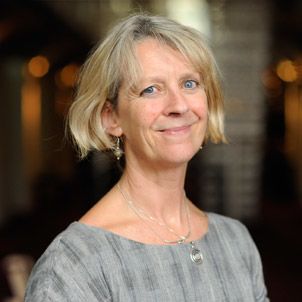 Sue Ziebland合作论文数Department of Primary Care Health Sciences, University of Oxford2
 Jane Katherine Seale合作论文数School of Education, University of Southampton2
 Melanie Nind合作论文数University of Southampton2deborah a watson合作论文数1Anne Parfitt合作论文数1
 Catherine Price合作论文数School of Geography, Faculty of Social Sciences, The University of Nottingham1
 Howard E Scott合作论文数1
 Richard Watermeyer合作论文数Sch Educ, Univ Bristol1Ibrar Bhatt合作论文数1
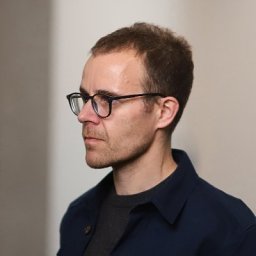 Adam Matthews合作论文数Univ Birmingham1
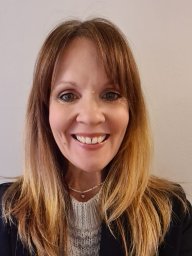 Sara Tolbert合作论文数Teaching Learning & Sociocultural Studies, Univ Arizona1
 Shane Orchard合作论文数School of Biological Sciences, Faculty of Science, University of Canterbury1
 Cheryl Brown合作论文数Centre for Educational Technology, University of Cape Town1
 Sarah Hayes合作论文数Centre for Learning Innovation and Professional Practice, Aston University Birmingham1
 Benjamin Jonathan Green合作论文数Department of Animal Science, University of Vermont1Read Stuart A合作论文数1
 Alison Mackenzie合作论文数1
 Linda Baggott La Velle合作论文数1
 Petar Jandric合作论文数Department of Informatics & Computing, Zagreb University of Applied Sciences1
 Michael Jopling合作论文数1
 Juha Suoranta合作论文数Tampere University;Centre for Media Education;Centre for Media Education, Tampere University1Martin Levinson合作论文数1
 Georgina Tuari Stewart合作论文数School of Education, Auckland University of Technology1
 Annabel Latham合作论文数School of Computing, Mathematics & Digital Technology, Manchester Metropolitan University1




