Ozark hellbenders (Cryptobranchus alleganiensis bishopi) have undergone marked population declines across their entire distribution. A variety of ecological life history research has been conducted to determine the cause(s) of the declines. Historically, hellbender diet studies used stomach content examination methods; however, alternative approaches such as less intrusive stable isotope analyses are now options for researchers. The goals of our study were to conduct stable isotope analysis on live and formalin-preserved museum specimen Ozark hellbender tissues to identify diet composition in the Eleven Point and Spring rivers, Arkansas. Also, we used stable isotope analysis to investigate if Spring River hellbender diets have changed over time. We sampled fish, live hellbenders (non-destructively), and formalin-preserved hellbender tissues from museum collections for stable isotope analysis. We sampled crayfish for assemblage composition and stable isotope analysis. The results of our stable isotope study revealed three main findings: (1) there were no statistically significant differences between hellbender δ13C and δ15N values among sites and hellbender stable C and N isotopes were correlated with body length; (2) traditional δ13C versus δ15N bi-plots and trophic discrimination values did not provide complete discernment in hellbender diets; however, Bayesian MixSIAR models revealed hellbenders to be generalists, and (3) the use of δ13C and δ15N values adjusted historic formalin-fixed and ethanol preserved hellbenders matched well with current crayfish and fish stable isotope values based on Bayesian MixSIAR models. These findings provide important diet information and a possible tool to examine dietary patterns from preserved specimens that may be used for hellbender conservation and management.
We describe observations of a continuing mass mortality event primarily involving wood frogs, but involving other amphibians to a lesser degree. The investigation took place from Spring 2000 through Spring 2004. No definitive correlations between environmental variables and mortality could be identified. Forensic analysis could not isolate causal pathogens. Although mortality fluctuated during the study, it may have spread to other species. Our report identifies population level problems in the eastern part of the Ozark National Forest but is unable to identify a cause. Future studies that more thoroughly address contaminants, pathogens/parasites, and other potential environmental problems in the Ozark National Forest are warranted.
Between August 2003 and December 2004 we completed a survey for Ozark Hellbenders (Cryptobranchus alleganiensis bishopi) in the Spring River (Fulton and Sharp counties, Arkansas, USA), beginning at Mammoth Spring and continuing downstream 27 km to the Arkansas Game and Fish Commission's Hardy Beach Access. We spent 74 person-hours searching 33 locations, which were chosen based on past records of occurrence (four localities) or the presence of potential C. a. bishopi habitat. We captured 12 Ozark Hellbenders at three of the four known local population sites. All 12 hellbenders were large (minimum 479 mm total length). Furthermore, data compiled from 1971 to 2004 illustrated a substantial temporal shift in size classes toward larger animals, a characteristic indicative of declining recruitment. Based upon these findings, the Ozark Hellbender appears to be at risk of extirpation from the Spring River.
There is significant economic incentive for illegal trade of wildlife on an international scale (Barnes and Jager, 1995; Lee, 1996; Tisdell, 2005) and regulations are often ineffective (Shepherd and Nijman, 2008), so this activity is of serious concern to government and wildlife officials (Alacs and Georges, 2008). Illegal trade of wildlife serves as a source of human and wildlife diseases (Yiming and Dianmo, 1998; Bell, Roberton, and Hunter, 2004; Gómez and Anguirre, 2008) and parasites (Burridge, 2007), provides opportunities to introduce invasive and exotic species (Carrete and Tella, 2008; Sodhi et al., 2004), and aggravates at-risk species’ endangerment (Lee, 1996; Walpole et al., 2001). Turtles are among the popular targets of the illegal international wildlife trade (Thorbjarnarson, 2001; Ceballos and Fitzgerald, 2004; Nijman and Shepherd, 2007). The health of animals that wildlife officials confiscate during crackdowns on the illegal international wildlife industry remains poorly recorded. Most of our information is based on anecdotal observations or comments (see Karesh, 1995; Encalada et al., 1994; Lau et al., No date). Illegal wildlife smugglers often subject animals to poor hygiene, starvation, and other mistreatment (Clark et al., 2008). Further, the smuggled animals frequently harbour parasites and diseases (Bailey, 2000; Kilbourn et al., 2003; Lampen et al., 2005; Superina et al., 2009). Little information exists about the health status of confiscated turtles, although we speculate that they are likewise mistreated. In a reintroduction study involving confiscated Egyptian Tortoises (Testudo kleinmanni) only 20 of ~200 surviving turtles were healthy enough (i.e., no clinical signs of disease) to reintroduce to the wild after an intensive clinical health screening (Alterio et al., 1999). Another study determined that it took 8-24 months of intensive veterinary care before all nine confiscated Bornean River Turtles (Orlitia borneensis) recovered from a complex of serious shell necrosis, bacterial infections and haemogregarine parasite infestation (Knotkova et al., 2005). After 8 mo., only 1/3 of these turtles had recovered. They mentioned the confiscation of hundreds of Bornean River Turtles without indicating what happened to the rest. Despite several recent studies (Hiler et al., 2006; Rauschenberger et al., 2004) that advanced our knowledge regarding the biology of the Alligator Snapping Turtle, (Harrel et al., 1996; Trauth et al., 1998; Tucker and Sloan, 1997), substantial information is still lacking, especially in the areas of hatchling development, ecology, and pathology (see Reed et al., 2002; Upton et al., 1992; McAllister et al., 1995). This gap in the natural history of these animals is critical Herpetology Notes, volume 4: 363-367 (2011) (published online on 24 October 2011)
Placobdella cryptobranchii is a rarely collected leech of the Ozark hellbender (Cryptobranchus alleganiensis bishopi) in northern Arkansas and southern Missouri, U.S.A. Between October 2002 and August 2005, 58 hellbenders were examined from Eleven Point River (Randolph Co., Arkansas and Oregon Co., Missouri), the north fork of the White River (Ozark Co., Missouri), and the Spring River (Fulton Co., Arkansas). Forty-one of the 58 hellbenders (70.7%) were infested with 1-140 leeches with a mean intensity (+/- SD) of 8.7 (+/- 22.1) and a relative abundance (+/- SD) of 6.3 (+/- 18.9). Contingency table analysis and t-tests revealed no significant differences in prevalence and mean intensity among various years and localities sampled. Leech size did not substantially change over the time period sampled. The dorsal pigmentation of live specimens of P. cryptobranchii is described for the first time.
Twenty-one lotic and lentic environments throughout central and northern Arkansas were surveyed for the presence of leeches during June 2004 and April, July - October 2005. Fourteen species of leeches (Helobdella elongata, Helobdella papillata, Helobdella stagnalis, Placobdella cryptobranchii, Placobdella multilineata, Placobdella ornata, Placobdella papillifera, Placobdella parasitica, Placobdella phalera, Placobdella picta, Haemopis marmorata, Erpobdella fervida, Erpobdella microstoma, and Erpobdella punctata) representing 3 families were collected. Five species (H. elongata, P. cryptobranchii, P. multilineata, H. marmorata, and E. fervida) are reported from Arkansas for the first time. The natural history of the 22 species of leeches now known from Arkansas is reviewed.
We documented abnormalitiesof Ozark hellbender {Cryptobranchus alleganiensis bishopi) populations in the Eleven Point River (RandolphCounty, Arkansas)and the Spring River (Fulton County, Arkansas) as part of ongoing monitoring efforts in thisspecies. Wefound abnormalities in 90% (9 of 10) and 40%(36 of 97) of hellbenders in the Spring River and Eleven Point River, respectively,during the 2003-2004field seasons. Most abnormalities foundin Eleven Point hellbenders were generally less invasive and seemed to be more intrinsic to the species' natural history (i.e., vicissitudesof living),whereasthose found in Spring River hellbenders were gross morphologicalaberrations. Wecompared the type and rate of observed abnormalities with those found in museum voucherscollected from the Spring River between 1970 and 1975. Abnormalities were found in 12.5%of the museum specimens from our Spring River localities. This rate is much higher than previously reported for hellbenders. The increase in the abnormality rate appears to be concurrent with the documentedpopulation declineobserved in the Spring River. Our studyillustrates an increasing trend of hellbenders exhibiting unusual morphological problems (e.g., epidermalpapillomas,extreme abrasions/lacerations, fungal infections, etc.) and also stresses the need for inclusion of abnormalities observed in field data. The causes of hellbender abnormalities remain speculative; however, plausible explanations may be related to intraspecific interactions, anthropogenic interactions with the microhabitat, viral infections, non-point/point source pollution, and the preponderance of older individuals. These findings emphasize the need for a proactive conservation effort within this species.
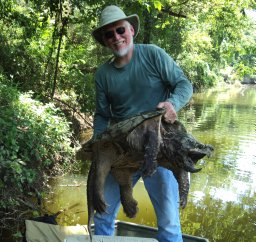 Stanley E. Trauth合作论文数Department of Biological Sciences;Arkansas State University;State University;Arkansas State University, State University12
 W. R. Hiler合作论文数5
 William Moser合作论文数3
 Alan D. Christian合作论文数Department of Biological Scienc;Arkansas State University;State University;Arkan - sas;Arkansas State University, State University3
 Malcolm L. Mccallum合作论文数Biological Sciences Program;Texas A&M University;Biological Sciences Program, Texas A&M University-Texarkana3WAYLON R. HILER合作论文数2Bruce A. Daniels合作论文数2
 Dennis Richardson合作论文数2Donald J. Klemm合作论文数2Milica Radanovic合作论文数1Irwin Kelly J合作论文数1Jennifer L. Bouldin合作论文数1
 Joseph R. Milanovich合作论文数1William W. Stephens合作论文数1




