Numerous studies have investigated problem-solving approaches adopted by engineering students and practitioners and provided recommendations for better teaching students problem-solving skills. However, few have examined faculty's perceptions of teaching problem solving, particularly ill-structured problems, and the factors that influence their comfort level in doing so in engineering classrooms. This study aims to examine faculty's reasons for choosing to teach or not teach ill-structured problems in the engineering classroom, the factors influencing their comfort levels, and their self-identified support needs. We conducted semistructured interviews with 18 engineering faculty to examine whether and why they teach ill-structured problems, their comfort level with this practice, and contributing factors. Using grounded theory, we analyzed faculty's responses to interview questions and developed a conceptual model reflecting faculty perceptions. Key factors influencing faculty decisions to teach ill-structured problems included their potential to increase students' familiarity with real-world problems and methods, the nature of their courses, and perceived benefits to students. Factors contributing to discomfort included limited personal experience with ill-structured problems, course constraints, and the additional time and effort required for teaching and grading. Faculty expressed a need for more tools, including a repository of ill-structured problems and evaluation rubrics, as well as more experience in solving and teaching these problems to enhance their comfort. The resulting conceptual model highlights faculty perceptions and beliefs about teaching ill-structured problems and synthesizes the key elements for understanding the barriers and motivations that influence faculty comfort. This model can inform the facilitation of discussions and collaborations among engineering faculty and administrators to support more effective teaching of ill-structured problem solving in engineering education.
Creating a more equitable and inclusive graduate engineering education environment requires amplifying the voices of female non-native English-speaking (NNES) international doctoral students (IDSs), whose experiences often go unheard. Their small representation results in their barriers being overlooked, as broader discussions on “women in STEM” or “international doctoral students” fail to capture their unique experiences. Despite contributing diverse perspectives and expertise, these students face complex barriers deeply intertwined with their identities. Using an intersectionality framework, we examined how their identities, as women, NNES students, international students, and members of underrepresented racial or ethnic groups, intersect to shape their experiences in doctoral engineering programs. Through semi-structured interviews with eight NNES women IDSs at a Midwestern university, we found that some participants perceived their interactions with faculty and peers were shaped by their awareness of multifaceted identities. Further, some participants reflected on how their identities influence how peers perceive their abilities and commitment to doctoral studies. Some participants reported doubts about their competence, stereotypes, unequal treatment, and discrimination in engineering classrooms and labs. Beyond academic barriers, several participants described how broader societal constraints, such as financial instability, cultural and family expectations, and U.S. immigration policies, further complicate their experiences, forcing them to balance academic progress with personal responsibilities. This study sheds light on how students make meaning of and perceive their experiences, highlighting the urgent need for engineering educators and student affairs professionals to address the unique barriers NNES women IDSs face. By implementing support systems, graduate engineering programs can take meaningful steps toward fostering a more inclusive and supportive academic environment.
Problem solving is an essential part of engineering. Research shows that students are not exposed to ill-structured problems in the engineering classrooms as much as well-structured problems and do not feel as confident and comfortable solving them. There have been several studies on how engineering students solve and perceive ill-structured problems, however, understanding engineering faculty's perceptions of teaching and solving such problems is important as well. Since it is the engineering faculty who teach students how to approach engineering problems, it is essential to understand how they perceive solving and teaching of these problems. The following research question has guided this research: What beliefs do engineering faculty have about teaching and solving ill-structured problems? Ten tenure-track or tenured faculty in civil engineering from various universities across the U.S. were interviewed after solving an ill-structured engineering problem. Their responses were transcribed and coded. The findings suggest that faculty generally preferred to teach both well-structured and ill-structured problems in their courses. They also acknowledge the advantages of ill-structured problems, in that they promote critical thinking, require creativity, and are more challenging. However, the results showed that some are less likely to use ill-structured problems in their teaching compared to well-structured problems. We also found that faculty became more comfortable teaching ill-structured problems as they gain more experience in teaching these types of problems. Faculty's responses showed that while they solve ill-structured problems as part of their research on a regular basis, some faculty do not integrate these problems in the classes that they teach. These results indicate that although faculty recognize the importance of using ill-structured problems while teaching, the lack of experience with teaching these problems, other faculty responsibilities, and the complex nature of these problems make it challenging for engineering faculty to incorporate these problems into the engineering classroom. Based on these findings, in order to improve faculty's comfort and willingness to use ill-structured problems in their teaching, recommendations for faculty are provided in the paper.
Important direct outcomes of new engineer socialization include understanding one's roles and responsibilities, learning the knowledge and skills required to perform one's job, understanding one's company culture, and gaining acceptance into one's workgroup.Studies have shown that achieving these outcomes positively impacts job retention, satisfaction, and performance.However, while the proactive behaviors new engineers implement to achieve these outcomes have been a primary focus of recent literature, there is a lack of understanding regarding the challenges new engineers face while attaining these outcomes.It is crucial to understand the challenges new engineers face to mitigate these obstacles and better prepare engineering students to enter the workforce.This research aims to (a) identify the specific challenges newly hired engineers face and the actions they take to overcome these challenges during the socialization period, and (b) identify aspects of undergraduate education that new engineers believe can be improved.Researchers interviewed 26 participants from four of the largest aerospace and defense organizations in the United States, and their responses were analyzed using an open coding method.Coders identified 26 unique challenges and 13 distinct solutions during this study.Challenges included a lack of engineering knowledge, unclear role boundaries, lack of organizational support, and navigating an unfamiliar environment.Of those 26 challenges, 15 significant challenges faced by newly-hired engineers are presented in this paper.Several solutions involved interacting with coworkers, shadowing and observing coworkers, and utilizing available resources.Knowing what challenges newly-hired engineers will face and what solutions they may use is helpful for undergraduates entering the workforce.When asked how undergraduate engineering education could be improved, the newly-hired engineers desired a more significant focus on practical training, more exposure to industry-like environments, and a greater emphasis on soft skills such as technical writing.This study aims to minimize the gap between academia's and industry's expectations for new engineers' required knowledge and skills, help prepare engineering students for the potential challenges they will face during the socialization period, and highlight potential areas of improvement within engineering organizations and undergraduate engineering education.
Engineering education has evolved significantly in recent years, however, engineering graduates continue to encounter challenges during their transition to the workplace. There is a need to identify graduates' needs and gather their input regarding engineering education programs to enhance the preparation of engineering students for the workplace. This study examined how early-career engineers perceive their undergraduate engineering programs in preparing them for the workplace. Additionally, it investigated what domains the engineers identify for improvement in engineering programs. In this multiple-case study, we interviewed 26 early-career engineers from seven organisations in the Aerospace and Defense industry across the U.S. We employed open coding to examine their responses and derive common themes. The findings showed that early-career engineers view technical knowledge and skills, persistence, and personal development instilled through their programs as valuable takeaways. However, they also highlighted the need for teaching professional skills, fostering collaboration between different engineering departments, promoting lifelong learning, and enhancing collaboration between academia and industry. The findings highlight areas in which engineering education and organisations can collaborate to better prepare students for the workplace.
This study extends the literature on organizational socialization by examining newly-hired engineers' proactive actions to integrate into the workplace, relating them to the four primary socialization task domains - task mastery, role clarification, acculturation, and social integration. The study conducts semi-structured interviews with 26 newly-hired engineers in aerospace companies. The results identify 16 proactive actions of newly-hired engineers during their socialization period. The most crucial actions during the onboarding period are interacting with coworkers, using available resources and tutorials, participating in training opportunities, learning through hands-on experience, seeking opportunities to learn and solve problems independently, and possessing self-belief to meet commitments. The study's findings provide valuable practical implications for engineering students, newly-hired engineers, engineering managers and organizations, and engineering educators concerning the use of specific actions to improve newly-hired engineers' socialization period.
Solving ill-structured problems is a complex task that is required of engineers who work in industry. To better prepare undergraduate engineering students for this complex task and their future professional careers, this paper provides an analysis of the results of research focusing on the study of problem-solving processes adopted by civil engineering students, faculty members, and practicing engineers. This exploratory work presents findings concerning the way in which 16 participants solved an ill-structured engineering problem and examines similarities and differences between the participants in terms of their problem-solving processes. This study was guided by the following research question: What specifically are the problem-solving processes of (1) students, (2) faculty, and (3) practicing engineers, and what are the similarities and differences between them when solving an ill-structured problem? In order to answer this research question, verbal protocol analysis was used. Participants were asked to think aloud as they formulated potential solutions to the proposed problem. Our findings indicate some distinct differences between students, professors, and practicing engineers in their problem-solving processes. Faculty were found to double-check their solutions and make assumptions more than students and practicing engineers, while students were found to express their feelings more and use analogies and outside knowledge less than faculty and practicing engineers. These differences between students, faculty, and practicing engineers suggest that engineering curriculum and instruction should supplement well-structured problems with ill-structured problems in engineering classrooms in order to help students become familiar with multiple problem-solving approaches available to them and better understand the connection between the workplace and the classroom. (C) 2021 American Society of Civil Engineers.
A primary outcome of the organizational socialization process for new hires is learning how to complete tasks successfully, which requires learning new knowledge and skills. Although researchers have investigated the knowledge and skills essential for engineers in general, research specific to the aerospace industry has been overlooked. Herein, semistructured interviews were used to explore the perspectives of newly graduated aerospace engineers, each with less than three years of work experience, to gather insights into the new knowledge and skills they needed to learn to do their jobs. Ten interviews were analyzed with an open coding process, and the participant responses were classified into different categories of knowledge and skills. The qualitative method generated rich contextual data, allowing us to identify new types of knowledge and skills that are missing from the related literature dominated by quantitative studies. Our findings show that new workers must learn new knowledge and skills related to electronic hardware, software, and aerospace business operations. The study leads to a call to update the curricula of existing aerospace engineering educational programs to help facilitate an easy transition from school to work and enable newcomers, as professionals, to adapt to the ever-changing industry and make valuable contributions.
The purpose of this study is to explore engineering managers' perspectives on what actions they should perform to assist newly hired engineers and what proactive steps newly hired engineers should take during the onboarding/socialization period. In total, nine unique managers' actions and nine distinct new engineers' actions were identified by applying Morrison's socialization framework and interviewing seven engineering managers working in aerospace companies. This study offers practical actions that engineering managers and new engineers can apply during the socialization period, and it provides research design guidance that engineering managers can use to find additional actions attuned to their organizations/workgroups.
The use of video games in education is nothing new, but often these games are specifically designed for one or more specific learning objectives. These games focus on maximizing the learning outcomes and are paired with a curriculum designed to cover the selected materials. However, that does not always translate to fun games or games played outside of the classroom. Students will associate these educational games as part of the class, not something they would do for fun. These games can be beneficial, but they can also be limited in scope. Since these games have a limited purpose, they are often used for that purpose and not used for anything else. This paper will review a trial run conducted in Fall 2020 using a popular and mainstream puzzle-solving game to teach engineering students teamwork and communication skills. First, we will outline our methodology for conducting this trial and the plan we followed in executing the trial using teleconference tools due to COVID-19. Next, we will discuss both pros and cons of using this game and the lessons we learned from this trial. Finally, we will review the data collected from this trial and the future work to continue using these games as an educational tool.
The aerospace industry is a major powerhouse for economic and scientific growth, encompassing billions of dollars in sales and millions of jobs worldwide. The scale of this industry requires many college graduates with Aerospace Engineering (AE) degrees. However, AE student enrollment is lower than that of other engineering disciplines, and its graduation rate is also low. The motivation for students to discontinue their AE degree is not understood in the current literature. Despite several studies on persistence in STEM, there is scant literature on persistence in AE or on AE students’ reasons for not persisting with their undergraduate degree. To fill this gap in the literature, this study uses a survey of 231 current and former AE students at a Midwestern university in the United States. It finds that the students’ main reason for choosing AE is a passion for aerospace-related vehicles, and they leave AE because of negative interactions with professors and advisors and a perceived career limitation with an AE degree. Further, students with an unclear motivation to enroll in AE are more likely to not persist. To improve the persistence in this field, AE programs can enhance their teaching and advising and showcase the AE field and its job opportunities realistically. By understanding the issues faced by AE students, programs can graduate more qualified AE engineers annually to continue fueling the large aerospace industry.
Organizational socialization is the process through which new employees learn and adapt to their new roles in organizations. However, new employees' proactive actions, in the context of engineering organizations, are not well explored. This study examines the actions newly hired engineers take during organizational socialization and identifies the actions from newly hired engineers working in the U.S. aerospace and defense (A&D) industry. By following Morrison's framework of new employees' primary tasks in socialization, we present the proactive actions taken by 10 participants. Specifically, we identified 13 actions and classified them into four categories: Relationship Developing, Knowledge Acquiring, Real Task Training, and Positive Attitude Cultivating. This study expands the research literature as it 1) explores new employees' proactive actions in the context of engineering organizations, 2) discusses and classifies the specific actions newly hired engineers proactively take during socialization, and 3) reveals how the identified actions in each category function across multiple domains. The study can provide an example of conducting qualitative research on new employees' proactivity for engineering education researchers; help engineering educators prepare students entering the A&D industry; inform managers of the newly hired engineers' insights on organizational socialization, and inform senior engineering students the actions they may need to do in the socialization period.
1 Abstract Turnover plays a significant role in the productivity of any organization and is especially vital within the initial adjustment period of new hires. Organizations seek to develop strategies to reduce turnover to help solve this issue, but these strategies require knowledge of what influences the retention and satisfaction of the employees. The objective of this research is to identify the factors that managers perceive to affect the retention and the satisfaction of newly hired aerospace engineers so that managers or employers can create strategies to reduce turnover within this group. While research has been conducted on general retention and satisfaction, no research has been specific to the aerospace engineering field and its newly hired employees. These aspects are important because unique factors can arise within specific fields. The current study used qualitative research methods to analyze seven semi-structured interviews with experienced managers of newly hired aerospace engineers. These interviews were analyzed to find key factors that managers consider to affect retention and satisfaction. This research identified six themes for retention factors: local and national economic trends, personal factors unique to each newcomer, the quality of work assigned to the newcomer, the social environment of the workgroup, benefits offered to employees, and the newcomer’s role and how it fits in with the workgroup. This study also identified six themes for satisfaction factors: the quality of work assigned to the newcomer, management styles and actions, general work environment, benefits, fit with a mentor, and expectations for the aerospace industry.
Research suggests that engineers generally undergo socialization through two sets of socialization processes when they are newly hired to an organization: (1) initiating proactive behaviors and (2) participating in company-initiated actions, called organizational tactics. This study provides a first-look at socialization in the U.S. aerospace and defense (A&D) industry by examining how newly-hired engineers at A&D organizations initiate proactive behaviors and participate in organizational tactics to adjust to their new jobs and organizations. First, the relationships between two sets of socialization processes and socialization outcomes of new engineers were examined. Second, holistic profiles that best characterize newly hired engineers' socialization processes, and whether engineers with different types of profiles present varying socialization outcomes were identified. A total of 86 new engineers who had less than two years of working experience in their A&D organizations were included in this study. Multiple regression and Latent Profile Analyses (LPA) were employed. Study findings show that newly-hired engineers in the A&D industry frequently rely on social interactions to adjust to their job position and organization, and they often participate in organizational tactics more than proactive socialization behaviors. Implications of these findings in the context of A&D workplaces and aerospace engineering education settings are discussed.
Solving open-ended complex problems is an essential skill for part of being an engineer and a common activity in the one of the qualities needed in an engineering workplace. In order to help undergraduate engineering students develop such qualities and better prepare them for their future careers, this study is a preliminary effort to explore the problem solving approaches adopted by a student, faculty, and practicing engineer in civil engineering. As part of an ongoing NSF-funded study, this paper qualitatively investigates how three participants solve the following research question: What are the similarities and differences between a student, faculty, and practicing engineer in the approach to solve an ill-structured engineering problem? Verbal protocol analysis was used to answer this research question. Participants were asked to verbalize their response while they worked on the proposed problem. This paper includes a detailed analysis of the observed problem-solving processes of the participants. Our preliminary findings indicate some distinct differences between the student, professor, and practicing engineer in their problem-solving approaches. The student and practicing engineer used their prior knowledge to develop a solution, while the faculty did not make any connection to outside knowledge. It was also observed that the faculty and practicing engineer spent a great deal of time on feasibility and safety issues, whereas the student spent more time detailing the tool that would be used as their solution. Through additional data collection and analysis, we will better understand the similarities and differences between students, professionals, and faculty in terms of how they approach an ill-structured problem. This study will provide insights that will lead to the development of ways to better prepare engineering students to solve complex problems.
Literature shows that the cooperative learning pedagogy increases engineering students' performance in a traditional lecture-based course. This study investigated whether a similar positive effect on student performances would be found in a hybrid course that implemented the cooperative learning pedagogy. To examine this question, this study compared the performance of engineering students taught with and without the cooperative learning pedagogy in a sophomore-level Mechanics of Materials course that implemented the hybrid format. The study findings showed that cooperative learning offered no additional increase in performance for students. Student characteristics (e.g. gender, class load in the semester, attendance, previous GPA) did not influence this finding. However, many students reported that they enjoyed working in teams, preferred including the cooperative learning pedagogy in hybrid courses and suggested that similar engineering courses be taught using the cooperative learning pedagogy.
This evidence-based practice paper provides guidance in assessing creativity in engineering education. In the last decade, a number of vision statements on the future of engineering education (e.g. Educating the Engineer of 2020, the ASCE Body of Knowledge) point to the fact that creativity is essential to engineering innovation; it is regarded as an important attribute in the education of engineers in order to meet the most urgent national challenges and to drive economic growth in the new millennium. Yet studies suggest that engineering students’ creative skills are being left underdeveloped or diminish over the course of their studies, or worse, that students who consider themselves to be creative are being driven away from engineering as a chosen field. On the surface, creativity skills are perceived as difficult to utilize in the engineering classroom, primarily due to the didactic nature of science and engineering instruction. Assessing the product of open ended or ill-structured assignments remains a difficult task as well. This study examines available assessments for creativity that are founded in three of the Four Ps of creativity: person, process, product (the fourth P, press, is not considered in this work.) The intent is to identify verified metrics that can be used to quantify creativity with a particular look to whether the metrics are appropriate for creativity, particularly as they pertain to the science and engineering domains. These metrics are examined for applicability to science and engineering, ease of administration and completion, expertise required to score, cost to administer, and time required to administer. Rather than determining the “best” metrics, this examination will provide guidelines for engineering educators and researchers interested in creativity for selecting appropriate metrics to be used in classrooms and research studies based on metric attributes.
The purpose of this study is to improve the persistence and academic outcomes of undergraduate students majoring in aerospace engineering (AE) by studying their pre-university academic abilities, demographic characteristics, and early experiences at a university. To explore significant factors that predict students' persistence and academic success, data were collected from first-year AE students from 2011 to 2016 at a large Midwestern university in the United States. Two data sets were analyzed: data from a Registrar's Office on students' demographic characteristics and data from an online survey, derived from Tinto's model of institutional departure, completed by students within 4 to 6 weeks of joining the university. Logistics regression analyses were run to highlight the factors that affected students' persistence and academic success in AE. High school preparation was positively related to predicting academic success and persistence for AE students. Coping with academic work, satisfaction with academic life, and being a part of a learning community were also important factors for AE students' academic success and persistence. Social experiences at the university did not impact students' persistence and students' academic outcomes. Early personalized interventions may help students persist in the AE program.
There has been a growing need to teach professional development skills to engineering students at Iowa State University. Students are often lacking these skills even though they are desired skills to have both for academic success and in the workplace. For our research, we are exploring using virtual reality to teach four professional development skills to students. These skills are leadership, teamwork, communication and ethics. We are using virtual reality as an innovative tool to teach students these skills in an interactive and fun environment. This work-in-progress paper will discuss the activities that are being developed to teach engineering students professional development skills at Iowa State University. In this paper, we will discuss three activities that are being developed to teach these four different professional development skills. Our framework for these activities is using Game Based Learning (GBL), which is based on Problem Based Learning (PBL). Each activity will be based on a problem that students must work together to solve. Through this interaction, students will learn one or more of the professional development skills outlined in this paper. The goals and learning outcomes of each activity will then be outlined and discussed in more detail. We will outline the execution of each activity and how the interaction between the students and the virtual reality system will be accomplished. In this paper, we will show our current work in progress of the development of the game environment used in these activities. This will include screen shots and other examples of the game environment for each activity. The development platform used for these activities is the Unity platform, a free game development software package that includes tools for working with virtual reality. The virtual reality headset that will be used with Unity will be the HTC Vive. This allows us to have an interactive environment where students can see and hear in the virtual space and use controllers to interact with objects in the virtual space. We are also adding physical props that can interact with the virtual space. The addition of these props is designed to allow multiple players to be involved while keeping costs low and increasing the portability of the system.
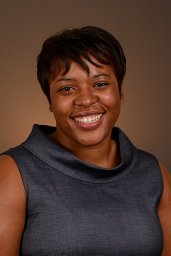 Jeremi S. London合作论文数Purdue University, Purdue Univ15
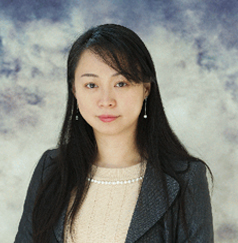 Jiabin Zhu (朱佳斌)合作论文数School of Education, Shanghai Jiao Tong University14
 Monica Farmer Cox合作论文数13
 Secil Akinci-Ceylan合作论文数Sch Educ, Iowa State Univ11
 Kristen Cetin合作论文数Department of Civil and Environmental Engineering, Michigan State University11
 Matthew Nelson合作论文数Department of Civil, Construction, and Environmental Engineering, Iowa State University8
 Bora Cetin合作论文数Deptment of Civil and Environmental Engineering, University of Maryland7Devayan Bir合作论文数6
 Andrea Surovek合作论文数6
 Osman Cekic合作论文数5
 Sara Branch合作论文数5Amadin Osagiede合作论文数4
 Yun Dong合作论文数4Catherine G. P. Berdanier合作论文数Dept Mech Engn, Penn State Univ4John G. Brisson合作论文数3Tasha Zephirin合作论文数3
 Subhanwit Roy合作论文数Department of Chemical and Biological Engineering, Iowa State University3
 Ana T. Torres-Ayala合作论文数3maksud ismailov合作论文数2Rocio Chavela Guerra合作论文数2
 Sara Oliveira Santos合作论文数Brown University2
 Chris Saulnier合作论文数MIT-SUTD Collaboration, Massachusetts Inst. of Technol.;c;MIT-SUTD Collaboration, Massachusetts Inst. of Technol.2
 Matthew Ohland合作论文数School of Engineering Education, College of Engineering, Purdue University2
 Aikaterini Bagiati合作论文数2
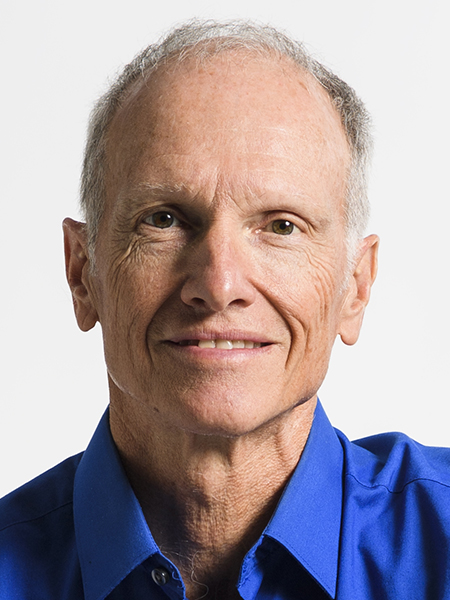 Stephen D. Heister合作论文数School of Aeronautics and Astronautics, Purdue University2
 Lorenzo Baber合作论文数2
 Heidi Diefes-Dux合作论文数Engineering Education, Purdue University2Katreena Thomas合作论文数1Aubrie Pfirman合作论文数1Michael Reese合作论文数1Tamara Knott合作论文数1Robert DeMonbrun合作论文数1Richard Aleong合作论文数1
 Brian Faulkner合作论文数1Chelsea Andrews合作论文数1
 Natasha Smith合作论文数1
 Stephanie Adams合作论文数1Justine Lawson合作论文数1Grace Panther合作论文数1Isabel Bradburn合作论文数1Corey Owen合作论文数1Floris van der Marel合作论文数1
 Aileen Huang-Saad合作论文数The Roux Institute, Northeastern University1
 Camilo Vieira合作论文数1Susannah C. Davis合作论文数1Jacki Rohde合作论文数1astronautics engineering合作论文数1yating haller合作论文数1




