HIV and STI prevention efforts often operate independently of each other and cost-effectiveness studies of HIV/STI testing interventions often consider only the health outcomes of one disease. We use cost-benefit analysis to evaluate 12 different HIV/STI testing interventions using only HIV health benefits (A); only STI health benefits (B); and both health benefits (C). We used a previously published stochastic agent-based network simulation model of HIV, gonorrhea, and chlamydia transmission among young men who have sex with men (YMSM) in Chicago to evaluate over 15 years the cost-benefit of 12 different HIV/STI testing interventions targeting YMSM. Among these are interventions scaling up either HIV testing or STI testing as well as opt-out interventions offering an HIV or STI test in case when requesting an STI or HIV test. Costs, in 2015 dollars, included treatment and testing cost for both HIV and STIs. The health outcomes considered were quality adjusted life years (QALY) of HIV, STIs, or HIV and STIs. We value a QALY at $50,000 (or $100,000). For scenario A, increasing HIV testing by 10% (intervention 1) yielded the highest cost-benefit; for scenarios B and C the opt-out policy where automatically a test is done for urethral and rectal infections when receiving a test for HIV (intervention 2) had the highest cost-benefit. The ranking is the same for both QALY values. However, the optimal policy for scenario A is only 7thbest when considering both HIV and STI health outcomes. Considering both HIV and STI health outcomes, the respective cost-benefits for interventions 1 and 2 are $17,234 ($34,497) and $20,983 ($42,025) per person per year (for $100,000/QALY in parentheses). The optimal choice HIV/STI testing strategy changes if one considers both HIV and STI health outcomes and considering ignoring HIV or STI health outcomes will suggest strategies that are significantly worse.
When assessing the cost-effectiveness of interventions most studies do not consider the rollout of the intervention and instead assume immediate implementation and 100% uptake. We evaluate the cost-effectiveness of an opt-out HIV/STI testing policy for different dynamic rollout scenarios. We used a previously published stochastic agent-based network simulation model of HIV, gonorrhea, and chlamydia transmission among young men who have sex with men (YMSM) in Chicago to study different rollouts of an opt-out HIV/STI testing policy targeting YMSM. We modelled the dynamic rollout of this policy. Specifically, we model the fraction of YMSM automatically receiving an HIV test when testing for STIs, using a Bass diffusion model where the timing of growth was varied such that full rollout was achieved at 2.5 (A), 3.5 (B) and 4.5 years (C) while the imitation rate was kept constant. Natural diffusion after complete rollout was not considered based on empirical evidence. Costs in 2015 dollars included treatment and testing cost for both HIV and STIs; the health outcome considered was HIV infections averted (HIA); and the base case assumed no implementation. For scenarios A, B and C the ICER was at 5 years $29,207, $54,073 and $100,230; at 10 years $19,634, $24,698 and $64,842; and at 15 years $4,412, $15,921 and $55,046. Differences in discounted cost and HIA between scenarios with the fastest (A) and slowest rollout (C) were $783,307 and 19.3 HIA at year 5; $633,634 and 27.7 HIA at year 10; and $460,527 and 46.4 HIA at year 15. Dragging out the rollout has increasing ICERs and should be included in future models because beyond a certain point such a policy may not be cost-effective. Differences in cost decrease with increasing time horizon but increase in HIA showing that benefits accrue over the long term.
Purpose: While ART has been studied for years, the specific quantitative implementation details have not. In order for this new scheme of radiation therapy to reach its potential, an effective ART planning strategy capable of taking into account the dose delivery history and patient's on-treatment geometric model must be in place. This work performs a study of dynamic closed-loop control algorithms for ART and demonstrates their utilities with data from phantom and clinical cases with on-treatment cone-beam CT images. Method: In closed-loop control, the controller is not run just once but repeatedly, each time receiving the current state of the system as its input. To meet the requirements of different clinical applications, two classes of algorithms are developed: those Adapting to Changing Geometry (ACG) and those Adapting to Geometry and Delivered Dose (AGDD). The former takes into account organ deformations found just before treatment. The latter optimizes the dose distribution accumulated over the entire course of treatment by adapting at each fraction not only to the anatomic information just before treatment but also to the dose delivery history. The closed-loop algorithms are showcased by phantom and clinical cases. Results: A comparison of the approaches with conventional open-loop IMRT without adaptively incorporating feedback information indicates that closed-loop ART may significantly improve the current practice. In both phantom and clinical studies, AGDD outperforms ACG algorithms in three aspects: target dose coverage, sensitive-structure sparing, and steeper gradients around the tumor. Within the AGDD formalism, it is beneficial not to correct all the previous dosimetric errors at once right after the information is available but over a number of fractions until next set of feedback data is available. Conclusion: ART with closed-loop dynamic algorithms substantially improve the dose distribution. In addition, the differing performance of the specific implementations shows that the algorithmic details matter.
Purpose: Current radiation treatment practice neither detects nor adapts to intrafraction organ motion beyond gating. We develop a simple optimization scheme for 4D IMRT which doesn't rely on gating and simulate its performance in the presence of the anticipated organ motion and unanticipated setup errors and tissue motion. Method and Materials: We wrote MATLAB code modeling treatment of a 2D phantom using the beamlet model. We also used geometry from a lung case. SNOPT (a commercial SQP optimization code) selects beamlet weights minimizing the weighted quadratic deviation from some desired dose. Suppose the beam-on time is divided into N phases and the prescription dose is D*. For location r in phase i, let Di*(r) be the planned dose; Di(r) the actually delivered dose; and r=Ai(v) the anticipated location of voxel v. Our two baseline algorithms use static plans (Di*=Dj* for any phases i,j) and gating (Di*=0 for phases i≠1). In both cases we choose feasible D1*+…+DN* minimizing the weighted quadratic deviation from D*. Our 4D algorithm selects Simulation determines the delivered dose Di from the anticipated dose Di* by adding noise and incorporating setup error (translation and rotation of the patient) and tissue distortion caused by unanticipated small organ motion. For our algorithm and the baseline, we compare the DVH of the cumulative dose D1+…+DN and the margin needed to achieve a satisfactory cumulative delivered dose. Results: We achieved significant improvement in the objective function (delivering more dose to the tumor and less to the organ) on our test case with 3cm motions. Conclusion: This new paradigm of 4D IMRT holds significant promise for improving the current radiation therapy.
We investigated mu(+) decays at rest produced at the ISIS beam stop target. Lepton flavor (LF) conservation has been tested by searching for nu(e) via the detection reaction p(nu(e),e(+))n. No nu(e) signal from LF violating mu(+) decays was identified. We extract upper limits of the branching ratio (BR) for the LF violating decay mu(+)-->e(+)+nu(e)+nu(-) compared to the standard model (SM) mu(+)-->e(+)+nu(e)+nu(mu) decay: BR<0.9(1.7) x 10(-3) (90% C.L.) depending on the spectral distribution of nu(e) characterized by the Michel parameter rho=0.75(0.0). These results improve earlier limits by one order of magnitude and restrict extensions of the SM in which nu(e) emission from mu(+) decay is allowed with considerable strength. The decay mu(+)-->e(+)+nu(e)+nu(mu) often proposed as a potential source for the nu(e) signal observed in the LSND experiment can be excluded.
The KARMEN experiment at the spallation neutron source ISIS used ${\overline{\ensuremath{\nu}}}_{\ensuremath{\mu}}$ from ${\ensuremath{\mu}}^{+}$ decay at rest for the search of neutrino oscillations ${\overline{\ensuremath{\nu}}}_{\ensuremath{\mu}}\ensuremath{\rightarrow}{\overline{\ensuremath{\nu}}}_{e}$ in the appearance mode, with $p({\overline{\ensuremath{\nu}}}_{e}{,e}^{+})n$ as a detection reaction of ${\overline{\ensuremath{\nu}}}_{e}.$ In total, 15 candidates satisfy all conditions for the ${\overline{\ensuremath{\nu}}}_{e}$ signature, in agreement with the background expectation of $15.8\ifmmode\pm\else\textpm\fi{}0.5$ events, yielding no indication for oscillations. A single event based likelihood analysis leads to upper limits on the oscillation parameters ${\mathrm{sin}}^{2}(2\ensuremath{\Theta})<1.7\ifmmode\times\else\texttimes\fi{}{10}^{\ensuremath{-}3}$ for $\ensuremath{\Delta}{m}^{2}>~100 {\mathrm{eV}}^{2}$ and $\ensuremath{\Delta}{m}^{2}<0.055 {\mathrm{eV}}^{2}$ for ${\mathrm{sin}}^{2}(2\ensuremath{\Theta})=1$ at 90% confidence. Thus, KARMEN does not confirm the LSND experiment and restricts significantly its favored parameter region for ${\overline{\ensuremath{\nu}}}_{\ensuremath{\mu}}\ensuremath{\rightarrow}{\overline{\ensuremath{\nu}}}_{e}.$
Accelerator-based neutrino experiment is reviewed. Among various activities on this research field, the most fascinating subject is to search for neutrino oscillations and the confirmation of this phenomenon. In this article, mainly neutrino oscillation experiment, with especially focusing on the presently active experiment, K2K, is discussed. The future prospect on the confirmation of neutrino oscillation is also described.
The neutrino experiment KARMEN is situated at the beam stop neutrino source ISIS. It provides νμ's, νe's and νμ's in equal intensities from the π+-μ+-decay at rest (DAR). The oscillation channels νμ → νe and νμ → νe are investigated in the appearance mode with a 56t liquid scintillation calorimeter at a mean distance of 17.7m from the ν-source. Analyses of experimental data from the measuring period 1990–1995 corresponding to 9122 C protons on target or 2.52 · 1021μ+ DAR are presented. No evidence for oscillations could be found with KARMEN, resulting in 90% CL exclusion limits of sin2(2θ) < 8.5·10−3 (νμ → νe) and sin2(2θ) < 4.0·10−2 (νμ → νe) for Δm2 ≥ 100 eV2 in a simple 2 flavor description of ν-oscillations.
 h gemmeke合作论文数27R. Maschuw合作论文数26T. Jannakos合作论文数26M. Kleifges合作论文数26e finckh合作论文数26
 W. Kretschmer合作论文数26B. Zeitnitz合作论文数26P. Plischke合作论文数25J. Kleinfeller合作论文数25J.A. Edgington合作论文数25K. Eitel合作论文数24J. Hößl合作论文数23
 Guido Drexlin合作论文数23V. Eberhard合作论文数23C. Eichner合作论文数21j rapp合作论文数20P. Jünger合作论文数18J. Wolf合作论文数18C. Oehler合作论文数18b a bodmann合作论文数17O. Stumm合作论文数17
 M. Steidl合作论文数17
 Norman E. Booth合作论文数15i m blair合作论文数13C. Ruf合作论文数12I. Blair合作论文数10Ne Booth合作论文数10b seligmann合作论文数10M. Ferstl合作论文数7
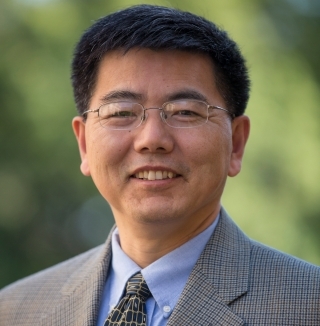 Lei Xing (邢磊)合作论文数School of Medicine, Zhejiang University;Department of Radiation Oncology, School of Medicine, Stanford University;Department of Electrical Engineering, Stanford University7W. Grandegger合作论文数7J. Reichenbacher合作论文数7Ac Dodd合作论文数6
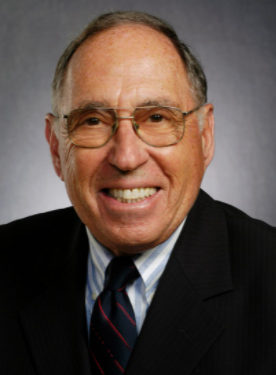 Jack Keil Wolf合作论文数Jacobs School of Engineering, University of California San Diego6Bernhard G Bodmann合作论文数6
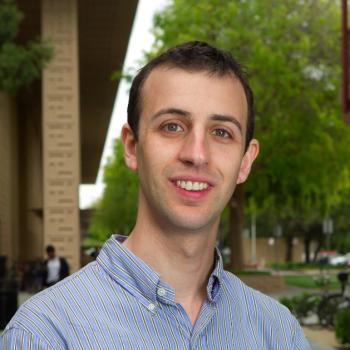 Adam De La Zerda合作论文数Department of Structural Biology, Molecular Imaging Program, Stanford University6F. Schilling合作论文数5
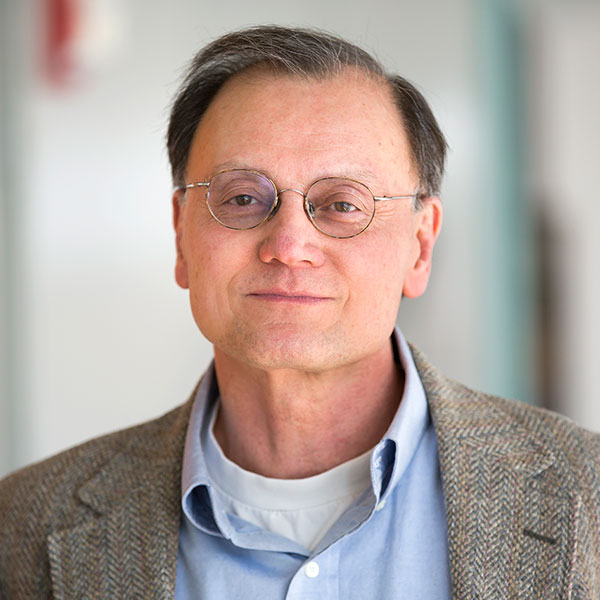 Chris Ruf合作论文数Department of Climate and Space Sciences and Engineering, College of Engineering, University of Michigan, Ann Arbor5S Wolfle合作论文数5M Hehle合作论文数3J. Wochele合作论文数3E. Beck合作论文数2
 Sigve Haug合作论文数Data Science Lab, Universität Bern2
 J. Knapp合作论文数DESY2
 Michelle A Birkett合作论文数Department of Medical Social Sciences, Feinberg School of Medicine, Northwestern University2
 Brian S. Mustanski合作论文数Department of Medical Social Sciences, Feinberg School of Medicine, Northwestern University2M. Becker合作论文数2A. Benen合作论文数2




