Passive sampling is a crucial method for evaluating concentrations of hydrophilic organic compounds in the aquatic environment, but it is insufficiently understood to what extent passive samplers capture the intermittent emissions that frequently occur for this group of compounds. In the present study, silicone sheets and styrene-divinyl benzene-reversed phase sulfonated extraction disks with and without a polyethersulfone membrane were exposed under semi-field conditions in a 31 m3 flume at three different flow velocities. Natural processes and spiking/dilution measures caused aqueous concentrations to vary strongly with time. The data were analyzed using two analytical models that account for these time-variable concentrations: a sampling rate model and a diffusion model. The diffusion model generally gave a better fit of the data than the sampling rate model, but the difference in residual errors was quite small (median errors of 19 vs. 25
The quality of chemical analysis is an important aspect of passive sampling-based environmental assessments. The present study reports on a proficiency testing program for the chemical analysis of hydrophobic organic compounds in silicone and low-density polyethylene (LDPE) passive samplers and hydrophilic compounds in polar organic chemical integrative samplers. The median between-laboratory coefficients of variation (CVs) of hydrophobic compound concentrations in the polymer phase were 33% (silicone) and 38% (LDPE), similar to the CVs obtained in four earlier rounds of this program. The median CV over all rounds was 32%. Much higher variabilities were observed for hydrophilic compound concentrations in the sorbent: 50% for the untransformed data and a factor of 1.6 after log transformation. Limiting the data to the best performing laboratories did not result in less variability. Data quality for hydrophilic compounds was only weakly related to the use of structurally identical internal standards and was unrelated to the choice of extraction solvent and extraction time. Standard deviations of the aqueous concentration estimates for hydrophobic compound sampling by the best performing laboratories were 0.21 log units for silicone and 0.27 log units for LDPE (factors of 1.6 to 1.9). The implications are that proficiency testing programs may give more realistic estimates of uncertainties in chemical analysis than within-laboratory quality control programs and that these high uncertainties should be taken into account in environmental assessments.
In this study, three different passive sampling receiving phases were evaluated, with a main focus on the comparability of established styrene-divinylbenzene reversed phase sulfonated (SDB-RPS) sampling phase from Empore™ (E-RPS) and novel AttractSPE™ (A-RPS). Furthermore, AttractSPE™ hydrophilic-lipophilic balance (HLB) disks were tested. To support sampling phase selection for ongoing monitoring needs, it is important to have information on the characteristics of alternative phases. Three sets of passive samplers (days 1–7, days 8–14, and days 1–14) were exposed to a continuously exchanged mixture of creek and rainwater in a stream channel system under controlled conditions. The system was spiked with nine pesticides in two peak scenarios, with log K OW values ranging from approx. − 1 to 5. Three analytes were continuously spiked at a low concentration. All three sampling phases turned out to be suitable for the chosen analytes, and, in general, uptake rates were similar for all three materials, particularly for SDB-RPS phases. Exceptions concerned bentazon, where E-RPS sampled less than 20% compared with the other phases, and nicosulfuron, where HLB sampled noticeably more than both SDB-RPS phases. All three phases will work for environmental monitoring. They are very similar, but differences indicate one cannot just use literature calibration data and transfer these from one SDB phase to another, though for most compounds, it may work fine. Graphical abstract
We present a novel tool for detecting and monitoring photosystem II (PSII) inhibitors, using the freshwater alga Desmodesmus subspicatus, in environmental samples fractionated by high-performance thin-layer chromatography (HPTLC). After chromatographic separation of a sample on a HPTLC plate, the algal suspension is sprayed homogeneously on the plate, and PSII-inhibition by specific sample components is detected based on changes in fluorescence yield, viewed by a maxi Imaging-PulseAmplitude-Modulation fluorometer. Dose-dependent responses to the PSII-inhibitor herbicides atrazine and diuron, frequently detected in water bodies, are demonstrated without and with chromatographic separation. The limits of quantification for atrazine and diuron with chromatographic separation were 1.94 ng and 99 pg, respectively, allowing the detection of environmentally relevant concentrations of these herbicides. The developed method was also employed to analyze sample extracts collected during a passive sampling campaign in surface waters. The obtained data correlated well with results from LC-MS/MS chemical analysis but also revealed unknown PSII-inhibiting activities. The proposed methodology represents a rapid and sensitive screening tool for the simultaneous effect-based detection of PSII-inhibitors in environmental samples.
This report provides a brief review of the 20th annual meeting of the German Language Branch of the Society of Environmental Toxicology and Chemistry (SETAC GLB) held from September 7th to 10th 2015 at ETH (Swiss Technical University) in Zurich, Switzerland. The event was chaired by Inge Werner, Director of the Swiss Centre for Applied Ecotoxicology (Ecotox Centre) Eawag-EPFL, and organized by a team from Ecotox Centre, Eawag, Federal Office of the Environment, Federal Office of Agriculture, and Mesocosm GmbH (Germany). Over 200 delegates from academia, public agencies and private industry of Germany, Switzerland and Austria attended and discussed the current state of science and its application presented in 75 talks and 83 posters. In addition, three invited keynote speakers provided new insights into scientific knowledge ‘brokering’, and—as it was the International Year of Soil—the important role of healthy soil ecosystems. Awards were presented to young scientists for best oral and poster presentations, and for best 2014 master and doctoral theses. Program and abstracts of the meeting (mostly in German) are provided as Additional file 1.
 Julia Bachtin合作论文数2
 Etiënne L M Vermeirssen合作论文数Corresponding authors.2
 Christian Kochleus合作论文数2Möhlenkamp Christel合作论文数2
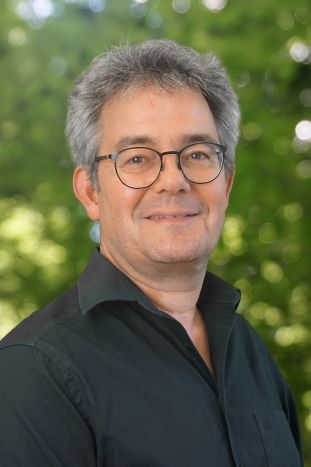 Henner Hollert合作论文数Institute und Einrichtungen, Fachbereich Biowissenschaften, Goethe-Universitat Frankfurt am Main2D. Spira合作论文数2
 Georg Reifferscheid合作论文数2
 Stefan Meinecke合作论文数2
 Kees Booij合作论文数Passive Sampling of Organic Compounds2Sophie Campiche合作论文数1Denis Crowley合作论文数1Fabienne Pfeiffer合作论文数1
 Branislav Vrana合作论文数1nicolas morin合作论文数1
 Koen Parmentier合作论文数ECOCHEM (Ecosystems Physico-Chemistry),, Royal Belgian Insititute of Natural Sciences (RBINS),1Annette Aldrich合作论文数1
 Katharina Heye合作论文数1Sabrina Giebner合作论文数1
 Eszter Simon合作论文数Swiss Centre for Applied Ecotoxicology Eawag-EPFL1
 Fabian Christoph Fischer合作论文数UFZ Helmholtz Ctr Environm Res1
 Carolin Riegraf合作论文数Ecotoxicol, Fed Inst Hydrol1
 Kazushi Noro合作论文数Sch Food & Nutr Sci, Univ Shizuoka1
 Sarit Kaserzon合作论文数Queensland Alliance for Environmental Health Sciences, Faculty of Health and Behavioural Sciences, The University of Queensland1
 Magdalena Rakowska合作论文数1
 Beate Escher合作论文数Helmholtz Centre for Environmental Research;Eberhard Karls University Tübingen1
 Kim Gi Beum合作论文数Marine Industry Institute, Gyeongsang National University;kgb@gnu.ac.kr>Marine Industry Institute, Gyeongsang National University1M. Burkhardt合作论文数1
 Inge Werner合作论文数Eawag - Swiss Federal Institute of Aquatic Science and Technology1Marion Junghans合作论文数1
 Helmut Segner合作论文数Centre for Fish and Wildlife Health, University of Bern1
 Sabrina Schiwy合作论文数Institute for Environmental Research, RWTH Aachen University1Schwarz Simon合作论文数1Muris Korkaric合作论文数1
 Jane Muncke合作论文数1
 Rainer Lohmann合作论文数Graduate School of Oceanography, University of Rhode Island1Kech Cécile合作论文数1
 Shimshon Belkin合作论文数The Alexander Silberman Institute of Life Science, Hebrew University of Jerusalem1Sebastian Buchinger合作论文数1
 Markus Zennegg合作论文数1
 Thomas Wintgens合作论文数Department of Chemical Engineering, RWTH Aachen University1
 Roman Grabic合作论文数1
 Tomas Ocelka合作论文数1Rita Triebskorn合作论文数Animal Physiological Ecology;University of Tübingen;University of Tübingen1
 Rolf-Alexander Duering合作论文数Institute of Soil Science and Soil Conservation, Justus-Liebig-University of Giessen1Katja Knauer合作论文数1Cornelia Kienle合作论文数Eawag-EPFL Swiss Centre for Applied Ecotoxicology Überlandstrasse 133 8600 Dübendorf Switzerland1
 Jorg Oehlmann合作论文数Goethe-Universitat Frankfurt am Main1Steven J. H. Crum合作论文数1
 Dennis Becker合作论文数United States Department of Agriculture Forest Service1




