MCP Server Proto-OKN (mcp-proto-okn) is a Python-based Model Context Protocol server that enables AI assistants to discover, inspect, query and integrate scientific knowledge graphs through natural language. The server provides graph routing, schema inspection, SPARQL execution, ontology expansion, multi-graph querying, and transcript generation, lowering the barrier to cross-domain knowledge graph analysis for biomedical and scientific users. mcp-proto-okn is implemented in Python using the FastMCP framework and is available at https://github.com/sbl-sdsc/mcp-proto-okn. Documentation, client configuration instructions, and example analysis transcripts are provided in the GitHub repository.
The continually expanding distributed global compendium of biomedical knowledge is diffuse, heterogeneous and huge, posing a serious challenge for biomedical researchers in knowledge harvesting: accessing, compiling, integrating and interpreting data, information and knowledge. In order to accelerate research towards effective medical treatments and optimizing health, it is critical that efficient and automated tools for identifying key research concepts and their experimentally discovered interrelationships are developed. As an activity within the feasibility phase of a project called “Translator” ( https://ncats.nih.gov/translator ) funded by the National Center for Advancing Translational Sciences (NCATS) to develop a biomedical science knowledge management platform, we designed a Representational State Transfer (REST) web services Application Programming Interface (API) specification, which we call a Knowledge Beacon. Knowledge Beacons provide a standardized basic workflow for the discovery of concepts, their relationships and associated supporting evidence from distributed online repositories of biomedical knowledge. This specification also enforces the annotation of knowledge concepts and statements to the NCATS endorsed the Biolink Model data model and semantic encoding standards ( https://biolink.github.io/biolink-model/ ). Implementation of this API on top of diverse knowledge sources potentially enables their uniform integration behind client software which will facilitate research access and integration of biomedical knowledge. Availability The API and associated software is open source and currently available for access at https://github.com/NCATS-Tangerine/translator-knowledge-beacon .
Abstract Motivation Gene Ontology Causal Activity Models (GO-CAMs) assemble individual associations of gene products with cellular components, molecular functions and biological processes into causally linked activity flow models. Pathway databases such as the Reactome Knowledgebase create detailed molecular process descriptions of reactions and assemble them, based on sharing of entities between individual reactions into pathway descriptions. Results To convert the rich content of Reactome into GO-CAMs, we have developed a software tool, Pathways2GO, to convert the entire set of normal human Reactome pathways into GO-CAMs. This conversion yields standard GO annotations from Reactome content and supports enhanced quality control for both Reactome and GO, yielding a nearly seamless conversion between these two resources for the bioinformatics community. Supplementary information Supplementary data are available at Bioinformatics online.
Hypothesis generation is a critical step in research and a cornerstone in the rare disease field. Research is most efficient when those hypotheses are based on the entirety of knowledge known to date. Systematic review articles are commonly used in biomedicine to summarize existing knowledge and contextualize experimental data. But the information contained within review articles is typically only expressed as free-text, which is difficult to use computationally. Researchers struggle to navigate, collect and remix prior knowledge as it is scattered in several silos without seamless integration and access. This lack of a structured information framework hinders research by both experimental and computational scientists. To better organize knowledge and data, we built a structured review article that is specifically focused on NGLY1 Deficiency, an ultra-rare genetic disease first reported in 2012. We represented this structured review as a knowledge graph and then stored this knowledge graph in a Neo4j database to simplify dissemination, querying and visualization of the network. Relative to free-text, this structured review better promotes the principles of findability, accessibility, interoperability and reusability (FAIR). In collaboration with domain experts in NGLY1 Deficiency, we demonstrate how this resource can improve the efficiency and comprehensiveness of hypothesis generation. We also developed a read-write interface that allows domain experts to contribute FAIR structured knowledge to this community resource. In contrast to traditional free-text review articles, this structured review exists as a living knowledge graph that is curated by humans and accessible to computational analyses. Finally, we have generalized this workflow into modular and repurposable components that can be applied to other domain areas. This NGLY1 Deficiency-focused network is publicly available at http://ngly1graph.org/. AVAILABILITY AND IMPLEMENTATION:Database URL: http://ngly1graph.org/. Network data files are at: https://github.com/SuLab/ngly1-graph and source code at: https://github.com/SuLab/bioknowledge-reviewer. CONTACT:asu@scripps.edu.
Wikidata is a community-maintained knowledge base that has been assembled from repositories in the fields of genomics, proteomics, genetic variants, pathways, chemical compounds, and diseases, and that adheres to the FAIR principles of findability, accessibility, interoperability and reusability. Here we describe the breadth and depth of the biomedical knowledge contained within Wikidata, and discuss the open-source tools we have built to add information to Wikidata and to synchronize it with source databases. We also demonstrate several use cases for Wikidata, including the crowdsourced curation of biomedical ontologies, phenotype-based diagnosis of disease, and drug repurposing.
Integrated, up-to-date data about SARS-CoV-2 and COVID-19 is crucial for the ongoing response to the COVID-19 pandemic by the biomedical research community. While rich biological knowledge exists for SARS-CoV-2 and related viruses (SARS-CoV, MERS-CoV), integrating this knowledge is difficult and time-consuming, since much of it is in siloed databases or in textual format. Furthermore, the data required by the research community vary drastically for different tasks; the optimal data for a machine learning task, for example, is much different from the data used to populate a browsable user interface for clinicians. To address these challenges, we created KG-COVID-19, a flexible framework that ingests and integrates heterogeneous biomedical data to produce knowledge graphs (KGs), and applied it to create a KG for COVID-19 response. This KG framework also can be applied to other problems in which siloed biomedical data must be quickly integrated for different research applications, including future pandemics.
To increase the utility of Gene Ontology (GO) annotations for interpretation of genome-wide experimental data, we have developed GO-CAM, a structured framework for linking multiple GO annotations into an integrated model of a biological system. We expect that GO-CAM will enable new applications in pathway and network analysis, as well as improve standard GO annotations for traditional GO-based applications.
Arachne is an RDF rule engine with support for efficient reasoning with large OWL RL terminologies. Arachne is being used by the Gene Ontology (GO) Consortium to provide real-time reasoning within the Noctua modeling tool while creating GO “Causal Activity Models”.
Noctua provides a graph-oriented modeling environment for realtime collaboration for modeling biological processes. Noctua integrates large biomedical terminologies and fast OWL 2 RL reasoning into the editor and data export tools.
Biomedical literature is growing at a rate that outpaces our ability to harness the knowledge contained therein. In order to mine valuable inferences from the large volume of literature, many researchers have turned to information extraction algorithms to harvest information in biomedical texts. Information extraction is usually accomplished via a combination of manual expert curation and computational methods. Advances in computational methods usually depends on the generation of gold standards by a limited number of expert curators. This process can be time consuming and represents an area of biomedical research that is ripe for exploration with citizen science. Citizen scientists have been previously found to be willing and capable of performing named entity recognition of disease mentions in biomedical abstracts, but it was uncertain whether or not the same could be said of relationship extraction. Relationship extraction requires training on identifying named entities as well as a deeper understanding of how different entity types can relate to one another. Here, we used the web-based application Mark2Cure (https://mark2cure.org) to demonstrate that citizen scientists can perform relationship extraction and confirm the importance of accurate named entity recognition on this task. We also discuss opportunities for future improvement of this system, as well as the potential synergies between citizen science, manual biocuration, and natural language processing.
Wikidata, a project of the Wikimedia Foundation, is an openly editable, semantic web-compatible framework for knowledge management. Wikidata has a large and active community that contributes to, maintains, and improves the quality of the data in Wikidata as well as deciding how the data itself should be represented. Our team has been populating Wikidata with a foundational semantic network linking genes, proteins, drugs, and diseases. Upon this foundation, we hope to stimulate the growth of this knowledge graph that can be used to build new knowledge-based applications that drive new discoveries. A cornerstone of the Wikidata knowledge graph is its built-in model for tracking the evidence underlying claims. For any claim in the graph (e.g. gene A regulates gene B), it is possible to provide evidence supporting or refuting that claim. The manner in which these evidence statements can be constructed is left open for the community to decide. Therefore, the patterns for representing the semantics of the associated evidence and the provenance trails linking back to the original sources of information must be defined and consistently used, such that this information is easily accessible by the end user or by software that exposes this information to end users.
Games with a purpose and other kinds of citizen science initiatives demonstrate great potential for advancing biomedical science and improving STEM education. Articles documenting the success of projects such as Fold.it and Eyewire in high impact journals have raised wide interest in new applications of the distributed human intelligence that these systems have tapped into. However, the path from a good idea to a successful citizen science game remains highly challenging. Apart from the scientific difficulties of identifying suitable problems and appropriate human-powered solutions, the games still need to be created, need to be fun, and need to reach a large audience that remain engaged for the long-term. Here, we describe Science Game Lab (SGL) ( https://sciencegamelab.org ), a platform for bootstrapping the production, facilitating the publication, and boosting both the fun and the value of the user experience for scientific games with a purpose.
With the advancement of genome sequencing technologies, new genomes are being sequenced daily. While these sequences are deposited in publicly available data warehouses, their functional and genomic annotations (beyond genes which are predicted automatically) mostly reside in the text of primary publications. Professional curators are hard at work extracting those annotations from the literature for the most studied organisms and depositing them in structured databases. However, the resources don’t exist to fund the comprehensive curation of the thousands of newly sequenced organisms in this manner. Here, we describe WikiGenomes ( wikigenomes.org ), a web application that facilitates the consumption and curation of genomic data by the entire scientific community. WikiGenomes is based on Wikidata, an openly editable knowledge graph with the goal of aggregating published knowledge into a free and open database. WikiGenomes empowers the individual genomic researcher to contribute their expertise to the curation effort and integrates the knowledge into Wikidata, enabling it to be accessed by anyone without restriction.
CIViC is an expert-crowdsourced knowledgebase for Clinical Interpretation of Variants in Cancer describing the therapeutic, prognostic, diagnostic and predisposing relevance of inherited and somatic variants of all types. CIViC is committed to open-source code, open-access content, public application programming interfaces (APIs) and provenance of supporting evidence to allow for the transparent creation of current and accurate variant interpretations for use in cancer precision medicine.
Ten steps for integrating CIViC DB into Wikidata. What you have to do to get your data into the melting pot that is Wikidata. Make it free, open and accessible to everybody.
Wikipedia and other openly available resources are increasingly becoming commonly used sources of information not just among the lay public but even in academic circles including undergraduate students and postgraduate trainees. To enhance the quality of the Wikipedia articles, in 2013, we initiated the Gene Wiki Reviews on genes and proteins as a series of invited reviews that stipulated editing the corresponding Wikipedia article(s) that would be also subject to peer-review. Thus, while the review article serves as an authoritative snapshot of the field, the "living article" can continue to evolve with the crowdsourcing model of Wikipedia. After publication of over 50 articles, we surveyed the authors to assess the impact of the project. The author survey results revealed that the Gene Wiki project is achieving its major objectives to increase the involvement of scientists in authoring Wikipedia articles and to enhance the quantity and quality of the information about genes and their protein products. Thus, the dual publication model introduced in the Gene Wiki Reviews series represents a valuable innovation in scientific publishing and biomedical knowledge management. We invite experts on specific genes to contact the editors to take part in this project to enhance the quality and accessibility of information about the human genome.
Drug toxicity is a major concern for both regulatory agencies and the pharmaceutical industry. In this context, text-mining methods for the identification of drug side effects from free text are key for the development of up-to-date knowledge sources on drug adverse reactions. We present a new system for identification of drug side effects from the literature that combines three approaches: machine learning, rule- and knowledge-based approaches. This system has been developed to address the Task 3.B of Biocreative V challenge (BC5) dealing with Chemical-induced Disease (CID) relations. The first two approaches focus on identifying relations at the sentence-level, while the knowledge-based approach is applied both at sentence and abstract levels. The machine learning method is based on the BeFree system using two corpora as training data: the annotated data provided by the CID task organizers and a new CID corpus developed by crowdsourcing. Different combinations of results from the three strategies were selected for each run of the challenge. In the final evaluation setting, the system achieved the highest Recall of the challenge (63%). By performing an error analysis, we identified the main causes of misclassifications and areas for improving of our system, and highlighted the need of consistent gold standard data sets for advancing the state of the art in text mining of drug side effects.Database URL: https://zenodo.org/record/29887?ln¼en#.VsL3yDLWR_V.
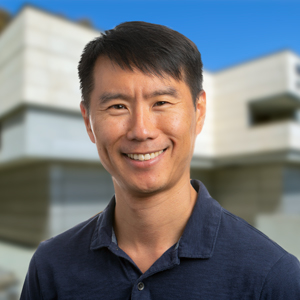 Andrew I. Su合作论文数Department of Integrative Structural and Computational Biology, The Scripps Research Institute51
 Sebastian Burgstaller合作论文数14
 Andra Waagmeester合作论文数BiGCaT Bioinformatics, Universiteit Maastricht14
 Mark D Wilkinson合作论文数12Elvira Mitraka合作论文数Department of Biology, University of Crete11Putman Timothy E合作论文数9
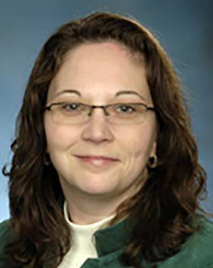 Lynn M. Schriml合作论文数Department of Epidemiology and Public Health, School of Medicine, University of Maryland;Institute of Genome Science, School of Medicine, University of Maryland9
 Chunlei Wu合作论文数Scripps Res Inst, Dept Mol & Expt Med, 10666 N Torrey Pines Rd, La Jolla, CA 92037 USA8
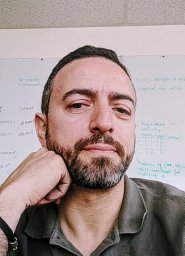 Salvatore Loguercio合作论文数The Scripps Research Institute;Department of Molecular and Experimental Medicine,;Department of Molecular and Experimental Medicine, The Scripps Research Institute8Tong Shu Li合作论文数Scripps Res Inst, Dept Mol & Expt Med, 10666 N Torrey Pines Rd, La Jolla, CA 92037 USA7
 Ginger Tsueng合作论文数Nereus Pharmaceuticals, Inc7
 Max Nanis合作论文数Scripps Res Inst, Dept Mol & Expt Med, MEM 216 10550 North Torrey Pines Rd, La Jolla, CA 92037 USA6
 Douglas D. Richman合作论文数San Diego Center for AIDS Research;School of Medicine, University of California San Diego6
 James P. Balhoff合作论文数Department of Biological Sciences, Louisiana State University6
 Núria Queralt-Rosinach合作论文数Chemogenomics Laboratory, Institut Municipal d’Investigació Mèdica and Universitat Pompeu Fabra6
 Obi L. Griffith合作论文数Divisions of Hematology & Oncology, Department of Medicine, Washington University School of Medicine in St. Louis6jesse spaulding合作论文数5
 Chris Mungall合作论文数Biosystems Data Science Department, Environmental Genomics and Systems Biology Division, Lawrence Berkeley National Laboratory;Berkeley Institute for Data Science5
 Gregory S Stupp合作论文数Department of Biochemistry and Molecular Biology, University of Florida5
 Jacques Corbeil合作论文数Laval University5
 Kristina Hettne合作论文数Medical Center, Erasmus University5Seth Carbon合作论文数5Erik L. Clarke合作论文数5Mark Thompson合作论文数4
 Satish Pillai合作论文数School of Medicine, University of California, San Francisco;Vitalant Research Institute4
 Alex Bravo合作论文数4
 Ainscough Benjamin J合作论文数The Genome Institute, Washington University School of Medicine4
 Paul Pavlidis合作论文数Michael Smith Laboratories, Centre for Brain Health, Department of Psychiatry, University of British Columbia4
 Daniel S Himmelstein合作论文数Dartmouth Medical School4
 Laura Inés Furlong合作论文数Instituto de Biologı́a y Medicina Experimental, Consejo Nacional de Investigaciones Cientificas y Técnicas4Richard Bruskiewich合作论文数International Rice Research Institute4
 Zhiyong Lu (陆致用)合作论文数National Center for Biotechnology Information, National Library of Medicine, National Institutes of Health;Department of Computer Science, University of Illinois Urbana-Champaign4
 Robert Leaman合作论文数Department of Biomedical Informatics, Arizona State University4Edward Kawas合作论文数4MC Strain合作论文数3
 David Smith合作论文数Department of Medicine, School of Medicine, University of California3
 Michael Mayers合作论文数Dept Struct & Computat Biol, Scripps Res Inst3
 Andre Van Wijnen合作论文数The Stein/Lian Laboratory, Department of Biochemistry, Larner College of Medicine, University of Vermont3
 Egon L. Willighagen合作论文数Department of Pharmaceutical Biosciences, Uppsala University3Joseph K. Wong合作论文数San Francisco Veterans Affairs Medical Center, University of California San Francisco3
 Malachi Griffith合作论文数Genome Sciences Centre, BC Cancer Agency3
 Joseph T. Tennis合作论文数Information School, University of Washington3David P Hill合作论文数2Kenneth C Huellas-Bruskiewicz合作论文数2Lynzey Kujan合作论文数2Connor Liu合作论文数McDonnell Genome Inst, Washington Univ2
 Thomas Marcotte合作论文数Department of Psychiatry, School of Medicine, University of California, San Diego2Jeremy Peay合作论文数2
 Karthik Gangavarapu合作论文数Dept Immunol & Microbiol, Scripps Res Inst2




