Recent advancements in use of machine learning techniques on field-programmable gate arrays (FPGAs) have allowed for implementation of embedded neural networks with extremely low latency. This is invaluable for particle detectors at the Large Hadron Collider, where latency and used area must be strictly bounded. The hls4ml framework is a procedure for converting from trained machine learning model software, to a synthesis result that can be used on an FPGA. However, running the pipeline is a time-consuming procedure, and there is a strong risk of failure. In particular, it is possible that the model is unable to be converted into a synthesis result, or that the resource consumption of the model will exceed the resources of the target FPGA. To aid with this development, we introduce wa-hls4ml, a surrogate model which uses a graph neural network to emulate the structure of the source models. The goal is to estimate the chance of success and resource consumption of an arbitrary model when passed through the hls4ml procedure, without the time consumption of actually running the pipeline.
Edge computation often requires robustness to faults, e.g., to reduce the effects of transient errors and to function correctly in high radiation environments. In these cases, the edge device must be designed with fault tolerance as a primary objective. FKeras is a tool that helps design fault-tolerant edge neural networks (NNs) that run entirely on chip to meet strict latency and resource requirements. FKeras provides metrics that give a bit-level ranking of NN weights with respect to their sensitivity to faults. FKeras includes these sensitivity metrics to guide efficient fault injection campaigns to help evaluate the robustness of an NN architecture. We show how to use FKeras in the codesign of edge NNs trained on the high-granularity endcap calorimeter dataset, which represents high energy physics data, as well as the CIFAR-10 dataset. We use FKeras to analyze an NN’s fault tolerance to consider alongside its accuracy, performance, and resource consumption. The results show that the different NN architectures have vastly differing resilience to faults. FKeras can also determine how to protect NN weights best, e.g., by selectively using triple modular redundancy on only the most sensitive weights, which reduces area without affecting accuracy.
using a memory look-up table addressed with nine to ten most significant non-zero bits. At 200 MHz internal clock, our demo core reaches a throughput of 200 M pairs/s/core, faster than a typical 2 GHz micro-processor by about a factor of 10. Temperature and power consumption of FPGAs were also lower than those of micro-processors. Fast and convenient, FPGAs can serve as alternatives to time-consuming micro-processors for space charge simulation.
Accessible machine learning algorithms, software, and diagnostic tools for energy-efficient devices and systems are extremely valuable across a broad range of application domains. In scientific domains, real-time near-sensor processing can drastically improve experimental design and accelerate scientific discoveries. To support domain scientists, we have developed hls4ml, an open-source software-hardware codesign workflow to interpret and translate machine learning algorithms for implementation with both FPGA and ASIC technologies. We expand on previous hls4ml work by extending capabilities and techniques towards low-power implementations and increased usability: new Python APIs, quantization-aware pruning, end-to-end FPGA workflows, long pipeline kernels for low power, and new device backends include an ASIC workflow. Taken together, these and continued efforts in hls4ml will arm a new generation of domain scientists with accessible, efficient, and powerful tools for machine-learning-accelerated discovery.
Machine learning algorithms are becoming increasingly prevalent and performant in the reconstruction of events in accelerator-based neutrino experiments. These sophisticated algorithms can be computationally expensive. At the same time, the data volumes of such experiments are rapidly increasing. The demand to process billions of neutrino events with many machine learning algorithm inferences creates a computing challenge. We explore a computing model in which heterogeneous computing with GPU coprocessors is made available as a web service. The coprocessors can be efficiently and elastically deployed to provide the right amount of computing for a given processing task. With our approach, Services for Optimized Network Inference on Coprocessors (SONIC), we integrate GPU acceleration specifically for the ProtoDUNE-SP reconstruction chain without disrupting the native computing workflow. With our integrated framework, we accelerate the most time-consuming task, track and particle shower hit identification, by a factor of 17. This results in a factor of 2.7 reduction in the total processing time when compared with CPU-only production. For this particular task, only 1 GPU is required for every 68 CPU threads, providing a cost-effective solution.
Efficient machine learning implementations optimized for inference in hardware have wide-ranging benefits, depending on the application, from lower inference latency to higher data throughput and reduced energy consumption. Two popular techniques for reducing computation in neural networks are pruning, removing insignificant synapses, and quantization, reducing the precision of the calculations. In this work, we explore the interplay between pruning and quantization during the training of neural networks for ultra low latency applications targeting high energy physics use cases. Techniques developed for this study have potential applications across many other domains. We study various configurations of pruning during quantization-aware training, which we term quantizationaware pruning, and the effect of techniques like regularization, batch normalization, and different pruning schemes on performance, computational complexity, and information content metrics. We find that quantization-aware pruning yields more computationally efficient models than either pruning or quantization alone for our task. Further, quantization-aware pruning typically performs similar to or better in terms of computational efficiency compared to other neural architecture search techniques like Bayesian optimization. Surprisingly, while networks with different training configurations can have similar performance for the benchmark application, the information content in the network can vary significantly, affecting its generalizability.
 Nhan Tran合作论文数6
 Javier Duarte合作论文数Department of Physics, Division of Physical Sciences, University of California, San Diego2T. Yang合作论文数Fermi National Accelerator Laboratory2Jeffrey Krupa合作论文数2Michael Wang合作论文数Fermilab2
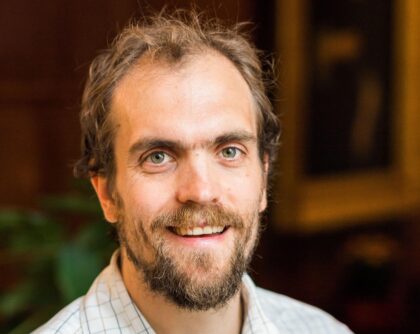 Philip Harris合作论文数MIT Department of Physics;The NSF AI Institute for Artificial Intelligence and Fundamental Interactions;A3D32Javier Mauricio Duarte合作论文数1Jovan Mitrevski合作论文数1
 Duc Hoang合作论文数Apple1
 Tejin Cai合作论文数1
 Andres Meza合作论文数1Vladimir Loncar合作论文数1
 Adrian Alan Pol合作论文数CERN1
 Manuel Blanco Valentín合作论文数Ctr Brasileiro Pesquisas Fis1James Hirschauer合作论文数1
 Olivia Weng合作论文数1Christian Herwig合作论文数1
 John Mamish合作论文数MIT, Comp Sci & Artificial Intelligence Lab, Cambridge, MA 02139 USA1Dylan Rankin合作论文数1Maria Acosta Flechas合作论文数1
 Mia Liu合作论文数Purdue Univ, Dept Phys & Astron, W Lafayette, IN 47907 USA1Yingyi Luo合作论文数Northwestern Univ, Dept Elect Engn & Comp Sci, Evanston, IL 60208 USA1Alessandro Pappalardo合作论文数AMD1jennifer ngadiuba合作论文数1Kevin Pedro合作论文数1Sioni Summers合作论文数1T. K. Aarrestad合作论文数CERN1
 Farah Fahim合作论文数Fermilab Natl Accelerator Lab, POB 500, Batavia, IL 60510 USA1
 Maurizio Pierini合作论文数CERN1
 Hamza A Javed合作论文数Dept Elect Elect Engn, Univ London Imperial1Edward Kreinar合作论文数1
 Josiah Hester合作论文数Center for Advancing Responsible Computing, College of Computing, Georgia Institute of Technology;School of Interactive Computing, College of Computing, Georgia Institute of Technology1
 Yaman Umuroglu合作论文数EmLogic1
 Nicholas J. Fraser合作论文数AMD Research & Advanced Development1
 Shih-Chieh Hsu合作论文数Department of Physics, University of Washington1
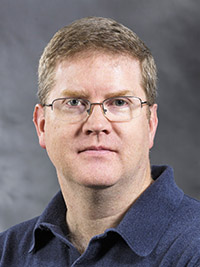 Scott Hauck合作论文数Department of Electrical & Computer Engineering, University of Washington1Sergo Jindariani合作论文数Fermi National Accelerator Laboratory Batavia IL 60510 USA1
 Burt Holzman合作论文数Brookhaven National Laboratory1
 Zhenbin Wu (吴振斌)合作论文数Institute of Hydrobiology, Chinese Academy of Sciences;University of Chinese Academy of Sciences1Kyle J. Knoepfel合作论文数1
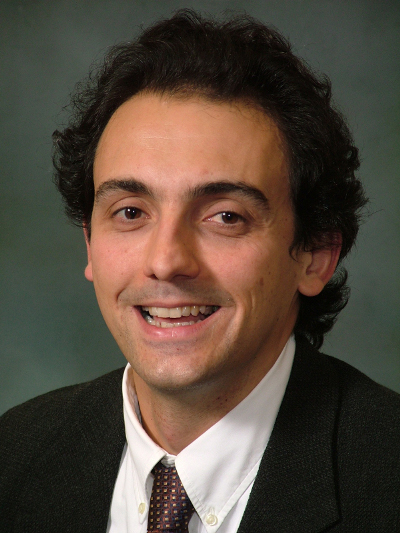 Luca Carloni合作论文数Department of Computer Science, The Fu Foundation School of Engineering and Applied Science, Columbia University1
 Ryan Kastner合作论文数Department of Computer Science and Engineering, University of California San Diego;Cycuity1G. Di Guglielmo合作论文数VLSI Design and Education Center, The University of Tokyo1




