AIM (Assess, Identify, Make it happen) is a community-engaged, data-driven, strategic planning process for school districts to develop and implement comprehensive health and wellness plans (CHWPs) aligned with the Whole School, Whole Community, Whole Child (WSCC) model. AIM was facilitated in 21 rural school districts and an 81-item survey was administered to participants completing this process (n = 236). Those surveyed indicated that the benefits of AIM were more pronounced than challenges. Top benefits included developing a shared commitment and long-term mindset to promote health and wellness in schools. Top challenges included fitting AIM into already busy schedules and getting buy-in from all task force members. The most common health problems prioritized in district CHWPs were poor mental health and alcohol tobacco and other drugs. These results support the effectiveness of AIM as a method for developing community-engaged, data-driven CHWPs with rural school districts. Future efforts to create school plans to promote health should account for the benefits and challenges noted in this work. Furthermore, approaches designed for rural and historically under-resourced schools are necessary to promote the equitable implementation of the WSCC model.
This work presents experiential criticism as a methodology for researching experience in education. The approach draws on elements of pragmatism, phenomenology, ethnography, and educational criticism and connoisseurship and was developed through a study of the adventure education experience. It is comprised of three modes of inquiry: (1) observation of others in experience, (2) conversation about experience, and (3) participation in experience. The use of all three modes positions the researcher to arrive at an empirically corroborated understanding of the experience. This methodology contributes to the body of methods necessary to centre experience in educational research.
Adventure education (AE) has long been celebrated for its unique contributions to learning and personal growth. But the benefits of the AE experience may be broader than these outcomes and we are best positioned to uncover these benefits through employing new lenses in our analysis of AE. A qualitative study of the AE experience was completed at three sites: a backpacking expedition, a challenge course, and a multi-activity adventure programme. Data collection efforts resulted in 183 hours of observation and 74 interviews with 41 participants. This data was analyzed through the lens of PERMA, a framework for wellbeing from the field of positive psychology. Findings illustrate the character of the AE experience across the five dimensions of PERMA: Positive emotion, Engagement, Relationships, Meaning, and Accomplishment. These findings position AE as a pathway for the pursuit of wellbeing. The significance of this conception of AE is also discussed.
Objective: In this paper we describe the status of wellbeing for school personnel in the 2021-22 school year through the PERMA framework and the extent to which the COVID-19 pandemic adversely impacted dimensions of wellbeing. Methods: We administered the workplace wellbeing survey (a quantitative instrument based on PERMA) to school staff members in a rural/frontier region of a western state of the United States. Overall, 777 persons completed it, including 463 teachers from 23 school districts. Results: PERMA constructs of meaning and accomplishment were higher than other constructs and may serve as an anchor for wellbeing in education. Teachers showed lower levels of positive emotion, engagement, and accomplishment, when compared to nonteachers in schools. When compared with non-Hispanic personnel, Hispanic personnel had lower levels of wellbeing in the domain of relationships and reported a more severe adverse impact from the COVID-19 pandemic on both social and physical wellbeing. Conclusions: Adopting a more nuanced view of educator wellbeing, as defined by more than the mere absence of burnout and attrition is critical to fostering educational practices that promote the flourishing of school personnel.
Youth engagement is often purported as a critical dimension of health promotion for young people, but the strategies used to facilitate this engagement are seldom evaluated or studied. This study explored the strategies used to engage youth in a strategic planning process to develop comprehensive health and wellness plans in 28 US school districts. Participating school districts conducted listening sessions, administered anonymous surveys, included youth on a district task force, and employed other strategies to engage youth. Following this initiative, semi-structured interviews were conducted with representatives from all school districts (n = 34) to enumerate the use of these strategies across districts and understand their perspectives related to the effectiveness and importance of these strategies for engaging youth in health promotion. The most prevalent strategy used by districts was listening sessions (27 districts; 564 youth), followed by including youth on the task force (19 districts; 39 youth), anonymous surveys (18 districts; 1988 youth) and other methods (5 districts). Interviewees clarified the benefits and challenges of each strategy and provided commentary on youth engagement for health promotion. The results stress the importance of building trusting relationships with youth, using multiple strategies to engage youth, and embodying an equity mindset throughout the development and implementation of youth engagement efforts.
Background: Partnerships are best positioned for success when the readiness of those engaged is assessed and discussed from the outset. Doing so requires an approach to readiness that is responsive to the particular context of the partnership.Objectives: This study contributes to the topic of partnership readiness through a readiness assessment used with rural local public health agencies (LPHAs) to partner with a uni-versity research team on implementing a Kindergarten to 12th-grade school-based health intervention called Assess, Identify, Make it happen.Methods: Through case study methodology, we explored the readiness of LPHAs to partner with a university on this initia-tive as well as the role the readiness assessment played in facilitating this partnership. We conducted semistructured interviews with directors and agency staff in five rural LPHAs before (n = 8) and after (n = 5) they implemented Assess, Identify, Make it happen. We also documented their work with Kindergarten to 12th-grade schools and in partnership with us throughout the initiative.Results: The findings of this study are presented in three phases. Phase 1 outlines the results from the initial readiness assessment interviews as aligned with select constructs of readiness. Phase 2 recounts how these constructs material-ized through partnership between LPHAs and the university. Phase 3 includes findings from a postintervention interview focused on readiness for partnership. Collectively, these findings portray prospective, operational, and retrospective perspectives on LPHA readiness for partnership. Conclusions: This study contributes to the constructs of readiness for partnership, highlights the distinction between assessing and cultivating readiness, and demonstrates the benefits of a multiphase approach to readiness for partnership.
BackgroundOne pathway to addressing childhood obesity is through implementing evidence-based practices (EBPs) shown to promote nutrition and physical activity in K-12 school settings. Assess, Identify, Make it happen (AIM) is a strategic planning process to engage stakeholders in implementing EBPs in their K-12 schools. Local Public Health Agencies (LPHAs) are a potential partner to facilitate this process to a broader audience of rural school communities.MethodsA process and outcome evaluation design was applied in this study to examine the extent to which LPHAs effectively implemented AIM with rural/frontier schools in comparison to university staff. Data collection included post-meeting surveys completed by facilitators, a post-intervention interview with facilitators, a survey of school task force members at the end of the AIM process, and systematic documentation of the intervention.ResultsReach—Among the 26 eligible elementary schools, 18 (69%) agreed to participate.Effect—In total, schools facilitated by LPHAs fully implemented an average of 4.0 changes per school, while schools facilitated by the university staff fully implemented an average of 3.7 changes.Adoption—Among the five LPHAs in the target region, all five agreed to partner on the initiative, but some agencies were unable to identify sufficient personnel to facilitate all schools in their catchment area.Implementation—(1) In total, 89 of 94 (95%) meetings scheduled by LPHA facilitators occurred. 47 of 48 (98%) meetings scheduled by the university staff occurred. (2) The university staff self-reported 93% of agenda items in the AIM process as “completely” followed while LPHA facilitators reported 41% of agenda items as “completely” followed. (3) Task force satisfaction with the AIM process and facilitator showed limited variance across LPHAs and university-facilitated schools.Maintenance—Of the 16 school districts that agreed to participate in the school-based version of AIM, 9 (56%) also participated in a district-wide version of AIM 2 years later.ConclusionAIM is an effective process for implementing EBPs in elementary schools when facilitated by LPHAs. Effective partnerships, a nuanced approach to fidelity, scalability considerations, and the role of technical assistance and training all contributed to the successful implementation of this LPHA-Elementary school partnership.
Service learning has been established as a promising method of teaching and learning that engages youth as change agents in their schools and communities. But service learning has not been widely implemented or studied in rural K-12 schools. This study explores the case of a service learning curriculum, the Working Together Project (WTP), in a rural, high-poverty school. Data collection included classroom observations, surveys, and individual/focus group interviews with participants of the curriculum. The case study findings illustrate how the WTP curriculum unfolded with students, benefits for the school (cross-generational collaboration, school introspection and improvement), benefits for the students (collaborative skills, professional skills, growth, and maturity), and the challenges of the WTP. This case highlights the potential of service learning to promote democratic citizenship in rural schools and communities.
Artistic sensibility is defined in this work as the sensitivity and capacity to appreciate and act upon concerns of or pertaining to art and its production. This article contends that artistic sensibility is inherent to research. This contention is supported through three points which reveal a fourth: (1) Research requires dissemination. (2) Dissemination requires representation. (3) Representation requires artistic sensibility. These three points considered in conjunction illustrate a fourth: (4) Research requires artistic sensibility. This argument has implications for research venues, evaluations of research, and the preparation of researchers in all research disciplines. Namely, certain tenets of arts-based research may be applied to a much broader array of research methodologies. Identifying, honoring, and harnessing artistic sensibility in research has the potential to improve research products and enrich discourse.
This study explores the interaction of participants and institutional cultures in adventure education (AE) through the qualitative method of educational criticism and connoisseurship. Three AE programmes were included in this study: a backpacking expedition (11 participants), a challenge course (29 participants), and a multi-activity adventure programme (21 participants). Through 183 hours of observation and 74 interviews, the thematic categories of cultural rigidity and cultural flexibility were identified. The AE institution exhibits cultural rigidity through guideline enforcement, jargon propagation, and value instillment, which results in participant adaptation. Conversely, the AE institution exhibits cultural flexibility through language accommodation, norm development, and goal setting, which results in participants' ability to sustain selfhood. The implications of these findings include reaffirming the importance of attending to participant experiences in AE and the contention that striking a cultural balance in AE can promote productive cultural interchange as an aim of AE.
ABSTRACTBACKGROUNDInvolving communities in school health has been purported as a practice integral to supporting a Whole School, Whole Community, Whole Child (WSCC) approach. Although community collaboration is often included in school‐based health initiatives, there is little research considering methods for increasing community engagement. The purpose of this study was to identify effective school‐based health interventions documenting changes in community engagement.METHODSAcademic experts and school stakeholders guided procedures for a systematic review of studies published from 1987–2017 and gray literature (ie, best practice documents; policy documents, etc.) on comprehensive school health interventions including community engagement as a targeted outcome.RESULTSThe search identified 9 studies addressing community as an outcome of school‐based health interventions; types of partnership mechanisms and partners' roles were classified.CONCLUSIONSAlthough involving communities is a WSCC component and commonly recommended as a strategy fundamental to school health, there is little empirical research examining effective strategies for engaging communities and engagement is often not measured as part of intervention studies. Further measurement and research in engaging communities in school health is warranted.
Objective: The Working Together Project (WTP) is a classroom-based curriculum in which rural, low-income middle school students completed "Assess. Identify. Make it Happen," a strategic planning process to improve student health by implementing evidence-based initiatives. The curriculum consisted of 30, 55-minute lessons and 28 "workdays" for students to conduct research, create communication materials, and develop presentations. Study goals were to: (1) assess the extent to which the WTP led to the implementation of evidence-based practices; and (2) describe student-level outcomes that resulted from participating in the WTP. Methods: We conducted a quasi-experimental, convergent mixed-methods study with 4 intervention and 2 control middle schools located in a low-income, rural region. We carried out pre/post student surveys and interviews with teachers, principals, and students. Results: Two of the 4 intervention schools completed the entire curriculum and implemented evidence-based practices. Students in control schools showed a decline in school connection, academic engagement, and knowledge of health problems, whereas students in the intervention arm showed increases in personal responsibility to solve problems, 21st century skills, school connectedness, and program planning skills. Conclusions: When implemented fully, the WTP is a promising youth-led, adult-supported strategy for implementing evidence-based practices to promote health in schools.
Educational objectives focus practice and dictate what happens in US classrooms. Currently, instructional objectives are privileged in K-12 schools over other forms of objectives, thereby marginalizing the implementation of some educational perspectives. We argue that objectives should be expanded to attend to the student experience, promoting a variety of practices to utilize in classroom operations. In so doing, we suggest an addition to the network of objectives: experience-based objectives. We review the history of objectives before presenting experience-based objectives as embodying 5 major shifts in thinking, and as actualized through four criteria.
Using the method of educational criticism and connoisseurship, I interviewed and observed 41 participants of adventure education (AE) programmes. Through these efforts, novelty was revealed as a central quality of the experience. In this work, this quality is characterised as it manifest in AE with an eye towards the educational value of novelty. The relationship of novelty to conceptions of educational experience is explored, and implications for schooling are offered.
This study builds upon ongoing research of ecological mindedness by exploring how teachers appraise and incorporate ecological care, interconnectedness, and ecological integrity into lesson planning, as well as how teachers reconcile these qualities with their current professional responsibilities. These topics are explored through educational connoisseurship and criticism, using think alouds to learn from teachers as they plan lessons with the qualities of ecological mindedness as a framework. Findings indicate that teachers view ecological mindedness as relevant for schools in terms of content, engagement, and students' lives; as compatible with standards and other external mandates; and as a form of character education.
This study is a phenomenological portraiture of an adventurer that explores the meanings of the adventure experience. Through interview and observation, I reveal four thematic meanings of the adventure experience for the research participant: solitude and camaraderie; escape; challenge; and living life. The implications of these findings for adventure education are discussed.
 Belansky Elaine S合作论文数Rocky Mountain Prevention Research Center, University of Colorado Denver and Health Sciences Center8
 Carla Loecke合作论文数4
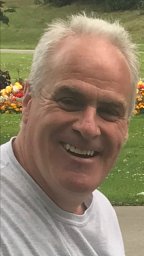 Nick Cutforth合作论文数3
 Christy McConnell Moroye合作论文数3Laura Borley合作论文数2Katie Lohmiller合作论文数2
 Melissa Renee Ward George合作论文数1
 Ann Pulling Kuhn合作论文数Dept Pediat, Univ Maryland1
 Jaimie Mcmullen合作论文数Coll Nat & Hlth Sci, Univ Northern Colorado1
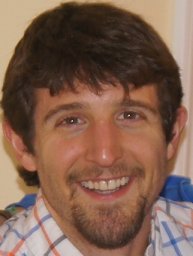 Dan J. Graham合作论文数Department of Psychology and Social Behavior, University of California1Sharon Scarbro合作论文数1
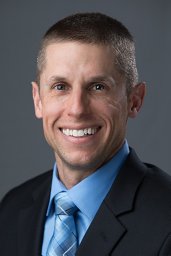 Russell Carson合作论文数Dept Kinesiol, Louisiana State Univ1




