In this paper, we introduce a general framework for analyzing the numerical conditioning of minimal problems in multiple view geometry, using tools from computational algebra and Riemannian geometry. Special motivation comes from the fact that relative pose estimation, based on standard 5-point or 7-point Random Sample Consensus (RANSAC) algorithms, can fail even when no outliers are present and there is enough data to support a hypothesis. We argue that these cases arise due to the intrinsic instability of the 5- and 7-point minimal problems. We apply our framework to characterize the instabilities, both in terms of the world scenes that lead to infinite condition number, and directly in terms of ill-conditioned image data. The approach produces computational tests for assessing the condition number before solving the minimal problem. Lastly, synthetic and real data experiments suggest that RANSAC serves not only to remove outliers, but in practice it also selects for well-conditioned image data, which is consistent with our theory.
Relative pose estimation for RGB-D cameras is crucial in a number of applications. A typical approach relies on RANSAC to find a triplet pair of 3D point correspondences from which relative pose can be derived. A key aspect to this work ensures the geometric consistency of the triplet, i.e., pairwise distances between 3D points are preserved between the two views. Observe, however, that depth values are typically an order of magnitude less precise than feature locations, leading to large distance thresholds and admission of numerous false positives. This paper proposes that the constraint of 3D distance can be cast as a 2D constraint which we refer to as the Geometric Correspondence Constraint (GCC). This constraint states that given one pair of correspondences, the two images are partitioned into a family nested of curves such that corresponding points must lie on corresponding curves. This can act as a filter in the RANSAC process with significant savings in computation and with increased robustness and accuracy as demonstrated in experiments using TUM, ICL-NUIM, and RGBD Scene v2 datasets.
Homotopy Continuation (HC) is an effective tool for solving systems of polynomial equations arising from multiview geometry problems in computer vision. Specifically, polynomial systems of camera pose estimation are widely considered as many are used in visual odometry (VO) or simultaneous localization and mapping (SLAM) frameworks. However, existing HC solvers are very slow for many VOs or SLAMs whose efficiency is critical. In addition, in the presence of outliers, the camera pose is typically solved repeatedly under a hypothesis-verification scheme, or RANSAC, for robust estimation, discouraging even more applications from adopting HC as a practical solver. In this paper, we accelerate the state-of-the-art GPU-HC solver progressively by direct parameter homotopy evaluation, improving GPU utilization, pruning homotopy paths, and early termination of RANSAC process, showing around 9.17x, 13.75x, 17.06x, and 17x speedups on NVIDIA V100, A100, H100, and GH200 GPUs, respectively. Additionally, multiple GPUs are also used to demonstrate strong scalability on up to 8 GPUs. We apply the optimized GPU-HC solver on a trifocal pose estimation problem which solves for camera poses using triplet 2D-2D oriented point matches, where one is associated with a 3D point in space. This is particularly useful in recovering VO/SLAM estimation failure when the scene is textureless, as existing recovering methods rely on ample 2D-3D point matches regardless of many 2D-2D pairs present in the images. Experiments show that integrating the accelerated GPU-HC with modern SLAMs substantially increases the success rate of recovering estimation failure without the cost of losing significant runtime.
In modern information retrieval tasks such as recommender systems, retrieval-augmented generation, and question-answering, there is a need for fast and efficient retrieval over large collections of vectors. These high-dimensional vector embeddings, typically produced by deep neural networks, pose computational and memory efficiency challenges for existing indexing methods, necessitating the development of new approaches. This submission to the SISAP 2025 Indexing Challenge tackles both of its challenge tracks: (1) approximate kNN search on a resource-limited system and (2) kNN graph construction. This solution to the first task pairs a graph-based index with scalar quantization to achieve 4x data compression while retaining query neighbors with 99
The semantic reconstruction of a scene relies in part on the curvilinear structure inherent in images. The recovery of curvilinear structure is not only key to the representation of objects via ridges and other object curves but is also critical to the reconstruction from texture-poor images which lack a sufficient number of features. Prior methods advocate for the recovery of curve segments from images and reconstructing these into an organized collection of 3D curve segments often referred to as the 3D curve sketch, which serves as the basis for further reconstruction of curves and surfaces. Observing that the process of edge grouping can lead to fictitious curves or missing veridical groupings, this paper advocates for a reconstruction of curvilinear structure directly from image edges in the form of a 3D edge sketch. The multiview reconstruction of edges faces significant combinatorial challenges which are effectively addressed in this paper. We demonstrate through experiments that the 3D edge sketch recovers a vast majority of the curvilinear structure and is a reliable substrate from which 3D curves can be constructed.
The image retrieval (IR) approach to image localization has distinct advantages to the 3D and the deep learning (DNN) approaches: it is seen-agnostic, simpler to implement and use, has no privacy issues, and is computationally efficient. The main drawback of this approach is relatively poor localization in both position and orientation of the query camera when compared to the competing approaches. This paper represents a hybrid approach that stores only image features in the database like some IR methods, but relies on a latent 3D reconstruction, like 3D methods but without retaining a 3D scene reconstruction. The approach is based on two ideas: (i) a novel proposal where query camera center estimation relies only on relative translation estimates but not relative rotation estimates through a decoupling of the two, and (ii) a shift from computing optimal pose from estimated relative pose to computing optimal pose from multiview correspondences, thus cutting out the “middle-man”. Our approach shows improved performance on the 7-Scenes and Cambridge Landmarks datasets while also improving on timing and memory footprint as compared to state-of-the-art.
Relative pose estimation for RGBD cameras is crucial in a number of applications. Previous approaches either rely on the RGB aspect of the images to estimate pose thus not fully making use of depth in the estimation process or estimate pose from the 3D cloud of points that each image produces, thus not making full use of RGB information. This paper shows that if one pair of correspondences is hypothesized from the RGB-based ranked-ordered correspondence list, then the space of remaining correspondences is restricted to corresponding pairs of curves nested around the hypothesized correspondence, implicitly capturing depth consistency. This simple Geometric Depth Constraint (GDC) significantly reduces potential matches. In effect this becomes a filter on possible correspondences that helps reduce the number of outliers and thus expedites RANSAC significantly. As such, the same budget of time allows for more RANSAC iterations and therefore additional robustness and a significant speedup. In addition, the paper proposed a Nested RANSAC approach that also speeds up the process, as shown through experiments on TUM, ICL-NUIM, and RGBD Scenes v2 datasets.
Similarity search is a fundamental task in applications such as recommender systems, image retrieval, and text retrieval. Graph-based indexes for similarity search traverse a graph constructed on the dataset to retrieve the query's neighbors, using edges to navigate to and explore the query's local neighborhood. Edge selection techniques are crucial for the performance of graph-based indexes, enhancing accuracy and efficiency by preventing local minima, reducing graph diameter, and improving sparsity. The Half-Space Proximal (HSP) Graph is an edge-minimal monotonic graph defined by a geometric edge selection which ensures a diverse, yet sparse set of edges. Unfortunately, the quadratic construction complexity of the HSP Graph renders it impractical for large-scale search scenarios. This work investigates an approximation of the HSP Graph that aims to preserve the monotonic property locally. By leveraging a hierarchical partitioning of the dataset, this work proposes a top-down, distributed graph construction which uses a coarse-scale graph on pivots to facilitate the construction of the layer below. This paper investigates the effectiveness of this approach as a submission to the SISAP 2024 Indexing Challenge.
We present a method for solving two minimal problems for relative camera pose estimation from three views, which are based on three view correspondences of (i) three points and one line and (ii) three points and two lines through two of the points. These problems are too difficult to be efficiently solved by the state of the art Grobner basis methods. Our method is based on a new efficient homotopy continuation (HC) solver, which dramatically speeds up previous HC solving by specializing HC methods to generic cases of our problems. We show in simulated experiments that our solvers are numerically robust and stable under image noise. We show in real experiment that (i) SIFT features provide good enough point-and-line correspondences for three-view reconstruction and (ii) that we can solve difficult cases with too few or too noisy tentative matches where the state of the art structure from motion initialization fails.
The Half Space Proximal (HSP) graph is a low out-degree monotonic graph with wide applications in various domains, including combinatorial optimization in strings, enhancing kNN classification, simplifying chemical networks, estimating local intrinsic dimensionality, and generating uniform samples from skewed distributions, among others. However, the linear complexity of finding HSP neighbors of a query limit its scalability, except when sacrificing accuracy by restricting the test to a small local neighborhood estimated through approximate indexing. This compromise leads to the loss of crucial long-range connections, introducing false positives and excluding false negatives, compromising the essential properties of the HSP. To overcome these limitations, we propose a fast and exact HSP Test showing sublinear complexity in extensive experimentation. Our hierarchical approach leverages pivots and the triangle inequality to enable efficient HSP search in general metric spaces. A key component of our approach is the concept of the shifted generalized hyperplane between two points, which allows for the invalidation of entire point groups. Our approach ensures the desired properties of the HSP Test with exactness even for datasets containing hundreds of millions of points.
For a generalized (or non-central) camera model, the minimal problem for two views of six points has efficient solvers. However, minimal problems of three views with four points and three views of six lines have not yet been explored and solved, despite the efforts from the computer vision community. This paper develops the formulations of these two minimal problems and shows how state-of-the-art GPU implementations of Homotopy Continuation solver can be used effectively. The proposed methods are evaluated on both synthetic and real datasets, demonstrating that they are fast, accurate and that they improve on structure from motion estimations, when employed in an hypothesis and test setting.
The Hierarchical Navigable Small World (HNSW) Graph is a graph-based approximate similarity search algorithm that achieves fast and accurate search through a hierarchical structure providing long-range and short-range links. The HNSW remains as a state-of-the-art method, as shown by this submission to the SISAP 2023 Indexing Challenge. This submission introduces a modification to the implementation of HNSW that avoids the cost of a batched construction and drastically reduces disk-space of the saved index when working with large datasets. Through the lens of this competition, this work provides a careful analysis of several important factors for high-performance applications, including the removal of unnecessary functionality, the use of SIMD vectorization for distance computations, and optimal utilization of cache through spatial locality and cache prefetching.
Microwave ablation (MWA) for lung tumors is an affordable alternative to traditional surgery. However, recurrence rate remains an issue. Here we propose a machine learning pipeline to assess the likely outcomes of lung tumor MWAs from pre-ablation tumor radiomic features.
Systems of polynomial equations arise frequently in computer vision, especially in multiview geometry problems. Traditional methods for solving these systems typically aim to eliminate variables to reach a univariate polynomial, e.g., a tenth-order polynomial for 5-point pose estimation, using clever manipulations, or more generally using Grobner basis, resultants, and elimination templates, leading to successful algorithms for multiview geometry and other problems. However, these methods do not work when the problem is complex and when they do, they face efficiency and stability issues. Homotopy Continuation (HC) can solve more complex problems without the stability issues, and with guarantees of a global solution, but they are known to be slow. In this paper we show that HC can be parallelized on a GPU, showing significant speedups up to 56 times on polynomial benchmarks. We also show that GPU-HC can be generically applied to a range of computer vision problems, including 4-view triangulation and trifocal pose estimation with unknown focal length, which cannot be solved with elimination template but they can be efficiently solved with HC. GPU-HC opens the door to easy formulation and solution of a range of computer vision problems.
This paper presents the Brown Pedestrian Odometry Dataset (BPOD) for benchmarking visual odometry algorithms on data from head-mounted sensors. This dataset was captured with stereo and RGB streams from RealSense cameras with rolling and global shutters in 12 diverse indoor and outdoor locations on Brown University's campus. Its associated ground-truth trajectories were generatedfrom third-person videos that documented the recorded pedestrians' positions relative to stick-on markers placed along their paths. We evaluate the performance of canonical approaches representative of direct, feature-based, and learning-based visual odometry methods on BPOD. Our finding is that current methods which are successful on other benchmarks fail on BPOD. The failure modes correspond in part to rapid pedestrian rotation, erratic body movements, etc. We hope this dataset will play a significant role in the identification of these failure modes and in the design, development, and evaluation of pedestrian odometry algorithms.
Relative pose estimation using the 5-point or 7-point Random Sample Consensus (RANSAC) algorithms can fail even when no outliers are present and there are enough inliers to support a hypothesis. These cases arise due to numerical instability of the 5- and 7-point minimal problems. This paper characterizes these instabilities, both in terms of minimal world scene configurations that lead to infinite condition number in epipolar estimation, and also in terms of the related minimal image feature pair correspondence configurations. The instability is studied in the context of a novel framework for analyzing the conditioning of minimal problems in multiview geometry, based on Riemannian manifolds. Experiments with synthetic and real-world data reveal that RANSAC does not only serve to filter out outliers, but RANSAC also selects for well-conditioned image data, sufficiently separated from the ill-posed locus that our theory predicts. These findings suggest that, in future work, one could try to accelerate and increase the success of RANSAC by testing only well-conditioned image data.
Similarity search for information retrieval on a variety of datasets relies on a notion of neighborhood, frequently using binary relationships such as the kNN approach. We suggest, however, that the notion of a neighbor must recognize higher-order relationship, to capture neighbors in all directions. Proximity graphs, such as the Relative Neighbor Graphs (RNG), use trinary relationships which capture the notion of direction and have been successfully used in a number of applications. However, the current algorithms for computing the RNG, despite widespread use, are approximate and not scalable. This paper proposes a hierarchical approach and novel type of graph, the Generalized Relative Neighborhood Graph (GRNG) for use in a pivot layer that then guides the efficient and exact construction of the RNG of a set of exemplars. It also shows how to extend this to a multi-layer hierarchy which significantly improves over the state-of-the-art methods which can only construct an approximate RNG.
There is an emerging sense that the vulnerability of Image Convolutional Neural Networks (CNN), i.e., sensitivity to image corruptions, perturbations, and adversarial attacks, is connected with Texture Bias. This relative lack of Shape Bias is also responsible for poor performance in Domain Generalization (DG). The inclusion of a role of shape alleviates these vulnerabilities and some approaches have achieved this by training on negative images, images endowed with edge maps, or images with conflicting shape and texture information. This paper advocates an explicit and complete representation of shape using a classical computer vision approach, namely, representing the shape content of an image with the shock graph of its contour map. The resulting graph and its descriptor is a complete representation of contour content and is classified using recent Graph Neural Network (GNN) methods. The experimental results on three domain shift datasets, Colored MNIST, PACS, and VLCS demonstrate that even without using appearance the shape-based approach exceeds classical Image CNN based methods in domain generalization.
Following prolonged swimming,Caenorhabditis eleganscycle between active swimming bouts and inactive quiescent bouts. Swimming is exercise forC. elegansand here we suggest that inactive bouts are a recovery state akin to fatigue. It is known that cGMP-dependent kinase (PKG) activity plays a conserved role in sleep, rest, and arousal. UsingC. elegansEGL-4 PKG, we first validate a novel learning-based computer vision approach to automatically analyzeC. eleganslocomotory behavior and an edge detection program that is able to distinguish between activity and inactivity during swimming for long periods of time. We find thatC. elegansEGL-4 PKG function impacts timing of exercise-induced quiescent (EIQ) bout onset, fractional quiescence, bout number, and bout duration, suggesting that previously described pathways are engaged during EIQ bouts. However, EIQ bouts are likely not sleep as animals are feeding during the majority of EIQ bouts. We find that genetic perturbation of neurons required for otherC. eleganssleep states also does not alter EIQ dynamics. Additionally, we find that EIQ onset is sensitive to age and DAF-16 FOXO function. In summary, we have validated behavioral analysis software that enables a quantitative and detailed assessment of swimming behavior, including EIQ. We found novel EIQ defects in aged animals and animals with mutations in a gene involved in stress tolerance. We anticipate that further use of this software will facilitate the analysis of genes and pathways critical for fatigue and otherC. elegansbehaviors.
A key bottleneck in the use of Multiview Stereo (MVS) to produce high quality reconstructions is the gaps arising from textureless, shaded areas and lack of fine-scale detail. Shape-from-Shading (SfS) has been used in conjunction with MVS to obtain fine-scale detail and veridical reconstruction in the gap areas. The similarity metric that gauges candidate correspondences is critical to this process, typically a combination of photometric consistency and brightness gradient constancy. Two observations motivate this paper. First, brightness gradient constancy can be erroneous due to foreshortening. Second, the standard ZSSD/NCC patchwise photometric consistency measures when applied to shaded areas is, to a first-order approximation, a calculation of brightness gradient differences, which can be subject to foreshortening. The paper proposes a novel trinocular differential photometric consistency that constrains the brightness gradients in three views so that the image gradient in one view is completely determined by the image gradients at corresponding points in the the other two views. The theoretical developments here advocate the integration of this new measure, whose viability in practice has been demonstrated in a set of illustrative numerical experiments.
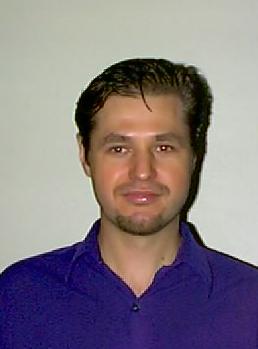 Hüseyin Tek合作论文数182 Hope Street
Box D, Engineering
Brown University
Providence, RI
0291217
Hüseyin Tek合作论文数182 Hope Street
Box D, Engineering
Brown University
Providence, RI
0291217 Steven Zucker合作论文数Department of Computer Science, Yale School of Engineering and Applied Science, Yale University14
 Kaleem Siddiqi合作论文数Centre for Intelligent Machines, McGill University;School of Computer Science, McGill University;Department of Mathematics and Statistics, McGill University12
 Hongyi Fan合作论文数Cognex Corporation9
 Allen Tannenbaum合作论文数Department of Computer Science, Stony Brook University;Department of Applied Mathematics & Statistics, Stony Brook University9
 Frederic Fol Leymarie合作论文数Brown University, Div. of Eng., SHAPE Lab., Box D, 182-4 Hope St., Providence, RI 02912, U.S.A9
 Joseph L. Mundy合作论文数Division of Engineering, School of Engineering, Brown University;Vision Systems Inc.8
 Philip N. Klein合作论文数Department of Computer Science, Brown University8
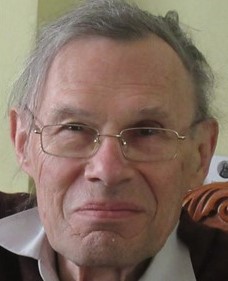 Peter Giblin合作论文数Department of Mathematical Sciences, University of Liverpool7Frederic F. Leymarie合作论文数Div. of Eng., SHAPE Lab., Brown University7Ricardo Fabbri合作论文数Polytechnic Institute – IPRJ;Rio de Janeiro State University7
 Nhon H. Trinh合作论文数SRI International7
 Ming-Ching Chang (張明清)合作论文数Department of Computer Science, College of Engineering and Applied Sciences, University at Albany, State University of New York;Center for GIS, RCHSS, Academic Sinica;Inventec Corp7Tb Sebastian合作论文数6
 Joseph J. Crisco (Joseph Crisco)合作论文数Department of Molecular Pharmacology, Physiology, and Biotechnology, Brown University6
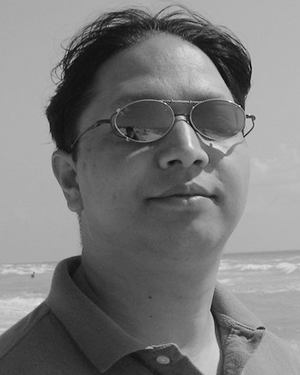 Amir Tamrakar合作论文数New technology and software for archaeologists6
 Yuliang Guo合作论文数Bosch AI Research Center5
 Derek Merck合作论文数University of North Carolina5
 Braden C. Fleming (Braden Fleming)合作论文数Center for Biomedical Engineering, Department of Molecular Pharmacology, Physiology, and Biotechnology, Brown University5thomas baby sebastian合作论文数4
 Cole Foster合作论文数4S. Collins合作论文数4Maruthi Narayanan合作论文数School of Engineering, Brown University4Berk Sevilmis合作论文数4
 David Cooper合作论文数Division of Engineering, School of Engineering, Brown University4Cm Cyr合作论文数3Krishna Nand Keshava Murthy合作论文数Dept Radiol, Mem Sloan Kettering Canc Ctr3Anil Usumezbas合作论文数3Dupuy Damian E合作论文数3
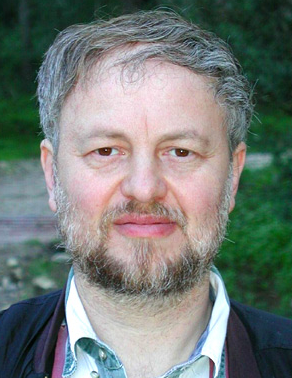 Alfred M. Bruckstein合作论文数Department of Computer Science, The Henry and Marilyn Taub Faculty of Computer Science, Technion – Israel Institute of Technology;School of Mathematics and Physical Sciences, Nanyang Technological University3
 Predrag Neskovic合作论文数Department of Physics, Institute for Brain and Neural Systems, Brown University3
 David H. Laidlaw合作论文数Visualization Research Lab, Department of Computer Science, Brown University3
 Elias Tsigaridas合作论文数INRIA3Weixin Kong合作论文数Laboratory for Engineering Man-Machine Systems (LEMS)3Daniel Sharvit合作论文数3J. Chan合作论文数3
 Ron Kimmel合作论文数Henry and Marilyn Taub Faculty of Computer Science, Technion–Israel Institute of Technology;Geometric Image Processing Lab, Technion–Israel Institute of Technology;Department of Computer Science, Technion–Israel Institute of Technology3
 David Mumford合作论文数Division of Applied Mathematics, Brown University3David da Costa de Pinho合作论文数2Chiang-Heng Chien合作论文数2G Sapiro合作论文数2
 Glenn Tung合作论文数2Ar Tannenbaum合作论文数2madeleine l cook合作论文数2Ms Joukowsky合作论文数2Jill Baker合作论文数2
 Joe Kileel合作论文数Department of Mathematics, College of Natural Sciences, University of Texas at Austin2Özge Can Özcanli合作论文数2
 Thomas Yi合作论文数2




