We propose a new family of latent variable models called max-margin min-entropy (M3E) models, which define a distribution over the output and the hidden variables conditioned on the input. Given an input, an M3E model predicts the output with the smallest corresponding Renyi entropy of generalized distribution. This is equivalent to minimizing a score that consists of two terms: (i) the negative log-likelihood of the output, ensuring that the output has a high probability; and (ii) a measure of uncertainty over the distribution of the hidden variables conditioned on the input and the output, ensuring that there is little confusion in the values of the hidden variables. Given a training dataset, the parameters of an M3E model are learned by maximizing the margin between the Renyi entropies of the ground-truth output and all other incorrect outputs. Training an M3E can be viewed as minimizing an upper bound on a user-defined loss, and includes, as a special case, the latent support vector machine framework. We demonstrate the efficacy of M3E models on two standard machine learning applications, discriminative motif finding and image classification, using publicly available datase
The bounding box representation employed by many popular object detection models [3, 6] implicitly assumes all pixels inside the box belong to the object. This assumption makes this representation less robust to the object with occlusion [16]. In this paper, we augment the bounding box with a set of binary variables each of which corresponds to a cell indicating whether the pixels in the cell belong to the object. This segmentation-aware representation explicitly models and accounts for the supporting pixels for the object within the bounding box thus more robust to occlusion. We learn the model in a structured output framework, and develop a method that efficiently performs both inference and learning using this rich representation. The method is able to use segmentation reasoning to achieve improved detection results with richer output (cell level segmentation) on the Street Scenes and Pascal VOC 2007 datasets. Finally, we present a globally coherent object model using our rich representation to account for object-object occlusion resulting in a more coherent image understanding.
Latent variable models are a powerful tool for addressing several tasks in machine learning. However, the algorithms for learning the parameters of latent variable models are prone to getting stuck in a bad local optimum. To alleviate this problem, we build on the intuition that, rather than considering all samples simultaneously, the algorithm should be presented with the training data in a meaningful order that facilitates learning. The order of the samples is determined by how easy they are. The main challenge is that often we are not provided with a readily computable measure of the easiness of samples. We address this issue by proposing a novel, iterative self-paced learning algorithm where each iteration simultaneously selects easy samples and learns a new parameter vector. The number of samples selected is governed by a weight that is annealed until the entire training data has been considered. We empirically demonstrate that the self-paced learning algorithm outperforms the state of the art method for learning a latent structural SVM on four applications: object localization, noun phrase coreference, motif finding and handwritten digit recognition.
Discriminative tasks, including object categorization and detection, are central components of high-level computer vision. However, sometimes we are interested in a finer-grained characterization of the object’s properties, such as its pose or articulation. In this paper we develop a probabilistic method (LOOPS) that can learn a shape and appearance model for a particular object class, and be used to consistently localize constituent elements (landmarks) of the object’s outline in test images. This localization effectively projects the test image into an alternative representational space that makes it particularly easy to perform various descriptive tasks. We apply our method to a range of object classes in cluttered images and demonstrate its effectiveness in localizing objects and performing descriptive classification, descriptive ranking, and descriptive clustering.
We present a new machine learning framework called "self-taught learning" for using unlabeled data in supervised classification tasks. We do not assume that the unlabeled data follows the same class labels or generative distribution as the labeled data. Thus, we would like to use a large number of unlabeled images (or audio samples, or text documents) randomly downloaded from the Internet to improve performance on a given image (or audio, or text) classification task. Such unlabeled data is significantly easier to obtain than in typical semi-supervised or transfer learning settings, making self-taught learning widely applicable to many practical learning problems. We describe an approach to self-taught learning that uses sparse coding to construct higher-level features using the unlabeled data. These features form a succinct input representation and significantly improve classification performance. When using an SVM for classification, we further show how a Fisher kernel can be learned for this representation.
We describe an algorithm for nonlinear dimensionality reduction based on semidefinite programming and kernel matrix factorization. The algorithm learns a kernel matrix for high dimensional data that lies on or near a low dimensional manifold. In earlier work, the kernel matrix was learned by maximizing the variance in feature space while preserving the distances and angles between nearest neighbors. In this paper, adapting recent ideas from semi-supervised learning on graphs, we show that the full kernel matrix can be very well approximated by a product of smaller matrices. Representing the kernel matrix in this way, we can reformulate the semidefinite program in terms of a much smaller submatrix of inner products between randomly chosen landmarks. The new framework leads to order-of-magnitude reductions in computation time and makes it possible to study much larger problems in manifold learning.
A rapid latex agglutination test (Bactigen Group B Streptococcus Cervical Screen) for detection of group B streptococci in cervical-vaginal specimens was evaluated using two different slide systems, the traditional serologic slide and capilliary action track (Trak) slide. Culture was used as reference method. A total of 344 cervical-vaginal specimens were tested. The group B streptococci carrier rate was found by culture to be 10.8 %, 56.8 % of these specimens being heavily colonized. The sensitivity and specificity of the latex agglutination test in heavily colonized specimens was 95.2 % and 99.3 % for the serologic and track slides respectively. The overall sensitivity, including lightly colonized specimens, was 62.2 %. The positive predictive value was 92 % for both slide systems, and the negative predictive value 95.4 % and 95.6 % for the serologic and track slides respectively. The latex agglutination test, used with either slide, provides a rapid and effective method for identification of specimens heavily colonized with group B streptococci. The track slide may provide a convenient alternative to serologic slides since it does not require rotation.
 Daphne Koller合作论文数Computer Science Department, Stanford University;Insitro;Engageli4
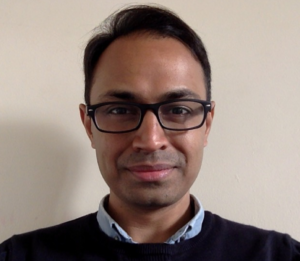 M. Pawan Kumar合作论文数Center for Visual Computing, Ecole Centrale Paris;OVAL Group, Department of Engineering Science, Oxford and the Alan Turing Institute;DeepMind2
 T Amato合作论文数1Bergeson P S合作论文数1Susan Stephens-Groff合作论文数1Curt Bay合作论文数Dept Interdisciplinary Hlth Sci, AT Still Univ1Kevin Miller合作论文数1
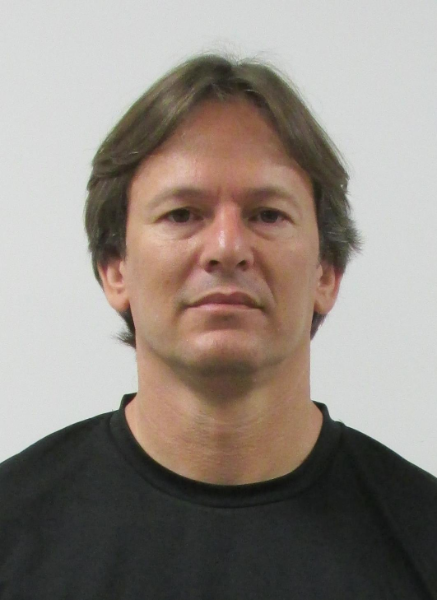 Gal Elidan合作论文数Department of Statistics, Faculty of Social Sciences, Hebrew University;Google1Danny Goodman合作论文数1
 Kilian Q. Weinberger合作论文数Department of Computer Science, Cornell University1
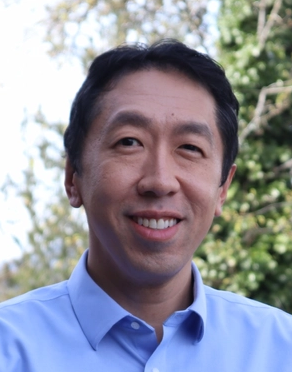 Andrew Ng (吳恩達)合作论文数Landing AI;Deeplearning. Ai;AI Fund;Coursera;Computer Science Department, Stanford University1
 Tianshi Gao (高天师)合作论文数OpenAI1
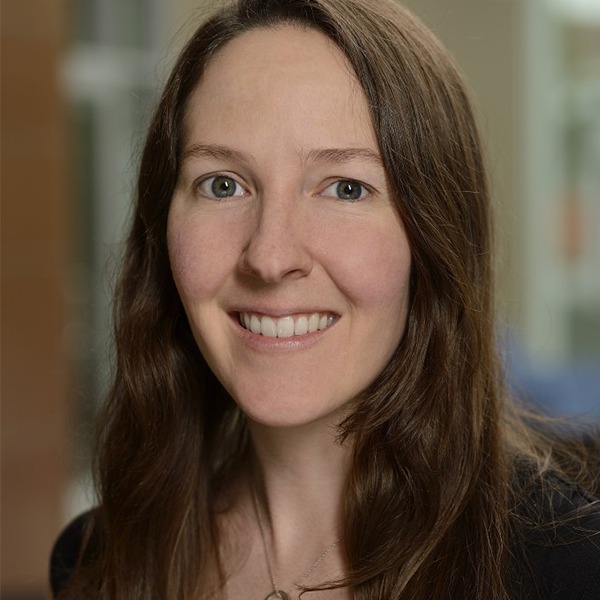 Alexis Battle合作论文数Center for Computational Biology, Johns Hopkins University;Mathematical Institute for Data Science, Johns Hopkins University1
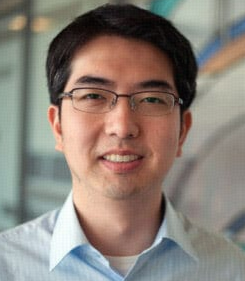 Honglak Lee合作论文数Electrical Engineering and Computer Science Department, College of Engineering, University of Michigan;LG AI Research1
 Rajat Raina合作论文数Pinterest1Michael Patton合作论文数1
 Lawrence Saul合作论文数Center for Computational Mathematics, Flatiron Institute1J. Iltis合作论文数1L. Lotz-Nolan合作论文数1
 Geremy Heitz合作论文数Nest Labs;Google Inc.1
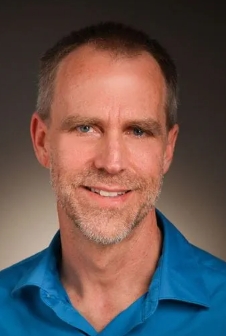 Robert J. Hopkin合作论文数Department of Pediatrics, University of Cincinnati;Division of Human Genetics, Cincinnati Children's Hospital Medical Center, University of Cincinnati College of Medicine1




