The transition to quantum-safe key agreement has begun: NIST has standardized ML-KEM and selected HQC for future standardization. The relative immaturity of these schemes encourages crypto-agile implementations, to facilitate resilient transitions to and between them. Intelligent crypto-agility requires efficient sharing strategies to compute operations from different cryptosystems using the same resources. This is particularly challenging for cryptosystems with distinct mathematical foundations, like lattice-based ML-KEM and code-based HQC. We introduce PHOENIX, the first crypto-agile hardware coprocessor for latticeand code-based cryptosystems—specifically, ML-KEM and HQC, at all three NIST security levels—with an effective agile sharing strategy. PHOENIX accelerates polynomial multiplication, which is the main operation in both cryptosystems, and the current bottleneck of HQC. To maximise sharing, we replace HQC’s Karatsubabased polynomial multiplication with the Frobenius Additive FFT (FAFFT), which is similar on an abstract level to ML-KEM’s Number Theoretic Transform (NTT). In hardware, our sharing strategy for the FAFFT and NTT is based on a new SuperButterfly unit that seamlessly switches between these two FFT variants over completely different rings. We have integrated PHOENIX in a real System-on-Chip FPGA scenario, where our performance measurements show that efficient cryptoagility for lattice- and code-based KEMs can be achieved with low overhead.
Hamming Quasi-Cyclic (HQC) is a code-based key encapsulation mechanism selected by NIST for standardization, making its resistance to implementation attacks critically important. We present a side-channel attack that exploits load/store leakage in the manipulation of HQC's sparse secret vectors. Analysing Cortex-M4 assembly generated from the reference implementation, we identify a leakage surface in which the low and high 32-bit halves of each 64-bit word leak with different strengths, due to compiler-generated register spilling. We exploit this leakage to construct a simple zero-word distinguisher classifying machine words of the secret vector as zero or nonzero from electromagnetic measurements. The recovered zero positions are then translated into decoding hints, reducing HQC key recovery to a shortened syndrome-decoding problem. We analyse the resulting decoding complexity for all HQC parameter sets: at 32-bit granularity an expected 88.7
We investigate the use of bit-level Soft Analytical Side-Channel Attacks (SASCA) to recover secret inputs of the SHA-256 hash function, and secret keys of HMAC-SHA-256, using Sentential Decision Diagrams to overcome the computational challenge posed to classical Belief Propagation by multiple-word modular addition. Our attack on HMAC requires no control nor knowledge of the input, and exploits its double manipulation of the key to improve key-recovery performance. We make comprehensive simulations to evaluate the attacker’s recovery capacity for both SHA-256 and HMAC-SHA-256. Finally, we study the profiling capabilities of load instructions in a multiposition EM probe setup on a STM32F303RET6 microcontroller, and use these results to evaluate the capability of our attack against software implementations of HMAC-SHA-256 in a realistic scenario.
We give an alternative derivation of $(N,N)$-isogenies between fastKummer surfaces which complements existing works based on the theory oftheta functions. We use this framework to produce explicit formulae for thecase of $N = 3$, and show that the resulting algorithms are more efficient thanall prior $(3, 3)$-isogeny algorithms.
Many signature applications-such as root certificates, secure software updates, and authentication protocols-involve long-lived public keys that are transferred or installed once and then used for many verifications. This key longevity makes post-quantum signature schemes with conservative assumptions (e.g., structure-free lattices) attractive for long-term security. But many such schemes, especially those with short signatures, suffer from extremely large public keys. Even in scenarios where bandwidth is not a major concern, large keys increase storage costs and slow down verification. We address this with a method to replace large public keys in GPV-style signatures with smaller, private verification keys. This significantly reduces verifier storage and runtime while preserving security. Applied to the conservative, short-signature schemes Wave and Squirrels, our method compresses Squirrels-I keys from 665 kB to 20.7 kB and Wave822 keys from 3.5 MB to 207.97 kB.
HQC is a quantum-resistant cryptographic key encapsulation mechanism, recently selected by NIST as a future standard. Polynomial multiplication is one of the most critical operations in HQC. Due to side-channel security concerns, the previously-used sparse-dense method was recently replaced by classical dense-dense multiplication implemented using Karatsuba's algorithm. This change has made polynomial multiplication the primary performance bottleneck, accounting for approximately 95% of the total execution time. This paper presents an alternative polynomial multiplication technique for HQC: the Frobenius Additive Fast Fourier Transform (FAFFT), which provides significant algorithmic-level performance improvements. We also present ANDROMEDA, the first state-ofthe-art hardware implementation of FAFFT, and evaluate its performance impact by integrating our solution in a resource-constrained RISC-V-based System-on-Chip scenario. Experimental results show that our solution improves HQC performance by approximately 9.64x and 19.22x across its security levels, making HQC more practical for real-world deployment.
An important open problem in supersingular isogeny-based cryptography is to produce, without a trusted authority, concrete examples of 'hard supersingular curves' that is equations for supersingular curves for which computing the endomorphism ring is as difficult as it is for random supersingular curves. A related open problem is to produce a hash function to the vertices of the supersingular $\ell $ -isogeny graph, which does not reveal the endomorphism ring, or a path to a curve of known endomorphism ring. Such a hash function would open up interesting cryptographic applications. In this paper, we document a number of (thus far) failed attempts to solve this problem, in the hope that we may spur further research, and shed light on the challenges and obstacles to this endeavour. The mathematical approaches contained in this article include: (i) iterative root-finding for the supersingular polynomial; (ii) gcd's of specialized modular polynomials; (iii) using division polynomials to create small systems of equations; (iv) taking random walks in the isogeny graph of abelian surfaces, and applying Kummer surfaces and (v) using quantum random walks.
Consider the problem of efficiently evaluating isogenies $\phi: E \to E/H$ of elliptic curves over a finite field $\mathbb{F}_q$, where the kernel $H = \langle G\rangle$ is a cyclic group of odd (prime) order: given $E$, $G$, and a point (or several points) $P$ on $E$, we want to compute $\phi(P)$. This problem is at the heart of efficient implementations of group-action- and isogeny-based post-quantum cryptosystems such as CSIDH. Algorithms based on V{\'e}lu's formulae give an efficient solution to this problem when the kernel generator $G$ is defined over $\mathbb{F}_q$. However, for general isogenies, $G$ is only defined over some extension $\mathbb{F}_{q^k}$, even though $\langle G\rangle$ as a whole (and thus $\phi$) is defined over the base field $\mathbb{F}_q$; and the performance of V{\'e}lu-style algorithms degrades rapidly as $k$ grows. In this article we revisit the isogeny-evaluation problem with a special focus on the case where $1 \le k \le 12$. We improve V{\'e}lu-style isogeny evaluation for many cases where $k = 1$ using special addition chains, and combine this with the action of Galois to give greater improvements when $k > 1$.
Groups of unknown order are of major interest due to their applications including time-lock puzzles, verifiable delay functions, and accumulators. In this paper we focus on trustless setup: in this setting, the most popular unknown-order group construction is ideal class groups of imaginary quadratic fields. We argue that the full impact of Sutherland's generic group-order algorithm has not been recognised in this context, and show that group sizes currently being proposed in practice (namely, approximately 830 bits) do not meet the claimed security level. Instead, we claim that random group orders should be at least 3300 bits to meet a 128-bit security level. For ideal class groups this leads to discriminants of around 6656 bits, which are much larger than desirable. One drawback of class groups is that current approaches require approximately $2\log_2(N)$ bits to represent an element in a group of order N. We provide two solutions to mitigate this blow-up in the size of representations. First, we explain how an idea of Bleichenbacher can be used to compress class group elements to $(3/2)\log_2(N)$ bits. Second, we note that using Jacobians of hyperelliptic curves (in other words, class groups of quadratic function fields) allows efficient compression to the optimal element representation size of $\log_2(N)$ bits. We discuss point-counting approaches for hyperelliptic curves and argue that genus-3 curves are secure in the trustless unknown-order setting. We conclude that in practice, Jacobians of hyperelliptic curves are more efficient in practice than ideal class groups at the same security level -- both in the group operation and in the size of the element representation.
As the Internet of Things (IoT) rolls out today to devices whose lifetime may well exceed a decade, conservative threat models should consider adversaries with access to quantum computing power. The IETF-specified SUIT standard defines a security architecture for IoT software updates, standardizing metadata and cryptographic tools—digital signatures and hash functions—to guarantee the update legitimacy. SUIT performance has been evaluated in the pre-quantum context, but not yet in a post-quantum context. Taking the open-source implementation of SUIT available in RIOT as a case study, we survey post-quantum considerations, and quantum-resistant digital signatures in particular, focusing on low-power, microcontroller-based IoT devices with stringent memory, CPU, and energy consumption constraints. We benchmark a range of pre- and post-quantum signature schemes on a range of IoT hardware including ARM Cortex-M, RISC-V, and Espressif (ESP32), which form the bulk of modern 32-bit microcontroller architectures. Interpreting our benchmarks in the context of SUIT, we estimate the real-world impact of transition from pre- to post-quantum signatures.
Many public-key cryptographic protocols, notably non-interactive key exchange (NIKE), require incoming public keys to be validated to mitigate some adaptive attacks. In CSIDH, an isogeny-based post-quantum NIKE, a key is deemed legitimate if the given Montgomery coefficient specifies a supersingular elliptic curve over the prime field. In this work, we survey the current supersingularity tests used for CSIDH key validation, and implement and measure two new alternative algorithms. Our implementation shows that we can determine supersingularity substantially faster, and using less memory, than the state-of-the-art.
We investigate the isogeny graphs of supersingular elliptic curves over $\mathbb{F}_{p^2}$ equipped with a $d$-isogeny to their Galois conjugate. These curves are interesting because they are, in a sense, a generalization of curves defined over $\mathbb{F}_p$, and there is an action of the ideal class group of $\mathbb{Q}(\sqrt{-dp})$ on the isogeny graphs. We investigate constructive and destructive aspects of these graphs in isogeny-based cryptography, including generalizations of the CSIDH cryptosystem and the Delfs-Galbraith algorithm.
Let q=2n, and let E/Fqℓ be a generalized Galbraith–Lin–Scott (GLS) binary curve, with ℓ≥2 and (ℓ,n)=1. We show that the GLS endomorphism on E/Fqℓ induces an efficient endomorphism on the Jacobian JacH(Fq) of the genus-g hyperelliptic curve H corresponding to the image of the GHS Weil-descent attack applied to E/Fqℓ, and that this endomorphism yields a factor-n speedup when using standard index-calculus procedures for solving the Discrete Logarithm Problem (DLP) on JacH(Fq). Our analysis is backed up by the explicit computation of a discrete logarithm defined on a prime-order subgroup of a GLS elliptic curve over the field F25⋅31. A Magma implementation of our algorithm finds the aforementioned discrete logarithm in about 1,035 CPU-days.
This work presents the first full implementation of Wave, a postquantum code-based signature scheme. We define Wavelet, a concrete Wave scheme at the 128-bit classical security level (or NIST postquantum security Level 1) equipped with a fast verification algorithm targeting embedded devices. Wavelet offers 930-byte signatures, with a public key of 3161 kB. We include implementation details using AVX instructions, and on ARM Cortex-M4, including a solution to deal with Wavelet's large public keys, which do not fit in the SRAM of a typical embedded device. Our verification algorithm is $\approx 4.65 \times$ faster then the original, and verifies in 1 087 538 cycles using AVX instructions, or 13 172 ticks in an ARM Cortex-M4.
We investigate special structures due to automorphisms in isogeny graphs of principally polarized abelian varieties, and abelian surfaces in particular. We give theoretical and experimental results on the spectral and statistical properties of (2, 2)-isogeny graphs of superspecial abelian surfaces, including stationary distributions for random walks, bounds on eigenvalues and diameters, and a proof of the connectivity of the Jacobian subgraph of the (2, 2)-isogeny graph. Our results improve our understanding of the performance and security of some recently-proposed cryptosystems, and are also a concrete step towards a better understanding of general superspecial isogeny graphs in arbitrary dimension.
Can we factor an integer $$N$$ unconditionally, in deterministic polynomial time, given the value of its Euler totient $$\varphi (N)$$ ? We show that this can be done under certain size conditions on the prime factors of $$N$$ . The key technique is lattice basis reduction using the LLL algorithm. Among our results, we show that if $$N$$ has a prime factor $$p > \sqrt{N}$$ , then we can recover $$p$$ in deterministic polynomial time given $$\varphi (N)$$ . We also shed some light on the analogous factorization problems given oracles for the sum-of-divisors function, Carmichael’s function, and the order oracle that is used in Shor’s quantum factoring algorithm.
We describe and illustrate the local neighbourhoods of vertices and edges in the (2, 2)-isogeny graph of principally polarized abelian surfaces, considering the action of automorphisms. Our diagrams are intended to build intuition for number theorists and cryptographers investigating isogeny graphs in dimension/genus 2, and the superspecial isogeny graph in particular.
This paper introduces a new key space for CSIDH and a new algorithm for constant-time evaluation of the CSIDH group action. The key space is not useful with previous algorithms, and the algorithm is not useful with previous key spaces, but combining the new key space with the new algorithm produces speed records for constant-time CSIDH. For example, for CSIDH-512 with a 256-bit key space, the best previous constant-time results used 789000 multiplications and more than 200 million Skylake cycles; this paper uses 438006 multiplications and 125.53 million cycles.
Last year Takashima proposed a version of Charles, Goren and Lauter's hash function using Richelot isogenies, starting from a genus-2 curve that allows for all subsequent arithmetic to be performed over a quadratic finite field Fp2. In a very recent paper Flynn and Ti point out that Takashima's hash function is insecure due to the existence of small isogeny cycles. We revisit the construction and show that it can be repaired by imposing a simple restriction, which moreover clarifies the security analysis. The runtime of the resulting hash function is dominated by the extraction of 3 square roots for every block of 3 bits of the message, as compared to one square root per bit in the elliptic curve case; however in our setting the extractions can be parallelized and are done in a finite field whose bit size is reduced by a factor 3. Along the way we argue that the full supersingular isogeny graph is the wrong context in which to study higher-dimensional analogues of Charles, Goren and Lauter's hash function, and advocate the use of the superspecial subgraph, which is the natural framework in which to view Takashima's Fp2-friendly starting curve.
Let $A/\overline{\mathbb{F}}\_p$ and $A'/\overline{\mathbb{F}}\_p$ be supersingular principally polarized abelian varieties of dimension $g>1$. For any prime $\ell \ne p$, we give an algorithm that finds a path $\phi \colon A \rightarrow A'$ in the $(\ell, \dots , \ell)$-isogeny graph in $\widetilde{O}(p^{g-1})$ group operations on a classical computer, and $\widetilde{O}(\sqrt{p^{g-1}})$ calls to the Grover oracle on a quantum computer. The idea is to find paths from $A$ and $A'$ to nodes that correspond to products of lower dimensional abelian varieties, and to recurse down in dimension until an elliptic path-finding algorithm (such as Delfs--Galbraith) can be invoked to connect the paths in dimension $g=1$. In the general case where $A$ and $A'$ are any two nodes in the graph, this algorithm presents an asymptotic improvement over all of the algorithms in the current literature. In the special case where $A$ and $A'$ are a known and relatively small number of steps away from each other (as is the case in higher dimensional analogues of SIDH), it gives an asymptotic improvement over the quantum claw finding algorithms and an asymptotic improvement over the classical van Oorschot--Wiener algorithm.
 Gustavo Banegas合作论文数7
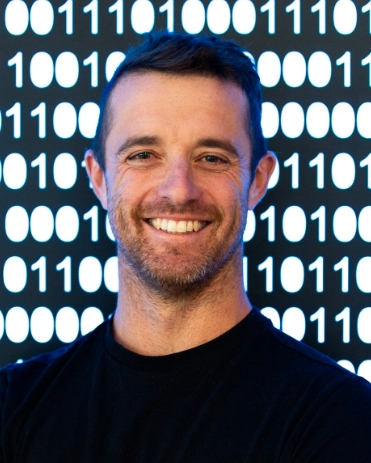 Craig Costello合作论文数Microsoft Research;School of Computer Science, Faculty of Science, Queensland University of Technology6
 Steven D. Galbraith合作论文数Mathematics Department3Luca De Feo合作论文数École Polytechnique3
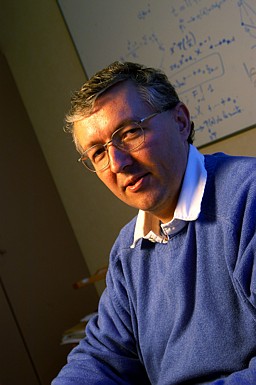 François Morain合作论文数LIX Laboratoire d'Informatique de l' ?0?7cole Polytechnique ?0?7quipe Cryptologie3Valerie Gilchrist合作论文数2Anaëlle Le Dévéhat合作论文数2Mathilde Chenu合作论文数2Enric Florit合作论文数Dept Matemat & Informat, Univ Barcelona2
 Jesus-Javier Chi-Dominguez合作论文数Cryptog Res Ctr, Technol Innovat Inst2
 Emanuele Valea合作论文数CNRS, Univ. Montpellier2Joost Renes合作论文数Radboud Univ Nijmegen, Digital Secur Grp, Nijmegen, Netherlands2Pontie, S.合作论文数TIMA, Univ. Grenoble Alpes;c;TIMA, Univ. Grenoble Alpes2
 Daniel J. Bernstein (狄傑比)合作论文数Department of Computer Science, College of Engineering, University of Illinois at Chicago2
 Christophe Ritzenthaler合作论文数Institut de Biologie Moléculaire des Plantes du CNRS (IBMP), 12 rue du Général Zimmer, 67084 Strasbourg Cedex, France2
 Francisco Rodríguez Henríquez合作论文数Computer Science Department, Centro de Investigación y de Estudios Avanzados del Instituto Politécnico Nacional2
 David R. Kohel合作论文数Mathematics Institute Luminy, University of the Mediterranean2Ping Ngai Chung合作论文数2Mikael Carmona合作论文数1Jean Kieffer合作论文数1
 Maxime Lecomte合作论文数1Julien Maillard合作论文数1Adrian Herrmann合作论文数1Charlotte Scribot合作论文数1Charlotte Weitkämper合作论文数1florent ulpat rovetta合作论文数1Antoine Loiseau合作论文数1
 Koen Zandberg合作论文数1
 Thomas Decru合作论文数COSIC, Katholieke Univ Leuven1
 Maria Corte-Real Santos合作论文数UCL1
 Jana Sotáková合作论文数QuSoft, University of Amsterdam1Sabrina Kunzweiler合作论文数Fak Math, Ruhr Univ Bochum1
 Samuel Dobson合作论文数University of Auckland1
 Fabio Campos合作论文数Max Planck Inst Secur & Privacy1Yan Bo Ti合作论文数1
 Tako Boris Fouotsa合作论文数EPFL1Simon-Philipp Merz合作论文数1
 Thomas Debris-Alazard合作论文数Inria Saclay1
 Daniel Cervantes-Vázquez合作论文数Center for Research and Advanced Studies, Computer Science Department, Mexico City, Mexico1
 Antonin Leroux合作论文数Laboratoire d'informatique de l'École polytechnique [Palaiseau]1
 Chloe Martindale合作论文数Dept Math & Comp Sci, Tech Univ Eindhoven1Christelle Vincent合作论文数Univ Vermont1Lorenz Panny合作论文数Inst Informat Sci, Acad Sinica1
 Elisa Lorenzo合作论文数Inst Math, Univ Neuchatel1Jeremy Booher合作论文数1Thomas L Lawson合作论文数1
 Jordi Pujolàs合作论文数Departament de Matemítica, Universitat de Lleida1
 Lukas Zobernig合作论文数Department of Mathematics, Faculty of Science, The University of Auckland1
 Christophe Petit合作论文数Crypto Group, UCL;Universit e catholique de Louvain;UCL Crypto Group, Universit e catholique de Louvain1




