Milliken's tree theorem is a deep result in combinatorics that generalizes a vast number of other results in the subject, most notably Ramsey's theorem and its many variants and consequences. Motivated by a question of Dobrinen, we initiate the study of Milliken's tree theorem from the point of view of computability theory. Our advance here stems from a careful analysis of the Halpern-Laüchli theorem which shows that it can be carried out effectively (i.e., that it is computably true). We use this as the basis of a new inductive proof of Milliken's tree theorem that permits us to gauge its effectivity in turn. The principal outcome of this is a comprehensive classification of the computable content of Milliken's tree theorem. We apply our analysis also to several well-known applications of Milliken's tree theorem, namely Devlin's theorem, a partition theorem for Rado graphs, and a generalized version of the so-called tree theorem of Chubb, Hirst, and McNicholl. These are all certain kinds of extensions of Ramsey's theorem for different structures, namely the rational numbers, the Rado graph, and perfect binary trees, respectively. We obtain a number of new results about how these principles relate to Milliken's tree theorem and to each other, in terms of both their computability-theoretic and combinatorial aspects. We identify again the familiar dichotomy between coding the halting problem or not based on the size of instance, but this is more subtle here owing to the more complicated underlying structures, particularly in the case of Devlin's theorem. We also establish new structural Ramsey-theoretic properties of the Rado graph theorem and the generalized Chubb-Hirst-McNicholl tree theorem using Zucker's notion of big Ramsey structure.
There exist two main notions of typicality in computability theory, namely, Cohen genericity and randomness. In this article, we introduce a new notion of genericity, called partition genericity, which is at the intersection of these two notions of typicality, and show that many basis theorems apply to partition genericity. More precisely, we prove that every co-hyperimmune set and every Kurtz random is partition generic, and that every partition generic set admits weak infinite subsets, for various notions of weakness. In particular, we answer a question of Kjos-Hanssen and Liu by showing that every Kurtz random admits an infinite subset which does not compute any set of positive effective Hausdorff dimension. Partition genericity is a partition regular notion, so these results imply many existing pigeonhole basis theorems.
Many constructions in computability theory rely on “time tricks”. In the higher setting, relativising to some oracles shows the necessity of these. We construct an oracle A and a set X , higher Turing reducible to X , but for which ψ( A ) ≠ X for any higher functional ψ which is consistent on all oracles. We construct an oracle A relative to which there is no universal higher ML-test. On the other hand, we show that badness has its limits: there are no higher self-PA oracles, and for no A can we construct a higher A -c.e. set which is also higher A -ML-random. We study various classes of bad oracles and differentiate between them using other familiar classes. For example, bad oracles for consistent reductions can be higher ML-random, whereas bad oracles for universal tests cannot.
The infinite pigeonhole principle for 2-partitions ([Formula: see text]) asserts the existence, for every set [Formula: see text], of an infinite subset of [Formula: see text] or of its complement. In this paper, we study the infinite pigeonhole principle from a computability-theoretic viewpoint. We prove in particular that [Formula: see text] admits strong cone avoidance for arithmetical and hyperarithmetical reductions. We also prove the existence, for every [Formula: see text] set, of an infinite low[Formula: see text] subset of it or its complement. This answers a question of Wang. For this, we design a new notion of forcing which generalizes the first and second-jump control of Cholak et al.
We complete a 40-year old program on the computability-theoretic analysis of Ramsey's theorem, starting with Specker and Jockusch in 1971/1972, by improving a result of Chong, Slaman and Yang in 2014. Given a set X, let [X]n be the collection of all n-element subsets of X. Ramsey's theorem for n-tuples asserts the existence, for every finite coloring of [ω]n, of an infinite set X⊆ω such that [X]n is monochromatic. The meta-mathematical study of Ramsey theory has a rich history, with several long-standing open problems and seminal theorems, including Seetapun's theorem in 1995 and Liu's theorem in 2012 about Ramsey's theorem for pairs. The remaining question about the study of Ramsey's theorem from a computational viewpoint was the relation between Ramsey's theorem for pairs (RT22) and its restriction to stable colorings (SRT22), that is, colorings admitting a limit behavior. Chong, Slaman and Yang first proved that SRT22 does not formally imply RT22 in a proof-theoretic sense, using non-standard models of reverse mathematics. In this article, we answer the open question whether this non-implication also holds within the framework of computability theory. More precisely, we construct an ω-model of SRT22 which is not a model of RT22. For this, we design a new notion of effective forcing refining Mathias forcing using the notion of largeness classes.
Abstract A mass problem is a set of functions $\omega \to \omega $ . For mass problems ${\mathcal {C}}, {\mathcal {D}}$ , one says that ${\mathcal {C}}$ is Muchnik reducible to ${\mathcal {D}}$ if each function in ${\mathcal {C}}$ is computed by a function in ${\mathcal {D}}$ . In this paper we study some highness properties of Turing oracles, which we view as mass problems. We compare them with respect to Muchnik reducibility and its uniform strengthening, Medvedev reducibility. For $p \in [0,1]$ let ${\mathcal {D}}(p)$ be the mass problem of infinite bit sequences y (i.e., $\{0,1\}$ -valued functions) such that for each computable bit sequence x, the bit sequence $ x {\,\leftrightarrow\,} y$ has asymptotic lower density at most p (where $x {\,\leftrightarrow\,} y$ has a $1$ in position n iff $x(n) = y(n)$ ). We show that all members of this family of mass problems parameterized by a real p with $0 < p <1/2 $ have the same complexity in the sense of Muchnik reducibility. We prove this by showing Muchnik equivalence of the problems ${\mathcal {D}}(p)$ with the mass problem $\text {IOE}({2^{2}}^{n})$ ; here for an order function h, the mass problem $\text {IOE}(h)$ consists of the functions f that agree infinitely often with each computable function bounded by h. This result also yields a new version of the proof to of the affirmative answer to the “Gamma question” due to the first author: $\Gamma (A)< 1/2$ implies $\Gamma (A)=0$ for each Turing oracle A. As a dual of the problem ${\mathcal {D}}(p)$ , define ${\mathcal {B}}(p)$ , for $0 \le p < 1/2$ , to be the set of bit sequences y such that $\underline \rho (x {\,\leftrightarrow\,} y)> p$ for each computable set x. We prove that the Medvedev (and hence Muchnik) complexity of the mass problems ${\mathcal {B}}(p)$ is the same for all $p \in (0, 1/2)$ , by showing that they are Medvedev equivalent to the mass problem of functions bounded by ${2^{2}}^{n}$ that are almost everywhere different from each computable function. Next, together with Joseph Miller, we obtain a proper hierarchy of the mass problems of type $\text {IOE}$ : we show that for any order function g there exists a faster growing order function $h $ such that $\text {IOE}(h)$ is strictly above $\text {IOE}(g)$ in the sense of Muchnik reducibility. We study cardinal characteristics in the sense of set theory that are analogous to the highness properties above. For instance, ${\mathfrak {d}} (p)$ is the least size of a set G of bit sequences such that for each bit sequence x there is a bit sequence y in G so that $\underline \rho (x {\,\leftrightarrow\,} y)>p$ . We prove within ZFC all the coincidences of cardinal characteristics that are the analogs of the results above.
For $p \in [0,1]$ let $\mathcal D(p)$ be the mass problem of infinite bit sequences~$y$ (i.e., $\{0,1\}$-valued functions) such that for each computable bit sequence $x$, the bit sequence $ x \leftrightarrow y$ has asymptotic lower density at most $p$ (where $x \leftrightarrow y$ has a $1$ in position $n$ iff $x(n) = y(n)$). We show that all members of this family of mass problems parameterized by a real $p$ with $0 < p<1/2 $ have the same complexity in the sense of Muchnik reducibility. We prove this by showing Muchnik equivalence of the problems $\mathcal D(p)$ with the mass problem $\mathrm{IOE}(2^ { 2^ n})$. As a dual of the problem $\mathcal D(p)$, define $\mathcal B(p)$, for $0 \le p < 1/2$, to be the set of bit sequences $y$ such that $\underline \rho (x \leftrightarrow y) > p$ for each computable set~$x$. We prove that the Medvedev (and hence Muchnik) complexity of the mass problems $\mathcal B(p)$ is the same for all $p \in (0, 1/2)$, by showing that they are Medvedev equivalent to the mass problem of functions bounded by $2^{2^ n}$ that are almost everywhere different from each computable function. Together with Joseph Miller, we obtain a proper hierarchy of the mass problems of type $\mathrm{IOE}$: We study cardinal characteristics in the sense of set theory that are analogous to the highness properties above.
We present an overview of higher randomness and its recent developments. After an introduction, we provide in the second section some background on higher computability, presenting in particular $\Pi^1_1$ and $\Sigma^1_1$ sets from the viewpoint of the computability theorist. In the third section we give an overview of the different higher randomness classes: $\Delta^1_1$-randomness, $\Pi^1_1$-Martin-Löf randomness, higher weak-2 randomness, higher difference randomness, and $\Pi^1_1$-randomness. We then move on to study each of these classes, separating them and inspecting their respective lowness classes. We put more attention on $\Pi^1_1$-Martin-Löf randomness and $\Pi^1_1$-randomness: The former is the higher analogue of the most well-known and studied class in classical algorithmic randomness. We show in particular how to lift the main classical randomness theorems to the higher settings by putting continuity in higher reductions and relativisations. The latter presents, as we will see, many remarkable properties and does not have any analogue in classical randomness. Finally in the eighth section we study randomness along with a higher hierarchy of complexity of sets, motivated by the notion of higher weak-2 randomness. We show that this hierarchy collapses eventually.
A set of integers A is computably encodable if every infinite set of integers has an infinite subset computing A. By a result of Solovay, the computably encodable sets are exactly the hyperarithmetic ones. In this article, we extend this notion of computable encodability to subsets of the Baire space, and we characterize the Pi(1)(0)-encodable compact sets as those which admit a nonempty Sigma(1)(1)-subset. Thanks to this equivalence, we prove that weak weak Kdnig's lemma is not strongly computably reducible to Ramsey's theorem. This answers a question of Hirschfeldt and Jockusch.
The Carlson-Simpson lemma is a combinatorial statement occurring in the proof of the Dual Ramsey theorem. Formulated in terms of variable words, it informally asserts that given any finite coloring of the strings, there is an infinite sequence with infinitely many variables such that for every valuation, some specific set of initial segments is homogeneous. Friedman, Simpson, and Montalban asked about its reverse mathematical strength. We study the computability-theoretic properties and the reverse mathematics of this statement, and relate it to the finite union theorem. In particular, we prove the Ordered Variable word for binary strings in ACA(0).
We study genericity and randomness with respect to ITTMs, continuing the work initiated by Carl and Schlicht. To do so, we develop a framework to study randomness in the constructible hierarchy. We then answer several of Carl and Schlicht's question. We also ask a new question one the equality of two classes of randoms. Although the natural intuition would dictate that the two classes are distinct, we show that things are not as simple as they seem. In particular we show that the categorical analogues of these two classes coincide, in contradiction with the natural intuition. Even though we are not able to answer the question for randomness in this article, we delineate and sharpen its contour and outline.
The infinite pigeonhole principle for 2-partitions asserts the existence, for every set A, of an infinite subset of A or of its complement. In this paper, we develop a new notion of forcing enabling a fine analysis of the computability-theoretic features of the pigeonhole principle. We deduce various consequences, such as the existence, for every set A, of an infinite subset of it or its complement of non-high degree. We also prove that every Δ03 set has an infinite low3 solution and give a simpler proof of Liu's theorem that every set has an infinite subset in it or its complement of non-PA degree.
We give two new characterizations of K-triviality. We show that if for all Y such that Omega is Y-random, Omega is (Y circle plus A)-random, then A is K-trivial. The other direction was proved by Stephan and Yu, giving us the first titular characterization of K-triviality and answering a question of Yu. We also prove that if A is K-trivial, then for all Y such that Omega is Y-random, (Y circle plus A) (LR) Y. This answers a question of Merkle and Yu. The other direction is immediate, so we have the second characterization of K-triviality. The proof of the first characterization uses a new cupping result. We prove that if A not less than or equal to(LR) B, then for every set X there is a B-random set Y such that X is computable from Y circle plus A.
We answer in this paper an open question (known as the "Gamma question"), related to the recent notion of coarse computability, which stems from complexity theory. The question was formulated by Andrews, Cai, Diamondstone, Jockusch and Lempp in "Asymptotic density, computable traceability and 1-randomness" [1]. The Gamma value of an oracle set measures to what extent each set computable with the oracle is approximable in the sense of density by a computable set. The closer to 1 this value is, the closer the oracle is to being computable. The Gamma question asks whether this value can be strictly in between 0 and 1/2. In this paper, we pursue some work initiated by Monin and Nies in "Aunifying approach to the Gamma question" [19]. Using notions from computability theory, developed by Monin and Nies, together with some basic techniques from the field of error-correcting codes, we are able to give a negative answer to this question. The proof we give also provides an answer to a related question, asked by Denis Hirschfeldt in the expository paper "Some questions in computable mathematics" [12]. We also solve the Gamma problem for bases other than 2, answering another question of Monin and Nies.
We investigate the role of continuous reductions and continuous relativization in the context of higher randomness. We define a higher analogue of Turing reducibility and show that it interacts well with higher randomness, for example with respect to van Lambalgen’s theorem and the Miller–Yu/Levin theorem. We study lowness for continuous relativization of randomness, and show the equivalence of the higher analogues of the different characterizations of lowness for Martin-Löf randomness. We also characterize computing higher [Formula: see text]-trivial sets by higher random sequences. We give a separation between higher notions of randomness, in particular between higher weak 2-randomness and [Formula: see text]-randomness. To do so we investigate classes of functions computable from Kleene’s [Formula: see text] based on strong forms of the higher limit lemma.
We use concepts of continuous higher randomness, developed in Bienvenu et al. [‘Continuous higher randomness’, J. Math. Log. 17(1) (2017).], to investigate $\unicode[STIX]{x1D6F1}_{1}^{1}$ -randomness. We discuss lowness for $\unicode[STIX]{x1D6F1}_{1}^{1}$ -randomness, cupping with $\unicode[STIX]{x1D6F1}_{1}^{1}$ -random sequences, and an analogue of the Hirschfeldt–Miller characterization of weak 2-randomness. We also consider analogous questions for Cohen forcing, concentrating on the class of $\unicode[STIX]{x1D6F4}_{1}^{1}$ -generic reals.
In algorithmic randomness, the class of K-trivial sets has proved itself to be remarkable, due to its numerous different characterizations. We pursue in this paper some work already initiated on Ktrivials in the context of higher randomness. In particular we give here another characterization of the non hyperarithmetic higher K-trivial sets. 1998 ACM Subject Classification Computability theory
The Gamma question was formulated by Andrews et al. In "Asymptotic density, computable trace ability and 1-randomness" (2013, available at http://www.math.wisc.edu/~lempp/papers/traceable.pdf). It is related to the recent notion of coarse computability which stems from complexity theory. The Gamma value of an oracle set measures to what extent each set computable with the oracle is approximable, in the sense of density, by a computable set. The closer to 1 this value is, the closer the oracle is to being computable. The Gamma question asks whether this value can be strictly in between 0 and 1/2. We say that an oracle is weakly Schnorr engulfing if it computes a Schnorr test that succeeds on all computable reals. We show that each non weakly Schnorr engulfing oracle has a Gamma value of at least 1/2. Together with a recent result of Kjos-Hanssen, Stephan, and Terwijn, this establishes new examples of such oracles. We also give a unifying approach to oracles with Gamma value 0. We say that an oracle is infinitely often equal with bound h if it computes a function that agrees infinitely often with each computable function bounded by h. We show that every oracle which is infinitely equal with bound 2dn for d>1 has a Gamma value of 0. This provides new examples of such oracles as well. We present a combinatorial characterization of being weakly Schnorr engulfing via traces, which is inspired by the study of cardinal characteristics in set theory.
Kechris showed in Kechris (Trans. Am. Math. Soc. 202, 259–297, 1975) that there exists a largest \({\Pi ^{1}_{1}}\) set of measure 0. An explicit construction of this largest \({\Pi ^{1}_{1}}\) nullset has later been given in Hjorth and Nies (J. Lond. Math. Soc. 75(2), 495–508, 2007). Due to its universal nature, it was conjectured by many that this nullset has a high Borel rank (the question is explicitely mentioned in Chong and Yu (J. Symb. Log. 80(04), 1131–1148, 2015) and Yu (Fundam. Math. 215, 219–231, 2011)). In this paper, we refute this conjecture and show that this nullset is merely \({\Sigma }^{0}_{3}\). Together with a result of Liang Yu, our result also implies that the exact Borel complexity of this set is \({\Sigma }^{0}_{3}\). To do this proof, we develop the machinery of effective randomness and effective Solovay genericity, investigating the connections between those notions and effective domination properties.
 Ludovic Patey合作论文数Université de Grenoble - Domaine de la Merci7
 Noam Greenberg合作论文数4Paul-Elliot Anglès d'Auriac合作论文数3Laurent Bienvenu合作论文数2
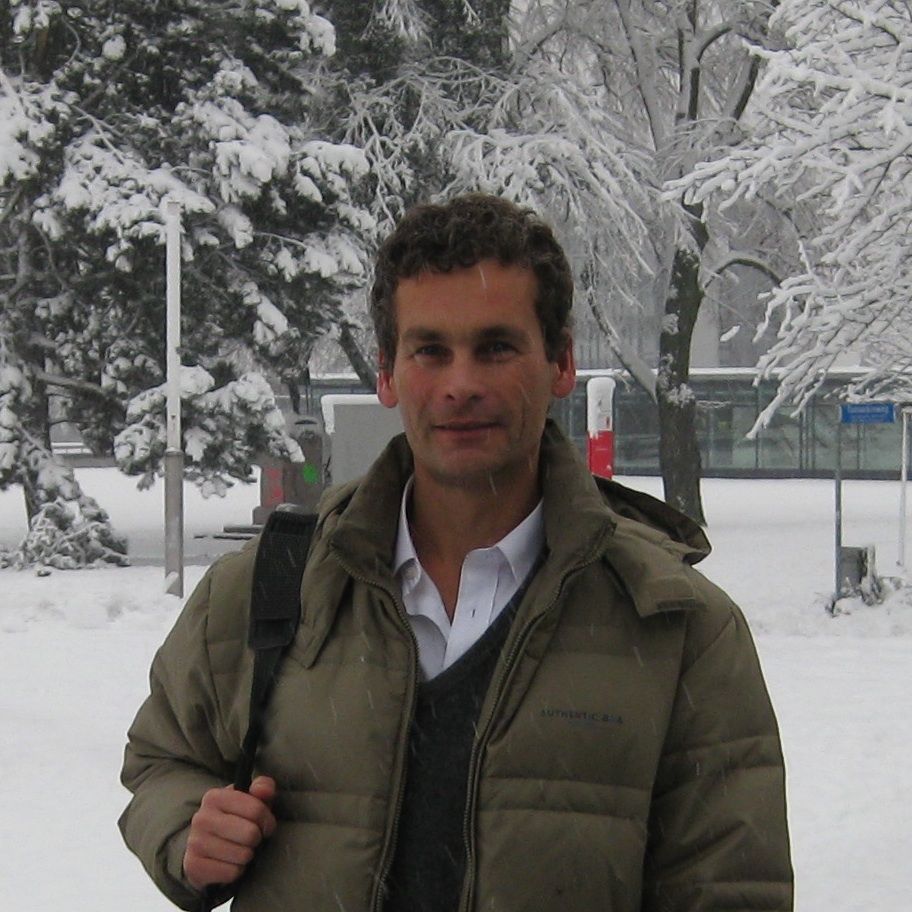 Andre Otfrid Nies合作论文数School of Computer Science, Faculty of Science, University of Auckland2Joseph Miller合作论文数1Daniel D. Turetsky合作论文数1A. Nies合作论文数Department of Computer Science;University of Auckland1
 Damir D. Dzhafarov合作论文数University of Chicago1Peter A. Cholak合作论文数Department of Mathematics1




