The family of layered materials currently attracting most interest for practical applications is that of Li and Mn-rich Li 1+x M 1-x O 2 layered oxides, with the overall Li/M ratio >1, M being Mn, Ni and Co 3d transition metals. Indeed, they offer very high reversible capacities (> 230 mAh/g) and the composition rich in manganese fulfills sustainability, availability and cost issues. The exceptional capacity delivered by these layered oxides is in fact explained by the reversible participation of oxygen anions to the redox processes. [1-4] This reaction is reversible within the bulk, occurring without any major structural modification, whereas oxidized oxygen ions are destabilized at the surface, leading to oxygen loss and structural reorganization at the outer part of the particle. [5-6] This structural reorganization is at the origin of a voltage profile evolution upon cycling and of a continuous decrease in energy, and its kinetics is obviously highly dependent on the composition of the pristine material. [7] The challenge in the field is now to develop alternative compounds with low cost and environmentally friendly metals being able to promote the participation of oxygen anions in the redox processes, with optimized and stabilized electrochemical performance over long range cycling. A large number of compositions are currently under study in our group at ICMCB, screening the composition in transition metal ions in a series of materials Li(Ni II Mn IV x+3y Co III 1-2(x+2y) )O 2 recently reported to stabilize cationic vacancies on the transition metal sites ( i.e. in the slabs). [8-10] We focused our efforts on compositions showing a Li/M ratio ranging between 1 and 1.5 and a Mn content being at least 45 at.% of M, as they deliver very attractive reversible capacities with a limited first cycle irreversible capacity. The phase diagram was established as function of the M composition and of the Li/M ratio using the combination of Synchrotron X-ray and neutron powder diffraction analyses. During this presentation, we will discuss in details the relationship between the synthesis conditions, the composition, the structure and the electrochemical performance of these materials, but also the subtle differences identified in the structural modifications observed in different cycling conditions to determine the optimized formation of the electrode material for its cyclability upon long range cycling. Acknowledgments The authors thank Cathy Denage, Laëtitia Etienne and Eric Lebraud (ICMCB) for SEM, ICP-OES and routine XRD analyses respectively, as well as the ANR and DGA for the funding of the project SILMARILION ANR-16-CE05-0015-02. References [1] H. Koga, L. Croguennec, M. Ménétrier, Ph. Mannessiez, F. Weill, C. Delmas, J. Power Sources 2013 , 236, 250 [2] H. Koga, L. Croguennec, M. Ménétrier, K. Douhil, S. Belin, L. Bourgeois, E. Suard, F. Weill, C. Delmas, J. Electrochem. Soc. 2013 , 160(6) , A786 [3] M. Sathiya, K. Ramesha, G. Rousse, D. Foix, D. Gonbeau, A.S. Prakash, M.L. Doublet, K. Hemalatha, J.-M. Tarascon, Chem. Mater. 2013 , 25 , 1121 [4] M. Sathiya, G. Rousse, K. Ramesha, C.P. Laisa, H. Vezin, M.T. Sougrati, M.L. Doublet, D. Foix, D. Gonbeau, W. Walker, A.S. Prakash, M. Ben Hassine, L. Dupont, J-M. Tarascon, Nat. Mater. 2013 , 12 , 827 [5] A. Boulineau, L. Simonin, J.-F. Colin, C. Bourbon, S. Patoux, Nano Lett. 2013 , 13 , 3857 [6] C. Genevois, H. Koga, L. Croguennec, M. Ménétrier, C. Delmas, F. Weill, J. Phys. Chem. C 2015 , 119 (1), 75 [7] M. Sathiya, A.M. Abakumov, D. Foix, G. Rousse, K. Ramesha, H. Vezin, C.P. Laisa, A. Prakash, D. Gonbeau, M. Saubanère, M.-L. Doublet, G. VanTendeloo, J.-M. Tarascon, Nat. Mater. 2015 , 14 , 230 [8] E. McCalla, A.W. Rowe, J. Camardese, J. R. Dahn, Chem. Mater. 2013 , 25, 2716 [9] R. Shunmugasundaram, R.S. Arumugam, J.R. Dahn, Chem. Mater. 2015 , 27, 757 [10] R. Shunmugasundaram, R. S. Arumugam, K. J. Harris, G. R. Goward, J. R. Dahn, Chem. Mater. 2016 , 26, 55
Layered sodium oxides with the formula NaxMO2 (where x is comprised between 0 and 1, M is a transition metal) have been intensively studied these last thirty years either for their unique physical properties (high thermoelectric power, superconductivity …) or with a view for their use in large sodium-ion batteries. More recently, advanced electrochemical properties of some NaxMO2 systems containing only one transition metal have been re-investigated and new complex materials with several transition metals in the MO2 layers have been synthesized and studied. In particular, systems containing non-toxic and abundant elements such as manganese and iron appear very attractive and first results in the P2-NaxMn1/2Fe1/2O2 system have showed a capacity as high as 190 mAh/g [1]. Other promising results were obtained in other compositions in manganese- and iron-based systems [2,3]. In this context, we recently studied some NaxMO2 phases used as positive electrode in Na cells with a special focus on the structural transformations and redox processes occurring during cycling in P2- and O3-Nax(Fe,Mn)O2 systems. The structures of all starting materials were determined by Rietveld refinement from powder X-Ray diffraction data. The electrochemical study was carried out in sodium batteries with a solution of NaPF6 in PC as electrolyte. For all materials, a very good reversibility of the electrochemical process was observed. In situ and ex situ X-ray powder diffraction experiments were carried out to understand better the structural transformations induced by the electrochemical (de)intercalation process. In parallel, redox processes were studied by ex situ and in situ Mössbauer spectroscopy. [1] N. Yabuuchi, M. Kajiyama, J. Iwatate, H. Nishikawa, S. Hitomi, R. Okuyama, R. Usui, Y. Yamada, S. Komaba Nature Materials, 2012, 11, 512. [2] J. Zhao, J. Xu, D. H. Lee, N. Dimov, Y. S. Meng, S. Okada J. Power Sources, 2014, 264, 235. [3] D. Yuan, X. Hu, J. Qian, F. Pei, F. Wu, R. Mao, X. Ai, H. Yang, Y. Cao Electrochimica Acta, 2014, 116, 300.
Introduction Sodium–ion batteries are considered to be one of the favourite for the future hybrid and electric vehicles because of their low price and sodium abundant resources. Sodium layered oxides (NaxMO2) are the expectable candidates as cathode material in respect of potential and sodium–ion diffusion. Especially, O3 type is mainly focused, however, the O3 type structure can be transformed into the spinel type structure that leads to capacity decay in several cycles. From the structural stability point of view, the P2 type structure is able to avoid converting to the spinel type structure due to different oxygen stacking. We focus on synthesizing the new P2 material including three transition metals, such as Mn, Ni, and Co, in order to achieve higher capacity and cyclability. Experimental We adopted a co−precipitation method in order to make the aimed compound. A solution of transition metal nitrates, and another solution of sodium carbonate were dripped into a beaker with distilled water simultaneously. The washed precipitate was dried at 80 ̊C for two days. The obtained powder was mixed with sodium carbonate with an excess amount, and annealed at 900 ̊C in air atmosphere, and finally quenched to room temperature. The crystal structure was studied by XRD. The electrochemical performances were evaluated in two electrodes cell configuration. The positive electrode was a mixture containing 88 wt. % of the active material, 10 wt. % of graphite as the conductor and 2 wt. % of polytetrafluoroethylene (PTFE). The electrolyte was 1 M NaPF6 in propylene carbonate (PC) with fluoroethylene carbonate (FEC) at 2 wt. %. Galvanostatic performances were carried out between 4.0 V and 1.5 V vs. Na+/Na at the current rate of 0.05 C and 25 ̊C. Cycle performance was evaluated between 3.8 V and 1.5 V at same condition. Results Among all composition studied, a pure phase with the P2 structure was obtained for the Na0.7Mn0.6Ni0.3Co0.1O2 composition. Fig. 1 shows the XRD pattern of Na0.7Mn0.6Ni0.3Co0.1O2 phase. It indicates that the sample crystallizes in the hexagonal system (S.G. , P63/mmc) and there were no impurities in the material. The cell parameters are ahex. = 2.8847 Å, chex. = 11.0833 Å. The material has excellent electrochemical performance as shown in Fig. 2. At first, it was discharged until 1.5 V in order to insert sodium ions into the remaining vacancies. The amount of sodium at the end of the first discharge (x = 0.96) shows that almost all sites are occupied between MO2 slabs. In the curves, there were two large potential drops around x = 0.7 and x = 0.5 (close to x = 1/2) identified with the single phase domain. The three sloping curves parts indicate solid solution behaviour. The specific capacity calculated from the sodium content was 153 mAh/g, which was similar to that of the O3 phase [1]. A good cycle retention was observed during 10 cycle test as shown in Fig. 3. In the presentation, we will discuss the crystal structural changes occurring during the sodium extraction deintercalation / intercalation. [1] M. Sathiya, et al., Chem. Mater. 2012, 24, 1846−1853.
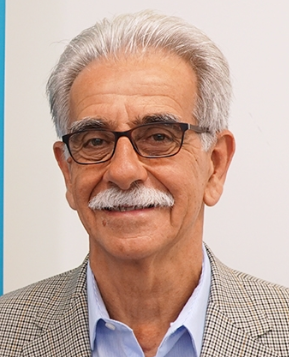 Claude Delmas合作论文数Bordeaux Institute of Condensed-Matter Chemistry, University of Bordeaux2
 Marie Guignard合作论文数2
 Dany Carlier合作论文数Institut de Chimie de la Matière Condensée de Bordeaux—CNRS UPR 9048, Ecole Nationale Supérieure de Chimie et Physique de Bordeaux2Elodie Guerin合作论文数1Sonia Buffière合作论文数1Jun Yoshida合作论文数1
 Philippe Moreau合作论文数University of Nantes;Institut des Matériaux de Nantes Jean Rouxel1Francois Weill合作论文数1
 M. Chakir合作论文数Laboratoire de Chimie des Matériaux Solides, UH2M1
 Laurence Croguennec合作论文数Institute of Chemistry of Condensed Matter, University of Bordeaux1Alain Wattiaux合作论文数1Francois Fauth合作论文数European Synchrotron Radiation Facility (ESRF), BP 220/6, Rue Jules Horowitz, F-38043 Grenoble, France1Emmanuelle Suard合作论文数1




