A study of 102 patients with primary macrofocal myocardial infarction, admitted to hospital within the first 6 hours after the onset of the disease, and experimental evidence obtained in 110 Wistar rats are reported. In a control group of myocardial infarction patients, collagen synthesis was depressed in the presence of the activation of free-radical lipid oxidation and circulatory hypoxia. Piracetam and inosine treatment was associated with the inhibition of free-radical lipid oxidation and a reduction of hypoxia, those being accompanied by increased collagenogenesis and accelerated postinfarction scar formation. Piracetam, as compared to inosine, had a more marked stimulating effect on the development of compensatory myocardial hypertrophy, thus contributing to rapid recovery of cardiac contractility and reducing manifestations of circulatory insufficiency.
A total of 172 patients with myocardial infarction were investigated. The hyperdynamic syndrome was revealed in 72 patients within the first days of the disease, as manifested in increased cardiac performance, while 100 patients, whose hemodynamics were of normodynamic type, made up the control group. The hyperdynamic syndrome was shown to develop in the presence of elevated blood catecholamine and 11-OCS content and enhanced energy metabolism, reflecting a more pronounced response to stress. The development of the hyperdynamic syndrome increases the rates of complications associated with myocardial infarction, prolongs the duration of the disease and builds up the risk of fatal outcome due to cardiorrhexis.
The use of beta-adrenoblockers in patients with acute myocardial infarction, accompanied by hypertension and hyperdynamia, leads to normalization of the arterial pressure, of parametres of haemo- and cardiodynamics, to a decrease of the degree of ischaemia of the damaged myocardium and to an increase of the heart work efficacy.
The work demonstrates the efficacy of glucagon in acute myocardial infarction and its complications, particularly in bradycardia, hypotension, disorders of cardiac rhythm and conduction, cardiogenic shock, cardiac insufficiency in complete atrioventricular heart block and recurrent forms of ventricular fibrillation. A differential approach and dynamic control over the effect of the drug on the values of hemodynamics, respiration, and metabolism are necessary under the conditions of units of intensive therapy and cardioresuscitation.
The work deals with the comparative assessment of integral rheography, a modern method for studying hemodynamic indices. As compared to the method of dye dilution and radiocardiography, integral rheography has proved to be sufficiently precise and at the same time has definite advantages as a method of express diagnosis in patients with acute cardiovascular diseases. As compared with the other method of indirect determination of the cardiac output, tetrapolar rheography, integral rheography is more suitable for being used in emergencies, particularly in cases with disorders of the rhythm of the cardiac activity.
Changes in the indices of central hemodynamics and contractility of the heart muscle in the acute period of macrofocal myocardial infarction were studied. In many cases heart ejection and performance of the left ventricle in the first 24 hours of the disease were greater than those in the control group of patients with ischemic heart disease in the period of remission. The increase coincided in time with sharp activation of the sympathico-adrenal and other systems of the organism in myocardial infarction, occurred on a background of deteriorated cardiac contractility, and ended by the third day of the acute period. Such changes in the first day of the disease were less manifest in the group of individuals in whom preceding cardiac failure had been more severe.
 A P Golikov合作论文数13VY POLUMISKOV合作论文数8Maĭorov N I合作论文数4O A Avilova合作论文数3V A Riabinin合作论文数3VA KAREV合作论文数3LA KONOREV合作论文数3VA RYABININ合作论文数3B V Davydov合作论文数2NI MAYOROV合作论文数2S B Vaniev合作论文数2
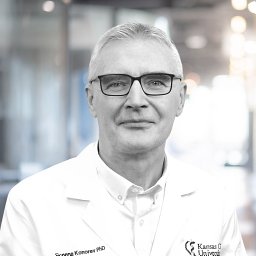 Eugene A. Konorev合作论文数Biophysics Research Institute, Medical College of Wisconsin2VV PICHUGIN合作论文数1VM GUKASOV合作论文数1GE BELOZEROV合作论文数1AI ORLOV合作论文数1Ershova Nv合作论文数1а м есаян合作论文数1É. Ya. Kaplan合作论文数1Vg Sharov合作论文数1PP GOLIKOV合作论文数1
 Vadim Polumiskov合作论文数1I. N. Sharipova合作论文数1V. Yu. Polumiskov合作论文数1Sergei P Smotrov合作论文数1




