We introduce several conjectures which mainly deal with restrictions on the Betti tables of licci ideals. We focus on a series of questions that compare the number of generators of homogeneous licci ideals in polynomial rings to the maximal last shift in their graded free resolution. We prove these conjectures in a large number of cases.
We investigate when the Rees algebra of an integrally closed 𝔪-primary ideal in a regular local ring is a Cohen-Macaulay normal domain. While this property always holds in dimension two, it fails in general in higher dimensions, prompting a search for sufficient conditions on the ideal. We show that if an integrally closed ideal contains a part of regular system of parameters of length d-2, where d is the dimension of the regular local ring, then its Rees algebra is Cohen-Macaulay and normal. We also extend results of Goto and Ciupercă by proving the same conclusion when the minimal number of generators of an ideal is at most d+2. Furthermore, we treat the case of integrally closed zero-dimensional ideals generated by d+3 homogeneous polynomials. Finally, using generic Bourbaki ideals, we generalize these results to integrally closed torsionfree modules of finite colength.
We prove a conjecture on the minimal number of generators of licci zero-dimensional ideals that are either monomial or have small Loewy colength.
Given a scheme X of finite type over the complex numbers, the Behrend function is a constructible function ν_X: X(ℂ) →ℤ introduced by Behrend in order to define enumerative invariants in Donaldson–Thomas theory. Even in simple cases, the Behrend function is very difficult to compute. In this article, we tackle the problem of computing the Behrend function of zero-dimensional schemes. We obtain a number of explicit formulas, in particular, for arbitrary zero-dimensional monomial schemes, thus providing vast generalizations of previous work of Graffeo–Ricolfi. Our main tools come from the theory of blowup algebras. Along the way, we establish results of independent interest related to the integer decomposition property, weighted Veronese subrings, and reduced fiber rings.
Let $(R,m,k)$ be a Golod ring. We show a recurrent formula for high syzygies of $k$ interms of previous ones. In the case of embedding dimension at most $2$, we provided complete descriptions of all indecomposable summands of all syzygies of $k$.
Schemes defined by residual intersections have been extensively studied in the case when they are Cohen-Macaulay, but this is a very restrictive condition. In this paper we make the first study of a class of natural examples far from satisfying this condition, the rank 1 loci of generic $2\times n$ matrices. Here we compute their depths and many other properties. These computations require a number of novel tools.
We provide a generalization of Jouanolou duality that is applicable to a plethora of situations. The environment where this generalized duality takes place is a new class of rings, that we introduce and call weakly Gorenstein. As a main consequence, we obtain a new general framework to investigate blowup algebras. We use our results to study and determine the defining equations of the Rees algebra of certain families of ideals.
The core of an ideal is defined as the intersection of all of its reductions. In this paper we provide an explicit description for the core of a monomial ideal $I$ satisfying certain residual conditions, showing that ${\rm core}(I)$ coincides with the largest monomial ideal contained in a general reduction of $I$. We prove that the class of lex-segment ideals satisfies these residual conditions and study the core of lex-segment ideals generated in one degree. For monomial ideals that do not necessarily satisfy the residual conditions and that are generated in one degree, we conjecture an explicit formula for the core, and make progress towards this conjecture.
Using Mather-Jacobian multiplier ideals, we prove a formula comparing the Grauert-Riemenschneider canonical sheaf with the canonical sheaf of a variety over an algebraically closed field of characteristic zero. We also study Mather-Jacobian multiplier ideals on algebraic curves, in which case Mather-Jacobian multiplier ideals can be defined over a ground field of any characteristic. We show that the Mather-Jacobian multiplier ideals on curves are essentially the integrally closed ideals. Finally by comparing the conductor ideal with the Mather-Jacobian multiplier ideal of the structure sheaf, we give a criterion for when an algebraic curve is locally a complete intersection.
In this article, we study the generalized Poincare problem from the opposite perspective, by establishing lower bounds on the degree of the vector field in terms of invariants of the variety.
We study the behavior of multidegrees in families and the existence of numerical criteria to detect integral dependence. We show that mixed multiplicities of modules are upper semicontinuous functions when taking fibers and that projective degrees of rational maps are lower semicontinuous under specialization. We investigate various aspects of the polar multiplicities and Segre numbers of an ideal and introduce a new invariant that we call polar-Segre multiplicities. In terms of polar multiplicities and our new invariants, we provide a new integral dependence criterion for certain families of ideals. By giving specific examples, we show that the Segre numbers are the only invariants among the ones we consider that can detect integral dependence. Finally, we generalize the result of Gaffney and Gassler regarding the lexicographic upper semicontinuity of Segre numbers.
If I I is an ideal in a Gorenstein ring S S , and S / I S/I is Cohen-Macaulay, then the same is true for any linked ideal I ′ I’ ; but such statements hold for residual intersections of higher codimension only under restrictive hypotheses, not satisfied even by ideals as simple as the ideal L n L_{n} of minors of a generic 2 × n 2 \times n matrix when n > 3 n>3 . In this paper we initiate the study of a different sort of Cohen-Macaulay property that holds for certain general residual intersections of the maximal (interesting) codimension, one less than the analytic spread of I I . For example, suppose that K K is the residual intersection of L n L_{n} by 2 n − 4 2n-4 general quadratic forms in L n L_{n} . In this situation we analyze S / K S/K and show that I n − 3 ( S / K ) I^{n-3}(S/K) is a self-dual maximal Cohen-Macaulay S / K S/K -module with linear free resolution over S S . The technical heart of the paper is a result about ideals of analytic spread 1 whose high powers are linearly presented.
Schemes defined by residual intersections have been extensively studied in the case when they are Cohen-Macaulay, but this is a very restrictive condition. In this paper we make the first study of a class of natural examples far from satisfying this condition, the rank 1 loci of generic 2× n matrices. Here we compute their depths and many other properties. These computations require a number of novel tools.
The objects of study in this paper are Hopf algebras H which are finitely generated algebras over an algebraically closed field and are extensions of a commutative Hopf algebra A by a finite dimensional Hopf algebra H‾:=H/A+H, where A+ is the augmentation ideal of A. Basic structural and homological properties are recalled and classes of examples are listed. A structure theorem is proved when (⁎) H‾ is semisimple and cosemisimple, showing that in this case the noncommutativity of H arises from the action of a finite group. For example, when (⁎) holds and H is prime and pointed, it is a crossed product of a smooth affine commutative domain by a finite group, and the simple H-modules are described by a type of Clifford's theorem.
We prove that two arbitrary ideals $$I \subset J$$ in an equidimensional and universally catenary Noetherian local ring have the same integral closure if and only if they have the same multiplicity sequence. We also obtain a Principle of Specialization of Integral Dependence, which gives a condition for integral dependence in terms of the constancy of the multiplicity sequence in families.
Let R be a non-negatively graded Cohen-Macaulay ring with R_0 a Cohen-Macaulay factor ring of a local Gorenstein ring. Let d be the dimension of R, m be the maximal homogeneous ideal of R, and M be a finitely generated graded R-module. It has long been known how to read information about the socle degrees of the local cohomology module H_m^0(M) from the twists in position d in a resolution of M by free R-modules. It has also long been known how to use local cohomology to read valuable information from complexes which approximate resolutions in the sense that they have positive homology of small Krull dimension. The present paper reads information about the maximal generator degree (rather than the socle degree) of H_m^0M from the twists in position d-1 (rather than position d) in an approximate resolution of M. We apply the local cohomology results to draw conclusions about the maximum generator degree of the second symbolic power of the prime ideal defining a monomial curve and the second symbolic power of the ideal defining a finite set of points in projective space. There is an application to general hyperplane sections of subschemes of projective space over an infinite field. There is an application of the local cohomology techniques to partial Castelnuovo-Mumford regularity. An application to the ideals generated by the lower order Pfaffians of an alternating matrix will appear in a future paper. One additional application to the study of blow-up algebras appears in a separate paper.
We prove duality results for residual intersections that unify and complete results of van Straten, Hunekc-Ulrich and Ulrich, and settle conjectures of van Straten and Warmt. Suppose that I is an ideal of codimension g in a Gorenstein ring, and J subset of I is an ideal with s = g + t generators such that K := J : I has codimension s. Let (I ) over bar be the image of I in (R) over bar := R/K. In the first part of the paper we prove, among other things, that under suitable hypotheses on I , the truncated Rees ring (R) over bar circle plus (I) over bar circle plus... circle plus(I) over bar (t+1) is a Gorenstein ring, and that the modules (I) over bar (u) and (I) over bar (t+1-u) are dual to one another via the multiplication pairing into (I) over bar (t+1 )congruent to omega((R) over bar). In the second part of the paper we study the analogue of residue theory, and prove that, when R/K is a finite-dimensional algebra over a field of characteristic 0 and certain other hypotheses are satisfied, the socle of It+1/JI(t) congruent to omega(R/K) is generated by a Jacobian determinant.
Several numerical indices that control the normalization of ideals are introduced and some relationships among them are derived.
Let $R$ be a formal power series ring over a field, with maximal ideal $\mathfrak m$, and let $I$ be an ideal of $R$ such that $R/I$ is Artinian. We study the iterated socles of $I$, that is the ideals which are defined as the largest ideal $J$ with $J\mathfrak m^s\subset I$ for a fixed positive integer $s$. We are interested in these ideals in connection with the notion of integral dependence of ideals. In this article we show that the iterated socles are integral over $I$, with reduction number one, provided $s \leq \text{o}(I_1(\varphi_d))-1$, where $\text{o}(I_1(\varphi_d))$ is the order of the ideal of entries of the last map in a minimal free $R$-resolution of $R/I$. In characteristic zero, we also provide formulas for the generators of iterated socles whenever $s\leq \text{o}(I_1(\varphi_d))$. This result generalizes previous work of Herzog, who gave formulas for the socle generators of any ${\mathfrak m}$-primary homogeneous ideal $I$ in terms of Jacobian determinants of the entries of the matrices in a minimal homogeneous free $R$-resolution of $R/I$. Applications are given to iterated socles of determinantal ideals with generic height. In particular, we give surprisingly simple formulas for iterated socles of height two ideals in a power series ring in two variables. These generators are suitable determinants obtained from the Hilbert-Burch matrix.
 Claudia Polini合作论文数31
 David Eisenbud合作论文数Department of Mathematics, University of California, Berkeley20
 Craig Huneke合作论文数Department of Mathematics, University of Virginia16
 Andrew R. Kustin合作论文数14
 Wolmer V. Vasconcelos合作论文数Department of Mathematics, Rutgers University12C Huneke合作论文数9Alberto Corso合作论文数6
 Jürgen Reinhard Gerhard Herzog合作论文数Fakultät für Mathematik, Universität Duisburg-Essen4
 Aron Simis合作论文数Federal University of Pernambuco4Marc Chardin合作论文数4
 Steve R. Kleiman合作论文数POH Performance, LLC4Joseph Lipman合作论文数3
 William Heinzer合作论文数Purdue University3Louiza Fouli合作论文数University of Texas3Javid Validashti合作论文数3Jooyoun Hong合作论文数3
 Yairon Cid-Ruiz合作论文数Max Planck Inst Math Sci, Inselstr 22, D-04103 Leipzig, Germany2Uwe Nagel合作论文数2Hubert Flenner合作论文数2
 Shiro Goto合作论文数2
 Joseph P. Brennan合作论文数Department of Mathematics, and Computer Science, Seton Hall University2Mee-Kyoung Kim合作论文数2Juan C. Migliore合作论文数Department of Mathematics;University of Notre Dame;Department of Mathematics, University of Notre Dame2
 Laura Ghezzi合作论文数2Youngsu Kim合作论文数1D Katz合作论文数1
 Jonathan Montaño合作论文数Corresponding author.1Irena Swanson合作论文数1Toshinori Kobayashi合作论文数Grad Sch Math, Nagoya Univ1
 Karen E. Smith合作论文数Department of Mathematics, University of Michigan, Ann Arbor1Miller Matthew合作论文数1
 Mark R. Johnson合作论文数Chelsea and Westminster Hospital;Department of Metabolism, Digestion and Reproduction, Faculty of Medicine, Imperial College London1
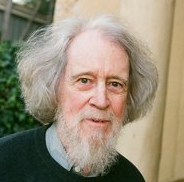 Robin Hartshorne合作论文数Department of Mathematics, University of California, Berkeley1Wolfgang Vogel合作论文数1
 Rafael Heraclio Villarreal Rodriguez合作论文数Departamento de Matematicas;Centro de Investigacion y de Estudios Avanzados del IPN;Departamento de Matematicas, Centro de Investigacion y de Estudios Avanzados del IPN1
 Seyed Hamid Hassanzadeh合作论文数Faculty of Mathematical Sciences and Computer, Tarbiat Moallem University1Neil M. Epstein合作论文数1
 Ngo Viet Trung合作论文数Institute of Mathematics, Vietnam Academy of Science and Technology1
 David A. Cox合作论文数Mid Carolina Cardiology1
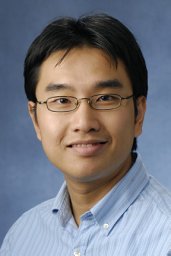 Hailong Dao合作论文数Department of Mathematics, University of Kansas1Jung-Chen Liu合作论文数1Susan Morey合作论文数1Carles Bivià-Ausina合作论文数Institut Universitari de Matemàtica Pura i Aplicada, Universitat Politècnica de València1Clarence W. Wilkerson合作论文数1
 Giulio Peruginelli合作论文数Italian National Research Council1
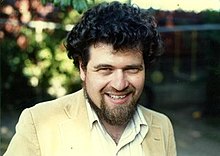 Mel Hochster合作论文数Department of Mathematics, University of Michigan1
 Darij Grinberg合作论文数1Jörgen Backelin合作论文数1




