Futures are not only created by scholars, fiction writers, and eccentric visionaries. Sometimes those who envision the future have the power to make (or at least try to make) the development they imagine happen; their visions promote their interests in a particular future. Since World War II, governments have been major funders of scientific research worldwide. Available funding in specific areas of research generally compels people to work in those fields and results in new technologies that ultimately shape our collective future. This speech by David Willetts, who at the time was the minister of state for universities and science in the UK, outlines a strategy for the British government to promote science in directions that will benefit the UK. While Willetts's vision of the future expresses hope for solving various social problems along the way, his recommendation to direct immense amounts of money at scientific research is targeted to ensure that Britain maintains its political and economic status. He contends that science should generate both pride and a monetary return on investment. His strategy has a fair amount of nuance. Willetts doesn't believe that politicians are knowledgeable enough to direct science at a microlevel, but he does want to ensure that the government has some say in how its money is used. So he identifies eight major areas of research in which he thinks UK scientists possess a distinctive capability; he envisions this research leading to commercial enterprises. Choosing to invest in specific areas of research directly affects what research is conducted and, in turn, the possible futures that can be realized.
In this chapter of Our Postmodern Future, Francis Fukuyama explores the social and psychological implications of technological change. He supposes that we will continue to make progress in using technologies to extend human life span and then speculates about the effects this will have on a range of social arrangements, practices, and ways of thinking. Although the data and theories that Fukuyama cites are a few decades old now, his vision of a future in which individuals live increasingly longer still provides food for thought. Like Forster, Fukuyama imagines a world in which an important human value is realized—in this case, a preeminent value in Western culture, avoiding death—yet he seems to warn us to be careful what we wish for. Fukuyama suggests that longevity may radically transform how we think about our lives, one another, and the organization of our society. Increased longevity could wreak havoc on many of our social and political practices as those in power hold on to their positions for much longer periods of time. Fukuyama anticipates the social, ethical, and psychological changes that could accompany prolongation of life. In doing this, he reveals connections between new technologies, demographic change, and social, ethical, and policy issues. His exploration reminds us that because decisions and choices about technology can have far-reaching and powerful implications, it is important to think those choices through before we make them.
Books about military history are filled with platitudes about how technology has, over the centuries, changed the nature of warfare. From the invention of chariots around 3000 BC, to the development of gunpowder around 800 AD, to naval ships and airplanes more recently, what nation-states (or individuals, for that matter) do in order to defend against enemies has changed as weapons of warfare have changed. With the development of computers, information technology, and the Internet in the twentieth century, conflict between nations began to play out in the cyber realm, a trend likely to continue and escalate in the twenty-first century.
We don't normally think of food as a technology, but people have learned to engineer it with ever better precision. Centuries ago humankind figured out that combining yeast, grain, and water would yield alcohol. Today, food scientists can reformulate food products to create very specific effects for consumers. The goal for many food producers is to achieve the bliss point, the perfect balance of flavor and texture that makes people want to eat more. Focusing on compelling people to buy more and eat more does, however, have wide-reaching effects beyond a healthy bottom line for the producer. Many scientists argue that the easy availability of certain foods (which they go so far as to label addictive) has been a major, if not the major, contributor to the obesity problem in the United States and beyond. Moss suggests that the engineers involved were able to advance the values of their bosses, perhaps, to the detriment of the values of many others.
Inventor and investor Bill Joy describes a breakthrough technology that can speed the de‐carbonization of the planet.
Written by the inventors of the technology, The Java Language Specification, Java SE 8 Edition is the definitive technical reference for the Java programming language. The book provides complete, accurate, and detailed coverage of the Java programming language. It fully describes the new features added in Java SE 8, including lambda expressions, method references, default methods, type annotations, and repeating annotations. The book also includes many explanatory notes and carefully distinguishes the formal rules of the language from the practical behavior of compilers.
Written by the inventors of the technology, The Java Language Specification, Java SE 7 Edition, is the definitive technical reference for the Java programming language. The book provides complete, accurate, and detailed coverage of the Java programming language. It fully describes the new features added in Java SE 7, including the try-with-resources statement, multi-catch, precise rethrow, diamond syntax, strings-in-switch, and binary literals. The book also includes many explanatory notes, and carefully distinguishes the formal rules of the language from the practical behavior of compilers.
New Perspectives QuarterlyVolume 25, Issue 1 p. 48-51 The Haiku and the Double Helix - Fall 2004 ILYA PRIGOGINE, ILYA PRIGOGINESearch for more papers by this authorSTEPHEN HAWKING, STEPHEN HAWKINGSearch for more papers by this authorPIET HUT, PIET HUTSearch for more papers by this authorJOHN POLANYI, JOHN POLANYISearch for more papers by this authorBILL JOY, BILL JOYSearch for more papers by this authorAMORY LOVINS, AMORY LOVINSSearch for more papers by this authorFRANCIS FUKUYAMA, FRANCIS FUKUYAMASearch for more papers by this authorJACQUES ATTALI, JACQUES ATTALISearch for more papers by this authorPETER SLOTERDIJK, PETER SLOTERDIJKSearch for more papers by this authorLEON KASS, LEON KASSSearch for more papers by this authorJAMES WATSON, JAMES WATSONSearch for more papers by this authorIAN WILMUT, IAN WILMUTSearch for more papers by this authorCRAIG VENTER, CRAIG VENTERSearch for more papers by this authorDANIEL COHEN, DANIEL COHENSearch for more papers by this authorWILLIAM HASELTINE, WILLIAM HASELTINESearch for more papers by this authorGERALD EDELMAN, GERALD EDELMANSearch for more papers by this authorDAVID BALTIMORE, DAVID BALTIMORESearch for more papers by this authorJOSHUA LEDERBERG, JOSHUA LEDERBERGSearch for more papers by this authorNORMAN BOURLAG, NORMAN BOURLAGSearch for more papers by this authorJIMMY CARTER, JIMMY CARTERSearch for more papers by this authorPAUL BOYER, PAUL BOYERSearch for more papers by this authorDANIEL COHN-BENDIT, DANIEL COHN-BENDITSearch for more papers by this authorJAMES HANSEN, JAMES HANSENSearch for more papers by this authorMARIO MOLINA, MARIO MOLINASearch for more papers by this authorFARIDA FAOUZIA CHARFI, FARIDA FAOUZIA CHARFISearch for more papers by this authorAHMED ZEWAIL, AHMED ZEWAILSearch for more papers by this authorALAIN TOURAINE, ALAIN TOURAINESearch for more papers by this authorMUNAWAR ANEES, MUNAWAR ANEESSearch for more papers by this authorCZESLAW MILOSZ, CZESLAW MILOSZSearch for more papers by this author ILYA PRIGOGINE, ILYA PRIGOGINESearch for more papers by this authorSTEPHEN HAWKING, STEPHEN HAWKINGSearch for more papers by this authorPIET HUT, PIET HUTSearch for more papers by this authorJOHN POLANYI, JOHN POLANYISearch for more papers by this authorBILL JOY, BILL JOYSearch for more papers by this authorAMORY LOVINS, AMORY LOVINSSearch for more papers by this authorFRANCIS FUKUYAMA, FRANCIS FUKUYAMASearch for more papers by this authorJACQUES ATTALI, JACQUES ATTALISearch for more papers by this authorPETER SLOTERDIJK, PETER SLOTERDIJKSearch for more papers by this authorLEON KASS, LEON KASSSearch for more papers by this authorJAMES WATSON, JAMES WATSONSearch for more papers by this authorIAN WILMUT, IAN WILMUTSearch for more papers by this authorCRAIG VENTER, CRAIG VENTERSearch for more papers by this authorDANIEL COHEN, DANIEL COHENSearch for more papers by this authorWILLIAM HASELTINE, WILLIAM HASELTINESearch for more papers by this authorGERALD EDELMAN, GERALD EDELMANSearch for more papers by this authorDAVID BALTIMORE, DAVID BALTIMORESearch for more papers by this authorJOSHUA LEDERBERG, JOSHUA LEDERBERGSearch for more papers by this authorNORMAN BOURLAG, NORMAN BOURLAGSearch for more papers by this authorJIMMY CARTER, JIMMY CARTERSearch for more papers by this authorPAUL BOYER, PAUL BOYERSearch for more papers by this authorDANIEL COHN-BENDIT, DANIEL COHN-BENDITSearch for more papers by this authorJAMES HANSEN, JAMES HANSENSearch for more papers by this authorMARIO MOLINA, MARIO MOLINASearch for more papers by this authorFARIDA FAOUZIA CHARFI, FARIDA FAOUZIA CHARFISearch for more papers by this authorAHMED ZEWAIL, AHMED ZEWAILSearch for more papers by this authorALAIN TOURAINE, ALAIN TOURAINESearch for more papers by this authorMUNAWAR ANEES, MUNAWAR ANEESSearch for more papers by this authorCZESLAW MILOSZ, CZESLAW MILOSZSearch for more papers by this author First published: 15 January 2008 https://doi.org/10.1111/j.1540-5842.2008.00942.xAboutPDF ToolsRequest permissionExport citationAdd to favoritesTrack citation ShareShare Give accessShare full text accessShare full-text accessPlease review our Terms and Conditions of Use and check box below to share full-text version of article.I have read and accept the Wiley Online Library Terms and Conditions of UseShareable LinkUse the link below to share a full-text version of this article with your friends and colleagues. Learn more.Copy URL Share a linkShare onEmailFacebookTwitterLinkedInRedditWechat Volume25, Issue1Winter 2008Pages 48-51 RelatedInformation
From the moment I became involved in the creation of new technologies, their ethical dimensions have concerned me, but it was only in the autumn of 1998 that I became anxiously aware of how great are the dangers facing us in the 21st century. I can date the onset of my unease to the day I met Ray Kurzweil, the deservedly famous inventor of the first reading machine for the blind and many other amazing things.
Written by the inventors of the technology, The Java™ Language Specification, Third Edition, is the definitive technical reference for the Java™ programming language. If you want to know the precise meaning of the language's constructs, this is the source for you.The book provides complete, accurate, and detailed coverage of the Java programming language. It provides full coverage of all new features added since the previous edition, including generics, annotations, asserts, autoboxing, enums, for-each loops, variable arity methods, and static import clauses.
Method Declarations . . . . . . . . . . . . . . . . . . . . . . . . . . . . . . . . . . 2059.4.1 Inheritance and Overriding . . . . . . . . . . . . . . . . . . . . . . . . . . . . . 2069.4.2 Overloading . . . . . . . . . . . . . . . . . . . . . . . . . . . . . . . . . . . . . . . . . 2079.4.3 Examples of Abstract Method Declarations . . . . . . . . . . . . . . . . 2079.4.3.1 Example: Overriding . . . . . . . . . . . . . . . . . . . . . . . . . 2079.4.3.2 Example: Overloading . . . . . . ....
New Perspectives QuarterlyVolume 21, Issue 4 p. 25-29 Act Now to Keep New Technologies Out of Destructive Hands BILL JOY, BILL JOY BILL JOY was co-founder and Chief Scientist of Sun Microsystems and was co-chairman of the presidential advisory commission on information technology. his article appeared in the Summer 2000 issue of NPQ.Search for more papers by this author BILL JOY, BILL JOY BILL JOY was co-founder and Chief Scientist of Sun Microsystems and was co-chairman of the presidential advisory commission on information technology. his article appeared in the Summer 2000 issue of NPQ.Search for more papers by this author First published: 01 November 2004 https://doi.org/10.1111/j.1540-5842.2004.00693.xAboutPDF ToolsRequest permissionExport citationAdd to favoritesTrack citation ShareShare Give accessShare full text accessShare full-text accessPlease review our Terms and Conditions of Use and check box below to share full-text version of article.I have read and accept the Wiley Online Library Terms and Conditions of UseShareable LinkUse the link below to share a full-text version of this article with your friends and colleagues. Learn more.Copy URL Share a linkShare onFacebookTwitterLinkedInRedditWechat Volume21, Issue4Fall 2004Pages 25-29 RelatedInformation
From the Book:This book teaches you how to develop software for the Sun Microsystems J2ME platform. It follows a tutorial-style approach; it's not a reference manual. The aim is to give you a solid foundation in concepts and techniques that will enable you to venture off and develop quality applications independently.Consistent with this approach, this book doesn't provide endless pages of API documentation; I leave that offering to the Sun Microsystems Java Software Web site, which maintains the latest and most accurate API documentation. The reader might find it useful, therefore, to have access to the official Java Software J2ME API documentation while reading this book, which can be found at http://java.sun.com/j2me/docs. You can either download the full API documentation or read it online. Additionally, Prentice-Hall publishes as part of its Java series a J2ME reference manual that compliments this book.Also absent by design from this book are specific details of J2ME development tools offered by third-party vendors. In concert with the book's tutorial approach, I only introduce you to the Sun Microsystems J2ME Wireless Toolkit, which is the reference development toolkit for J2ME. It's available free of charge from Sun Microsystems at the Java Developer Connection Web site, which you must access by logging in. Follow the developer connection link from http://java.sun.com/. In this way, you can become familiar with a J2ME development environment and emulator and build and test real applications.Device manufacturers often provide development tools of their own that are similar to Sun's J2ME Wireless Toolkit. Additionally, other thirdparty software companies offer J2ME development tools. This book doesn't discuss those tools because they don't add anything to the concepts or pragmatics of how to design and develop J2ME applications.This book also defines and discusses wireless application provisioning systems and covers application deployment and provisioning from a conceptual perspective, without becoming mired in the details of specific vendor offerings of provisioning server software. The notion of application deployment is more visible-and more critical-with J2ME than with other platforms such as J2SE. In fact, understanding deployment issues is a crucial element of the J2ME application development process.Finally, I expose the reader to ideas surrounding application architecture. As we rely more heavily on computing devices that are continually becoming more pervasive, it becomes increasingly important for developers to think about reliability, performance, scalability, security, manageability, and so forth. This book gives you an introduction to these concepts and to the notion that developers must think about these characteristics from the outset.Although this book introduces elements comprising the breadth of the J2ME platform, it focuses on the CLDC and MIDP, which support personal, mobile, independent devices-those with intermittent network connectivity, such as mobile phones. Programming examples and API discussions address this subset of the J2ME platform. The reason for this choice is that, as a J2ME developer, you will most likely be called upon to develop applications for this class of devices.Book Content and OrganizationThe book is organized as follows: Chapter 1: Introduction to the Java 2 Micro Edition (J2ME) Platform Chapter 2: The MIDP Application Development Process Chapter 3: MIDP Application Program Structure Chapter 4: The MIDP High-Level API Chapter 5: The MIDP UI Components Chapter 6: The MIDP Low-Level API Chapter 7: Persistent Storage Support in MIDP Chapter 8: MIDP Networking and Communications Chapter 9: Internationalization Chapter 10: Application Provisioning Chapter 11: The Wireless Internet EnvironmentChapter 1 introduces you to the J2ME computing platform. It defines much of the J2ME terminology and gives you a general orientation to the concepts that surround the design and organization of the J2ME platform.Chapter 2 describes the J2ME application development process. You learn how to create, compile, prepare, execute, and debug J2ME applications. This chapter doesn't cover the toolkit or APIs. Coverage of those items begins in Chapter 3.Chapter 3 describes the J2ME MIDP platform from the software developer's point of view. Here you learn the organization of the APIs and the basic programming abstractions and models defined by the MIDP platform.Chapter 4 continues where Chapter 3 left off. It covers the MIDP high-level API, which encompasses the bulk of the UI components defined by the MIDP. You learn how to manipulate the various UI components and also how to do event handling, called command processing in MIDP terminology.Chapter 5 covers the MIDP user interface (UI) components. After lea the MIDP in Chapter 4, you're ready to learn how to use the components that are built upon those abstractions.Chapter 6 covers the MIDP low-level API, which is implemented by the balance of the MIDP UI components not covered in Chapter 5.Chapter 7 covers the persistent storage mechanisms available to you using the MIDP.Chapter 8 is dedicated to networking and communications. Here you learn how to use the networking and distributed processing services and functionality defined by the CLDC and MIDP. You will also acquire some insight on the decisions for design and support of connectivity services in J2ME.Chapter 9 gives you an introduction to internationalization. This is a topic of considerable breadth and depth that requires more than even a single, dedicated volume. Here, you'll learn about some of the issues that you'll encounter while building real-world MIDP applications. This chapter covers the extent of the internationalization support in the CLDC and MIDP and shows some examples of how to employ their features. You'll also learn how to configure your device environment to support internationalization and localization.Chapter 10 covers application management and provisioning systems. Conceptual familiarity with these systems is important to the J2ME application developer, particularly MIDP developers, because these systems affect your interaction with application and content providers, wireless network carriers, and even end users.Chapter 11 discusses the wireless Internet environment. It discusses the integration between wireless and fixed networks, the wireless Internet from the application developer's perspective, and the context in which applications execute. You'll get an introduction to wireless Internet gateways, Internet portal interfaces, and wireless application interfaces and services-all things that you're likely to encounter as a wireless application developer. This chapter also introduces basic architectural concepts and how they influence the J2ME application developer.AudienceThis book is intended for Java developers. It's suitable for professional software developers and advanced students alike. More precisely, this book expects the reader to be fluent with the Java programming language but doesn't assume programming experience with particular APIs beyond the core Java APIs. Notwithstanding a lack of experience in any particular area of Java programming beyond fluency with the language, it's helpful if readers have at least an understanding of the concepts and vernacular that surrounds various Java technologies, such as those terms related to virtual machines, garbage collection, class loading, class verification, native code interfaces, just-in-time compilation, AWT, RMI, JDK, JRE, and so forth.I also assume, however, that the reader has a decent background in object-oriented programming. For this reason, I don't explain object-oriented concepts when they arise during the process of discussing the J2ME APIs, classes, programming idioms, and so forth.Of course, the more experience the reader has, the better. Throughout the book, various references are made to AWT and Swing. A significant part of MIDP programming involves manipulating user-interface components. The reader with knowledge of AWT or Swing toolkit abstractions can quickly glean useful insights into the organization and abstractions of the MIDP's UI programming model. Notwithstanding the benefits of AWT and Swing experience, you don't need to have any previous background in Java UI development.Where to Download J2ME You can download the J2ME Wireless Toolkit and full API documentation by following the links to the Java Developer Connection from http://java.sun.com/. There, you'll find full API documentation for CDC, the Foundation Profile and the CLDC/MIDP, as well as the toolkit for all platforms such as Solaris, Linux, Windows NT, and Windows 2000.Where to Find the Code Examples From This BookAll the code examples that you encounter in this book can be found on the Prentice-Hall Web site at http://www.phptr.com/piroumian/
From the Publisher:Written by the inventors of the technology, The Java(tm) Language Specification, Second Edition is the definitive technical reference for the Java(tm) programming language. If you want to know the precise meaning of the language's constructs, this is the source for you. The book provides complete, accurate, and detailed coverage of the syntax and semantics of the Java programming language. It describes all aspects of the language, including the semantics of all types, statements, and expressions, as well as threads and binary compatibility.
From the Publisher: Written by the inventors of the technology, The Java(tm) Language Specification, Second Edition is the definitive technical reference for the Java(tm) programming language. If you want to know the precise meaning of the language's constructs, this is the source for you. The book provides complete, accurate, and detailed coverage of the syntax and semantics of the Java programming language. It describes all aspects of the language, including the semantics of all types, statements, and expressions, as well as threads and binary compatibility.
 James Gosling合作论文数Amazon Web Services10
 Guy L. Steele Jr. (小盖伊·史提尔)合作论文数Oracle Labs8
 Gilad Bracha合作论文数5
 Francis Fukuyama合作论文数Freeman Spogli Institute for International Studies, Stanford University;Center on Democracy, Development and the Rule of Law, Stanford University;Aarhus University5
 Gary Chapman合作论文数4Patrick D. Hopkins合作论文数4
 Harry Collins合作论文数School of Social Sciences, Cardiff University4
 Roopali Phadke合作论文数4Jameson M. Wetmore合作论文数Consortium for Science;Arizona State University;Arizona State University4Noela Invernizzi合作论文数4
 Torin Monahan合作论文数Department of Communication, College of Arts and Sciences, The University of North Carolina at Chapel Hil4
 Trevor J Pinch合作论文数Department of Science & Technology Studies, The College of Arts & Sciences, Cornell University4
 Fabio Salamanca-Buentello合作论文数Canadian Program on Genomics and Global Health4
 Michael K Bess合作论文数Ctr Invest & Docencia Econ3
 Bruno Latour合作论文数Centre de Sociologie de l'Innovation, Ecole des Mines de Paris3
 Wiebe E. Bijker合作论文数University of Maastricht3
 Dominique Vinck合作论文数University3Alex Buckley合作论文数2Bruce Schneier合作论文数2GERALD EDELMAN合作论文数1Amory Lovins合作论文数1Daniel Cohn-Bendit合作论文数1JACQUES ATTALI合作论文数1
 Ian Wilmut合作论文数Centre for Regenerative Medicine, The University of Edinburgh1
 John Polanyi合作论文数Department of Chemistry, Faculty of Arts & Science, University of Toronto1
 Ilya Prigogine合作论文数Center for Complex Quantum Systems, The University of Texas at Austin1Kristin Shrader-Frechette合作论文数1Mike Clary合作论文数1
 Peter Sloterdijk合作论文数University of Art and Design Karlsruhe1
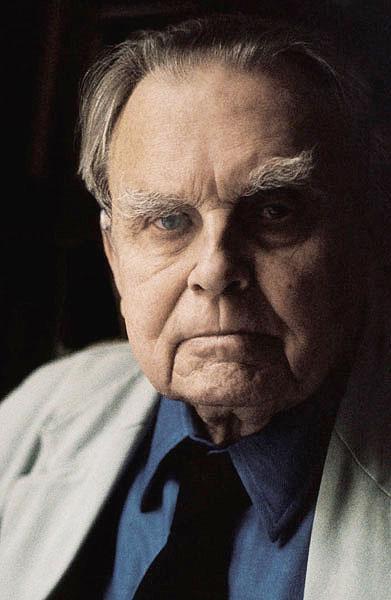 Czeslaw Milosz (切斯瓦夫·米沃什)合作论文数加利福尼亚大学伯克利分校斯拉夫语言文学系1Stephen Hawking合作论文数1Farida Faouzia Charfi合作论文数1Munawar Anees合作论文数1
 Elizabeth Forster合作论文数1Daniel Nisim Cohen合作论文数1
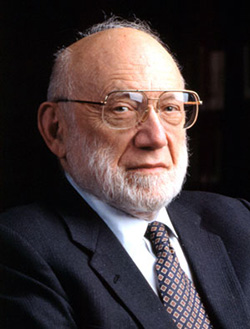 Joshua Lederberg合作论文数The Rockefeller University1Craig Venter合作论文数1Piet Hut合作论文数1Leon Kass合作论文数1
 Ahmed Zewail (哈迈德·泽维尔)合作论文数Physical Biology Center for Ultrafast Science and Technology, California Institute of Technology1
 W. Patrick McCray合作论文数Department of History, University of California, Santa Barbara1
 Vartan Piroumian合作论文数Piroumian Software1David Spenhoff合作论文数1Douglas Kramer合作论文数1




