Binuclear manganese complexes mimic the catalase enzyme by converting hydrogen peroxide rapidly and efficiently to oxygen and water. The complex (1) may be activated by either periodic acid or Oxone® and can oxidize selected organic substrates. Potassium manganate gave similar oxidation products suggesting that the manganese is transformed to a higher oxidation state. Kinetic studies with the MnIV-MnIV complex show an induction period indicating that it is not the active catalyst. Further studies suggested that the actual catalytic species is a MnIII-MnIV complex. These complexes show similar properties to the activation of FeCl3 with hydrogen peroxide. This is particularly evident by the formation of a new and unusual peroxide from ergosterol acetate.
The Gif systems permit the selective functionalization of saturated hydrocarbons under mild conditions and with high efficiencies. A newly discovered Fe-II-Fe-IV manifold is shown to form alkyl chlorides by a process involving carbon-centered radicals as intermediates. This is distinct from the usual ketonization process (Gif Chemistry) produced by an Fe-III-Fe-V manifold. The importance of certain carboxylic acids such as picolinic acid for hydrocarbon activation has been demonstrated. The ligand environment of the catalyst in solution is clarified using quantitative C-13-NMR spectroscopy. Evidence for a mu-peroxo dimer species as a key intermediate in solution is provided and recent mechanistic studies are reported.
Ergosterol acetate, in pyridine, reacts with hydrogen peroxide and catalytic amounts of FeCl3 to afford the unusual product 5α,9α-peroxyergosta-7,22-dien-6-one-3β-ol acetate. The peroxide, in the title structure, is seen to bridge the C5 and C9 positions of the sterol backbone. Crystal data: C30H44O5, orthorhombic, P212121, a = 6.552(2), b = 11.048(8), c = 37.60(2), V = 2772(3)Å3, Z = 4.
The oxidation of triphenylphosphine to the corresponding oxide in pyridine is faster in the presence of FeIII compounds, especially FeCl3. Even greater effects are seen for the oxidation of trimethyl phosphite.
Gif chemistry permits the selective functionalization of saturated hydrocarbons under very mild conditions. The formation of alkyl chlorides is shown to derive from an FeII–FeIV manifold and is distinct from the usual ketonization process (Gif chemistry) produced by an FeIII–FeV manifold. The importance of certain carboxylic acids such as picolinic acid 1 for hydrocarbon activation is highlighted. The ligand environment of the catalyst in solution is clarified using 13C NMR spectroscopy. Evidence for a µ-peroxo-dimer species as a key intermediate in solution is provided.
Acetonitrile is an efficient solvent for Gif ketonisation chemistry in the presence of pyridine based amines. Pyridine bases constitute an important role in the FeIII complex. Efficient ketonisation proceeds with as little as 15 mmol of base per mmol of FeIII.
Ferric chloride in pyridine behaves as an efficient model for the catalase enzyme. It converts H2O2 nearly quantitatively into water and oxygen (2 H2O2 → 2 H2O + O2). The addition of Ph2S to the model system affords Ph2SO, the amount of which increases with the Ph2S added. The inverse relationship between oxygen and Ph2SO formation proves that there is an intermediate in the model catalase reaction. When di-n-butyl, di-t-butyl and diphenyl sulfides are reacted in pairs in competition for the intermediate a large steric effect of over 600 is found for the di-n-butyl versus di-t-butyl sulfoxide formation. In contrast the same number for per-acid oxidation is 8. It is concluded from this and other evidence that the intermediate is and FeV oxenoid, or equivalent, which reacts competitively with H2O2 to give oxygen and with sulfides to furnish sulfoxides. Comparison is made with the catalase enzyme in water and in water-acetonitrile. An unexpected by-product of this study is an efficient and economic procedure for the oxidation of sulfides to sulfoxides without further significant oxidation to sulfones.
An important step towards the characterization of the ligand environment of saturated hydrocarbon activating Fe-III-carboxylic acid complexes in Gif type systems was accomplished employing quantitative C-13-NMR spectroscopy.
The presence or absence of certain chelating carboxylic acids such as picolinic acid permits the distinction between ketonization (Gif Chemistry) and oxygen formation (catalase reaction). In the presence of such an acid, evidence is provided for the possible involvement of a IIIFeOOFeIII species as a key intermediate in this hydrocarbon activation chemistry.
The reaction between cyclohexane and 2-methyl-1,4-naphthoquinone 1 using hydrogen peroxide in the FeIIFeIV manifold gave the adduct 2 in good yield. The same reaction was carried out with the FeIIIH2O2 system and gave also some 3-alkyl-2-methyl-1,4-naphthoquinone. The presence of FeII during the reaction showed that the FeIIFeIV manifold was again dominant.
The photolysis of Barton PTOC esters (radical reaction) in presence of Tempo produces alkyl-Tempo in very good yield. Good results are also obtained with FeII-H2O2 system (pyridine, Picolinic Acid, hydrocarbon). In this case the FeII-FeIV manifold is responsible for the formation of the adduct. Using FeIII-H2O2, Tempo adduct is formed at the same rate as the oxidation products. Mechanistic studies suggest the oxidation of Tempo by the FeV to give an oxoamonium salt and an FeIV species.
The substitution of saturated hydrocarbons by the anions nitrite, thiocyanate, azide and chloride, using H2O2 and TBHP as oxidants has been shown to depend upon the FeII-FeIV manifold and to involve radical chemistry. As soon as the FeII has been oxidised to FeIII, the reactions proceed in the FeIII-FeV manifold where oxidation, but no anion substitution, is seen.
The oxidation of saturated hydrocarbons with Fe(III)-tert-butyl hydroperoxide (TBHP) under Gif conditions in the presence of methyl vinyl ketone (MVK) affords adducts (a Michael type reaction) in which the hydrocarbon has been added to the MVK and a tert-butylperoxy group has been inserted a- to the carbonyl group. The adducts slowly eliminate tert-butanol to give alpha-diketones. Extensive competitive trapping experiments with TEMPO have shown that in all reactions with carbon radicals TEMPO traps very efficiently as expected. TEMPO is, however, an inefficient trap for the iron-carbon bond (Intermediate A) postulated as the basis of the extensive Gif chemistry of saturated hydrocarbon.
The species responsible for hydrocarbon activation and formation of alkyl chlorides in the Fen and Fe-III-H2O2 and tert-butyl hydroperoxide systems are identified. The importance of the Fe-II-Fe-IV manifold in providing a mechanism which permits the selective functionalization of saturated hydrocarbons by; ionic trapping with chloride, azide, and other anions is made manifest. Comparison is made with the Fe-III-Fe-V manifold where ionic trapping is never seen.
Cycloalkanes are transformed into the corresponding cycloalkenes by treatment with tert-butyl hydroperoxide (TBHP) in pyridine/acetic acid solution in the presence of Cu(OAc)2.H2O. When iron salts used instead of copper salts, the major reaction product is the corresponding ketone. Differences between the iron-catalyzed and the copper-catalyzed reactions support a metal-dependent reaction pathway.
Cycloalkanes are transformed into monosubstituted cycloalkyl derivatives (chloride, azide, cyanide, thiocyanate, dicycloalkyl disulfide, or nitroalkane
AbstractChemInform is a weekly Abstracting Service, delivering concise information at a glance that was extracted from about 100 leading journals. To access a ChemInform Abstract of an article which was published elsewhere, please select a “Full Text” option. The original article is trackable via the “References” option.
The Fe(III)-catalyzed ketonization of saturated hydrocarbons by tert-butyl hydroperoxide (TBHP) in pyridine-acetic acid or acetonitrile solution follows the reaction pathway alkane → alkyl hydroperoxide → ketone or alcohol. Dioxygen (O2) is the precursor of the oxygen atoms in the alkyl hydroperoxide, the alcohol, and the ketone.
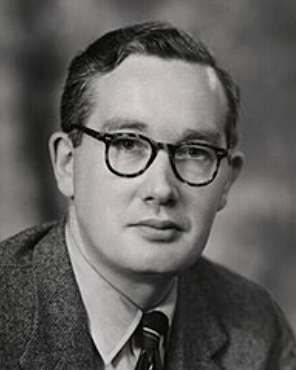 Derek Barton合作论文数Texas A&M University15
 Warinthorn Chavasiri合作论文数Department of Chemistry, Texas A&M University7Rur Wahl合作论文数4Stéphane D. Bévière合作论文数4
 Darío Doller合作论文数Schering-Plough Research Institute4Dennis K. Taylor合作论文数3DR HILL合作论文数3Béatrice M. Chabot合作论文数3
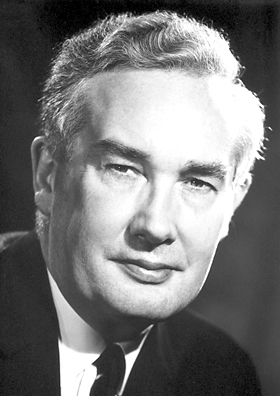 Derek H.R. Barton合作论文数Institut de Chimie des Substances Naturelles2David R. Hill合作论文数1
 Jason Smith合作论文数Department of Materials, University of Oxford1John Mackinnon合作论文数1
 Joseph Reibenspies合作论文数X-ray Diffraction Laboratory, Department of Chemistry, Texas A&M University1Nathalie C. Delanghe合作论文数1D. H. R. Barton合作论文数1Tingsheng Li合作论文数1




