A composite support of CoO x –SiO2 was obtained through modifying silica with cobalt of different loadings; with CoO x –SiO2 as the support, a series of Pd/CoO x –SiO2 catalysts were prepared for the combustion of lean methane at low temperature. The effects of CoO loading and palladium precursor on the catalytic performance of Pd/CoO x –SiO2 were investigated. The Pd/CoO x –SiO2 catalyst containing 20 wt% CoO and 1 wt% Pd with acetate as palladium precursor performs excellently in lean methane combustion; over it a complete conversion of methane can be achieved at 420 °C and the activity does not show any decline in a long-term test of 120 h. Various characterizations suggested that cobalt species are highly dispersed on the silica of high surface area and there exists a synergetic interaction between palladium and cobalt species, which improves the redox properties of Pd/CoO x –SiO2 and contributes to the excellent catalytic performance in lean methane combustion.
Zeolite ZSM-23 materials with different Si/Al ratios were synthesized under static hydrothermal conditions using pyrrolidine as template. The samples obtained were characterized by powder X-ray diffraction, N2 adsorption/desorption, ICP atom emission, scanning electron microscopy and FTIR of adsorbed pyridine, and were found to be very highly efficient and stable catalysts for the catalytic cracking of C4 alkane.
Various effects on the synthesis of titanium silicalite-1 (TS-1) were discussed in the non-TPAOH (tetrapropyl ammonium hydroxide) inorganic reactant synthesis system, in which cheap colloidal silica and TiCl3 aqueous solution, TiCl4 were used as the silicon and titanium sources, respectively, TPABr (tetrapropyl ammonium bromide) as the template reagent, and weak organic bases as the base source to provide the alkalinity needed for crystallization. The influence of diverse synthesis parameters such as different base sources, SiO2/TiO2 ratio, silicon source, titanium source, amounts of template, N2 protection, seed crystals, aging period, amount of water, crystallization temperature, and crystallization time have been investigated in detail.
There has been an increasing interest in recent years in catalytic cracking of mixed C4 alkene to produce ethylene and propylene over zeolite catalysts. Among numerous catalysts which are used in such a process, the zeolite ZSM-23 showed distinctive potential. In this report, pure and well-crystallized ZSM-23 (MTT) catalyst was synthesized under static hydrothermal conditions using pyrrolidine as template. The product obtained was characterized by powder X-ray diffraction (XRD), ICP atom emission, scanning electron microscopy (SEM), thermal analysis (TGA-DTA) and FTIR of adsorbed pyridine. The ZSM-23 was used as catalyst in mixed C4 alkene cracking and showed very high catalytic activity and yields of ethylene and propylene. The effects of reaction temperature, WHSV crystallite size, pore size and Si/Al ratio on the catalytic activity were also studied in detail.
 Jishuan Suo合作论文数3Guang QIAN (钱广)合作论文数1ShuNa Li (李术娜)合作论文数1Huaqing Zhu (朱华青)合作论文数Institute of Coal Chemistry, Chinese Academy of Sciences1
 Qiang Gao (高强)合作论文数School of Chemistry & Chemical Engineering, Shaanxi Normal University1
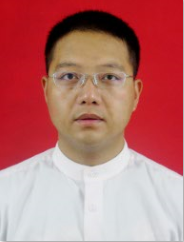 Yong Ding (丁勇)合作论文数School of Science, Nanjing University of Science and Technology1
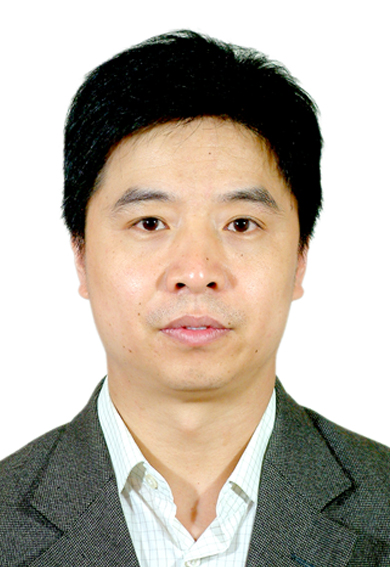 Guofu Wang (王国富)合作论文数Institute of Coal Chemistry, Chinese Academy of Sciences1
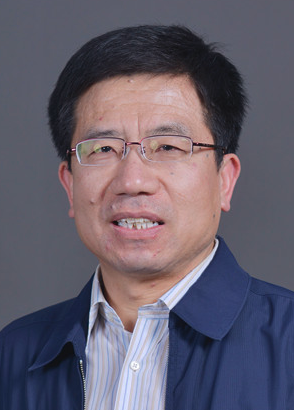 Weibin Fan (樊卫斌)合作论文数Institute of Coal Chemistry, Chinese Academy of Sciences1Guixian Li合作论文数1
 Jianguo Wang (王建国)合作论文数Institute of Applied Physics and Computational Mathematics1
 Zhikai Li (李志凯)合作论文数Institute of Coal Chemistry, Chinese Academy of Sciences;University of Chinese Academy of Sciences1Liang Yan (晏亮)合作论文数1
 Zhiwei Wu (吴志伟)合作论文数Institute of Coal Chemistry, Chinese Academy of Sciences;University of Chinese Academy of Sciences1Xiaolai Wang合作论文数1
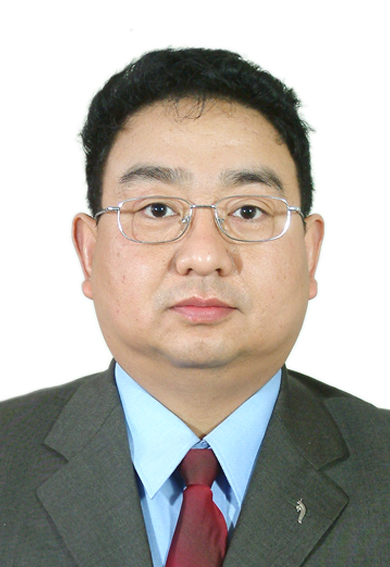 Zhangfeng Qin (秦张峰)合作论文数Institute of Coal Chemistry, Chinese Academy of Sciences1Yanqiang Liu (刘彦强)合作论文数Grinm Group Corporation Limited1Dong Ji合作论文数1Jiandong Gao合作论文数1Gaomeng Lu合作论文数1




