Traditional auxiliary power supply bidirectional DC/DC converter in hydrogen electric hybrid vehicle has the problems of high power tube loss and reverse recovery of parasitic diode. In order to solve these problems, this paper first improves its topology, adopts a non-isolated bidirectional Buck/Boost topology, and makes its two power switch tubes complementary on when working, realizes the zero voltage conduction of the power tube, and inhibits the reverse recovery of the parasitic diode of the power tube. Secondly, the analytical model of the converter is established by the modified state average method, and the two power switch tubes are uniformly controlled by the complementary control mode, which ensures the stable operation of the two-way flow of energy of the system. By using the built 1.2 Kw experimental prototype to verify, the obtained experimental waveform and data verify that the converter realizes soft switching, reduces power loss and improves conversion efficiency.
In view of the fact that the existing OTDR (Optical Time-Domain Reflectometry) system is difficult to meet the requirements of high resolution and long distance sensing, based on the optical time domain reflectometer, this paper studies the factors affecting the performance of the system by analyzingBOTDR (Brillouin Optical Time-Domain Reflectometry) technology, by means of the time-varying Markoffchain model, combined with the compilation of the time-varying Markoff chain model, an code sequencepulse light technology is proposed to optimize the signal-to-noise ratio of BOTDR system. This method canrealize the long distance sensing under the condition of low detecting light power, and improve the accuracyof the sensing system by improving the data fitting method. Finally, the practicability and effectiveness ofthe method is verified by experiments..Keywords- OTDR, optical time domain
Neoadjuvant chemotherapy (NAC) is the widely Immune checkpoint inaccepted treatment strategy for locally advanced ESCC and has been used in the past decades to downstage and improve the surgical resection rate for this malignancy. Immune checkpoint inhibitors (ICIs) have been shown to be efficient for advanced ESCC, while few studies focus on the neoadjuvant combination of immunotherapy and chemotherapy. To this end, we designed a trial to evaluate the safety and efficacy of toripalimab, a PD-1 inhibitor, combined with nab-paclitaxel (nab-P) and S-1 followed by radical resection surgery for resectable ESCC.
In order to simulate the target echo energy of semi-active laser guidance in actual combat environment, an injection laser energy simulation device was designed and developed. The laser-guided energy transfer process and simulation techniques were researched. First of all, aiming at the working process of laser guided weapons, the laser scattering and attenuation model in the atmosphere were established. Fog, rainfall, and interference smoke existing in actual combat were modeled and simulated. Then, the overall scheme of the laser target echo energy simulator was proposed. The DPS-A laser and Brewster angle polarizer were used to simulate the laser attenuation. A fiber coupling and uniform light collimation system was designed. Finally, a laser-guided semi-physical simulation system was constructed, laser echo energy simulation experiments, seeker calibration and laser terminal guidance experiments were performed, respectively. The results show that laser energy simulation error is less than 3%, the residual error within the linear range of the seeker is less than 0. 08, the accuracy of angle measurement is less than 0. 45 mrad, and the tracking error of line-of-sight angle in the terminal guidance process is less than 0. 2. The system can simulate laser energy transmission in a variety of real-world environments with high accuracy, which can meet the requirements of laser-guided semi physical simulation.
Heavy vehicle brake system controlled by electron-hydraulic servo is analyzed and designed in this paper. Considered the high speed, heavy weight and quick brake of heavy vehicle, the schemes of double pipeline brake that double chamber in brake cylinder controlled by dual brake valve used electron-hydraulic servo control is adopted in the brake system which can accomplish steering brake and emergent brake for heavy vehicle. Based on analyzed the influence of composed unit and linked pipeline to brake performance, the nonlinear mathematic model is developed for the brake system. The double pipeline steering brake is discussed by simulation experiment. The simulation results proved the rationality to develop the double pipeline brake system. Moreover the test-bed control experiments for the brake system of heavy vehicle are carried out, the experimental data prove that the brake performance achieve the design request.
 jingang su合作论文数1usha raghuram合作论文数1
 Li Jin合作论文数1charlene chen合作论文数1D-L Cao合作论文数1G-M Zhang合作论文数1C-Y Bao合作论文数1H-L Zhang合作论文数1Kejian Liu合作论文数1wenying liu合作论文数1
 Ye Wang (王烨)合作论文数1Chen-yang XU (徐晨阳)合作论文数1Cai Liang合作论文数1bei li合作论文数1X-J Qin合作论文数1Jin Dan合作论文数1Ma Yanhong合作论文数1Zhou Qiang合作论文数1
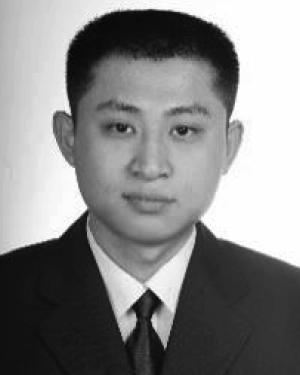 Zhao Long合作论文数1S. Sun合作论文数1
 John Foster合作论文数Intermolecular Inc1olov karlsson合作论文数1Wenguang Luo合作论文数Guangxi University of Technology(Guangxi University of Technology ^),Liuzhou,China1Huifeng Wang合作论文数1
 Amol M. Joshi合作论文数School of Business, Wake Forest University1Zi-lan ZHAO (赵子兰)合作论文数1Shiyuan Zhou (周识远)合作论文数甘肃省电力公司1Yue Ning (宁悦)合作论文数School of Mechanical and Aerospace Engineering, Jilin University1
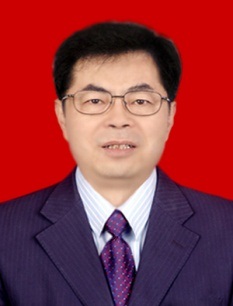 Ningbo Wang (汪宁渤)合作论文数State Grid Gansu Electric Power Company1
 Paul J. L. Zhang合作论文数Department of Pathology and Lab Medicine, Division of Anatomic Pathology, University of Pennsylvania Medical Center1Junqiang Zhang (张军强)合作论文数1
 Tingting Sun (孙婷婷)合作论文数School of Chemistry and Biological Engineering, University of Science and Technology Beijing1
 Kun Ding (丁坤)合作论文数国网甘肃省电力公司发展事业部1
 Hongyan Zhang (张红彦)合作论文数School of Mechanical and Aerospace Engineering, Jilin University1Jian Li合作论文数1
 Wang Hongwei合作论文数Institute of High Energy Physics, Chinese Academy of Science1Guoxi Zhang合作论文数1
 Su Ming Sun合作论文数1Zhendong Hong合作论文数1Xikui Miao (苗锡奎)合作论文数1
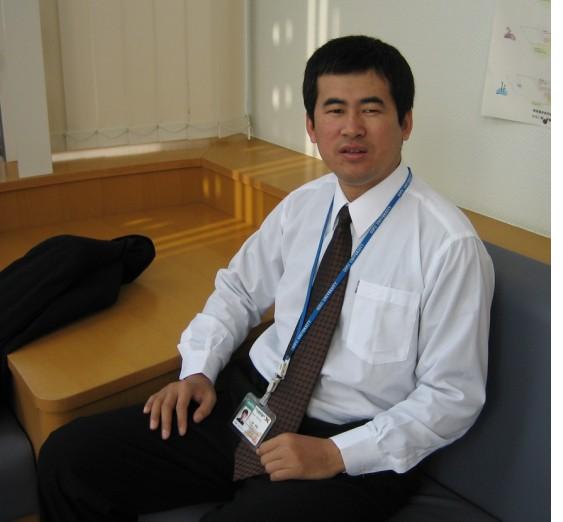 Mingde Gong (巩明德)合作论文数School of Mechanical Science and Engineering, Jilin University1




