The secondary school teaching supervision system is a beneficial supplement of establishing school-level teaching supervision system, and it also is an important means of promoting the steady improvement of teaching quality in schools and universities. The object of this dissertation is the secondary school teaching supervision system and the aim of this dissertation is to transfer the relationship between “supervision” and “guidance”, so the secondary teaching supervision system which mainly based on the stimulation, takes guidance as the major and uses supervision as the supplement is proposed. Based on this system, the dissertation gives the specific execution strategy about the construction of supervision team, the innovation of supervision content and the cultivation of supervisor, etc. Finally, the dissertation analyzed the advantages of this secondary school teaching supervision system.
Given the scheduling model of bike-sharing, we consider the problem of hitting a set of n axis-parallel line segments in \(\mathbb {R}^2\) by a square or an \(\ell _\infty \)-circle (and two squares, or two \(\ell _\infty \)-circles) whose center(s) must lie on some line segment(s) such that the (maximum) edge length of the square(s) is minimized. Under a different tree model, we consider (virtual) hitting circles whose centers must lie on some tree edges with similar minmax-objectives (with the distance between a center to a target segment being the shortest path length between them). To be more specific, we consider the cases when one needs to compute one (and two) centers on some edge(s) of a tree with m edges, where n target segments must be hit, and the objective is to minimize the maximum path length from the target segments to the nearer center(s). We give three linear-time algorithms and an \(O(n^2\log n)\) algorithm for the four problems in consideration.
We consider a variant of visibility-constrained Voronoi diagrams for n given point sites in the Euclidean plane. Whereas such diagrams typically are of size Ω(n2), the combinatorial and algorithmic complexity of the studied variant is significantly subquadratic in n.
Minimum Common String Partition (MCSP) has drawn a lot of attention due to its application in genome rearrangement. The best approximation algorithm has a factor O(lognlog* n) and it was shown most recently that it is FPT (but with a very high running time). In this paper, we consider the decision version of the one-sided MCSP problem (formally called the exact block cover problem); namely, when one sequence is already partitioned into k blocks, how to decide whether the other sequence can be partitioned accordingly. While this decision problem is obviously in FPT, we show interesting results in this paper: (1) If each letter is allowed to appear at most twice (or three times), then the problem is polynomially solvable, (2) There is an FPT algorithm which runs in O *(2 k ) time, improving the trivial bound of O *(k!), and (3) If |Σ| = c, c being a constant at least 2, then the problem is NP-complete.
 Binhai Zhu合作论文数Department of Computer Science Montana State University3
 Hao Ji合作论文数1
 Zhihui Liu (刘知辉)合作论文数School of Qilu Transportation, Shandong University1Yanjun SHAO (邵艳君)合作论文数1Xiaozhou He合作论文数1
 Haitao Jiang (姜海涛)合作论文数School of Computer Science and Technology, Shandong University1
 Guohui Lin (林国辉)合作论文数Department of Computing Science, Faculty of Science, University of Alberta1Yong Chen合作论文数Department of Mathematics, Zhejiang University1
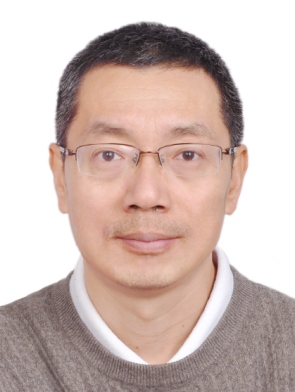 Tian Liu (刘田)合作论文数Key Lab of High Confidence Software Technologies, Ministry of Education, Peking University;School of Computer Science, Peking University1
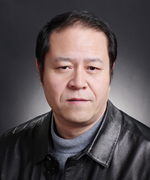 Yinfeng Xu (徐寅峰)合作论文数Donghua University1
 Peng Zhang (张鹏)合作论文数Laboratory of Combinatorial Optimization and Algorithms, School of Software, Shandong University1
 Franz Aurenhammer合作论文数Institute of Theoretical Computer Science, Graz University of Technology1
 Feifeng Zheng (郑斐峰)合作论文数Donghua University1Farong Zhong (钟发荣)合作论文数College of Mathematics and Computer Science, Zhejiang Normal University1Taibo Luo合作论文数1
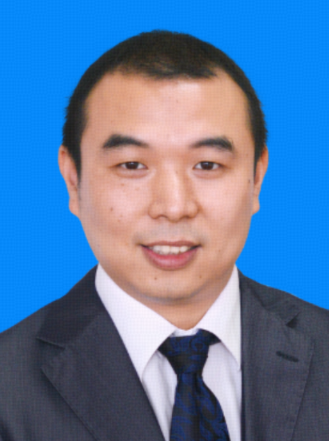 Mingyu Xiao (肖鸣宇)合作论文数School of Computer Science and Engineering, University of Electronic Science and Technology of China1




