This article examines how people with disabilities in the state of Kerala, India experience and respond to the impacts of climate change, drawing on 72 semi-structured interviews with disabled individuals, caregivers, and key stakeholders. Although Kerala has comparatively strong social development indicators and has taken steps toward disability-inclusive climate and disaster planning, our findings reveal persistent social, economic, and institutional barriers that heighten climate vulnerability for people with disabilities. Participants described how inaccessible early-warning systems, evacuation procedures, emergency shelters, and relocation programs intensify exposure to climate hazards and limit their ability to respond effectively. Longer-term structural factors, including poverty, inadequate housing, limited access to assistive devices and medical care, and discriminatory attitudes, further constrain their adaptive capacity. Using a social-relational model of disability, the article shows how ableism intersects with other inequalities to shape exposure, sensitivity, and adaptive capacity in the face of climate risks. At the same time, the study highlights the agency and expertise of disabled individuals, who engage in creative adaptation strategies, mutual aid, and other forms of community support, strengthening resilience within and beyond the disability community. The article argues for disability-inclusive and universally designed solutions across multiple sectors relevant to climate resilience and underscores the importance of centering disabled people’s knowledge in adaptation planning.
Conceptualising public authority as continually performed, this paper traces the interplay between modes of legitimation, state capacity and scalar politics in governing the COVID-19 pandemic. Despite attempts to unify COVID responses nationally, governance practices differed across India's cities: Ahmedabad (Gujarat) heightened policing, Thiruvananthapuram (Kerala) engaged its decentralised governance institutions, and Chennai (Tamil Nadu) sought to universalise welfare provision. National-state political dynamics shaped these differences, but performing public authority under crisis conditions also required innovation based around pre-existing legitimating 'scripts' and state capacity. By enacting an expanded, responsive local state, these performances can indicate possible pathways towards more inclusive disaster responses.
The protest of ASHAs (Accredited Social Health Activists) in Kerala, India, carries significant potential in shaping broader working-class solidarities among women care workers in the state. However, it is crucial to situate their demands - and those of other scheme-based voluntary women workers - within the wider context of labour informalities and the state's appropriation of unpaid and underpaid care work. Although advocating for improved wages is crucial, emphasising only one group and asserting that the nature of their work warrants higher pay may undermine broader collective action, especially when the lived realities of most women care workers are similarly precarious.
Contrary to general perceptions of the outcomes of Kerala model development on the gender-equality front, the state also coincides with the pattern of societal orders rife with sexual violence against women. The nexus of an indifferent state, corrupt institutions/functionaries and deep pockets of perpetrators has been denying justice to the victims. But what have currently markedly varied are the articulations of resistance and solidarity building recounted in the response of the ‘survivors’ of patriarchal violence. Bringing forward multiple collectives across differences, these feminist campaigns promise to create a significant shift in Kerala's socio-cultural landscape. These, however, are not devoid of challenges from the reactionary elements in society. One thing to be worked out from the responses of the survivors is the materializing of a broader platform of solidarity with space for plurality. These developments, therefore, further gain in importance when considered in conjunction with contemporary neoliberal articulations of feminist politics that undermine collective mobilizations.
Fertility has declined significantly across the socioeconomic spectrum in the south Indian state of Tamil Nadu, which has the potential to increase the strains of support provision for family members and to limit support for dependent older people. We used a qualitative approach to explore the challenges that adults (N = 113) from varying socioeconomic backgrounds (urban/rural and socioeconomic status) in Tamil Nadu experience when supporting their older relatives, and to understand how they cope with these challenges. While the broad challenges mirrored those seen elsewhere in India and globally (e.g., role conflict), some were particular to the context of contemporary Tamil Nadu (e.g., difficulties around supporting son/child-less or non-co-resident elders). The challenges experienced were qualitatively similar across socioeconomic groups but affluent families had more coping strategies available to limit the negative outcomes of support provision. We highlight the potential value of universal health coverage for promoting family-based support for older Indians, the urgent need for strategies to ease the challenges for lower socioeconomic status families, and the importance of wider socioeconomic policy to reduce the financial and time pressures that restrict the support that much of the population can provide each other.
This paper analyses the 2019 general elections and the by-elections that followed in the state of Kerala, India, to discern the changing gender dynamics that produced certain kinds of 'desirability' and 'approval' around the candidature of women politicians. By tracing the historical trajectory of women's engagement in public politics in the state, this paper attempts to identify the coordinates of evolving gender dynamics that decidedly shape women's political representation. It identifies three specific frameworks such as 'honorary masculinity, ''relaxed honorary masculinity,' and 'welfarist feminine altruism' in and through which three generations of women politicians entered into public politics and carved out their niches. However, what is striking is that the framework of 'welfarist feminine altruism', originated at the local level during the mid-1990s in the context of decentralisation, is getting extended to the state level. It incorporated specific markers of 'desirability' that accommodates the current caste and religious identity politics. This has led to effectively push women politicians further towards the margins of mainstream politics. The study thus raises the question of intersectionality in women's political leadership, which is relevant to the contemporary analysis of women's political representation.
In this article, we foreground the potential for a space for collective deliberation and political subjectivities building among women leaders in local governance. We interrogate the Gramamukhya portal, which was initiated in 2011 and continued until 2015, as a democratic space to politicise the invited spaces of governance. Revisiting the question of women’s engagement in panchayati raj institutions in Kerala, we suggest that the practice of citizenship can become politically effective for women in governance if they use a platform that facilitates critical engagement from within and without the invited spaces of participation. This reflection becomes all the more significant given the contemporary political context of Kerala, where the women’s question is caught between developmentalist intentions of the state and right-wing political mobilisations at the grass-roots level.
The authors tested theories of housework among tea plantation workers in India, where women comprise the main part of the workforce and are breadwinners in their families. Analysis of 49 semistructured interviews and survey data from 3,181 female workers revealed that although women were mainly responsible for domestic labor, more than half of husbands usually or sometimes helped their wives with cooking, fuel wood collection, and child care. The analyses revealed a curvilinear relationship between husbands' earnings share and their participation in each task, supporting theories of bargaining and gender display. The probability of male participation decreased to its lowest level when men earned less than their wives. Husbands rarely helped with clothes washing-considered the most feminine task-and their participation did not respond to changes in relative earnings. These results support the authors' argument that patterns of bargaining and gender display will vary depending on the gendered nature of housework tasks within a particular society.
One of the benefits often claimed for ‘moving’ the state closer to people through the institutional reforms of democratic decentralisation is an improvement in the inclusion of politically marginalised groups. Decentralisation promises to deliver both the closer physical presence of centres of government and the formalisation of practices of representation at the grassroots. These changes in turn are expected to provide opportunities for historically marginalised groups to improve their associational capacities, and to gain recognition as rights-bearing citizens. This idea is examined through the experience of Kerala, which has one of the most thorough programmes of democratic decentralisation within India. Decentralisation has indeed provided new pathways to engage with local government. However, attempts to ‘rescale’ the state to the local level have also reshaped existing institutional channels for representation, political discourses, and everyday state practices, in ways which produce new microgeographies of exclusion. This paper highlights the importance of these everyday experiences of marginalisation for programmes of state reform. It argues that if they are ignored, decentralisation risks reproducing narrow forms of majoritarian localism, and its potential to contribute to building substantive democracy will be lost.
The rapidly changing urban scenario seems to have important implications for gendering governance in Kerala. Thus, besides the different histories mediated by caste and community, the spatial location of women leaders in local governance appears to be of central importance in shaping their agency. This article which is based on the research about women leaders in local governance in Kerala in 2005-10 explores the extent to which success in local governance allowed these women entry into politics and gave them a greater presence within the public life. Generally it is seen that successful women leaders are often the bearers of a specific form of power that has been historically associated with the deployment of sentiment and affect, and ideal femininity, and that such power is understood to be crucial to local governance as well. However, an entirely different picture emerged from this study on women leaders of urban governance. Besides gentle power, successful women attribute their success equally to knowledge - of official norms and procedures.
This paper presents a relational approach to the study of poverty (Mosse, 2010), and uses this to critically evaluate state strategies for identifying and alleviating poverty in Kerala, India. It traces these from national planning documents through to their point of implementation, drawing on qualitative research in two of Kerala's poorest Districts. Ideas of participatory poverty classification, economic self-reliance and political empowerment are laudable national policy goals, and Kerala has shown innovation in its adaptation of these within the State's devolved structures of local governance. However, both the framing of policy and its implementation reproduce ideas of individual transitions out of poverty which indicate that the state pays insufficient attention to the highly unequal social and economic relationships reproducing poverty in contemporary Kerala - in short, to poverty's inherently political nature. (C) 2012 Elsevier Ltd. All rights reserved.
139955Kerala's poverty eradication programme, Kudumbashree, aims to enhance women's economic development and enable women to become 'active citizens'. The programme has been largely successful in terms of the numbers of women involved, their levels of engagement with the local state, and their increased ability to save money and access subsidised credit. However this study suggests that, as a result of local political cultures and sustained patterns of social exclusion, some of the poorest and most marginalised women find it difficult to access the programme, and many of the women who are involved still lack decision-making power and autonomy.
This article examines the operation of Kudumbashree, the Poverty Eradication Mission for the Indian State of Kerala. Kudumbashree operates through female-only Neighbourhood Groups, which aim to contribute to their participants' economic uplift, and to integrate them with the activities and institutions of local governance. As such, Kudumbashree echoes poverty alleviation programmes elsewhere in the Global South designed to link poverty alleviation to 'active citizenship'. This article evaluates the programme, looking in turn at its impacts on women's participation in public space, its attempts to engineer participatory citizenship through engagement with the local state, and the wider consequences of its particular linking of participation and poverty alleviation for processes of exclusion within Kerala. It argues that although the programme has undoubtedly been successful in its scale and in supporting women's public participation, questions remain over both the autonomy of the "invited spaces' it has created, and the underlying vision of poverty alleviation it embodies.
In this paper, historical analysis and qualitative fieldwork are combined to question the belief that recent efforts in Kerala to induct women into local governance and mobilize poor women into self-help groups implies continuity with the earlier history of women's mobility into the spaces of paid work and politics. For a longer view, the histories of gender-coding of spaces and of women's mobility into paid work and politics are examined. In the twentieth century, while the subversive potential of paid work was contained through casting it within 'feminine terms', politics was unquestionably 'unfeminine space'. However, recent efforts have not advanced women's mobility in any simple sense. The subversive potential of women's mobility towards work in self-help groups is still limited. In local governance, unlike the experience of an earlier generation of women, the ability to conform to norms of elite femininity now appears to be a valuable resource.
 Glyn Williams合作论文数Department of Urban Studies and Planning, Faculty of Social Sciences, The University of Sheffield10
 s nandigama合作论文数Birla Institute of Technology and Sciences-Pilani7
 d narayana合作论文数6d bhattacharyya合作论文数6
 J. Devika合作论文数6
 Karen Coelho合作论文数Madras Inst Dev Studies2
 Darshini Mahadevia合作论文数2A. K. Rajasree合作论文数1P. R. Nisha合作论文数1
 Judith Lieber合作论文数1
 Katherine Lofts合作论文数1
 Nancy Luke合作论文数Dept Sociol & Criminol, Penn State Univ1
 Raphael Lencucha合作论文数School of Physical & Occupational Therapy, Faculty of Medicine and Health Sciences, McGill University1
 Matthew Hunt合作论文数School of Physical & Occupational Therapy, Faculty of Medicine and Health Sciences, McGill University1
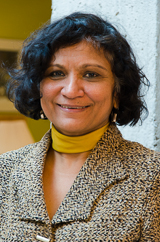 Nandini Ramanujam合作论文数Faculty of Law, McGill University1
 Sébastien Jodoin合作论文数Faculty of Law, McGill University1
 Hongwei Xu合作论文数1
 Iliatha Papachristou Nadal合作论文数Department of Applied Health Research, UCL1Debashish Bhattacharya合作论文数1Aarti Kawlra合作论文数1Lynda Clarke合作论文数1
 Reshma Bharadwaj合作论文数Department of Biosciences and Bioengineering, Indian Institute of Technology Bombay1Sanjay Kinra合作论文数London School of Hygiene and Tropical Medicine, London, United Kingdom1
 Gary W. Williams合作论文数Department of Agricultural Economics;Texas Agribusiness Market Research Center;Texas A&M Uni -;Department of Agricultural Economics, Texas Agribusiness Market Research Center1Usha Zacharias合作论文数1Ranjini Krishnan合作论文数1




