Atrial fibrillation (AF) is a common cardiac arrythmia that is usually developed for elder people with aging. AF may result in complications such as chest pain or even heart failure in later stage. Based on the characteristics of surface ECG, AF can be detected by several methods. A particular investigation on the fibrillatory waveform reveals the inherent structure of AF signals. As opposed to traditional frequency domain methods, we utilize the stationary wavelet transform to extract the information from ECG signal which differentiates AF and non-AF cases based on some feature extraction and selection processes. A linear classifier is then designed for computational efficiency. The proposed method eliminates the need for QRST cancellation step which is required for frequency domain methods and provides a more systematic approach for AF detection. Extensive experiments are tested on signals from the MIT-BIH Atrial Fibrillation Database to show the superior performance of the proposed algorithm.
The empirical mode decomposition (EMD) was recently proposed as a new time-frequency analysis tool for nonstationary and nonlinear signals. Although the EMD is able to find the intrinsic modes of a signal and is completely self-adaptive, it does not have any implication on reconstruction optimality. In some situations, when a specified optimality is desired for signal reconstruction, a more flexible scheme is required. We propose a modified method for signal reconstruction based on the EMD that enhances the capability of the EMD to meet a specified optimality criterion. The proposed reconstruction algorithm gives the best estimate of a given signal in the minimum mean square error sense. Two different formulations are proposed. The first formulation utilizes a linear weighting for the intrinsic mode functions (IMF). The second algorithm adopts a bidirectional weighting, namely, it not only uses weighting for IMF modes, but also exploits the correlations between samples in a specific window and carries out filtering of these samples. These two new EMD reconstruction methods enhance the capability of the traditional EMD reconstruction and are well suited for optimal signal recovery. Examples are given to show the applications of the proposed optimal EMD algorithms to simulated and real signals.
The empirical mode decomposition (EMD) was recently proposed as a new time-frequency analysis tool for nonstationary and nonlinear signals. Although the EMD is able to find the intrinsic modes of the signal and is completely self-adaptive, it does not have any implication on optimality. In some situation, when certain optimality is considered, we need a more flexible signal decomposition and reconstruction scheme. We propose a modified version of the EMD, which enhances the capability of the EMD. The proposed modified EMD algorithm gives the best estimate to a given signal in the minimum mean square error sense. Two different formulations are proposed. The first one utilizes a linear weighting for the intrinsic mode functions (IMF). The second algorithm adopts a bidirectional weighting, namely, it not only uses weighting for IMF modes, but also exploits the correlations between samples in a specific window and carries out filtering in the window. These two new EMD methods extend the capability of the traditional EMD and is well suited for optimal signal recovery. Simulation studies are performed to show the application of the proposed optimal EMD algorithms to denoising problem.
In linear finite-impulse-response filter design, it is desirable that the filter frequency response has linear phase (LP). In this brief, we investigate the LP concept for nonlinear Volterra filters. The LP condition of Volterra filters is defined in terms of its output spectrum in which the phase term introduced by the Volterra kernels is linear. It is shown that under certain symmetry conditions, the LP condition is satisfied by Volterra filters. Moreover, the LP condition for Volterra filters can be considered as an extension to the linear filter case.
Image sequence prediction is widely used in image compression and transmission schemes such as differential pulse code modulation. In traditional predictive coding, linear predictors are usually adopted for simplicity. The nonlinear Volterra predictor can be employed as an alternative to linear predictors to compensate for the nonstationary and non-Gaussian nature of image sequences. Although the Volterra predictor avoids the smoothing effects introduced by linear predictors, it generally amplifies noise contamination present in the images. In this letter, we propose a nonlinear polynomial weighted median (PWM) predictor for image sequence. The proposed PWM predictor is more robust to noise, while still retaining the information of higher order statistics of pixel values. Experimental results illustrate that the PWM predictor yields good results in both high and low motion video. It is especially suitable for high motion sequence in noisy case. The proposed scheme can be incorporated in new predictive coding systems.
The electrocardiogram (ECG) is widely used for diagnosis of heart diseases. Good quality ECG are utilized by physicians for interpretation and identification of physiological and pathological phenomena. However, in real situations, ECG recordings are often corrupted by artifacts. Two dominant artifacts present in ECG recordings are: (1) high-frequency noise caused by electromyogram induced noise, power line interferences, or mechanical forces acting on the electrodes; (2) baseline wander (BW) that may be due to respiration or the motion of the patients or the instruments. These artifacts severely limit the utility of recorded ECGs and thus need to be removed for better clinical evaluation. Several methods have been developed for ECG enhancement. In this paper, we propose a new ECG enhancement method based on the recently developed empirical mode decomposition (EMD). The proposed EMD-based method is able to remove both high-frequency noise and BW with minimum signal distortion. The method is validated through experiments on the MIT-BIH databases. Both quantitative and qualitative results are given. The simulations show that the proposed EMD-based method provides very good results for denoising and BW removal.
Most nonlinear system identification methods based on Volterra model assume that the underlying system is time-invariant. In this paper, a novel identification method for time-varying Volterra systems (TVVS) is proposed. We view this problem from a different perspective in the sense that the system identification problem is converted to a state estimation problem of a dynamic system. The time-varying Volterra kernels are governed by a Gauss-Markov stochastic difference equation upon which a state-space representation of time-varying Volterra systems is built. The state transition matrix and noise covariance of the underlying state equations are usually unknown. Therefore, we develop a method to estimate these unknown quantities. Finally, a Kalman filtering scheme is utilized to identify and track the time-varying Volterra system. Simulation examples are given to illustrate the better performance of the proposed method as compared with other adaptive identification methods such as the LMS and RLS algorithms.
DNA sequence analysis has been widely studied by gene-expression microarray techniques. Few results, however, have been provided by Terahertz spectroscopy which reveals the absorbtion or reflectance percentage from different DNA sequences. Previous Terahertz methods have lacked a quantitative analysis of the spectroscopy features, and no definitive conclusion regarding the data can be easily drawn. In this paper, we use a signal processing approach which gives a quantitative interpretation of the DNA spectroscopy. Due to the presence of physical noise, the data can be contaminated by both random fluctuations and impulsive noise. A new signal processing tool called empirical mode decomposition (EMD) is employed to remove the noise and extract the trend of the signal. The data is subsequently partitioned by clustering methods. Experimental results of Terahertz spectroscopy of several different DNA samples show that the EMD aids the clustering process and yields clustering of higher validity than that obtained from the raw data.
The electrocardiogram (ECG) has been widely used for diagnosis purposes of heart diseases. Good quality ECG are utilized by the physicians for interpretation and identification of physiological and pathological phenomena. However, in real situations, ECG recordings are often corrupted by artifacts. One prominent artifact is the high frequency noise caused by electromyogram induced noise, power line interferences, or mechanical forces acting on the electrodes. Noise severely limits the utility of the recorded ECG and thus need to be removed for better clinical evaluation. Several methods have been developed for ECG denoising. In this paper, we proposed a new ECG denoising method based on the recently developed Empirical Mode Decomposition (EMD). The proposed EMD-based method is able to remove high frequency noise with minimum signal distortion. The method is validated through experiments on the MIT-BIH database. Both quantitative and qualitative results are given. The results show that the proposed method provides very good results for denoising.
Nonlinear system identification has been studied under the assumption that the noise has finite second and higher order statistics. In many practical applications, impulsive measurement noise severely weakens the effectiveness of conventional methods. In this paper, /spl alpha/-stable noise is used as a noise model. In such case, the minimum mean square error (MMSE) criterion is no longer an appropriate metric for estimation error due to the lack of finite second-order statistics of the noise. Therefore, we adopt minimum dispersion criterion, which in turn leads to the adaptive least mean pth power (LMP) algorithm. It is shown that the LMP algorithm under the /spl alpha/-stable noise model converges as long as the step size satisfies certain conditions. The effect of p on the performance is also investigated. Compared with conventional methods, the proposed method is more robust to impulsive noise and has better performance.
This paper proposes a novel frequency offset (FO) estimator for differential orthogonal frequency division multiplexing. By separating the normalized FO into integral and fractional parts, our FO estimation is carried out in two successive stages. In the first stage, we take advantage of differential coding and the finiteness of signal constellation to derive a channel-independent cost function whose minimization leads to an accurate estimate of the fractional part. It is proved that under certain mild assumptions, the identifiability of the fractional part can be guaranteed with probability one. After compensating the fractional part, the second stage estimates the remaining integral part with the aid of a judiciously designed initial block of differential coding. Combining these two stages, the proposed estimator is shown capable of offering full-range FO estimation without relying on any training or virtual subcarriers. Furthermore, unlike some existing estimators, the proposed estimator is applicable in both frequency-flat and frequency-selective fading channels. Another salient feature of the proposed estimator is that accurate FO estimation can be achieved with two received data blocks only, making it very attractive especially for short-burst communications. The merits of our FO estimator have been confirmed by theoretical analysis as well as corroborating simulations.
The MUSIC method represents a class of super-resolution methods for frequency estimation. However, it has poor performance in impulsive noise environments due to the presence of outliers. A more robust method called trimmed correlation based-MUSIC (TR-MUSIC) method is proposed in this paper. Through a trimming operation, outliers in the samples participating in the correlation calculation are discarded. The amount of trimming is determined by the Mahalanobis distance in which robust estimates of location and scale are utilized. Frequency estimation results from the eigendecomposition of the trimmed correlation matrix. Corroborating simulations are presented to show the robustness and performance improvement of the proposed method.
Sinusoidal frequency estimation has been studied for many years. The MUSIC method represents a class of super-resolution methods based on subspace decomposition. However, the MUSIC method has poor performance in impulsive noise environments due to the prevalence of outliers and very large noise variance. A more robust method called trimmed correlation based-MUSIC (TR-MUSIC) method is proposed in this paper. Through a trimming operation, outliers in the samples participating in the correlation calculation are discarded, yielding a correlation sequence that is closer to the true underlying correlation. The amount of trimming is determined by the Mahalanobis distance in which robust estimates of location and scale are utilized to compensate for outlier effects. Frequency estimation results from the eigendecomposition of the trimmed correlation matrix. In the simulations, we take α-stable noise (α > 1) as an example of impulsive noise. The proposed method is very robust and performs better than the conventional MUSIC and other robust methods. Furthermore, it can be applied to real signals as well as complex signals.
This paper proposes a novel blind carrier frequency offset (CFO) estimator for differential OFDM. By separating the normalized CFO into integral and fractional parts, our CFO estimation is carried out in two successive stages. In the first stage, we take advantage of differential coding and the finiteness of signal constellation to derive a channel-independent cost function whose minimization leads to an accurate estimate of the fractional part. It is proved that under certain mild assumptions, the identifiability of the fractional part can be guaranteed with probability one. After compensating the fractional part, the second stage estimates the remaining integral part with the aid of a judiciously designed initial block of differential coding. Combining these two stages, the proposed estimator is shown capable of offering full-range CFO estimation without relying on any training or virtual subcarriers. Another salient feature of the proposed estimator is that accurate CFO estimation can be achieved with two received data blocks only, making it very attractive especially for short-burst communications. The merits of our CFO estimator have been confirmed by theoretical analysis as well as corroborating simulations.
A novel blind carrier frequency offset estimator is proposed for differentially coded OFDM. Exploiting differential encoding and finiteness of signal constellation, our carrier-frequency offset estimation is carried out without requiring either channel knowledge or training. It is proved that under certain mild assumptions, the proposed estimator is capable of identifying the carrier-frequency offset with probability one. Different from some existing estimators, our proposed estimator does not rely on virtual subcarriers. More importantly, it is able to achieve reliable carrier frequency offset estimation by using only two received data blocks, which makes it very attractive especially for short-burst communications. The merits of our estimator are confirmed both by theoretical analysis and by simulations.
 Kenneth Barner合作论文数Department of Electrical & Computer Engineering, University of Delaware10
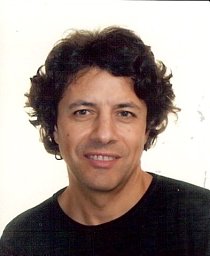 Manuel Blanco-Velasco合作论文数Department of Teoría de la Señal y Comunicaciones, Universidad de Alcalá3
 john j wang合作论文数1Michaud Francis合作论文数1
 James Kolodzey合作论文数Department of Electrical and Computer Engineering;University of Delaware;Department of Electrical and Computer Engineering, University of Delaware1
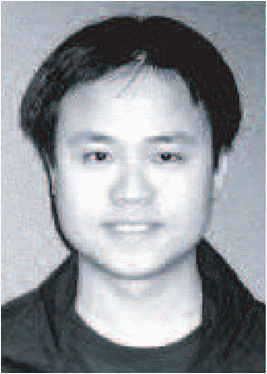 Qingyu Zhu合作论文数1
 Zhiqiang Liu合作论文数Analog Devices1
 Tuncer C. Aysal合作论文数Department of Electrical and Computer Engineering;McGill University1




