Purpose - Sustainability transitions (STs) refer to large-scale step changes in complex systems required to face sustainability issues. We aim to delineate how they can unfold in service ecosystems, especially when inspired by regenerative thinking. Design/methodology/approach - We develop a conceptual framework based on a processual view of STs and provide a propositional inventory based on literature leveraging deductive reasoning. Moreover, we contextualize our conceptualizations by showing illustrative examples of cities coping with STs. Findings - We connect the perception of unsustainability with the shift toward service-dominant (S-D) logic and identify them as triggers of an ST; we focus on the role of nested service ecosystems and the adoption of regenerative thinking in STs; finally, we highlight the domino effect that can drive continuous change towards sustainability in service ecosystems. Future research could be focused on (loss of) sensemaking for driving STs, practical approaches to deal with institutional tensions in nested service ecosystems and the possible fractality of ST processes in service ecosystems. Originality/value - This study supports the understanding of STs in cities and other systems such as industries, markets and organizations. It contributes to ST literature by suggesting the adoption of S-D logic and system lenses to identify, drive and cope with system changes toward sustainability, showing implications for policymakers and practitioners. Furthermore, it contributes to S-D logic by unfolding the self-adjustment of service ecosystems and the focus of sustainability initiatives on nested service ecosystems to sustain the broader systems. Finally, it contributes to transformative service research by identifying how the procedural and inspirational principles characterizing regenerative thinking can support design for STs.
The objective of this article is to create an understanding of how the UN sustainable development goals (SDGs) can be used to steer stakeholder engagement for transformative change, meeting global challenges, and navigate a new business-societal practice driven by a values-based business model. The article is a conceptual study with case studies of the role that the SDGs play in multi-stakeholder dialog via the kind of sustainable business-societal practice that takes corporate social responsibility (CSR) to the next level, where it is embedded in a values-based business model, creating a new meaning to effect real business-societal transformation. Multi-stakeholder dialog implies interactive and communicative engagement with the full range of stakeholders in order to create value for all, employing a societal perspective and using the value network as a basis for effective decision-making. We explain our methodological approach by presenting multi-stakeholder dialog in practice, in the form of multiple case studies. These empirical settings consisted of two values-driven privately owned companies with a strong reporting mechanism and a clear transformation agenda based on the SDG challenges: IKEA and Löfbergs. The empirical study provides the basis for our proposed model. This article makes an original contribution to the study of the use of SDGs in management and service research. It investigates steering and navigating processes in specific contexts in order to determine what should be subject to legal enforcement and what comprises moral and/or ethical value, particularly at the societal level.
In this chapter, we discuss innovative and sustainable transformation and what can be learned from sustainability challenges acting as a driving force to create a new business landscape for the future. The main purpose of this chapter is to develop and conceptualize in an explorative way a values-based sustainability practice in a business context embedded in "circular economy" thinking, which can be used for challenge-driven transformative change. The business context is that of IKEA, being a values-based global enterprise, and its vision-driven transformative change process of its entire business concept guided by a dynamic transforming culture and values where great importance is placed on sustainability thinking. The UN Sustainable Development Goals (SDGs) now underpin IKEA's business and are used as a compass to mobilize change.
This introduction presents an overview of the key concepts discussed in the subsequent chapters of this book. The book focuses on business transformation meeting global challenges. It discusses the impact that Principles for Responsible Management (PRME) has made in the last decade with its ongoing fostering of the business transformation process. The book demonstrates, innovation can be described in many different ways and with different emphases. It defines innovation as novel, smart and scalable solutions to societal challenges that meet new requirements, unarticulated needs, or existing market and societal needs. The book presents lessons learned and implications for a challenge-driven business and societal transformation. It introduces business transformation for sustainable future based on the three concepts of sustainability, innovation, and transformation. The book examines the role of individuals by discussing the transformation of people to a better life and better world – the real purpose of marketing.
Service Innovation for Sustainable Business, pp. 203-223 (2019) No AccessChapter 11: Values-Driven Service Innovation for Transformational ChangeSamuel Petros Sebhatu and Bo EnquistSamuel Petros SebhatuService Research Center — CTF, Karlstad University, Sweden and Bo EnquistService Research Center — CTF, Karlstad University, Swedenhttps://doi.org/10.1142/9789813273382_0011Cited by:0 PreviousNext AboutSectionsPDF/EPUB ToolsAdd to favoritesDownload CitationsTrack CitationsRecommend to Library ShareShare onFacebookTwitterLinked InRedditEmail Abstract: "Sustainable business" is a fuzzy term that implies that business is in some way sustainable, but in what way? Edvardsson and Enquist (2009) addressed values-based service for sustainable business and used IKEA for contextual understanding to study a values-based, driven global enterprise as a sustainable business. In this chapter, we use the concept of a sustainable business to assess and understand situations where sustainability is the key driver for innovation and transformation, embedded in the core values of the organization. The objective is built upon the latest service and transformative change management research, both theoretically and conceptually. We are using service research labeled as value creation through service, where service innovation and resource integration are two key elements, to interact with sustainable business practices and find a broader meaning, and to understand transformative change in the new globalized business landscape. The study presented in this chapter was also driven by innovation based on an organization's transformation agenda to co-create value and networking, and to secure engagement and the foundational values of the sustainable business. Nidumolu et al. (2009) has shown in an explorative way why sustainability can be seen as a key driver of innovation… FiguresReferencesRelatedDetails Service Innovation for Sustainable BusinessMetrics History PDF download
PurposeThe aim of this article is to provide a deeper conceptual understanding of the interdependence between service innovation, sustainability and quality in the age of accelerations in the context of cities. The research question is, how can service innovation, sustainability and quality interact in cities to meet the challenges of technology, globalization and climate change?Design/methodology/approachThe study adopts a qualitative research approach and cases study research method in the context of cities. In this article, meeting the challenges in the age of accelerations is analyzed and interpreted in an abductive process in an interaction between empirical findings of three progressive cities Freiburg, Malmö and Gothenburg and the conceptual and theoretical frame for getting a new meaning.FindingsThe article demonstrates the need for a deeper conceptual understanding of the interdependence of service innovation, sustainability and quality in the age of accelerations. Service innovation and quality improvement cannot be handled as a standalone managerial activity because these processes are part of values-based learning and developing a loop for transformation, value co-creation and sustainability practice.Research limitations/implicationsFuture research in this area should focus on generalizing the present findings to securing sustainable service business embedded on social and environmental perspectives and governance issues in other empirical settings and conceptualization.Societal implicationsThe article looks into the idea of an ecosystem to achieve a balance between nature and people: “Dynamic” and “complex” ecosystems can be illustrated in different contexts to ensure a strong commitment to societal and environmental perspectives to create value and develop a sustainability practice.Originality/valueThe article makes an original contribution by using insights from service research, quality movement research and from studying actual sustainability practices in the real-life contexts of cities by developing a conceptual paper.
The main aim of this paper is to assess and analyse how sustainable public transit (SPT) services contribute to building living cities in emerging economies through value network and resource integration/value co-creation, which is embedded on societal and environmental perspectives. The main theoretical and empirical challenges are how to understand public transport as dynamic and transformative values based service eco-system for living city regions to develop and implement a feasible and proactive tool for changing the mind-set, which is embedded on societal and environmental perspectives. The objective is to look deeper on how these emergent and fast growing cities are put together STP for building cities for people by focusing on societal and environmental issues, which value network of SPT are integrated and value is co-created within the service system. The paper has an explorative nature. It is built around three concepts - (i) SPT and value network (ii), resilient living cities in emerging economies and (iii) Societal and environmental perspectives. The paper illustrates these concepts with four different cases from Cape Town - South Africa, Buenos Aires – Argentina; Singapore - Singapore, and Jakarta - Indonesia. The study has identified the challenges of transforming emergent and fast urbanized cities, and understanding the role of public transport services from the cities perspective in an international context by embedding social and environmental perspectives. The challenges of transforming today's cities have created many new opportunities for prosperity through new ways of living and working in urban areas. The paper makes a contribution to the study of public transit services by explicitly linking the adoption of SPT value network in emerging economies based on sustainability, and resource integration/value co-creation for building resilient living cities.
This paper seeks to assess and analyse service innovation in a complex service system, using a theoretical framework that comprises three key concepts: service innovation, complexity, and sustainability. Using two public transit cases, from Zurich and Singapore, this contribution describes the challenges associated with understanding service innovation in the complex public transit service system, according to its basis in social and environmental perspectives on sustainability. The findings affirm theoretical attempts to conceptualize service innovation and value co-creation in the service systems. By delineating the challenges of integrating sustainable thinking in complex service systems for service innovations and understanding the role of public transport services in an international context, this study makes an original contribution to research in services, sustainability, and complexity.
Purpose - The purpose of this paper is to provide a deeper understanding of transcendence as business logic and to advance value co-creation and value network thinking. The authors are looking for business logic to have wider understanding of sustainable business. Understanding how value is "networked" and "co-created" by what the authors will call "transcendent business logic" in specific contextual settings is deemed essential in securing sustainable business, which social and environmental perspectives and governance issues are embedded. The authors lay the foundation for enriching the transcendence for business logics for a sustainable business based on sustainability, stakeholder-unifying perspective and value creation network theories.Design/methodology/approach - The study adopts a qualitative approach, using multiple case studies to undertake an analysis of the role of transcendence for business logics. Four case studies of private companies and parallel case studies of retail, health care and public organizations (regional public transport networks) are applied. The paper further asses a methodological approach goes beyond the positivistic paradigm in service research to understand the texts and analyze the research materials. This section presents the methodological approach based on transcendence beyond objectivism and relativism and the transformation process of transcendence business logic.Findings - The paper demonstrates that "different business logics" contributes to securing sustainable business embedded on social and environmental perspectives on governance issues. The authors have shown this based on the idea of transcendence, which can be used from a methodological point of view based on a deeper understanding beyond objectivism and relativism. The authors argued in this paper for a methodological path beyond functionalism. The authors are providing a deeper understanding of the business logic; co-creating value for people and developing sustainability for society. The study has also shown that values form the network, and co-creation is the basis for transcending the business logics.Originality/value - The paper makes original contribution to the exploring transcendence for business logics to be in lieu of guiding open source business models based on the need for understanding of the new logic in the new complex landscape. In service research, the main theoretical challenges of understand and integrating value co-creation and value networks to secure sustainable businesses are founded on the principles of steering and navigation. In this study the authors addressed the need for advancement of value co-creation network thinking and perusal for the business logic to have a wider understanding of sustainable business.
Purpose – This paper aims to contribute to the debate on business excellence by comparing the business excellence models of Malcolm Baldrige, European Foundation for Quality Management and Swedish Institute for Quality. By assessing these in relation to today’s new business landscape, the authors suggest that emphasising issues such as stakeholder co-creation of value, stakeholder dialogue, service innovation, service logic, business ethics and different views on resource integration can alter the view of quality improvement from economic, social and environmental perspectives, in turn, leading to Business Excellence 2.0. Design/methodology/approach – This study examines three business excellence models and compares their adoption of the concepts of today’s new business landscape. The study focuses on whether the models’ fundamental principles and concepts are aligned with the views on sustainability, stakeholder co-creation and service innovation. Findings – The examined business excellence models do not fully respond to the requirements of today’s business landscape. To gain relevance in the private sector, the fundamental ideas of the models in terms of concepts, criteria and evaluation processes must be rethought. Such an opportunity enables the quality movement and service logic research to come together to develop new business excellence models that incorporate the challenges of today’s business landscape. Research limitations/implications – This paper illustrates the need to develop business excellence models to address the perspectives of today’s new business landscape. Practical implications – By incorporating strategies in sustainability, stakeholder co-creation and service innovation in business excellence models, organisations can deliver sustainable business growth. Originality/value – The paper sheds new light on how business excellence models can incorporate aspects of the new business landscape. It also shows how the quality movement and the ongoing service logic research can come together to develop a new business excellence model that addresses the challenges in the new business landscape.
1. Introduction: Framing Innovation in Public Service Sectors: A Contextual Approach Lars Fuglsang and Rolf Ronning 2. How Front-line Employees Nurture Service Innovation through Co-creation with their Customers: A Case Study of Public Health Care Jenny Karlsson, Per Skalen and Erik Sundstrom 3. Service Innovations for Enhancing Public Transit Services Heiko Gebauer, Mikael Johnson and Bo Enquist 4. User-Driven Innovation and the Role of the Citizen: A Citizen, a Customer, or a Human Being? Luise Li Langergaard 5. Value Innovations in Electricity Utilities Heiko Gebauer, Hagen Worch and Bernhard Truffer 6. Framing Innovation in Postal Services: Developing a Hybrid Organization Lars Fuglsang and Jorn Kjolseth Moller 7. Organizing for Innovation in the Public Sector Anne Marie Berg 8. Translating Client-Orientation through ICT Maria Rohnebaek 9. Collaborative Service Innovation in the Public Sector Johan Quist and Martin Fransson 10. Coevolution and Innovations in Governance - A Case Study of the New Public Service System for Electric Vehicles in Oslo Rannveig Roste 11. The Diffusion of Innovation: A Question of Power Rolf Ronning 12. Conclusion: Public Service Sector Innovation in Context Lars Fuglsang and Rolf Ronning
 Bo Edvardsson合作论文数Service Research Centre, Karlstads Universitet;Effect Management Development AB;Hanken School of Economics33
 Samuel Petros Sebhatu合作论文数32
 Mikael Johnson合作论文数18
 Heiko Gebauer合作论文数Department of Management and Engineering, Linköping University10
 Per Skalen合作论文数Service Research Center, Karlstad University5
 Robert Johnston合作论文数Department of Business Information Systems, Business School, The University of Sydney3
 Anders Gustafsson合作论文数Serv Res Ctr, Karlstad Univ3Asa Ronnback合作论文数3
 Rolf Ronning合作论文数2
 Jorg Pareigis合作论文数Karlstad Business Sch, Karlstad Univ2Carolina Camén合作论文数2Johan Quist合作论文数2
 Lars Witell合作论文数Industrial Engineering and Management, Linköpings Universitet2
 J. Reynoso合作论文数2Merlin C. Simpson合作论文数1
 Aidan Daly合作论文数1Sw Brown合作论文数1
 james mick andzulis合作论文数Ohio University1
 roberta sebastiani合作论文数Univ Cattolica Sacro Cuore1Richard Nicholls合作论文数1
 Ko de Ruyter合作论文数King’s Business School, King’s College London1Florian von Wangenheim合作论文数Department of Management, Technology, and Economics,Eidgenössische Technische Hochschule Zürich1
 Greer Dominique A合作论文数1
 Steve Worthington合作论文数1
 Robert C Ford合作论文数Department of Biomolecular Sciences, UMIST1
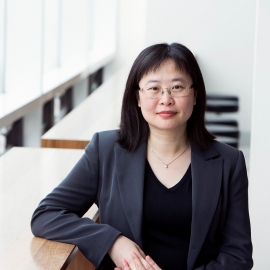 Ting Yu合作论文数School of Marketing, Business School, The University of New South Wales1
 Maria Holmlund合作论文数1
 Jochen Wirtz合作论文数Business School, National University of Singapore1
 Alan Wilson合作论文数Univ Strathclyde1Larry Neale合作论文数1
 Lia Patrício合作论文数University of Porto1
 Alastair Tombs合作论文数UQ Business School;University of Queensland;UQ Business School, University of Queensland1
 Jillian Dawes Farquhar合作论文数1Susan Dann合作论文数Faculty of Business;Queensland University of Technology;Faculty of Business, Queensland University of Technology1Kate L. Daunt合作论文数1
 Carolyn A. Massiah合作论文数1
 Stephen L. Vargo合作论文数Michael F. Price College of Business, University of Oklahoma1
 Sven Tuzovic合作论文数Murray State University1
 R Craig Lefebvre合作论文数1
 Francesco Polese合作论文数Department of Medicine and Surgery, University of Salerno1
 Mark Scott Rosenbaum合作论文数Dept Mkt, Northern Illinois Univ1
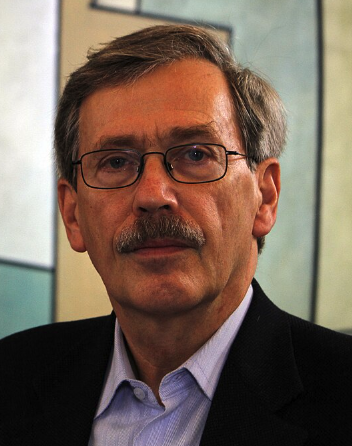 Christian Grönroos合作论文数Department of Marketing, Hanken School of Economics;Nankai University;Tianjin Normal University;Oslo School of Management1
 Michael Ehret合作论文数Nottingham Business School1
 Debora Sarno合作论文数Department of Mechanical Engineering, University of Salerno1
 Kunio Shirahada合作论文数School of Knowledge Science, Japan Advanced Institute of Science and Technology1Niels Schillewaert合作论文数1
 Cristina Mele合作论文数University of Naples Federico II, Department of Economics, Management and Institutions1
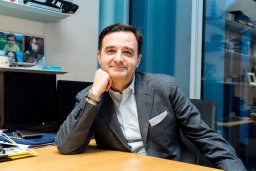 Andrea Ordanini合作论文数Bocconi University1




