This summary of the second Terrestrial Very-Long-Baseline Atom Interferometry (TVLBAI) Workshop provides a comprehensive overview of our meeting held in London in April 2024 (Second Terrestrial Very-Long-Baseline Atom Interferometry Workshop, Imperial College, April 2024), building on the initial discussions during the inaugural workshop held at CERN in March 2023 (First Terrestrial Very-Long-Baseline Atom Interferometry Workshop, CERN, March 2023). Like the summary of the first workshop (Abend et al. in AVS Quantum Sci. 6:024701, 2024), this document records a critical milestone for the international atom interferometry community. It documents our concerted efforts to evaluate progress, address emerging challenges, and refine strategic directions for future large-scale atom interferometry projects. Our commitment to collaboration is manifested by the integration of diverse expertise and the coordination of international resources, all aimed at advancing the frontiers of atom interferometry physics and technology, as set out in a Memorandum of Understanding signed by over 50 institutions (Memorandum of Understanding for the Terrestrial Very Long Baseline Atom Interferometer Study).
This paper outlines the centralized design and production of the ultra-high-vacuum sidearm and laser-stabilization systems for the AION Ultra-Cold Strontium Laboratories. Commissioning data on the residual gas and steady-state pressures in the sidearm chambers, on magnetic field quality, on laser stabilization, and on the loading rate for the 3D magneto-optical trap are presented. Streamlining the design and production of the sidearm and laser stabilization systems enabled the AION Collaboration to build and equip in parallel five state-of-the-art Ultra-Cold Strontium Laboratories within 24 months by leveraging key expertise in the collaboration. This approach could serve as a model for the development and construction of other cold atom experiments, such as atomic clock experiments and neutral atom quantum computing systems, by establishing dedicated design and production units at national laboratories.
This document presents a summary of the 2023 Terrestrial Very-Long-Baseline Atom Interferometry Workshop hosted by CERN. The workshop brought together experts from around the world to discuss the exciting developments in large-scale atom interferometer (AI) prototypes and their potential for detecting ultralight dark matter and gravitational waves. The primary objective of the workshop was to lay the groundwork for an international TVLBAI proto-collaboration. This collaboration aims to unite researchers from different institutions to strategize and secure funding for terrestrial large-scale AI projects. The ultimate goal is to create a roadmap detailing the design and technology choices for one or more km-scale detectors, which will be operational in the mid-2030s. The key sections of this report present the physics case and technical challenges, together with a comprehensive overview of the discussions at the workshop together with the main conclusions.
Optical clocks have improved their frequency stability and estimated accuracy by more than two orders of magnitude over the best caesium microwave clocks that realise the SI second. Accordingly, an optical redefinition of the second has been widely discussed, prompting a need for the consistency of optical clocks to be verified worldwide. While satellite frequency links are sufficient to compare microwave clocks, a suitable method for comparing high-performance optical clocks over intercontinental distances is missing. Furthermore, remote comparisons over frequency links face fractional uncertainties of a few $10^{-18}$ due to imprecise knowledge of each clock's relativistic redshift, which stems from uncertainty in the geopotential determined at each distant location. Here, we report a landmark campaign towards the era of optical clocks, where, for the first time, state-of-the-art transportable optical clocks from Japan and Europe are brought together to demonstrate international comparisons that require neither a high-performance frequency link nor information on the geopotential difference between remote sites. Conversely, the reproducibility of the clocks after being transported between countries was sufficient to determine geopotential height offsets at the level of 4 cm. Our campaign paves the way for redefining the SI second and has a significant impact on various applications, including tests of general relativity, geodetic sensing for geosciences, precise navigation, and future timing networks.
A ready-to-use numerical model has been developed for the atomic ladder (cascade) systems which are widely exploited in Rydberg Radio Frequency (RF) sensors. The model has been explicitly designed for user convenience and to be extensible to arbitrary N-level non-thermal systems. The versatility and adaptability of the model is validated up to 4-level atomic systems by direct comparison with experimental results from the prior art. The numerical model provides a good approximation to the experimental results and provides experimentalists with a convenient ready-to-use model to optimise the operation of an N-level Rydberg RF sensor. Current sensors exploit the 4-level atomic systems based on alkali metal atoms which require visible frequency lasers and these can be expensive and also suffer from high attenuation within optical fiber. The ability to quickly and simply explore more complex N-level systems offers the potential to use cheaper and lower-loss near-infrared lasers.
We investigate, based on the coupled dipole model, collective properties of dense Sr ensembles trapped in a three-dimensional (3D) optical lattice in the presence of dipole-dipole interactions induced on the 5$s5p^{3}$P$_{0}\to5s4d^{3}$D$_{1}$ transition. Our results reveal that the collective scattering properties, such as the scattered light intensity, frequency shift and linewidth, strongly depend on the interatomic distance and the atom number in the lattice. Moreover, the emission intensity is strongly dependent on the atomic distribution in lattices, the laser polarization and the detection position. The results not only offer the understanding of collective behaviors of lattice-trapped ensembles with an atom number equivalent to the experimental scale, but also provide an excellent platform for exploring many-body physics, thereby, opening a new window for applications like quantum information processing and quantum simulation.
Borehole gravity sensing can be used in a number of applications to measure features around a well, including rock-type change mapping and determination of reservoir porosity. Quantum technology gravity sensors, based on atom interferometry, have the ability to offer increased survey speeds and reduced need for calibration. While surface sensors have been demonstrated in real world environments, significant improvements in robustness and reductions to radial size, weight, and power consumption are required for such devices to be deployed in boreholes. To realise the first step towards the deployment of cold atom-based sensors down boreholes, we demonstrate a borehole-deployable magneto-optical trap, the core package of many cold atom-based systems. The enclosure containing the magneto-optical trap itself had an outer radius of (60 ± 0.1) mm at its widest point and a length of (890 ± 5) mm. This system was used to generate atom clouds at 1 m intervals in a 14 cm wide, 50 m deep borehole, to simulate how in-borehole gravity surveys are performed. During the survey, the system generated, on average, clouds of (3.0 ± 0.1) × 105 87Rb atoms with the standard deviation in atom number across the survey observed to be as low as 8.9 × 10⁴.
We study the dynamics of a magneto-optical trap (MOT) operating at high-bandwidth. We find the absolute importance of high recapture efficiency between cycles to maintain a practical atom number. We develop a simple model accounting for MOT trapping forces and pressure induced collisions and validate with experimental data using $\mathrm{{}^{87}Rb}$. This is then applied to quantum sensing predicting a shot noise limited sensitivity of $\mathrm{10^{-7}g/\sqrt{Hz}}$ for a gravimeter at 100 Hz operation. The results are useful for understanding MOT operation at high-bandwidth, particularly in the context of developing mobile high-bandwidth quantum inertial sensors targeting dynamic environments and navigation applications.
We present a passive RF to optical data transfer without a local oscillator using an atomic “Rydberg” receiver. We demonstrate the ability to detect a 5G frequency carrier wave (3.5 GHz) and decode digital data from the carrier wave without the use of a local oscillator to detect the modulation of the RF signal. The encoding and decoding of the data are achieved using an intermediate frequency (IF). The rubidium vapor detects the changes in the carrier wave's amplitude, which comes from the mixing of the IF onto the carrier. The rubidium vapor then upconverts the IF into the optical domain for detection. Using this technique for data encoding and extraction, we achieve data rates up to 238 kbps with a variety of encoding schemes.
From underground exploration to brain science and air-traffic control, the sensing potential of quantum devices is enormous. But they must first get out of the laboratory. From underground exploration to brain science and air-traffic control, the sensing potential of quantum devices is enormous. But they must first get out of the laboratory.
The ever-expanding horizon of radar applications demands solutions with high-end radar functionalities and technologies and is often limited by the available radar equipment, cost and time. A practical method to tackle the situation is to rely on the modelling and simulation of radar systems based on the user requirements. The comprehensive system-level modelling of a pulsed Doppler radar in MATLAB/Simulink consisting of all the fundamental blocks in the transmit chain, the environment, the receive chain, and the data processing chain is presented in this article. The first half of the article discusses the high-fidelity simulation of each building block in the radar model. In the second half of the article, the range-Doppler plot generated from the high-fidelity radar model is compared and validated using the range-Doppler plot from a real radar trial. The radar phase noise plays a crucial role in the detection of slowly moving, low radar cross-section targets in the presence of strong clutter. The article also briefly discusses the effects of radar oscillator phase noise in the range-Doppler plot. The validated, fully flexible radar model has the advantage of supporting the addition of further building blocks and optimising the parameters based on user requirements.
In this report, we present our work towards the development of strontium based optical lattice clock testbed system [1]. This system facilitates the accomplishment of a compact and transportable strontium-based optical atomic clock (one of the two goals of iqClock project [2]) built from the components developed by our industrial partners. The testbed system allows us to benchmark and access the performance of industrial components and subsystems. With this task completed, we have been extending the testbed system to constitute a fully-fledged optical lattice clock. The main results from testbed system includes: - 1) Two stage laser cooling of 88 Sr atoms, 2) Stabilisation of 689 nm laser to ULE cavity for second stage cooling, 3) Trapping 88 Sr atoms in optical lattice trap.
We present the development and in-depth characterization of an optical reference based on a 1.5 μm laser stabilized to a cryogenic silicon optical resonator operated at 1.7 K. The closed-cycle cryostat is equipped with a cryogenic passive vibration isolation. At τ = 1 s integration time the frequency instability is 2 × 10-14, predominantly due to residual vibrations. At τ = 100 s the frequency instability is 6.2 × 10⁻¹⁵. The lowest instability of 3.5 × 10⁻¹⁶ occurs at τ = 6000 s, and is limited by the stability of the hydrogen maser used in the comparison. The mean fractional frequency drift rate over 190 days was -3.7 × 10⁻²⁰/s. In conjunction with a frequency comb and a GNSS receiver this optical reference would be suitable to provide optical frequencies with accuracies at the low 10-14 level. We show that residual vibrations affect the resonator and the optical fiber delivering the laser light to it, and that laboratory temperature variations contribute to frequency instability at short and medium integration times. Mitigation of these issues might in the future allow for demonstration of the thermal-noise-limited performance of the resonator.
Space-borne quantum technologies, particularly those based on atom interferometry, are heralding a new era of strategic and robust space exploration. The unique conditions of space, characterized by low noise and low gravity environments, open up diverse possibilities for applications ranging from precise time and frequency transfer to Earth Observation and the search of new Physics. In this paper, we summarise the M-class mission proposal in response to the 2022 call in ESA's science program: Space-Time Explorer and Quantum Equivalence Principle Space Test (STE-QUEST). It consists in a satellite mission featuring a dual-species atom interferometer operating over extended durations. This mission aims to tackle three of the most fundamental questions in Physics: (i) testing the universality of free fall with an accuracy better than one part in 10^-17, (ii) exploring various forms of Ultra-Light Dark Matter, and (iii) scrutinizing the foundations of Quantum Mechanics.
We summarise the discussions at a virtual Community Workshop on Cold Atoms in Space concerning the status of cold atom technologies, the prospective scientific and societal opportunities offered by their deployment in space, and the developments needed before cold atoms could be operated in space. The cold atom technologies discussed include atomic clocks, quantum gravimeters and accelerometers, and atom interferometers. Prospective applications include metrology, geodesy and measurement of terrestrial mass change due to, e.g., climate change, and fundamental science experiments such as tests of the equivalence principle, searches for dark matter, measurements of gravitational waves and tests of quantum mechanics. We review the current status of cold atom technologies and outline the requirements for their space qualification, including the development paths and the corresponding technical milestones, and identifying possible pathfinder missions to pave the way for missions to exploit the full potential of cold atoms in space. Finally, we present a first draft of a possible road-map for achieving these goals, that we propose for discussion by the interested cold atom, Earth Observation, fundamental physics and other prospective scientific user communities, together with the European Space Agency (ESA) and national space and research funding agencies.
The interference of matter waves is a direct consequence of wave-particle duality and lies at the heart of quantum mechanics. Today, with the validity of quantum theory being widely ascertained, we are beyond proof-of-principle demonstrations and are transforming this phenomenon into a measurement tool for practical applications via the development of quantum technologies. Atom interferometry is a special type of quantum technology, which is particularly suitable for the detection of gravity. Its potential for absolute, low-drift measurements with options for noise suppression could bring wide-ranging benefits for applications that are important across economies. This journey from the laboratory into the real world of applications requires the understanding and mitigation of the effects of external influences on the system.
There are still many unexplored hypotheses regarding subsurface water movement, and gravimetry could be a tool to elucidating them. The field of gravimetry has been used in hydrology as an auxiliary methodology for many years, but recent developments in quantum technology has improved the sensitivity and accuracy of gravimeters significantly. Computer modelling can provide a helpful way of assessing the benefits of new technologies. A number of soil types were modelled to determine their wetting and drying curves, as well as a number of weather event scenarios. From these hydrological models, the changes in density produced in accordance with the wetting and drying curves were determined. The resulting change in local gravity could then be calculated and modelled with the parameters for each instrument, to determine the detection thresholds and relevancy of classical and quantum gravimeters, as well as gravity gradiometry. The data shows not only the sensitivity and accuracy of each, but can also be scaled to show their utility in varying degrees of environmental noise, ensuring that these results can be relevant to field conditions. This project should clearly demonstrate the increased visibility of subsurface water storage and flux with the use of quantum technology, sparking a conversation around the future of data gathering in hydrology.
We present a quantum enabled networked radar system that incorporates an optical atomic clock to provide the radar systems with both an ultra-low noise oscillator and time synchronization. Characterization of the photonic microwave generator against traditional oscillators currently used in the radar systems is presented. Near-future developments of the radar network are discussed.
Quantum sensors based on cold atoms are being developed which produce measurements of unprecedented accuracy. Due to shifts in atomic energy levels, quantum sensors often have stringent requirements on their internal magnetic field environment. Typically, background magnetic fields are attenuated using high permeability magnetic shielding, with the cancelling of residual and introduction of quantisation fields implemented with coils inside the shield. The high permeability shield, however, distorts all magnetic fields, including those generated inside the sensor. Here, we demonstrate a solution by designing multiple coils overlaid on a 3D-printed former to generate three uniform and three constant linear gradient magnetic fields inside the capped cylindrical magnetic shield of a cold atom interferometer. The fields are characterised in-situ and match their desired forms to high accuracy. For example, the uniform transverse field, $B_x$, deviates by less than $0.2$% over more than $40$% of the length of the shield. We also map the field directly using the cold atoms and investigate the potential of the coil system to reduce bias from the quadratic Zeeman effect. This coil design technology enables targeted field compensation over large spatial volumes and has the potential to reduce systematic shifts and noise in numerous cold atom systems.
 Klaus Sengstock合作论文数Institute for Quantum Physics, Department of Physics, Universität Hamburg57
 Yeshpal Singh合作论文数School of Physics and Astronomy, College of Engineering and Physical Sciences, University of Birmingham50
 Ernst Maria Rasel合作论文数Institute for Quantum Optics, Faculty of Mathematics and Physics, Leibniz Universität Hannover44
 Wolfgang Ertmer合作论文数Institute of Quantum Optics, Faculty of Mathematics and Physics, Leibniz University Hannover36
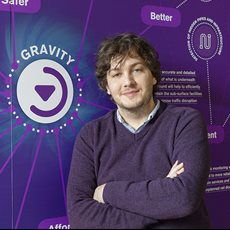 Michael Holynski合作论文数School of Physics and Astronomy, College of Engineering and Physical Sciences, University of Birmingham36
 Achim Peters合作论文数31
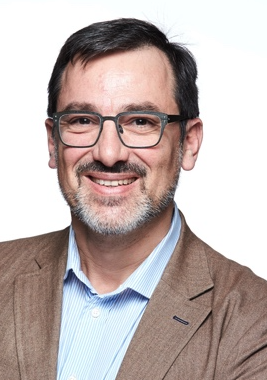 Philippe Bouyer合作论文数Institute of Physics, University of Amsterdam;Eindhoven University of Technology;Institut d'optique Graduate School;MuQuans;Laboratoire Photonique, Numérique et Nanosciences29
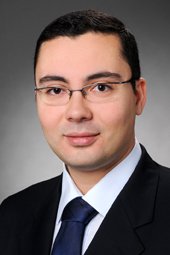 Naceur Gaaloul合作论文数Institut für Quantenoptik, Fakultät für Mathematik und Physik, Leibniz University of Hanover23
 Claus Lämmerzahl合作论文数Gauß-Olbers Space Technology Transfer Center, Universität Bremen22R. Walser合作论文数21
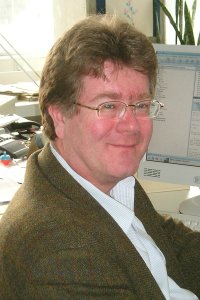 Wolfgang P. Schleich合作论文数Institut für Quantenphysik, Universität Ulm21
 F. Sorrentino合作论文数INFN, Sezione di Genova, I-16146 Genova, Italy.19
 Luigi Cacciapuoti合作论文数ESA Research and Scientific Support Department17
 Hansjoerg Dittus合作论文数University of Bremen17
 Gill Patrick合作论文数National Physical Laboratory16
 Claus Braxmaier合作论文数Institut für Mikroelektronik, Universität Ulm16
 Arnaud Landragin合作论文数SYRTE16G. M. Tino合作论文数15
 Markus Krutzik合作论文数Joint Lab Integrated Quantum Sensors, Humboldt-Universität zu Berlin;Rydberg Photonics;Ferdinand-Braun-Institut, Leibniz-Institut für Höchstfrequenztechnik15
 Sven Herrmann合作论文数Center of Applied Space Technology and Microgravity, University Bremen15J Kronjäger合作论文数14
 Stephan Schiller合作论文数Institut für Experimentalphysik, Heinrich-Heine-Universität Düsseldorf14
 Andrea Bertoldi合作论文数LP2N Laboratory, Institut d'Optique d'Aquitaine14
 Guglielmo Tino合作论文数Dipartimento di Fisica e Astronomia and LENS Laboratory, Universita degli Studi di Firenze13
 Tristan Valenzuela合作论文数Institut fuer Physik, Johannes Gutenberg University13
 Albert Roura合作论文数Institute of Quantum Technologies, German Aerospace Center13
 Jakob Reichel合作论文数Max-Planck-Institut fur Quantenoptik und Sektion Physik der13Charles F. A. Baynham合作论文数Natl Phys Lab, Hampton Rd, Teddington TW11 0LW, Middx, England12
 Christian Ospelkaus合作论文数Institut fur Laserphysik;Universitat Hamburg;Institut fur Laserphysik, Universitat Hamburg12
 Wolf Von Klitzing合作论文数Institute of Electronic Structure and Laser;Foundation for Research and Technology;Institute of Electronic Structure and Laser, Foundation for Research and Technology12Patrick Windpassinger合作论文数11
 Uwe Sterr合作论文数Physikalisch-Technische Bundesanstalt, Phys.-Technische Bundesanstalt11
 Jonathan Jones合作论文数Centre for Quantum Computation, Department of Physics, University of Oxford;Clarendon Laboratory, University of Oxford11Peter Wolf合作论文数11
 Franck Pereira dos Santos合作论文数SYRTE11
 Baptiste Battelier合作论文数10Patrick E. G. Baird合作论文数10Thijs Wendrich合作论文数10
 Silke Ospelkaus合作论文数Institut fur Laserphysik10
 Sven Burger合作论文数JCMwave;Zuse Institute Berlin10T. van Zoest合作论文数10
 Jamie Vovrosh合作论文数Sch Phys & Astron, Univ Birmingham9
 Peter B R Nisbetjones合作论文数9Wenzlawski André合作论文数9
 Shengnan Zhang (张盛楠)合作论文数9Adrian Vogel合作论文数9Waldemar Herr合作论文数9Marco Prevedelli合作论文数Sezione di Firenze, Università di Firenze INFN9




