We present progress towards a transportable laser-cooled ytterbium ion microwave clock. We have designed and built a new trap chamber which we describe in this paper. Initial results of Rabi spectroscopy and clock stability are presented, and the next steps are outlined.
The design and testing of a laser frequency stabilisation system is presented for potential use in the LISA mission.The system is based on a National Physical Laboratory (NPL) dual-axis cubic cavity.The cavity spacer is manufactured from Corning ultra-low expansion (ULE) glass and incorporates thermo-mechanically insensitive mounting to allow compliance to LISA frequency noise power spectral density (PSD) requirements within the ESA-specified thermal and vibration noise environments.The performance of this cavity-based frequency stabilised laser has been determined by beat frequency comparison versus an NPL optical clock reference cavity.Light is propagated via fibre from this reference laser and an optical path-length stabilisation system is implemented to cancel phase noise induced in the fibre link.We have measured the thermal expansion for both axes of the cube and control the temperature where the linear thermal expansion of one bore is near zero.We have also measured the contribution to the overall frequency stability of thermal noise in a proposed 5-m fibre link between the laser and cavity.Finally, we demonstrate that a laser locked to the NPL cubic cavity meets the LISA frequency noise requirements.
Optical clocks can now achieve a higher stability and lower systematic uncertainty than the highest performance microwave atomic clocks. For a Trapped Ion Space Optical Clock (TISOC) project funded by the European Space Agency (ESA) we are developing an optical clock based on a trapped laser-cooled strontium ion for future deployment in space. In a laboratory setting, a 88Sr+ system has been shown to provide excellent performance and crucially has reduced size, mass, laser power and complexity compared to alternatives such as lattice clocks. Spaceborne optical atomic clocks will offer transformative capabilities for future science, navigation, and earth observation programmes. As a first step towards space deployment, the design used in our existing single ion clocks was employed as a baseline to develop a set of finite element models. These were used to simulate the response of the ion trap and accompanying vacuum chamber to vibration, shock and thermal conditions encountered during launch and space deployment. Additionally, an electrostatic model has been developed to investigate the relationship between the ion trap geometrical tolerances and the trapping efficiency. We present the results from these analyses and how they have helped design a more robust prototype for experimental testing.
Here we present progress towards a compact cold-atom microwave clock. The system we have developed is currently a demonstrator for a clock architecture whereby a cloud of laser-cooled caesium atoms are dropped and interrogated during free fall. We describe the experimental sequence as well as show preliminary results related to signal-to-noise ratio limits and Rabi microwave spectroscopy.
The detection of variations of fundamental constants of the Standard Model would provide us with compelling evidence of new physics, and could lift the veil on the nature of dark matter and dark energy. In this work, we discuss how a network of atomic and molecular clocks can be used to look for such variations with unprecedented sensitivity over a wide range of time scales. This is precisely the goal of the recently launched QSNET project: A network of clocks for measuring the stability of fundamental constants. QSNET will include state-of-the-art atomic clocks, but will also develop next-generation molecular and highly charged ion clocks with enhanced sensitivity to variations of fundamental constants. We describe the technological and scientific aims of QSNET and evaluate its expected performance. We show that in the range of parameters probed by QSNET, either we will discover new physics, or we will impose new constraints on violations of fundamental symmetries and a range of theories beyond the Standard Model, including dark matter and dark energy models.
We carried out a 26-day comparison of five simultaneously operated optical clocks and six atomic fountain clocks located at INRIM, LNE-SYRTE, NPL and PTB by using two satellite-based frequency comparison techniques: broadband Two-Way Satellite Time and Frequency Transfer (TWSTFT) and Global Positioning System Precise Point Positioning (GPS PPP). With an enhanced statistical analysis procedure taking into account correlations and gaps in the measurement data, combined overall uncertainties in the range of 1.8 x 10(-16)to 3.5 x 10(-16)for the optical clock comparisons were found. The comparison of the fountain clocks yields results with a maximum relative frequency difference of 6.9 x 10(-16), and combined overall uncertainties in the range of 4.8 x 10(-16)to 7.7 x 10(-16).
We report on the realization of a magneto-optical trap (MOT) for metastable strontium operating on the 2.92-mu m transition between the energy levels 5s5p(3)P(2) and 5s4d(3)D(3). The strontium atoms are initially captured in a MOT operating on the 461-nm transition between the energy levels 5s(2) S-1(0) and 5s5p( 1)P(1), prior to being transferred into the metastable MOT and cooled to a final temperature of 6 mu K. Challenges arising from aligning the midinfrared and 461-nm light are mitigated by employing the same pyramid reflector to realize both MOTs. Finally, the 2.92-mu m transition is used to realize a full cooling sequence for an optical lattice clock, in which cold samples of Sr-87 are loaded into a magic-wavelength optical lattice and initialized in a spin-polarized state to allow high-precision spectroscopy of the 5s(2) (1)S0 to 5s5p( 3)P(0) clock transition.
We search for transient variations of the fine structure constant using data from a European network of fiber-linked optical atomic clocks. By searching for coherent variations in the recorded clock frequency comparisons across the network, we significantly improve the constraints on transient variations of the fine structure constant. For example, we constrain the variation in alpha to <5*10^-17 for transients of duration 10^3 s. This analysis also presents a possibility to search for dark matter, the mysterious substance hypothesised to explain galaxy dynamics and other astrophysical phenomena that is thought to dominate the matter density of the universe. At the current sensitivity level, we find no evidence for dark matter in the form of topological defects (or, more generally, any macroscopic objects), and we thus place constraints on certain potential couplings between the dark matter and standard model particles, substantially improving upon the existing constraints, particularly for large (>~10^4 km) objects.
The development of a transportable microwave frequency standard based on the ground-state transition of 171Yb+ at ∼12.6 GHz requires a compact laser system for cooling the ions, clearing out of long-lived states and also for photoionisation. In this paper, we describe the development of a suitable compact laser system based on a 6U height rack-mounted arrangement with overall dimensions 260 × 194 × 335 mm. Laser outputs at 369 nm (for cooling), 399 nm (photoionisation), 935 nm (repumping), and 760 nm (state clearout) are combined in a fiber arrangement for delivery to our linear ion trap and we demonstrate this system by cooling of 171Yb+ ions. Additionally, we demonstrate that the lasers at 935 nm and 760 nm are close in frequency to water vapor and oxygen absorption lines, respectively; specifically, at 760 nm, we show that one 171Yb+ transition is within the pressure broadened profile of an oxygen line. These molecular transitions form convenient wavelength references for the stabilization of lasers for a 171Yb+ frequency standard.
We present progress on the development of a compact microwave atomic clock testbed based on coherent population trapping interrogation of thermal cesium atoms in a glass vapor cell. The compact clock driving circuitry is designed to be modular and reconfigurable, and includes a physics package, low-noise driving electronics and power supply, mounted entirely inside an enclosure of 270 x 150 x 70 mm.
We report on the development of a trapped-ion, microwave frequency standard based on the 12.6 GHz hyperfine transition in laser-cooled ytterbium-171 ions. The entire system fits into a 6U 19-inch rack unit (51×49×28 cm) and comprises laser, electronics, and physics package subsystems. The performance of this development system is evaluated; the fractional frequency instability was measured to be 3.6×10^-12/√τ for averaging times between 30 s and 1500 s.
We outline the experimental concept and key scientific capabilities of AION (Atom Interferometer Observatory and Network), a proposed UK-based experimental programme using cold strontium atoms to search for ultra-light dark matter, to explore gravitational waves in the midfrequency range between the peak sensitivities of the LISA and LIGO/Virgo/KAGRA/Einstein Telescope/Cosmic Explorer experiments, and to probe other frontiers in fundamental physics. AION would complement other planned searches for dark matter, and operating AION in a network with other gravitational wave detectors would offer many synergies. AION would share many technical features with the US-based MAGIS experimental programme, and more synergies would flow from operating the two projects as a network.
Compact coherent population trapping (CPT) based clocks require single-mode, low-power consumption, high-speed and polarization-stable laser sources. We report our progress in developing customized vertical cavity surface emitting laser (VCSEL) diodes designed for operating on the D1 transition of cesium, and specifically tailored for CPT-based atomic clocks. The VCSELs provide high power (>1 mW), narrow linewidths (<; 100 MHz), mode-hop free tunability over 8 nm, and are shown to be polarization stable over a wide range of operating bias conditions (average polarization suppression >15 dB). Preliminary spectroscopy has been observed.
We report on the development of a portable, trapped-ion, microwave frequency standard based on the 12.6GHz hyperfine transition in laser-cooled ytterbium-171 ions. The entire system fits into a 6U 19-inch rack unit (51×49×28 cm) and comprises laser, electronics and physics package subsystems. The performance of this development system is evaluated; the fractional frequency instability was measured to be 3.6 × 10⁻¹²/ √ τ for averaging times between 30 s and 1500 s.
A list of standard reference frequency values (LoF) of quantum transitions from the microwave to the optical regime has been recommended by the International Committee for Weights and Measures (Comité international des poids et mesures, CIPM) for use in basic research, technology, and for the metrology of time, frequency and length. The CIPM LoF contains entries that are recommended as secondary representations of the second in the International System of Units, and entries that can be used to serve as realizations of the definition of the metre. The historical perspective that led to the CIPM LoF is outlined. Procedures have been developed for updating existing, and validating new, entries into the CIPM LoF. The CIPM LoF might serve as an entry for a future redefinition of the second by an optical transition.
A portable microwave clock incorporating laser-cooling of 171 Yb + promises to bring significantly improved performance compared to existing thermal commercial devices. We report on progress in the development of a compact microwave frequency standard designed to fit in a 19-inch rack enclosure that comprises laser, electronics and physics package subsystems. Recent results in which a local oscillator was disciplined by laser-cooled trapped 171 Yb + ions are presented. Preliminary measurements have demonstrated a fractional frequency instability of 1 × 10 -13 at 10,000 s. Potential applications include telecommunications and financial operations time reference systems as well as navigation system integrity.
The highly forbidden S-2(1/2) -> F-2(7/2) electric octupole transition in Yb-171(+) is a potential candidate for a redefinition of the SI second. Wepresent a measurement of the absolute frequency of this optical transition, performed using a frequency link to International Atomic Time to provide traceability to the SI second. The Yb-171(+) optical frequency standard was operated for 76% of a 25-day period, with the absolute frequency measured to be 642 121 496 772 645.14(26) Hz. The fractional uncertainty of 4.0 x 10(-16) is comparable to that of the best previously reported measurement, which was made by a direct comparison to local caesium primary frequency standards.
An atom exposed to an electric field will experience Stark shifts of its internal energy levels, proportional to their polarizabilities. In optical frequency metrology, the Stark shift due to background black-body radiation (BBR) modifies the frequency of the optical clock transition, and often represents a large contribution to a clock's uncertainty budget. For clocks based on singly-ionized ytterbium, the ion's complex structure makes this shift difficult to calculate theoretically. We present a measurement of the differential polarizabilities of two ultra-narrow optical clock transitions present in ^171Yb^+, performed by exposing the ion to an oscillating electric field at a wavelength in the region of room temperature BBR spectra. By measuring the frequency shift to the transitions caused by a laser at λ=7.17 μ m, we obtain values for scalar and tensor differential polarizabilities with uncertainties at the percent level for both the electric quadrupole and octupole transitions at 436nm and 467nm respectively. These values agree with previously reported experimental measurements and, in the case of the electric quadrupole transition, allow a 5-fold improvement in the determination of the room-temperature BBR shift. However, we note significant concerns over the validity of the uncertainty charactarization presented and draw the reader's attention to the Note on applicability section for a discussion.
Get PDF Email Share Share with Facebook Tweet This Post on reddit Share with LinkedIn Add to CiteULike Add to Mendeley Add to BibSonomy Get Citation Copy Citation Text M. A. Gouveia, T. D. Bradley, M. Haji, N. V. Wheeler, Y. Chen, S. R. Sandoghchi, D. J. Richardson, P. Gill, and M. N. Petrovich, "Coherent Population Trapping in Cs-filled Kagome Hollow Core Fibers," in Conference on Lasers and Electro-Optics, OSA Technical Digest (online) (Optica Publishing Group, 2018), paper JTh2A.42. Export Citation BibTex Endnote (RIS) HTML Plain Text Citation alert Save article
 G. P. Barwood合作论文数88
 H. A. Klein合作论文数National Physical Laboratory66
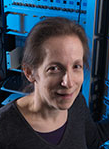 Helen Margolis合作论文数National Physical Laboratory58
 Guilong Huang合作论文数35
 S. N. Lea合作论文数Department of Physics, University of Oxford30Wrc Rowley合作论文数29C. S. Edwards合作论文数22
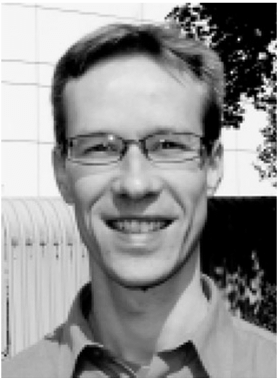 Webster S A合作论文数22W. R. C. Rowley合作论文数21
 R. M. Godun合作论文数18
 S. A. King合作论文数Fisheries and Ocean Canada, Institute of Ocean Sciences, Sidney, BC, Canada17
 Ian R. Hill合作论文数16
 Kai Bongs合作论文数School of Physics and Astronomy, College of Engineering and Physical Sciences, University of Birmingham16B. R. Walton合作论文数13
 Peter B R Nisbetjones合作论文数11
 P. E. G. Baird合作论文数11G. M. Tino合作论文数10a stannard合作论文数10
 Ekkehard Peik合作论文数Institute for Experimental Quantum Metrology, Physikalisch-Technische Bundesanstalt10
 Anne Curtis合作论文数10
 Uwe Sterr合作论文数Physikalisch-Technische Bundesanstalt, Phys.-Technische Bundesanstalt10K. Hosaka合作论文数9Charles F. A. Baynham合作论文数Natl Phys Lab, Hampton Rd, Teddington TW11 0LW, Middx, England9
 Richard C Thompson合作论文数Univ London Imperial Coll Sci Technol & Med, Blackett Lab, London SW7 2AZ, England9Richard Hobson合作论文数Natl Phys Lab, NPL9
 Ernst Maria Rasel合作论文数Institute for Quantum Optics, Faculty of Mathematics and Physics, Leibniz Universität Hannover9A. P. Levick合作论文数9
 Krzysztof Szymaniec合作论文数9
 Gp Barwood合作论文数8Alastair G. Sinclair合作论文数8L. A. M. Johnson合作论文数7
 Angus Bell合作论文数School of Physics & Astronomy, University of Glasgow7
 Pacome Delva合作论文数7
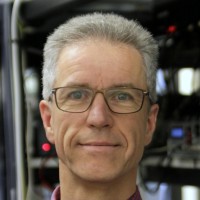 Stephan Schiller合作论文数Institut für Experimentalphysik, Heinrich-Heine-Universität Düsseldorf7Alexander Nevsky合作论文数Institut fur Experimentalphysik;Heinrich-Heine Universitat Dusseldorf;Institut fur Experimentalphysik, Heinrich-Heine Universitat Dusseldorf7Jerome Lodewyck合作论文数7
 Giuseppe Marra合作论文数Natl Phys Lab, Teddington TW11 0LW, Middx, England7Guido Wilpers合作论文数7Christian Lisdat合作论文数7p j blythe合作论文数6S. Bize合作论文数6S. A. Webster合作论文数6Thomas Lindvall合作论文数VTT Tech Res Ctr Finland Ltd, Natl Metrol Inst VTT MIKES6Alighanbari, S.合作论文数6
 Kelin Gao (高克林)合作论文数Innovation Academy for Precision Measurement Science and Technology, Chinese Academy of Sciences6
 N. Poli合作论文数INFN–Sezione di Firenze, Università di Firenze6
 Stephen C Donnellan合作论文数Evolutionary Biology Unit, South Australian Museum6
 Yuri B. Ovchinnikov合作论文数National Physical Laboratory6Robert S. Windeler合作论文数OFS Laboratories6




