Univariate marked Hawkes processes are used to model a range of real‐world phenomena including earthquake aftershock sequences, contagious disease spread, content diffusion on social media platforms, and order book dynamics. This paper illustrates a fundamental connection between univariate marked Hawkes processes and multivariate Hawkes processes. Exploiting this connection renders a framework that can be built upon for expressive and flexible inference on diverse data. Specifically, multivariate unmarked Hawkes representations are introduced as a tool to parameterize univariate marked Hawkes processes. We show that such multivariate representations can asymptotically approximate a large class of univariate marked Hawkes processes, are stationary given the approximated process is stationary, and that resultant conditional intensity parameters are identifiable and, more importantly, interpretable. A simulation study provides a heuristic bound for error induced by the relatively larger parameter space of multivariate Hawkes processes, and an application to the Southern California earthquake catalogue is presented to demonstrate the efficacy of our novel approach.
We connect boundary conditions for one-sided pseudo-differential operators with the generators of modified one-sided Lévy processes. On one hand this allows modellers to use appropriate boundary conditions with confidence when restricting the modelling domain. On the other hand it allows for numerical techniques based on differential equation solvers to obtain fast approximations of densities or other statistical properties of restricted one-sided Lévy processes encountered, for example, in finance. In particular we identify a new nonlocal mass conserving boundary condition by showing it corresponds to fast-forwarding, i.e. removing the time the process spends outside the domain. We treat all combinations of killing, reflecting and fast-forwarding boundary conditions. In Part I we show wellposedness of the backward and forward Cauchy problems with a one-sided pseudo-differential operator with boundary conditions as generator. We do so by showing convergence of Feller semigroups based on grid point approximations of the modified Lévy process. In Part II we show that the limiting Feller semigroup is indeed the semigroup associated with the modified Lévy process by showing continuity of the modifications with respect to the Skorokhod topology.
This paper extends the existing fractional Hawkes process to better model mainshock-aftershock sequences of earthquakes. The fractional Hawkes process is a self-exciting point process model with temporal decay kernel being a Mittag-Leffler function. A maximum likelihood estimation scheme is developed and its consistency is checked. It is then compared to the ETAS model on three earthquake sequences in Southern California. The fractional Hawkes process performs favourably against the ETAS model. Additionally, two parameters in the fractional Hawkes process may have a fixed geophysical meaning dependent on the study zone and the stage of the seismic cycle the zone is in.
Most point process models for earthquakes currently in the literature assume the magnitude distribution is i.i.d. potentially hindering the ability of the model to describe the main features of data sets containing multiple earthquake mainshock aftershock sequences in succession. This study presents a novel multidimensional fractional Hawkes process model designed to capture magnitude dependent triggering behaviour by incorporating history dependence into the magnitude distribution. This is done by discretising the magnitude range into disjoint intervals and modelling events with magnitude in these ranges as the subprocesses of a mutually exciting Hawkes process using the Mittag-Leffler density as the kernel function. We demonstrate this model's use by applying it to two data sets, Japan and the Middle America Trench, both containing multiple mainshock aftershock sequences and compare it to the existing ETAS model by using information criteria, residual diagnostics and retrospective prediction performance. We find that for both data sets all metrics indicate that the multidimensional fractional Hawkes process performs favourably against the ETAS model. Furthermore, using the multidimensional fractional Hawkes process we are able to infer characteristics of the data sets that are consistent with results currently in the literature and that cannot be found by using the ETAS model.
We develop a finite difference approximation of order $$\alpha $$ for the $$\alpha $$ -fractional derivative. The weights of the approximation scheme have the same rate-matrix type properties as the popular Grünwald scheme. In particular, approximate solutions to fractional diffusion equations preserve positivity. Furthermore, for the approximation of the solution to the skewed fractional heat equation on a bounded domain the new approximation scheme keeps its order $$\alpha $$ whereas the order of the Grünwald scheme reduces to order $$\alpha -1$$ , contradicting the convergence rate results by Meerschaert and Tadjeran.
We describe a new and computationally efficient Bayesian methodology for inferring species trees and demographics from unlinked binary markers. Likelihood calculations are carried out using diffusion models of allele frequency dynamics combined with novel numerical algorithms. The diffusion approach allows for analysis of data sets containing hundreds or thousands of individuals. The method, which we call Snapper, has been implemented as part of the BEAST2 package. We conducted simulation experiments to assess numerical error, computational requirements, and accuracy recovering known model parameters. A reanalysis of soybean SNP data demonstrates that the models implemented in Snapp and Snapper can be difficult to distinguish in practice, a characteristic which we tested with further simulations. We demonstrate the scale of analysis possible using a SNP data set sampled from 399 fresh water turtles in 41 populations. [Bayesian inference; diffusion models; multi-species coalescent; SNP data; species trees; spectral methods.].
This paper derives physically meaningful boundary conditions for fractional diffusion equations, using a mass balance approach. Numerical solutions are presented, and theoretical properties are reviewed, including well-posedness and steady state solutions. Absorbing and reflecting boundary conditions are considered, and illustrated through several examples. Reflecting boundary conditions involve fractional derivatives. The Caputo fractional derivative is shown to be unsuitable for modeling fractional diffusion, since the resulting boundary value problem is not positivity preserving.
This paper establishes explicit solutions for fractional diffusion problems on bounded domains. It also gives stochastic solutions, in terms of Markov processes time-changed by an inverse stable subordinator whose index equals the order of the fractional time derivative. Some applications are given, to demonstrate how to specify a well-posed Dirichlet problem for space-time fractional diffusions in one or several variables. This solves an open problem in numerical analysis.
This paper derives physically meaningful boundary conditions for fractional diffusion equations, using a mass balance approach. Numerical solutions are presented, and theoretical properties are reviewed, including well-posedness and steady state solutions. Absorbing and reflecting boundary conditions are considered, and illustrated through several examples. Reflecting boundary conditions involve fractional derivatives. The Caputo fractional derivative is shown to be unsuitable for modeling fractional diffusion, since the resulting boundary value problem is not positivity preserving. (C) 2018 Published by Elsevier B.V.
This paper derives physically meaningful boundary conditions for fractional diffusion equations, using a mass balance approach. Numerical solutions are presented, and theoretical properties are reviewed, including well-posedness and steady state solutions. Absorbing and reflecting boundary conditions are considered, and illustrated through several examples. Reflecting boundary conditions involve fractional derivatives. The Caputo fractional derivative is shown to be unsuitable for modeling fractional diffusion, since the resulting boundary value problem is not positivity preserving.
We identify the stochastic processes associated with one-sided fractional partial differential equations on a bounded domain with various boundary conditions. This is essential for modelling using spatial fractional derivatives. We show well-posedness of the associated Cauchy problems in C0(Ω) and L1(Ω). In order to do so we develop a new method of embedding finite state Markov processes into Feller processes on bounded domains and then show convergence of the respective Feller processes. This also gives a numerical approximation of the solution. The proof of well-posedness closes a gap in many numerical algorithm articles approximating solutions to fractional differential equations that use the Lax–Richtmyer Equivalence Theorem to prove convergence without checking well-posedness.
The Japan Agency for Marine-Earth Science and Technology contributed this challenge to the 2016 Mathematics-in-Industry New Zealand Study Group Workshop. It concerned implications of the self-thinning rule for modelling plant population characteristics via a partial differential equation governing the temporal evolution of the density distribution of plants of a particular size. The self-thinning rule is empirically observed for crowded populations under constrained resources. We investigate the theoretical consequences of a resource constraint on the partial differential equation of interest, and through numerical experiments reveal a surprisingly strong link between imposition of the resource constraint, and populations that evolve according to the self-thinning rule. The result is a simple condition between growth and mortality functions that implies self-thinning behaviour, and motivates further mathematical investigation.
It is proved that the distributions of scaling limits of Continuous Time Random Walks (CTRWs) solve integro-differential equations akin to Fokker-Planck equations for diffusion processes. In contrast to previous such results, it is not assumed that the underlying process has absolutely continuous laws. Moreover, governing equations in the backward variables are derived. Three examples of anomalous diffusion processes illustrate the theory.
Hillslope subsurface stormflow exhibits complex patterns when natural soils with multiscale heterogeneity impart a spatiotemporally nonlocal memory on flow dynamics. To efficiently quantify such nonlocal flow responses, this technical note proposes a fully subordinated flow (FSF) equation where the time‐ and flow‐subordination capture the temporal and spatial memory, respectively. Results show that the time‐subordination component of the FSF model captures a wide range of delayed flow response due to various degrees of soil heterogeneity (especially for low‐conductivity zones), while the model's flow‐subordination term accounts for the rapid flow responses along preferential flow paths. In the FSF model, parameters defining spatiotemporal memory functions may be related to soil properties, while other parameters such as scalar factors controlling the overall advection and diffusion are difficult to predict and can be estimated from subsurface stormflow hydrographs. These parameters can be constants at the hillslope scale because the spatiotemporal subordination, an upscaling technique, can capture the impact of system heterogeneity on flow dynamics, leading to a linear FSF model that might be applicable for various slopes. Valid scale, limitation and extension of the FSF model, and modification of the model for other complex hydrological dynamics are also discussed.
This paper explicitly computes the transition densities of a spectrally negative stable process with index greater than one, reflected at its infimum. First we derive the forward equation using the theory of sun-dual semigroups. The resulting forward equation is a boundary value problem on the positive half-line that involves a negative Riemann-Liouville fractional derivative in space, and a fractional reflecting boundary condition at the origin. Then we apply numerical methods to explicitly compute the transition density of this space-inhomogeneous Markov process, for any starting point, to any desired degree of accuracy. Finally, we discuss an application to fractional Cauchy problems, which involve a positive Caputo fractional derivative in time.
We give stability and consistency results for higher order Grünwald-type formulae used in the approximation of solutions to fractional-in-space partial differential equations. We use a new Carlson-type inequality for periodic Fourier multipliers to gain regularity and stability results. We then generalise the theory to the case where the first derivative operator is replaced by the generator of a bounded group on an arbitrary Banach space.
We seek a transform that will map between the outputs of pairs of similar spectroscopes. The spectroscopes are used to sort fruit and must regularly be calibrated to allow for seasonal fruit variation. The aim is to obtain transforms that would allow calibration of a number of such spectroscopes from the calibration of one of them.
We consider a class of semilinear Volterra type stochastic evolution equation driven by multiplicative Gaussian noise. The memory kernel, not necessarily analytic, is such that the deterministic linear equation exhibits a parabolic character. Under appropriate Lipschitz-type and linear growth assumptions on the nonlinear terms we show that the unique mild solution is mean-p Holder continuous with values in an appropriate Sobolev space depending on the kernel and the data. In particular, we obtain pathwise space-time (Sobolev-Holder) regularity of the solution together with a maximal type bound on the spatial Sobolev norm. As one of the main technical tools we establish a smoothing property of the derivative of the deterministic evolution operator family. (C) 2014 Elsevier Inc. All rights reserved.
This study develops an explicit two‐step Lagrangian scheme based on the renewal‐reward process to capture transient anomalous diffusion with mixed retention and early arrivals in multidimensional media. The resulting 3‐D anomalous transport simulator provides a flexible platform for modeling transport. The first step explicitly models retention due to mass exchange between one mobile zone and any number of parallel immobile zones. The mobile component of the renewal process can be calculated as either an exponential random variable or a preassigned time step, and the subsequent random immobile time follows a Hyper‐exponential distribution for finite immobile zones or a tempered stable distribution for infinite immobile zones with an exponentially tempered power‐law memory function. The second step describes well‐documented early arrivals which can follow streamlines due to mechanical dispersion using the method of subordination to regional flow. Applicability and implementation of the Lagrangian solver are further checked against transport observed in various media. Results show that, although the time‐nonlocal model parameters are predictable for transport with retention in alluvial settings, the standard time‐nonlocal model cannot capture early arrivals. Retention and early arrivals observed in porous and fractured media can be efficiently modeled by our Lagrangian solver, allowing anomalous transport to be incorporated into 2‐D/3‐D models with irregular flow fields. Extensions of the particle‐tracking approach are also discussed for transport with parameters conditioned on local aquifer properties, as required by transient flow and nonstationary media.
Numerical transport models based on the advection-dispersion equation (ADE) are built on the assumption that sub-grid cell transport is Fickian such that dispersive spreading around the average velocity is symmetric and without significant tailing on the front edge of a solute plume. However, anomalous diffusion in the form of super-diffusion due to preferential pathways in an aquifer has been observed in field data, challenging the assumption of Fickian dispersion at the local scale. This study develops a fully Lagrangian method to simulate sub-grid super-diffusion in a multidimensional regional-scale transport model by using a recent mathematical model allowing super-diffusion along the flow direction given by the regional model. Here, the time randomizing procedure known as subordination is applied to flow field output from MODFLOW simulations. Numerical tests check the applicability of the novel method in mapping regional-scale super-diffusive transport conditioned on local properties of multidimensional heterogeneous media.
 Mark M. Meerschaert合作论文数Department of Statistics and Probability, Michigan State University34
 Mihály Kovács合作论文数15
 David A Benson合作论文数Department of Geology and Geological Engineering, Colorado School of Mines13
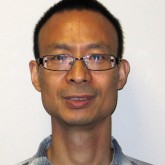 Yong Zhang (张勇)合作论文数Department of Geological Sciences,University of Alabama10
 Rina Schumer合作论文数Division of Hydrologic Sciences, Desert Research Institute7Harish Sankaranarayanan合作论文数5
 Murugesu Sivapalan合作论文数Department of Geography & Geographic Information Science, School of Earth, Society & Environment, College of Liberal Arts & Sciences, University of Illinois Urbana-Champaign;Department of Civil & Environmental Engineering, The Grainger College of Engineering, University of Illinois Urbana-Champaign;Department of Hydraulic Engineering, Tsinghua University4
 Ciaran Harman合作论文数Department of Environmental Health and Engineering, Whiting School of Engineering, Johns Hopkins University4
 Ting Wang合作论文数3
 Donald Matt Reeves合作论文数Desert Research Institute, Desert Research Institute3
 Hans-Peter Scheffler合作论文数Fachbereich Mathematik, University of Dortmund3
 Frank Neubrander合作论文数Department of Mathematics, Louisiana State University3
 Straka Peter合作论文数2
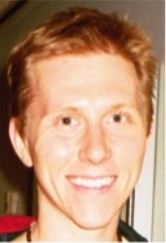 Daniel M. Reeves合作论文数Beeminder2
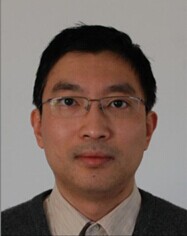 Li Chen (陈力)合作论文数河海大学水文水资源学院2
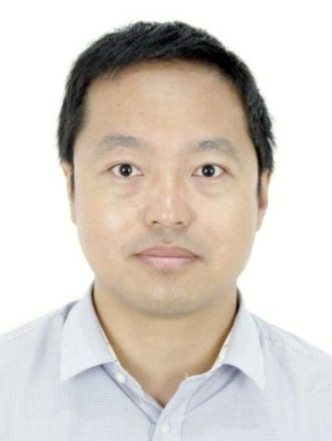 Hongguang Sun (孙洪广)合作论文数College of Mechanics and Engineering Science, Hohai University;School of Mathematics, Hohai University2Satoko Kurita合作论文数2
 Erkan Nane合作论文数Department of Mathematics;Purdue University;Department of Mathematics, Purdue University2G. Lumer合作论文数1Hiscott Gordon合作论文数1
 Conor Kresin合作论文数1Marnus Stoltz合作论文数1
 Ruanui Nicholson合作论文数Dept Engn Sci, Univ Auckland1Lorenzo Toniazzi合作论文数Department of Applied Physics and Applied Mathematics, Columbia University1tomasz luks合作论文数1Markus Haase合作论文数1
 Graham E Fogg合作论文数Department of Land, Air and Water Resources, University of California, Davis1
 Stephen Taylor合作论文数Department of Mathematics, Faculty of Science, The University of Auckland1
 Thomas Rades合作论文数Department of Pharmacy, University of Copenhagen;School of Pharmacy, University of Otago;Department of Medicine, University of Adelaide1Ian G. Tucker合作论文数1
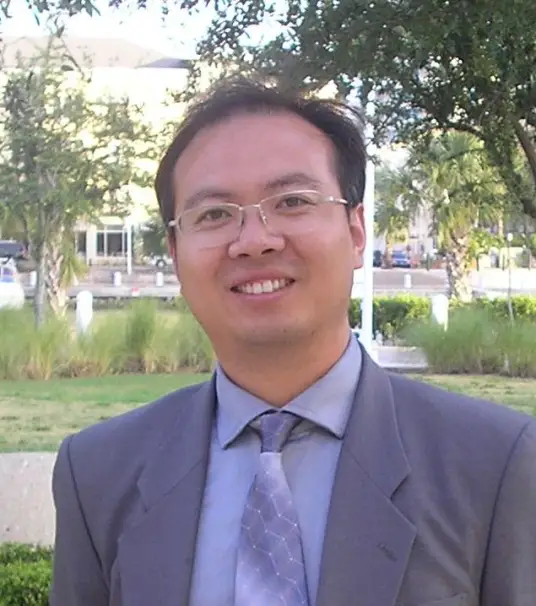 Dong Chen (陈东)合作论文数Institute of Geographic Sciences and Natural Resources Research, Chinese Academy of Sciences;University of Chinese Academy of Sciences1
 David Bryant合作论文数University of Auckland1Eric M. Labolle合作论文数1Stephen W. Wheatcraft合作论文数Department of Geologic Sciences;University of Nevada;Department of Geologic Sciences, University of Nevada1René L. Schilling合作论文数FB Mathematik und Informatik, Philipps-Universität Marburg1Jeff Mortensen合作论文数1
 Colin Fox合作论文数Department of Mathematics;University of Auckland;Department of Mathematics, University of Auckland1
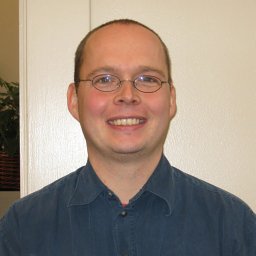 Peter Hinow合作论文数Institute for Mathematics and its Applications;University of Minnesota;Institute for Mathematics and its Applications, University of Minnesota1
 Raleigh L. Martin合作论文数Department of Earth and Environmental Science, University of Pennsylvania1
 Ami Radunskaya合作论文数Department of Mathematics, Pomona College1
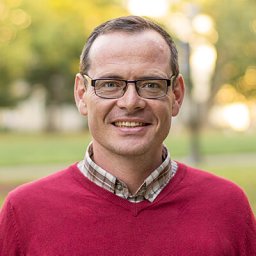 Diogo Bolster合作论文数College of Engineering, University of Notre Dame1
 Christopher T. Green合作论文数US Geological Survey1
 Robert McKibbin合作论文数1
 Remco Bouckaert合作论文数Centre for Computational Evolution, School of Computer Science, Faculty of Science, The University of Auckland1Dimetre Triadis合作论文数1Lipika Chatterjee合作论文数1Matthias Geissert合作论文数1
 Matthew Parry合作论文数Department of Physics;Brown University;Department of Physics, Brown University1Mark Naber合作论文数1




