Natural organic matter in drinking water is causing concern especially due to the formation of disinfection by-products (DBPs) by chlorine, as these are proven to have adverse health effects on consumers. In this research, humic acid was used as a source of dissolved organic carbon (DOC) in drinking water (up to 3 mg L-1). The efficiency of DOC removal was studied by applying 03, H2O2/O-3, H2O2/UV and O-3/UV advanced oxidation processes (AOPs) alone and combined with hybrid hydrodynamic cavitation (HC), generated by an orifice plate, as this technology recently shows promising potential for the treatment of water, containing recalcitrant organic substances. It was observed that the combined treatment by HC could significantly affect the performance of the applied AOPs, with as little as 3-9 passes through the cavitation generators. For O-3 and H2O2 dosages up to 2 and 4 mg L-1, respectively, and UV dosage up to 300 mJ cm(-2), HC enhanced DOC removal by 5-15% in all combinations, except for O-3/UV AOPs. Overall, the potential benefits of HC for DOC removal were emphasized for low ratio between applied oxidants to DOC and high UV absorbance of the sample. Investigated DBPs formation potentials require special attention for H2O2/UV AOPs and combinations with HC. (C) 2017 Elsevier B.V. All rights reserved.
Drinking water contains organic matter that occasionally needs to be treated to assure its sufficient quality and safety for the consumers. H2O2 and UV advanced oxidation processes (H2O2/UV AOPs) were combined with hydrodynamic cavitation (HC) to assess the effects on the removal of selected organic pollutants. Water samples containing humic acid, methylene blue dye and micropollutants (metaldehyde, diatrizoic acid, iohexol) were treated first by H2O2 (dosages from 1 to 12 mg L-1) and UV (dosages from 300 to 2800 mJ cm-2) AOPs alone and later in combination with HC, generated by nozzles and orifice plates (4, 8, 18 orifices). Using HC, the removal of humic acid was enhanced by 5-15 %, methylene blue by 5-20 % and metaldehyde by approx. 10 %. Under favouring conditions, i.e. high UV absorbance of the matrix (more than 0.050 cm-1 at a wavelength of 254 nm) and a high pollutant to oxidants ratio, HC was found to improve the hydrodynamic conditions in the photolytic reactor, to improve the subjection of the H2O2 to the UV fluence rate distribution and to enhance the removal of the tested organic pollutants, thus showing promising potential of further research in this field.
This study describes a gas chromatography-mass spectrometry analytical method for the analysis of cytostatic cyclophosphamide (CP), ifosfamide (IF) and their selected metabolites/transformation products (TPs): carboxy-cyclophosphamide (carboxy-CP), keto-cyclophosphamide (keto-CP) and 3-dechloroethyl-ifosfamide/N-dechloroethyl-cyclophosphamide (N-decl-CP) in wastewater (WW). Keto-cyclophosphamide, CP and IF were extracted with Oasis HLB and N-decl-CP and carboxy-CP with Isolute ENV+ cartridges. Analyte derivatization was performed by silylation (metabolites/TPs) and acetylation (CP and IF). The recoveries and LOQs of the developed method were 58, 87 and 103 % and 77.7, 43.7 and 6.7 ng L−1 for carboxy-CP, keto-CP and N-decl-CP, respectively. After validation, the analytical method was applied to hospital WW and influent and effluent samples of a receiving WW treatment plant. In hospital WW, levels up to 2690, 47.0, 13,200, 2100 and 178 ng L−1 were detected for CP, IF, carboxy-CP, N-decl-CP and keto-CP, respectively, while in influent and effluent samples concentrations were below LOQs. The formation of TPs during abiotic treatments was also studied. Liquid chromatography-high-resolution mass spectrometry was used to identify CP and IF TPs in ultrapure water, treated with UV and UV/H2O2. UV treatment produced four CP TPs and four IF TPs, while UV/H2O2 resulted in five CPs and four IF TPs. Besides already known TPs, three novel TPs (CP-TP138a, imino-ifosfamide and IF-TP138) have been tentatively identified. In hospital WW treated by UV/O3/H2O2, none of the target metabolites/TPs resulted above LOQs.
Ballast water is, together with hull fouling and aquaculture, considered the most important factor of the worldwide transfer of invasive non-indigenous organisms in aquatic ecosystems and the most important factor in European Union. With the aim of preventing and halting the spread of the transfer of invasive organisms in aquatic ecosystems and also in accordance with IMO's International Convention for the Control and Management of Ships Ballast Water and Sediments, the systems for ballast water treatment, whose work includes, e.g. chemical treatment, ozonation and filtration, are used. Although hydrodynamic cavitation (HC) is used in many different areas, such as science and engineering, implied acoustics, biomedicine, botany, chemistry and hydraulics, the application of HC in ballast water treatment area remains insufficiently researched. This paper presents the first literature review that studies lab- and large-scale setups for ballast water treatment together with the type-approved systems currently available on the market that use HC as a step in their operation. This paper deals with the possible advantages and disadvantages of such systems, as well as their influence on the crew and marine environment. It also analyses perspectives on the further development and application of HC in ballast water treatment.
The north-western part of the northern Adriatic (NA) exhibits eutrophic to mesotrophic characteristics with recurrent algal blooms and quite unpredictable mucilage events. To contribute to the understanding of the mucilage events in the NA a machine learning algorithm for induction of regression trees was applied on a long-term data-set comprising physical, chemical and biological parameters, measured at six stations on the profile from the Po River delta (Italy) to Rovinj (Croatia). A model describing the connection between the TIN/PO4 ratio, considered as a necessary factor and sometimes even a trigger for mucilage events, and the environmental conditions in NA, was elaborated. The model for TIN/PO4 ratio confirmed the assumption that the mucilage events are connected with this ratio, e.g. mucilage events coincides with its high values. This finding indicates that at certain levels of phosphorus limitation (from TIN/PO4 ratio) mucilage event frequency increases. The model also reveals that salinity and temperature are responsible for the changes of the TIN/PO4 ratio and gives an insight on their threshold values which lead to high values of this ratio, further related to mucilage events.
The adhesion of bacterial cells to various surfaces is based on physical and chemical interactions between the micro-organisms and the surfaces. The main purpose of this research is to determine the effect of material roughness and incubation temperature on the adhesion of bacteria. To determine the adhesion of the bacterial strain of Legionella pneumophila ATCC 33153 to the glass coupons, a spectrophotometric method of measuring the optical density of crystal violet dye that is released from pre-stained bacterial cells attached to the test surface was used. The intensity of adhesion is in positive correlation to the increase in surface roughness (p < 0.05). The adhesion is the greatest at an optimal temperature of 36 °C, whereas the temperature of 15 °C has a bacteriostatic effect and the temperature of 55 °C a bactericidal effect.
The use of acoustic cavitation for water and wastewater treatment (cleaning) is a well known procedure. Yet, the use of hydrodynamic cavitation as a sole technique or in combination with other techniques such as ultrasound has only recently been suggested and employed. In the first part of this paper a general overview of techniques that employ hydrodynamic cavitation for cleaning of water and wastewater is presented. In the second part of the paper the focus is on our own most recent work using hydrodynamic cavitation for removal of pharmaceuticals (clofibric acid, ibuprofen, ketoprofen, naproxen, diclofenac, carbamazepine), toxic cyanobacteria (Microcystis aeruginosa), green microalgae (Chlorella vulgaris), bacteria (Legionella pneumophila) and viruses (Rotavirus) from water and wastewater. As will be shown, hydrodynamic cavitation, like acoustic, can manifest itself in many different forms each having its own distinctive properties and mechanisms. This was until now neglected, which eventually led to poor performance of the technique. We will show that a different type of hydrodynamic cavitation (different removal mechanism) is required for successful removal of different pollutants. The path to use hydrodynamic cavitation as a routine water cleaning method is still long, but recent results have already shown great potential for optimisation, which could lead to a low energy tool for water and wastewater cleaning.
Cytostatic drug residues in the aqueous environment are of concern due to their possible adverse effects on non-target organisms. Here we report the occurrence and removal efficiency of cyclophosphamide (CP) and ifosfamide (IF) by biological and abiotic treatments including advanced oxidation processes (AOPs). Cyclophosphamide was detected in hospital wastewaters (14-22,000 ng L(-1)), wastewater treatment plant influents (19-27 ng L(-1)) and effluent (17 ng L(-1)), whereas IF was detected only in hospital wastewaters (48-6800 ng L(-1)). The highest removal efficiency during biological treatment (attached growth biomass in a flow through bioreactor) was 59 ± 15% and 35 ± 9.3% for CP and IF, respectively. Also reported are the removal efficiencies of both compounds from wastewater using hydrodynamic cavitation (HC), ozonation (O3) and/or UV, either individually or in combination with hydrogen peroxide (H2O2). Hydrodynamic cavitation did not remove CP and IF to any significant degree. The highest removal efficiencies: 99 ± 0.71% for CP and 94 ± 2.4% for IF, were achieved using UV/O3/H2O2 at 5 g L(-1) for 120 min. When combined with biological treatment, removal efficiencies were >99% for both compounds. This is the first report of combined biological and AOP treatment of CP and IF from wastewater with a removal efficiency >99%.
In this work, we develop a library of components for building semi-distributed watershed models. The library incorporates basic modeling knowledge that allows us to adequately model different water fluxes and nutrient loadings on a watershed scale. It is written in a formalism compliant with the equation discovery tool ProBMoT, which can automatically construct watershed models from the components in the library, given a conceptual model specification and measured data. We apply the proposed modeling methodology to the Ribeira da Foupana catchment to extract a set of viable hydrological models. By specifying the conceptual model and using the knowledge library, two different hydrological models are generated. Both models are automatically calibrated against measurements and the model with the lower root mean squared error (RMSE) value is selected as an appropriate hydrological model for the selected study area.
In this work, we develop a library of components for building semi-distributed watershed models. The library incorporates basic modeling knowledge that allows us to adequately model different water fluxes and nutrient loadings on a watershed scale. It is written in a formalism compliant with the equation discovery tool ProBMoT, which can automatically construct watershed models from the components in the library, given a conceptual model specification and measured data. We apply the proposed modeling methodology to the Ribeira da Foupana catchment to extract a set of viable hydrological models. By specifying the conceptual model and using the knowledge library, two different hydrological models are generated. Both models are automatically calibrated against measurements and the model with the lower root mean squared error (RMSE) value is selected as an appropriate hydrological model for the selected study area.
In this study, the removal of clofibric acid, ibuprofen, naproxen, ketoprofen, carbamazepine and diclofenac residues from wastewater, using a novel shear-induced cavitation generator has been systematically studied. The effects of temperature, cavitation time and H2O2 dose on removal efficiency were investigated. Optimisation (50 degrees C; 15 min; 340 mg L-1 of added H2O2) resulted in removal efficiencies of 4786% in spiked deionised water samples. Treatment of actual wastewater effluents revealed that although matrix composition reduces removal efficiency, this effect can be compensated for by increasing H2O2 dose (3.4 g L-1) and prolonging cavitation time (30 mm). Hydrodynamic cavitation has also been investigated as either a pre- or a post-treatment step to biological treatment. The results revealed a higher overall removal efficiency of recalcitrant diclofenac and carbamazepine, when hydrodynamic cavitation was used prior to as compared to post biological treatment i.e., 54% and 67% as compared to 39% and 56%, respectively. This is an important finding since diclofenac is considered as a priority substance to be included in the EU Water Framework Directive. (C) 2013 Elsevier B.V. All rights reserved.
The paper describes the use of machine learning (ML) and discusses various approaches in modeling phytoplankton based on data from station RV001 in front of Rovinj which well represents the main processes in the open northern Adriatic (NA). Station RV001 is an example of oligotrophic seawater in NA. In order to contribute to the understanding of phytoplankton dynamics at the observation station, based on data covering physical, biological and chemical parameters, ML techniques were used. The final result is a construction of models in the form of regression and model trees, respectively; there were models constructed to be used to explain the dynamics of phytoplankton concentrations at the mentioned station as a result of independent environmental variables. Models in an affordable way combine and show knowledge collected by measurements during 35 year period, which have greatly contributed to a better understanding of ecosystem functioning.
Reuse of treated municipal wastewater to supplement part of fresh water is becoming more and more important. However, treated water can contain some pollutants that cannot be successfully removed with classical biological wastewater treatment processes. Aim of the study presented was to assess whether advanced oxidation processes (AOPs) and special enzymes enhance biodegradation of municipal wastewater and if treated municipal wastewater can be reused in the production process of textile industry. To test
Reuse of treated municipal wastewater to supplement part of fresh water is becoming more and more important. However, treated water can contain some pollutants that cannot be successfully removed with classical biological wastewater treatment processes. Aim of the study presented was to assess whether advanced oxidation processes (AOPs) and special enzymes enhance biodegradation of municipal wastewater and if treated municipal wastewater can be reused in the production process of textile industry. To test biodegradability we used a small-scale pilot wastewater treatment plant (PWWTP) consisting of six parallel bioreactors with suspended activated sludge (CAS type). Bioreactors were supplied with untreated municipal wastewater, AOP-treated municipal wastewater and AOP-treated municipal wastewater with addition of special enzymes. The results showed that AOPs contributed to better biodegradation while enzymes did not. Municipal wastewater treated by a combination of AOP and biological treatment was not suitable for reuse in the dyeing process, but could potentially be reused in some other processes in the textile industry.
The northern Adriatic (NA) is one of the most productive areas of the Mediterranean Sea with a watershed area spread over four neighboring countries, Italy, Slovenia, Switzerland and Croatia. Up to date research include mainly the nutrient load estimations from the biggest nutrients sources, like the Po River watershed (Italian part). This research aims to estimate the loads from nearly the entire contributing area, including the Italian, the Slovenian and the Croatian part. The ArcView Generalized Watershed Loading Function (AVGWLF) model was applied to simulate nutrient loads from the NA watershed. The model can simulate runoff, sediment and nutrients (nitrogen and phosphorus) loads from the watershed, by taking dispersed and point sources into account. Calibration and validation of the model were performed on the data from 1999 to 2002 and 2003 to 2007, respectively. Comparison between the simulated and measured loads in the Po River watershed shows a good match and thus high reliability of the model. As expected, the Po River dominated the nutrient loads to the NA. However, the results also point to other contributing areas, e.g. smaller watersheds with high intensity of nutrient loads, causing significant local impacts (e.g. Lagoon of Venice). The model also shows that the major sources of nutrients are not only agricultural but also urban areas without proper wastewater treatment (secondary at present). Proper management of these areas, such as introducing suitable (tertiary) wastewater treatment, or other nutrient management measures shall reduce the nutrient loadings to the NA.Further work is focused to use the model for optimizing the control and management of the activities in the contributing areas, smaller as well as bigger sub-watersheds. (C) 2013 Elsevier B.V. All rights reserved.
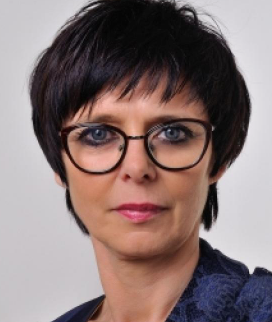 Ester Heath合作论文数Department of Environmental Sciences, Jozef Stefan Institute14
 Nataša Atanasova合作论文数Faculty of Civil and Geodetic Engineering, University of Ljubljana13
 Tina Kosjek合作论文数Jo ef Stefan " Institute12darko drev合作论文数10
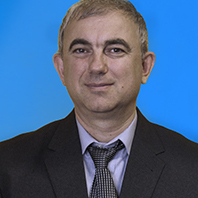 Sašo Džeroski合作论文数Department of Knowledge Technologies, Jozef Stefan Institute;Jozef Stefan International Postgraduate School;Centre of Excellence for Integrated Approaches in Chemistry and Biology of Proteins9
 Aleksandra Krivograd Klemencic合作论文数7
 Tjasa Griessler Bulc合作论文数Faculty of Civil and Geodetic Engineering, University of Ljubljana7
 Goran Volf合作论文数6Brane Sirok合作论文数6
 Nevenka Ožanić合作论文数Faculty of Civil Engineering, University of Rijeka5
 Matevž Dular合作论文数Laboratory for Water and Turbine Machines, University of Ljubljana5klara jarni合作论文数4
 Mojca Zupanc合作论文数4
 Mateja Skerjanec合作论文数4Robert Precali合作论文数4
 Primoz Banovec合作论文数FGG, University of Ljubljana4
 Marjeta Cesen合作论文数3Panjan Jože合作论文数3
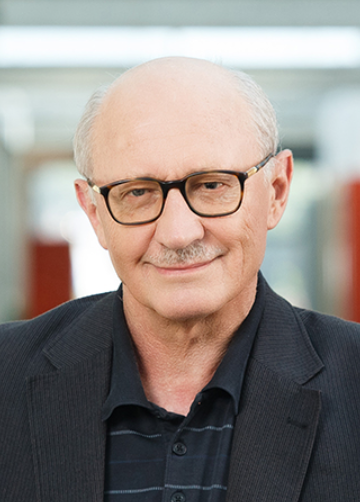 Ivan Bratko合作论文数Artificial intelligence Laboratory, Faculty of Computer and Information Science, University of Ljubljana3M. Krzyk合作论文数3
 Eva Eriksson合作论文数Chalmers University of Technology3
 Matej Cerk合作论文数3
 Ljupčo Todorovski合作论文数Department of Knowledge Technologies;Jozef Stefan Institute;Ljupco Todorovski3Franci Steinman合作论文数3
 Marko Petkovsek合作论文数Department of Mathematics, Faculty of Mathematics and Physics, University of Ljubljana3Viljem Križman合作论文数2
 Damjan Balabanic合作论文数2Alojz Medic合作论文数2Matej Čehovin合作论文数2a lecloux合作论文数2Oder Martina合作论文数2
 Ljupco Todorovski合作论文数Department of Knowledge Technologies;Jozef Stefan Institute;Ljupco Todorovski2
 Daniel Vladusic合作论文数XLAB d.o.o.2
 Gideon Gal合作论文数Y. Allon Kinneret Limnological Laboratory, IOLR2Aleksandra Krivograd合作论文数2
 Francesco Busetti合作论文数Curtin Water Quality Research Centre, Curtin University2
 Marija Bogataj合作论文数Edvard Kardelj University2Anna Ledin合作论文数Institute of Environment & Resources, Technical University of Denmark2
 Andreja Zgajnar Gotvajn合作论文数2Marina Pintar合作论文数2
 Lidija Globevnik合作论文数Water Management Institute2Leon Gosar合作论文数2
 Tonie Wickman合作论文数2Gregor Sluga合作论文数2Wim Van Laer合作论文数1
 Jens Scheideler合作论文数1Maria Laimou-Geraniou合作论文数1Marjeta Stražar合作论文数1uros jese合作论文数1




