We present NEL (Network Error Logging), a planet-scale, client-side, network reliability measurement system. NEL is implemented in Google Chrome and has been proposed as a new W3C standard, letting any web site operator collect reports of clients' successful and failed requests to their sites. These reports are similar to web server logs, but include information about failed requests that never reach serving infrastructure. Reports are uploaded via redundant failover paths, reducing the likelihood of shared-fate failures of report uploads. We have designed NEL such that service providers can glean no additional information about users or their behavior compared to what services already have visibility into during normal operation. Since 2014, NEL has been invaluable in monitoring all of Google's domains, allowing us to detect and investigate instances of DNS hijacking, BGP route leaks, protocol deployment bugs, and other problems where packets might never reach our servers. This paper presents the design of NEL, case studies of real outages, and deployment lessons for other operators who choose to use NEL to monitor their traffic.
We present the design of Espresso, Google's SDN-based Internet peering edge routing infrastructure. This architecture grew out of a need to exponentially scale the Internet edge cost-effectively and to enable application-aware routing at Internet-peering scale. Espresso utilizes commodity switches and host-based routing/packet processing to implement a novel fine-grained traffic engineering capability. Overall, Espresso provides Google a scalable peering edge that is programmable, reliable, and integrated with global traffic systems. Espresso also greatly accelerated deployment of new networking features at our peering edge. Espresso has been in production for two years and serves over 22% of Google's total traffic to the Internet.
 Ilya Grigorik合作论文数1Matthew Holliman合作论文数1Puneet Sood合作论文数1Ankur Jain合作论文数1Manish Verma合作论文数1Taeeun Kim合作论文数1Calvin Ying合作论文数Google1Dzevad Trumic合作论文数Google1Colin Rice合作论文数Google1Marcus Hines合作论文数Google1Gary Baldus合作论文数Google1Jeremy Rahe合作论文数Google1Matt Tierney合作论文数Courant Institute of Mathematical Sciences, New York University1
 victor lin合作论文数1bert h tanaka合作论文数1Lily Chen合作论文数1Ben Jones合作论文数1
 Amin M. Vahdat合作论文数Google;Department of Computer Science and Engineering, University of California San Diego1
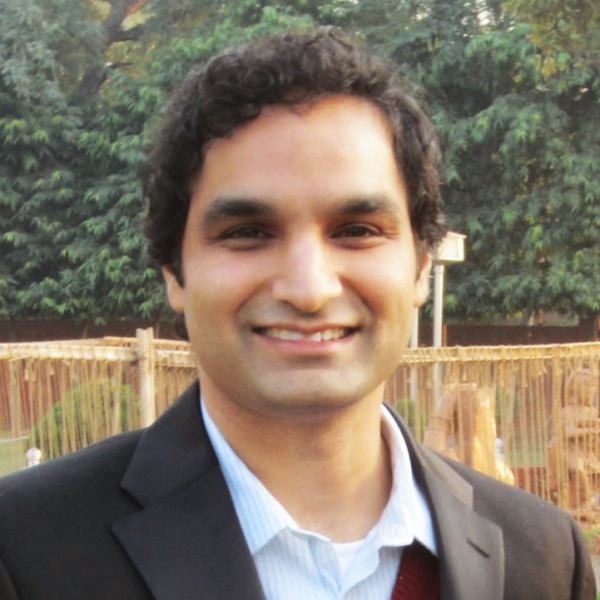 Arjun Singh合作论文数Google1Sam Burnett合作论文数Georgia Institute of Technology1
 Harsha V. Madhyastha合作论文数Thomas Lord Department of Computer Science, University of Southern California1Steve Padgett合作论文数College of Computing;Georgia Institute of Technology1Bikash Koley合作论文数1Douglas A. Creager合作论文数Computing Laboratory, Oxford University1
 Murtaza Motiwala合作论文数College of Computing;Georgia Tech;College of Computing, Georgia Tech1Ashok Narayanan合作论文数Cisco Systems1
 Vytautas Valancius合作论文数Georgia Tech1
 Mukarram Tariq合作论文数Google1
 Kok-Kiong Yap合作论文数Google1
 Mahesh Kallahalla合作论文数Google1




