The economics profession appears to have been unaware of the long build-up to the current worldwide financial crisis and to have significantly underestimated its dimensions once it started to unfold. In our view, this lack of understanding is due to a misallocation of research efforts in economics. We trace the deeper roots of this failure to the profession's focus on models that, by design, disregard key elements driving outcomes in real-world markets. The economics profession has failed in communicating the limitations, weaknesses, and even dangers of its preferred models to the public. This state of affairs makes clear the need for a major reorientation of focus in the research economists undertake, as well as for the establishment of an ethical code that would ask economists to understand and communicate the limitations and potential misuses of their models.
Economists not only failed to anticipate the financial crisis; they may have contributed to itwith risk and derivatives models that, through spurious precision and untested theoretical assumptions, encouraged policy makers and market participants to see more stability and risk sharing than was actually present. Moreover, once the crisis occurred, it was met with incomprehension by most economists because of models that, on the one hand, downplay the possibility that economic actors may exhibit highly interactive behavior; and, on the other, assume that any homogeneity will involve economic actors sharing the economist's own putatively correct model of the economy, so that error can stem only from an exogenous shock. The financial crisis presents both an ethical and an intellectual challenge to economics, and an opportunity to reform its study by grounding it more solidly in reality.
 Thomas Lux合作论文数Department of Economics, University of Kiel4
 Armin Haas合作论文数4
 Alan Kirman合作论文数Centre D'Analyse et de Mathematique Sociales, Ecole des Hautes Etudes en Sciences Sociales;University of Aix-Marseille4
 Katarina Juselius合作论文数Department of Economics, University of Copenhagen4
 Michael Goldberg合作论文数3
 David C. Colander合作论文数Middlebury College3
 John B. Taylor合作论文数2
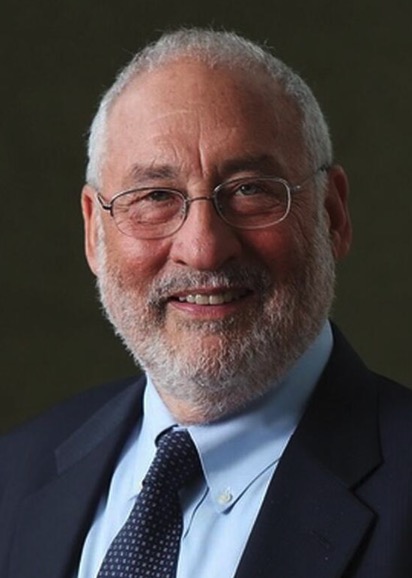 Joseph E. Stiglitz合作论文数Department of Economics, Columbia Business School, Columbia University;School of International and Public Affairs, Columbia University;Graduate School of Arts and Sciences, Columbia University2
 Vernon Smith合作论文数Economic Science Institute, Chapman University;Dale E. Fowler School of Law, Chapman University;The George L. Argyros College of Business and Economics, Chapman University2
 Lawrence J. White合作论文数Department of Economics, Leonard N. Stern School of Business, New York University2Matthew Richardson合作论文数Microsoft2
 Daron Acemoglu合作论文数Department of Economics, Massachusetts Institute of Technology2
 Steven Gjerstad合作论文数Department of Economics;University of Arizona2
 Peter J. Wallison合作论文数2
 Mateusz Machaj合作论文数Mises Institute Warsaw2
 Viral V. Acharya合作论文数Department of Finance, Stern School of Business, New York University;National Bureau of Economic Research;Centre for Economic Policy Research;European Corporate Governance Institute;Central Bank of Sweden2Amar Bhide合作论文数Fetal Medicine Unit, St. George's Hospital2Juliusz Jablecki合作论文数Bureau of Monetary;Policy National Bank of Poland;Bureau of Monetary, Policy National Bank of Poland2Hans Follmer合作论文数1




