tively (e.g., Summers and Hrabowski 2006). Here, we describe a one-anda-half-day Distinguished Scholar Symposium during which undergraduate URMs from nearby schools visit the University ofNorth Carolina at Chapel Hill (UNC-CH) to learn about advanced degree programs. The symposium provides an opportunity for these undergraduates to interact with scientists and labs at a Research University/Very High (RU/VH) (Carnegie Foundation for the Advancement of Teaching 2006). Although our model focuses on postcollege biological and biomedical sciences, other educators will find it a useful tool to develop and adapt for recruiting students to any of the sciences. Background The Minority Opportunities in Research Division of the National Institute of General Medical Sciences aims to increase the diversity of undergraduates in the biomedical sciences. They formally define URMs as "groups [that] have been identified as underrepresented in biomedical and behavioral research nationally: African Americans, Hispanic Americans, Native Americans (including Alaskan Natives), and natives of the U.S. Pacific Islands" (NIGMS). In addition to national programs designed to enhance diversity, we need to ensure that each institution does its utmost to recruit URMs. The Seeding Postdoctoral Innovators in Research and Education (SPIRE) Postdoctoral Fellowship Program is funded by the Minority Opportunities in Research Division and trains PhDs to bring novel and effective pedagogical techniques into the classrooms of minority-serving institutions (SPIRE). SPIRE has worked with eight institutions throughout North Carolina: Elizabeth City State University, Fayetteville State University, Johnson C. Smith University, North Carolina A&T State University, North Carolina Central University, Shaw University, the University of North Carolina at Pembroke, and WinstonSalem State University Beginning in the year 2000, SPIRE began hosting an annual Distinguished Scholar Symposium, and in 2004 we began encouraging students from our partner institutions to attend the event. The goal of this student-centered component was to bring minority students who were considering advanced degrees in the biosciences to UNC-CH. We wanted students to gain exposure to
Uncoupling proteins (UCPs) belong to the mitochondrial anion carrier gene family which has been implicated in diverse physiological functions ranging from thermoregulation to antioxidant defense. In mammals, the UCP family is well characterized and contains five members (UCP1-5). In contrast, invertebrate homologues of uncoupling proteins are much less studied both from the viewpoints of structure and function. In this study we report nucleotide and predicted protein structure of an important member of UCP family, UCP5 from eastern oysters Crassostrea virginica. UCP5 from oysters appears to be a close homolog of the mammalian brain mitochondrial carrier protein (BMCP1, or UCP5) and is the first full-length UCP described from a Lophotrochozoan invertebrate. Evolutionary analysis of UCP sequences indicates at least three monophyletic UCP branches (UCP1-3, UCP4 and UCP5) that have diverged early in the evolution, prior to the divergence of vertebrates and invertebrates. In oysters, two forms of UCP5 transcript are found (UCP5S and UCP5L) that differ by 152 bp in length due to the presence of an intron in UCP5L UCP5 was expressed in all studied oyster tissues, unlike mammals, where UCP5 is predominantly expressed in brains and male gonads. Hypoxia-reoxygenation stress, sublethal Cd exposure (50 pg L-1 Cd for 56 days) and acclimation to different temperatures (12 and 20 degrees C) had no significant effect on UCP5 mRNA expression in oysters indicative of its relative unimportance in antioxidant defense and temperature adaptation of oyster mitochondria. These data suggest that despite the relatively high degree of evolutionary conservation of the UCP5 amino acid sequence, its functional significance in mitochondria changed in the course of evolution of mollusks and vertebrates. (C) 2008 Elsevier Inc. All rights reserved.
Bone remodeling is central to maintaining the integrity of the skeletal system, wherein the developed bone is constantly renewed by the balanced action of osteoblastic bone formation and osteoclastic bone resorption. In the present study, we demonstrate a novel function of the Stat1 transcription factor in the regulation of bone remodeling. In the bone of the Stat1-deficient mice, excessive osteoclastogenesis is observed, presumably caused by a loss of negative regulation of osteoclast differentiation by interferon (IFN)-beta. However, the bone mass is unexpectedly increased in these mice. This increase is caused by excessive osteoblast differentiation, wherein Stat1 function is independent of IFN signaling. Actually, Stat1 interacts with Runx2 in its latent form in the cytoplasm, thereby inhibiting the nuclear localization of Runx2, an essential transcription factor for osteoblast differentiation. The new function of Stat1 does not require the Tyr 701 that is phosphorylated when Stat1 becomes a transcriptional activator. Our study provides a unique example in which a latent transcription factor attenuates the activity of another transcription factor in the cytoplasm, and reveals a new regulatory mechanism in bone remodeling.
 Y Eugene Chin合作论文数1T Yokochi合作论文数1H Takayanagi合作论文数1Eugene P Sokolov合作论文数1
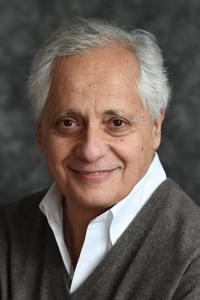 Gerard Karsenty合作论文数Department of Genetics and Development, Columbia University Medical Center;Department of Biomedical Engineering, The Fu Foundation School of Engineering and Applied Science, Columbia University in the City of New York1
 Tadatsugu Taniguchi合作论文数Department of Inflammology, Research Center for Advanced Science and Technology, The University of Tokyo;Institute of Industrial Science, The University of Tokyo1
 Rebecca M. Price合作论文数Department of Biology, University of Washington1Miho Isobe合作论文数1
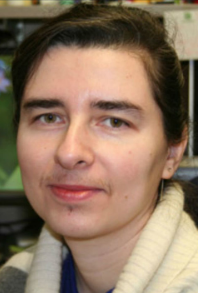 Helen Piontkivska合作论文数Department of Biological Sciences, Kent State University1
 Sun-Hwa Kim合作论文数Department of Immunology, University of Tokyo1Anna V. Ivanina合作论文数Biology Department, University of North Carolina at Charlotte1
 Inna Sokolova合作论文数Institute for Biological Sciences, University of Rostock1




