Given the pivotal role of data and cyberinfrastructure (CI) in teaching and scientific discovery, it is essential that researchers at small and mid-sized institutions be empowered to fully exploit them.While access to physical infrastructure is essential, it is equally important to have access to people known as Research Computing Facilitators (RCFs) who possess a mix of technical knowledge and interpersonal skills that enables faculty to make the best use of available computing resources.Meeting this need is a significant challenge for small and mid-sized institutions that do not have the critical mass to build teams of RCFs on site.Launched in 2017, the National Science Foundation (NSF) funded Northeast Cyberteam (NECT) built a program to address these challenges for researchers/educators at small and mid-sized institutions in four states -Maine, Massachusetts, New Hampshire, and Vermontwhile simultaneously developing selfservice tools that support management and execution of RCF engagements.These tools are housed in a Portal called Connect.cyberinfrastructure and have enabled adoption of program methods by the broader research computing community.
The Connect.Cyberinfrastructure.org Portal, originally known as the Cyberteam Portal, was developed to support the management of project workflows and to capture project results for the Northeast Cyberteam (NECT) [3,5,6]. Recently, the Portal has expanded to provide support for other programs in the Research Computing ecosystem, creating opportunities for collaboration, and leveraging a consistent, cohesive approach to common challenges. As reported at SC20 [6], a pilot was launched in July 2020 to enable six additional Cyberteam programs to explore the use of the Portal as a management tool for their related programs. In addition, in January of 2021, the Extreme Science and Engineering Discovery Environment (XSEDE) Campus Champions leadership decided to use the Portal to modernize participant management and onboarding functions. Portal details, preliminary results, and future plans are discussed.
Ask. CI [3], the Q&A site for Research Computing, was launched at PEARC18 with the goal of aggregating answers to a broad spectrum of questions that are commonly asked by the research computing community.As researchers, facilitators, staff, students, and others ask and answer questions on Ask.CI, they create a shared knowledge base for the larger community.
Computing has become an essential component of research and education for nearly every scientific discipline. Meeting the need for support staff who can help faculty make the best use of available computing resources is a significant challenge for small and mid-sized institutions. The NSF-sponsored Northeast Cyberteam is addressing this challenge by building a pool of research computing facilitators that can be shared across institutional boundaries while also developing self-service tools that reduce the support burden.
Cyberinfrastructure is as important for research in the 21st century as test tubes and microscopes were in the 20th century.Familiarity with and effective use of cyberinfrastructure at small and mid-sized institutions is essential if their faculty and students are to remain competitive.The Northeast Cyberteam Program is a 3-year NSF-funded regional initiative to increase effective use of cyberinfrastructure by researchers and educators at small and mid-sized institutions in northern New England by making it easier to obtain support from Research Computing Facilitators.Research Computing Facilitators combine technical knowledge and strong interpersonal skills with a service mindset, and use their connections with cyberinfrastructure providers to ensure that researchers and educators have access to the best available resources.It is widely recognized that Research Computing Facilitators are critical to successful utilization of cyberinfrastructure, but in very short supply.The Northeast Cyberteam aims to build a pool of Research Computing Facilitators in the region and a process to share them across institutional boundaries.Concurrently, we are providing
The Northeast Cyberteam Program is a collaborative effort across Maine, New Hampshire, Vermont, and Massachusetts that seeks to assist researchers at small and medium-sized institutions in the region with making use of cyberinfrastructure, while simultaneously building the next generation of research computing facilitators. Recognizing that research computing facilitators are frequently in short supply, the program also places intentional emphasis on capturing and disseminating best practices in an effort to enable opportunities to leverage and build on existing solutions whenever practical. The program combines direct assistance to computationally intensive research projects; experiential learning opportunities that pair experienced mentors with students interested in research computing facilitation; sharing of resources and knowledge across large and small institutions; and tools that enable efficient oversight and possible replication of these ideas in other regions. Each project involves a researcher seeking to better utilize cyberinfrastructure in research, a student facilitator, and a mentor with relevant domain expertise. These individuals may be at the same institution or at separate institutions. The student works with the researcher and the mentor to become a bridge between the infrastructure and the research domain. Through this model, students receive training and opportunities that otherwise would not be available, research projects get taken to a higher level, and the effectiveness of the mentor is multiplied. Providing tools to enable self-service learning is a key concept in our strategy to develop facilitators through experiential learning, recognizing that one of the most fundamental skills of successful facilitators is their ability to quickly learn enough about new domains and applications to be able draw parallels with their existing knowledge and help to solve the problem at hand. The Cyberteam Portal is used to access the self-service learning resources developed to provide just-in-time information delivery to participants as they embark on projects in unfamiliar domains, and also serves as a receptacle for best practices, tools, and techniques developed during a project. Tools include Ask.CI, an interactive site for questions and answers; a learning resources repository used to collect online training modules vetted by Cyberteam projects that provide starting points for subsequent projects or independent activities; and a Github repository. The Northeast Cyberteam was created with funding from the National Science Foundation, but has developed strategies for sustainable operations. Each project involves a researcher seeking to better utilize cyberinfrastructure in research, a student facilitator, and a mentor with relevant domain expertise. These individuals may be at the same institution or at separate institutions. The student works with the researcher and the mentor to become a bridge between the infrastructure and the research domain. Through this model, students receive training and opportunities that otherwise would not be available, research projects get taken to a higher level, and the effectiveness of the mentor is multiplied. Providing tools to enable self-service learning is a key concept in our strategy to develop facilitators through experiential learning, recognizing that one of the most fundamental skills of successful facilitators is their ability to quickly learn enough about new domains and applications to be able draw parallels with their existing knowledge and help to solve the problem at hand. The Cyberteam Portal is used to access the self-service learning resources developed to provide just-in-time information delivery to participants as they embark on projects in unfamiliar domains, and also serves as a receptacle for best practices, tools, and techniques developed during a project. Tools include Ask.CI, an interactive site for questions and answers; a learning resources repository used to collect online training modules vetted by Cyberteam projects that provide starting points for subsequent projects or independent activities; and a Github repository. The Northeast Cyberteam was created with funding from the National Science Foundation, but has developed strategies for sustainable operations. Providing tools to enable self-service learning is a key concept in our strategy to develop facilitators through experiential learning, recognizing that one of the most fundamental skills of successful facilitators is their ability to quickly learn enough about new domains and applications to be able draw parallels with their existing knowledge and help to solve the problem at hand. The Cyberteam Portal is used to access the self-service learning resources developed to provide just-in-time information delivery to participants as they embark on projects in unfamiliar domains, and also serves as a receptacle for best practices, tools, and techniques developed during a project. Tools include Ask.CI, an interactive site for questions and answers; a learning resources repository used to collect online training modules vetted by Cyberteam projects that provide starting points for subsequent projects or independent activities; and a Github repository. The Northeast Cyberteam was created with funding from the National Science Foundation, but has developed strategies for sustainable operations.
The NSF-sponsored Northeast Cyberteam program (https://necyberteam.org) is matching student research computing facilitators with research projects at small and medium sized institutions that need help making use of high performance computing resources. Students are selected based on relevant domain knowledge and level of interest in exploring the Research Computing Facilitator role as a career path. Each student is paired with an experienced mentor, and each project lasts 3-5 months. The poster presents results from two of the ~10 Northeast Cyberteam projects that are either completed or in progress at the time of the conference. Students will be prepared to discuss the research projects that they supported, how their efforts advanced each project, reflections on what they learned about the Research Computing Facilitator role, and recommendations on how other sites might make best use of students as Research Computing Facilitators. In the first project, conducted at the University of Maine, improvements to application performance and parallelization have enabled production of forest attribute data at significantly higher volume, changing the philosophy of forest mapping from creating a single map to creating and assessing thousands of maps, making it possible to assess and (to some degree) trade off errors between maps. The second project expanded efforts to introduce computational chemistry into the undergraduate chemistry curriculum at Bridgewater State University. Having access to a high performance computer cluster allows for studying "real world" systems and also provides students with an opportunity to experience how research computing is done in academia and/or chemical/pharmaceutical industries.
In this paper, we explore the Raspberry pi 2 B+ (RPI) graphics in terms of electrical power and energy. We use a novel method to correlate graphics processing, CPU load and electrical power consumption and total energy. By using different benchmarks both with and without the GPU rendering and a Power Gauge, the power consumption difference between GPU rendering and software rendering can be measured. Our results are showing that the number of frames rendered per second increases dramatically when hardware rendering is used, as does electrical power. Interestingly, because the hardware rendering takes less time, we have found that the total energy consumed per rendered frame can be lower despite the electrical power during hardware rendering being higher.
The remote access of computers can be accomplished numerous ways. A common remote access method is secure shell (SSH). It is possible to use SSH to access graphical interfaces by using X11 forwarding. SSH, however, uses the computer that the user is accessing from, the client, as a means to process the graphical commands. This problem can be solved by using a program called VirtualGL. VirtualGL allows the rendering to happen on the host computer and utilizes the video card on that machine allowing for a smoother experience. Virtual machines are becoming increasingly common and do not have hardware graphics acceleration natively, however, there are several techniques available to allow a virtual machine access to a graphics card.
The Octave Fuzzy Logic Toolkit, a free, open-source toolkit for Octave that provides a large subset of the functionality of the MATLAB Fuzzy Logic Toolbox as well as many extensions, has recently been updated to support fuzzy clustering. This paper introduces the fuzzy clustering capabilities of the toolkit and illustrates their use through two examples. Future work will focus on implementing GUI tools and additional advanced fuzzy inference techniques. The Octave Fuzzy Logic Toolkit is shared on Octave-Forge and SourceForge under the GNU GPL.
Sudoku is a popular puzzle utilizing 81 squares in a 9x9 grid consisting of nine 3x3 boxes. The digits 1-9 can each appear only once in a given row, column, or box. This paper describes the implementation of Particle Swarm Optimization (PSO) to solve sudoku puzzles using GPU processing. This PSO uses our opensource PSO framework that takes advantage of CUDAenabled GPUs. Although each row contains nine digits, permutations of nine digits can be represented as eight ”picks”. To find a solution each of the nine rows was treated as a permutation. This reduced the problem dimensionality from 81 to 72. With suitable parameters the algorithm was able to solve multiple sudoku puzzles. This paper describes the implementation of the algorithm , the fitness function used, and the effects of variation on PSO parameters. The original PSO framework and the Sudoku code described in this paper are available online.
SPEC CPU2006 benchmark suite has been extensively studied, with efforts focusing on the requirement understanding of memory workloads from the SPEC CPU2006 suite. However, characterizing SPEC CPU2006 workloads from a time dependence perspective has attracted little attention. This paper studies the auto-correlation functions of the arrival intervals of memory accesses in all SPEC CPU2006 traces, and concludes that correlations in memory inter-access times are inconsistent, either with evident correlations or with little and no correlation. Different with the studies focused on the prior suites, we present that self-similarity exists only in a small number of SPEC2006 workloads. In addition, we implement a memory access series generator in which the inputs are the measured properties of the available trace data. Experimental results show that this model can more accurately emulate the complex access arrival behaviors of real memory systems than the conventional self-similar and independent identically distributed methods, particularly the heavy-tail characteristics under both Gaussian and non-Gaussian workloads.
Random accesses are generally harmful to performance in hard disk drives due to more dramatic mechanical movement. This paper presents the design, implementation, and evaluation of Hot Random Off-loading (HRO), a self-optimizing hybrid storage system that uses a fast and small SSD as a by-passable cache to hard disks, with a goal to serve a majority of random I/O accesses from the fast SSD. HRO dynamically estimates the performance benefits based on history access patterns, especially the randomness and the hotness, of individual files, and then uses a 0-1 knapsack model to allocate or migrate files between the hard disks and the SSD. HRO can effectively identify files that are more frequently and randomly accessed and place these files on the SSD. We implement a prototype of HRO in Linux and our implementation is transparent to the rest of the storage stack, including applications and file systems. We evaluate its performance by directly replaying three real-world traces on our prototype. Experiments demonstrate that HRO improves the overall I/O throughput up to 39% and the latency up to 23%.
 John Goodhue合作论文数7Julie Ma合作论文数7Ralph Zottola合作论文数7Sia Najafi合作论文数7
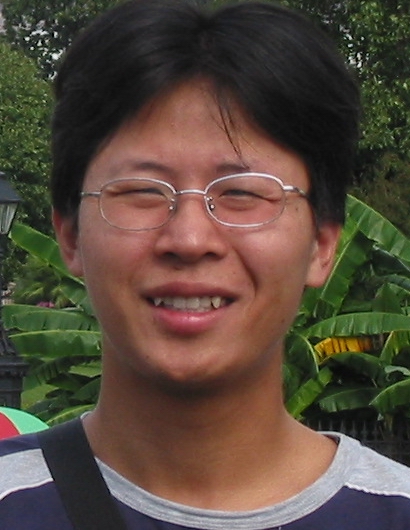 Yifeng Zhu合作论文数Electrical and Computer Engineering Department of the College of Engineering7
 Scott A. Valcourt合作论文数Science Department, Computer;University of New Hampshire7
 Adrian Del Maestro合作论文数Department of Physics;Harvard University;Department of Physics, Harvard University6Peter O Koons合作论文数5m schauffler合作论文数3
 Anthony M. Viselli合作论文数3Sean D. Birkel合作论文数3Habib Dagher合作论文数3Andrea Elledge合作论文数2
 Torey Battelle合作论文数2
 Andrew Sherman合作论文数Department of Computer Science, Yale University2Withee, J.合作论文数2Bourgoin, N.合作论文数2John Field合作论文数2
 Dana S Brunson合作论文数Oklahoma State University2
 Kiran Bhaganagar合作论文数Department of Mechanical Engineering, University of Texas2
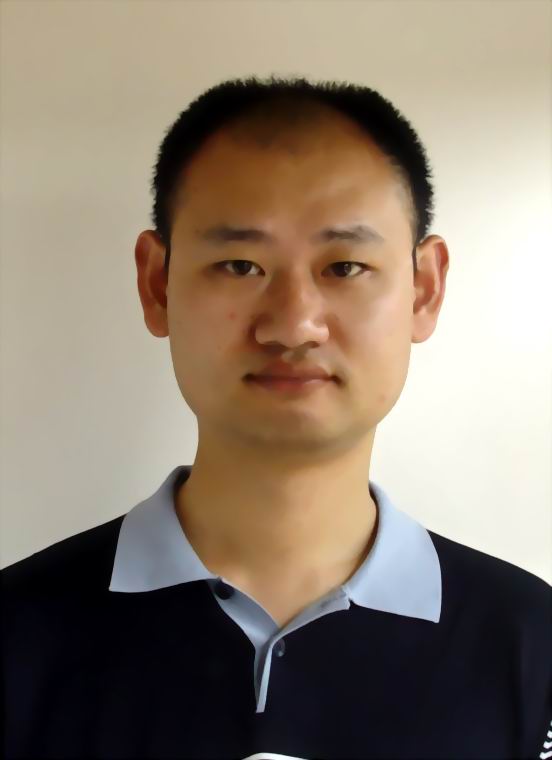 Jianhui Yue合作论文数Department of Electrical and Computer Engineering,University of Maine2
 James L. Fastook合作论文数Climate Change Institute;Department of Computer Science;University of Maine;Climate Change Institute, University of Maine2Eric D. Cassidy合作论文数2fred hewitt smith合作论文数1Aaron Culich合作论文数1
 Zoe Braiterman合作论文数1Lucas Varella合作论文数1Vikram Gazula合作论文数1Jacob B Pessin合作论文数1yifeng zhu合作论文数1Kevin Brandt合作论文数1Evan McCoy合作论文数1Bj Lougee合作论文数1
 Katia Bulekova合作论文数Boston University1
 Jack Smith合作论文数Dept Chem, Univ Iowa1Bhushan Chitre合作论文数1
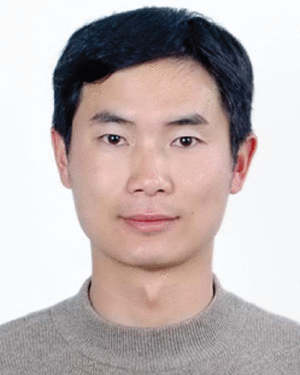 Qiang Zou合作论文数1
 Neil McGlohon合作论文数Rensselaer Polytech Inst, Dept Comp Sci, Troy, NY 12180 USA1
 Lisa M Perez合作论文数Texas A&M Univ, Dept Chem, College Stn, TX 77842 USA1
 Ozer Badak合作论文数Department of Cardiology, Cleveland Clinic Foundation1
 Dhruva K Chakravorty合作论文数Dept Chem, Univ New Orleans1
 Colella Nicholas S合作论文数†Department of Polymer Science and Engineering, University of Massachusetts1
 Mary Jane Perry合作论文数School of Oceanography, University of Washington;School of Marine Sciences, University of Maine1
 Sochat Vanessa V合作论文数Department of Psychology, Stanford University Stanford1
 Sudarshan S. Chawathe合作论文数School of Computing and Information Science, University of Maine1
 Xiongyi Liu合作论文数Center for Instructional Innovation, University of Nebraska-Lincoln1Christopher D Carothers合作论文数Department of Computer Science
Rensselaer Polytechnic Institute1James N. Griffioen合作论文数University of Kentucky;Department of Computer Science 1
Xiongyi Liu合作论文数Center for Instructional Innovation, University of Nebraska-Lincoln1Christopher D Carothers合作论文数Department of Computer Science
Rensselaer Polytechnic Institute1James N. Griffioen合作论文数University of Kentucky;Department of Computer Science 1 Vincent M. Weaver合作论文数Cornell University1




