The sintering and electrical properties of the hydrothermal PSZT powders obtained by substituting 4, 6 and 8 mol% Sr for Pb in PZT lattice structure were investigated. The lattice constant and particle size decreased in proportion to a quantity of Sr. The sintering properties of PSZT powders showed 7.754 g/cm(3) of sintered density and 4 mu m of grain size at sintering temperature of 1250 degrees C. Curie temperature lowered gradually from 363.6 degrees C to 319.2 degrees C and relative dielectric constants increased rapidly by a quantity of Sr. In comparison to PZT, moreover, the quality factor of PSZT was increased more than three times with increase of Sr mole ratio, and piezoelectric constant (d(31) and g(31)) was decreased. It was found that dielectric loss of PSZT was decreased by 0.574% which was half of PZT.
PSZT are selected and SHS are applied to each system. The sintering properties of PSZT powders showed 7.754 g/cm(3) of sintered density and 4 mu m of grain size at sintering temperature of 1250 degrees C. Curie temperature lowered gradually from 363.6 degrees C to 319.2 degrees C and relative dielectric constants increased rapidly by a quantity of Sr. This remarkable contrast in dielectric properties with powder preparation methods, in this study, was not due to grain size and sintered density but rather a crystallinity and sinterability of synthesized powders, extra-supplied Pb during reaction, mol fraction of rhombohedral phase and purity of starting materials.
Conditions for formation of perovskite Pb(Zr0.52Ti0.48)O-3 phase by the hydrothermal synthesis are investigated. Pb(Zr0.52Ti0.48)O-3 ceramics were synthesized by hydrothermal process above 180 degrees C for 2 h reaction using 5 similar to 30 M KOH solution as a mineralizer. Particle size increases in proportion to the mineralizer concentration. As a result of EDX analysis, PZT powders synthesized using 50 M of KOH as a mineralizer were considered as 2.42 mol% K doped-PZT powders. And 2.42 mol% K doped-PZT has much higher mechanical quality factor than undoped PZT ceramics. The sintering properties showed 7.987 g/cm(3) of sintered density and 3-4 um of grain size.
Ag powder was prepared from $AgNO_3$ by wet chemical reduction method using various reduction agent system involving $AgNO_3$, $AgNO_2$(AgCl) and Ag complex ion aqueous solution. The pure Ag powder could be prepared regardless of reaction system but the particle shape and distribution were affected very much according to the kind of reduction agents and reaction systems. The optimum reaction system for the preparation of the silver powder having the uniform particle shape and size distribution was Ag complex ion aqueous solution-reduction agent system and in particular, $H_2O_2$ and $C_6H_8O_6$as a reduction agent leaded the more uniform particle shape and size distribution.
The effect of reaction parameters in the characteristic of Pb(Zr0.52Ti0.48)O-3 (below nominal PZT) powders by SHS was investigated in this study. In the preparation of PZT, the effect of starting material contents, pressure, additive on phase fraction and morphology was investigated respectively. The optimum condition of PZT powders were prepared by SHS is 0.37Pb(3)O(4) + 0.52ZrO(2)+ 0.48TiO(2) +0.35KClO(3) + 0.5C, (P-Ar = 50 atm). The PZT powder synthesized in this condition had an spherical shape and the particle size of 0.8 pm.
앞선 논문 분말의 제조에서 정립한 α-Si₃N₄ 분말의 제조를 위한 최적의 조성에서 반응 혼합물의 양에 따른 압력 및 생성물의 변화를 관찰하였다. 5L 반응기 내에서 반응 혼합물의 양이 100g 일 때 필요한 최저 N₂ 압력은 60 atm이었다. 그러나 반응 혼합물의 양이 200g 이상일 때부터 반응기 내부의 압력 증가로 인해 반응은 완료될 수 없었으며, 혼합물이 증가할수록 반응율은 직선적으로 감소하였다. 반응물의 양이 증가할수록 최초 반응기 내부의 N₂ 압력을 감소시킴으로써 반응을 완료시킬 수 있었으며, 500g일 때 초기 N₂ 압력을 약 20 atm까지 감소시킴으로써 반응은 완료될 수 있었다. 반응이 중간에 멈추는 원인은 반응기 내부의 압력 증가로 인해 기화되지 못한 채 혼합물 안에 존재한 NH₄Cl 때문인 것으로 밝혀졌다.
$Al_2O_3-SiC$ and $Al_2O_3-SiC$-TiC composite powders were prepared by SHS process using $SiO_2,\;TiO_2$, Al and C as raw materials. Aluminum powder was used as reducing agent of $SiO_2,\;TiO_2$ and activated charcoal was used as carbon source. In the preparations of $Al_2O_3-SiC$, the effect of the molar ratio in raw materials, compaction pressure, preheating temperature and atmosphere were investigated. The most important variable affecting the synthesis of $Al_2O_3-SiC$ was the molar ratio of carbon. Unreactants remained in the product among all conditions without compaction. The optimum condition in this reaction was $SiO_2$: Al: C=3: 5: 5.5, 80MPa compaction pressure under Preheating of $400^{\circ}C$ with Ar atmosphere. However there remains cabon in the optimum condition. The effect of $TiO_2$ as additive was investigated in the preparations of $Al_2O_3-SiC$. As a result of $TiO_2$ addition, $Al_2O_3-SiC$-TiC composite powder was prepared. The $Al_2O_3$ powder showed an angular type with 8 to $15{\mu}m$, and the particle size of SiC powder were 5~$10{\mu}m$ and TiC powder were 2 to $5{\mu}m$.
Heparin-binding epidermal growth factor (HB-EGF) gene transcription is rapidly activated in NIH 3T3 cells transformed by oncogenic Ras and Raf and mediates the autocrine activation of the c-Jun N-terminal kinases (JNKs) observed in these cells. A 1.7-kb fragment of the promoter of the murine HB-EGF gene linked to a luciferase reporter was strongly induced following activation of deltaRaf-1:ER, a conditionally active form of oncogenic human Raf-1. Promoter activation by deltaRaf-1:ER required a composite AP-1/Ets transcription factor binding site located between bp -974 and -988 upstream of the translation initiation site. In vivo genomic footprinting indicated that the basal level of occupancy of this composite AP-1/Ets element increased following deltaRaf-1:ER activation. Cotransfection of Ets-2 and p44 mitogen-activated protein (MAP) kinase expression vectors strongly potentiated HB-EGF promoter activation in response to deltaRaf-1:ER. Potentiated activation required both p44 MAP kinase catalytic activity and threonine 72 in the Pointed domain of Ets-2. Biochemical assays demonstrated the ability of the p42 and p44 MAP kinases to phosphorylate Ets-2 on threonine 72. Importantly, in intact cells, the kinetics of phosphorylation of Ets-2 on this residue closely mirror the activation of the p42 and p44 MAP kinases and the observed onset of HB-EGF gene transcription following deltaRaf-1:ER activation. These data firmly establish Ets-2 as a direct target of the Raf-MEK-MAP kinase signaling pathway and strongly implicate Ets-2 in the regulation of HB-EGF gene expression.
The Ras oncogene products regulate the expression of genes in transformed cells, and members of the Ets family of transcription factors have been implicated in this process. To determine which Ets factors are the targets of Ras signaling pathways, the abilities of several Ets factors to activate Ras-responsive enhancer (RRE) reporters in the presence of oncogenic Ras were examined. In transient transfection assay, reporters containing RREs composed of Ets-AP-1 binding sites could be activated 30-fold in NIH 3T3 fibroblasts and 80-fold in the macrophage-like line RAW264 by the combination of Ets1 or Ets2 and Ras but not by several other Ets factors that were tested in the assay. Ets2 and Ras also superactivated an RRE composed of Ets-Ets binding sites, but the Ets-responsive promoter of the c-fms gene was not superactivated. Mutation of a threonine residue to alanine in the conserved amino-terminal regions of Ets1 and Ets2 (threonine 38 and threonine 72, respectively) abrogated the ability of each of these proteins to superactivate reporter gene expression. Phosphoamino acid analysis of radiolabeled Ets2 revealed that Ras induced normally absent threonine-specific phosphorylation of the protein. The Ras-dependent increase in threonine phosphorylation was not observed in Ets2 proteins that had the conserved threonine 72 residue mutated to alanine or serine. These data indicate that Ets1 and Ets2 are specific nuclear targets of Ras signaling events and that phosphorylation of a conserved threonine residue is a necessary molecular component of Ras-mediated activation of these transcription factors.
The receptor for macrophage colony stimulating factor (CSF-1), the c-fms gene product, is a key determinant in the differentiation of monocytic phagocytes. Dissection of the human and mouse c-fms proximal promoters revealed opposing roles for nuclear protooncogenes in the transcriptional regulation of this gene. On the one hand, c-ets-1, c-ets-2, and the macrophage-specific factor PU.1, but not the ets-factor PEA3, trans-activated the c-fms proximal promoter. On the other hand c-myb repressed proximal promoter activity in macrophages and blocked the action of c-ets-1 and c-ets-2. Basal c-fms promoter activity was almost undetectable in the M1 leukaemia line, which expressed high levels of c-myb, but was activated as cells differentiated in response to leukemia inhibitory factor and expressed c-fms mRNA. The repressor function of c-myb depended on the COOH-terminal domain of the protein. We propose that ets-factors are necessary for the tissue-restricted expression of c-fms and that c-myb acts to ensure correct temporal expression of c-fms during myeloid differentiation.
Pyruvate carboxylase (PC) (pyruvate:carbon dioxide ligase (ADP-forming), EC 6.4.1.1.), a nuclear-encoded mitochondrial enzyme, catalyzes the conversion of pyruvate to oxaloacetate. We have isolated and characterized cDNAs spanning the entire coding region of human PC. The sequence of human PC has an open reading frame of 3537 nucleotides which encodes for a polypeptide with a length of 1178 amino acids. The identity of the cDNA as PC is confirmed by comparison to PC cDNAs of other species and sequenced peptide fragments of mammalian PC. The M(r) of the full length precursor protein is 129,576 and that of the mature apoprotein is 127,370. RNA blot analysis from a variety of human tissues demonstrates that the highest level of PC mRNA is found in liver corresponding to this tissue's high level of PC activity. Based on homology with other biotin-containing proteins, the ATP, pyruvate, and biotin-binding sites can be identified. One of two patients with documented PC deficiency was found to be missing PC mRNA, further confirming the identity of this cDNA.
Overexpression of Myc in cells can suppress the transcription of specific genes. Because several of these genes have common transcriptional regulatory elements, we investigated the possibility that this effect of Myc is mediated through a specific transcription factor. In vitro DNA-binding assays detect only one form of CCAAT transcription factor/nuclear factor 1 (CTF/NF-1) in quiescent 3T3-L1 cells. By contrast, quiescent 3T3-L1 cells that stably overexpress either c-Myc or N-Myc contain at least three forms of CTF/NF-1. Biochemical characterization of the various CTF/NF-1 forms showed that they have the same native molecular weight but differ in charge density. The more negatively charged CTF/NF-1 forms present in Myc-overexpressing cells are converted into that found in normal cells by treatment with acid phosphatase, suggesting that they represent a more phosphorylated form of the CTF/NF-1 protein. The various CTF/NF-1 forms have a similar DNA-binding affinity. Transfection experiments demonstrated that transcription from CTF/NF-1-dependent promoters is specifically suppressed in cells that stably overexpress c-Myc. This effect requires CTF/NF-1 binding. CTF/NF-1-dependent promoter activity is also suppressed in 3T3-L1 cells during active growth (relative to the quiescent state). Interestingly, actively growing 3T3-L1 cells contain forms of CTF/NF-1 similar to those in quiescent cells that stably overexpress c-Myc. Thus, the CTF/NF-1 forms present in cells that express high amounts of c-Myc correlate with a lower transcription rate of CTF/NF-1-dependent promoters in vivo. Our results provide a basis for the suppression of specific gene transcription by c-Myc.
High levels of c-Myc in mouse 3T3-L1 cells specifically suppress the expression of three collagen genes. This effect is exerted through collagen promoter sequences and requires the leucine zipper motif of c-Myc. Our data suggest that an important aspect of c-Myc transforming activity is the ability to suppress specific cellular gene transcription.
 Chang Whan Won合作论文数5Ki Seok Yun合作论文数5
 Michael Ostrowski合作论文数Biochemistry & Molecular Biology Department, College of Medicine, Medical University of South Carolina3Svend O. Freytag合作论文数3Chang Yun Shin合作论文数2DA Hume合作论文数2Craig A. Hauser合作论文数2Chang-Whan Won合作论文数1JD Gilbert合作论文数1
 Changyun Shin合作论文数1Greg Henkel合作论文数1Sk Mandal合作论文数1Mv Lisgaris合作论文数1Yf Du合作论文数1Isaiah D. Wexler合作论文数1Tc Liu合作论文数1RJ POGULIS合作论文数1Xiaorong Chen合作论文数1
 Ian L Ross合作论文数1X Yue合作论文数1
 Matt Sweet合作论文数Institute for Molecular Bioscience, The University of Queensland;School of Chemistry and Molecular Biosciences, Faculty of Science, The University of Queensland1
 Kate Stacey合作论文数School of Chemistry and Molecular Biosciences, Faculty of Science, The University of Queensland1McCarthy S A合作论文数1Barnett C J合作论文数1Park Young Cheol合作论文数1Martin McMahon合作论文数1Douglas S. Kerr合作论文数1
 Young-Cheol Park合作论文数1
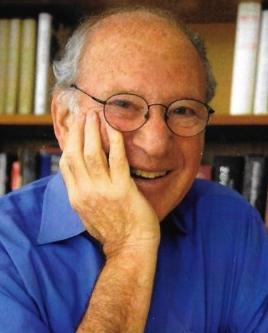 Michael Klagsbrun合作论文数Boston Children's Hospital;Harvard Medical School1Marpadga A. Reddy合作论文数1T. J. Geddes合作论文数1C Vanbeveren合作论文数1
 Chanyeon Won合作论文数1Moosik Kwon合作论文数1
 Mulchand S. Patel合作论文数Department of Biochemistry, Jacobs School of Medicine & Biomedical Sciences, University at Buffalo1Richard A. Maki合作论文数Departments of Molecular Neurobiology and Neuroscience1Hyun-Hong Min合作论文数1M Colman合作论文数1Holly Cherwinski合作论文数1




