This paper studies an online cost optimization problem for distributed storage and access. The goal is to dynamically create and delete copies of data objects over time at geo-distributed servers to serve access requests and minimize the total storage and network cost. We revisit a recent algorithm in the literature and show that it does not have a competitive ratio of 2 as claimed by constructing a counterexample. We further prove that no deterministic online algorithm can achieve a competitive ratio bounded by 2 for the general cost optimization problem. We develop an online algorithm and prove that it achieves a competitive ratio of max{2, min{gamma, 3}}, where gamma is the max/min storage cost ratio among all servers. Examples are given to confirm the tightness of competitive analysis. We also empirically evaluate algorithms using real object access traces.
We study an online cost optimization problem for distributed storage and access. The objective of this problem is to dynamically transfer, create, and delete copies of data objects over time at distributed servers to serve access requests, while minimizing the total cost of storage and network transfers. We develop an online algorithm and prove that it achieves a competitive ratio of $\max \left\{2, \min \left\{\mu_{\max }, \frac{5}{2}\right\}\right\}$, where $\mu_{\max }$ is the max/min ratio of storage cost rates among all servers. This improves on the best known algorithm which has a competitive ratio of up to 3. Examples are given to confirm the tightness of competitive analysis. We also conduct simulation experiments to evaluate our proposed algorithm, and compare it with a state-of-the-art algorithm.
The mobility patterns of people in cities evolve alongside changes in land use and population. This makes it crucial for urban planners to simulate and analyze human mobility patterns for purposes such as transportation optimization and sustainable urban development. Existing generative models borrowed from machine learning rely heavily on historical trajectories and often overlook evolving factors like changes in population density and land use. Mechanistic approaches incorporate population density and facility distribution but assume static scenarios, limiting their utility for future projections where historical data for calibration is unavailable. This study introduces a novel, data-driven approach for generating origin-destination mobility flows tailored to simulated urban scenarios. Our method leverages adaptive factors such as dynamic region sizes and land use archetypes, and it utilizes conditional generative adversarial networks (cGANs) to blend historical data with these adaptive parameters. The approach facilitates rapid mobility flow generation with adjustable spatial granularity based on regions of interest, without requiring extensive calibration data or complex behavior modeling. The promising performance of our approach is demonstrated by its application to mobile phone data from Singapore, and by its comparison with existing methods.
In the field of image quality assessment (IQA), researchers have been studying the mean opinion score (MOS) of image quality for decades. They focus on developing IQA methods with the help of MOS without using the potential of the distribution of opinion scores (DOS). We find that the Gaussian mixture distribution (GMD) can more accurately describe the DOS of image quality on SJTU IQSD and KonIQ-10K databases compared to some traditional distributions. Therefore, this paper proposes a blind IQA method that predicts the MOS of image quality by learning the GMD-based image quality. The proposed method consists of a visual feature learning module and a GMD learning module. The visual feature learning module uses a multi-stage Swin Transformer model and a CLIP feature extractor to extract visual features from an image. The GMD learning module then maps the extracted visual features to the GMD-based image quality using a mixture density network, where the mean of the GMD represents the MOS of image quality. We not only use the MOS of image quality to train the proposed method, but also employ the DOS of image quality for auxiliary training to improve the prediction performance of the proposed method. To address the lack of DOS in some existing IQA databases, we introduce a pseudo DOS generation strategy to generate the DOS of image quality for training, which significantly improves the applicability of the proposed method. Numerous analyses show that the proposed method is superior to most state-of-the-art IQA methods in predicting both the MOS and the DOS, thus facilitating a deeper investigation into the DOS of image quality in IQA.
The ability to distinguish whether an image is generated by artificial intelligence (AI) is a crucial ingredient in human intelligence, usually accompanied by a complex and dialectical forensic and reasoning process. However, current fake image detection models and databases focus on binary classification without understandable explanations for the general populace. This weakens the credibility of authenticity judgment and may conceal potential model biases. Meanwhile, large multimodal models (LMMs) have exhibited immense visionlanguage capabilities on various tasks, bringing the potential for explainable fake image detection. Therefore, we pioneer the probe of LMMs for explainable fake image detection by presenting a multimodal database encompassing descriptions of textual authenticity, the FakeBench. For construction, we first introduce a fine-grained taxonomy of generative visual forgery concerning human perception, based on which we collect forgery descriptions in human natural language with a human-in-the-loop strategy. FakeBench examines LMMs with four evaluation criteria: detection, reasoning, explanation and fine-grained forgery analysis, to obtain deeper insights into image authenticity-relevant capabilities. Experiments on various LMMs confirm their merits and demerits in different aspects of fake image detection tasks. This research presents a paradigm shift towards transparency for the fake image detection area and reveals the need for greater emphasis on forensic elements in visual-language research and AI risk control. FakeBench will be available at https://github.com/Yixuan423/FakeBench.
Improving the sample efficiency of deep reinforcement learning (DRL) agents has been an ongoing challenge in research and real-world applications. Self-attention, a mechanism originally popularized in natural language processing, has shown great potential to enhance sample efficiency when integrated with DRL algorithms. However, effective integration techniques remain underexplored. In this paper, we investigate the dimensional bias of self-attention in visual-based DRL settings. Specifically, we design various self-attention modules by altering the dimensions where the scaled dot-product attention is applied. Then, we integrate the proposed self-attention modules with the proximal policy optimization algorithm and evaluate the performances of the DRL agents in the Arcade Learning Environment. Our study reveals that each self-attention module possesses a unique bias and generates attention patterns oriented along specific axes. Similarly, each game environment exhibits a distinctive bias regarding its main dynamic axis. It is shown that games are more likely to be won by the agent whose attention axis aligns with the main dynamic axis. We demonstrate that this “alignment of biases” enables agents to learn better state representations by capturing important dynamics from the environment and serves as a practical guide in designing sample-efficient agents for specific tasks. The codes and supplementary are available at https://github.com/JianxiaoSun/self-attention-rl.
In this paper, we study an online cost optimization problem for distributed data access. The goal of this problem is to dynamically create and delete data copies in a multi-server distributed system as time goes, in order to minimize the total storage and network cost of serving access requests. We propose an online algorithm with randomized storage periods of data copies in the servers, and derive an optimal probability density function of storage periods, which makes the algorithm achieve a competitive ratio of 1+ root 2/2. An example is presented to show that the competitive analysis of our algorithm is tight. Experimental evaluations using real data access traces demonstrate that our algorithm outperforms the best known deterministic algorithm.
This paper studies an online replication problem for distributed data access. The goal is to dynamically create and delete data copies in a multi-server system as time passes to minimize the total storage and network cost of serving access requests. We study the problem in the emergent learning-augmented setting, assuming simple binary predictions about inter-request times at individual servers. We develop an online algorithm and prove that it is ($\frac{5+\alpha}{3}$)-consistent (competitiveness under perfect predictions) and ($1 + \frac{1}{\alpha}$)-robust (competitiveness under terrible predictions), where $\alpha \in (0, 1]$ is a hyper-parameter representing the level of distrust in the predictions. We also study the impact of mispredictions on the competitive ratio of the proposed algorithm and adapt it to achieve a bounded robustness while retaining its consistency. We further establish a lower bound of $\frac{3}{2}$ on the consistency of any deterministic learning-augmented algorithm. Experimental evaluations are carried out to evaluate our algorithms using real data access traces.
New electricity demands from electric vehicle (EV) charging introduce significant challenges to the power supply infrastructure. This paper introduces a methodology for modeling the spatial-temporal EV charging demand by leveraging mobility data. The detailed individual mobility patterns extracted from these data enable the simulation of the district-level EV charging demand profiles. Further, by incorporating non-EV demand (e.g., household consumption) data, we also identify critical areas that require grid expansion to accommodate this new demand. Our study contributes to the understanding of the spatial-temporal vehicle-grid interactions, laying the groundwork for the development of EV charging strategies.
Satellite images are commonly used to monitor land use land cover (LULC) changes. Unfortunately, publicly available images often lack the resolution required for detailed urban studies. In this study, we enhanced the resolution of Sentinel-2 (S2) satellite images from 10 meters to 2.5 meters using two super-resolution models: Real-SR and Real-ESRGAN. We tested the suitability of the enhanced images for LULC classification of an urban city, Singapore. From our results, colors have mostly been preserved and man-made objects have become sharper. However, the enhanced images also exhibit colour change, darkening, and salt-and-pepper effects. At this stage, there is no conclusive evidence that enhanced images can improve LULC classification. In fact, they have worsened classification accuracy by 17 - 30%, and the Kappa coefficient by 0.2 - 0.4. Although our application of super-resolution on LULC classification is not successful, it is a first attempt and could be further improved.
Human mobility has been significantly affected by COVID-19 and associated travel restrictions imposed by government policies. This study examines changes in mobility patterns in Singapore during different stages of the pandemic using mobile phone data. Our results indicate that population mobility decreased over the COVID pandemic and is slowly increasing after the restrictions were lifted. However, there have been changes in the mobility patterns of the population. Despite the easing of COVID-19 measures, the population is making fewer trips and the trip distances are longer for some people. This change may be attributed to several factors. One of which is that the population has not quite come back to the pre-COVID working routine and has adopted a semi-work-from-home policy, where the staff is working in the office for a few days a week. The other factor is the habit of making more “purposeful” trips remains. Further, we investigate changes in mobility patterns among the classified explorers and returners. The results demonstrate that the change in mobility has a similar trend to the population as a whole. These observed changes in mobility patterns may become the new normal and should be taken into account for traffic management, business decision-making, policy-making, and urban or transport infrastructure planning.
The ability to understand and predict the flows of people in cities is crucial for the planning of transportation systems and other urban infrastructures. Deep-learning approaches are powerful since they can capture non-linear relations between geographic features and the resulting mobility flow from a given origin location to a destination location. However, existing methods are not able to quantify the uncertainty of the predictions, which limits their interpretability and thus their use for practical applications in urban infrastructure planning. To that end, we propose a Bayesian deep-learning approach that formulates deep neural networks as Gaussian processes and integrates automatic variable selection. Our method provides uncertainty estimates for the predicted origin-destination flows while also allowing to identify the most important geographic features that drive the mobility patterns. The developed machine learning approach is applied to large-scale taxi trip data from New York City.
Urban soundscape research and their impact study are gaining more prominence with regard to a livable environment. Machine learning models have been used extensively to classify sounds where the input sound data, commonly in wave form, needs to be collected in its full frequency spectrum. However, in an application like NoiseCapture, the sound spectrum is divided into 23 frequency bands and thus some information or features are lost. Given the recent success in training a deep learning model to classify sounds with a limited sound spectrum, we developed a pipeline for maximizing the performance of sound spectrum input with attention-based model. Using data from ESC-50, we discover that the use of transformers improve accuracy over the conventional neural networks by 22.5%; however the limited frequency bands in NoiseCapture sound spectrum impairs the model accuracy, necessitating the use of data augmentation. The data pipeline is analyzed for our case study of Singapore, where selected sound labels, curated to fit the local context, are used to train the model, resulting in an improvement in base transformer accuracy by 12.7%.
For indoor localisation, a challenge in data-driven localisation is to ensure sufficient data to train the prediction model to produce a good accuracy. However, for WiFi-based data collection, human effort is still required to capture a large amount of data as the representation Received Signal Strength (RSS) could easily be affected by obstacles and other factors. In this paper, we propose an extendGAN+ pipeline that leverages up-sampling with the Dirichlet distribution to improve location prediction accuracy with small sample sizes, applies transferred WGAN-GP for synthetic data generation, and ensures data quality with a filtering module. The results highlight the effectiveness of the proposed data augmentation method not only by localisation performance but also showcase the variety of RSS patterns it could produce. Benchmarking against the baseline methods such as fingerprint, random forest, and its base dataset with localisation models, extendGAN+ shows improvements of up to 23.47%, 25.35%, and 18.88% respectively. Furthermore, compared to existing GAN+ methods, it reduces training time by a factor of four due to transfer learning and improves performance by 10.13%.
The number of people suffering from Dementia has been increasing, increasing the burden of caregivers living in the community. Despite the potential of mHealth technologies, many of these systems have low acceptance and adoption rate due to varying needs and dynamics of users, such as primary and secondary caregivers. Hence, we aims to consolidate user interaction and assess the proposed design with potential users. This paper reports on the methodology used for determining user’s requirements for different types of caregivers and the development of a tracking and localization mHealth application for the caregivers of a person with dementia with wandering and getting lost behaviour. Remote Usability testing was conducted on the SingTRACeX application using scenario-based methods and feedback was obtained for the refinement of the application. Lessons learned and higher design principles and guidelines were highlighted based on the different needs of caregivers.
In the last few years, the deep learning paradigm has experienced huge success in various machine learning research areas like computer vision, drug discoveries, natural language processing, and combinatorial optimizations. Moreover, the world has witnessed remarkable achievements when combining deep learning with reinforcement learning (now known as Deep Reinforcement Learning) in the areas like robotics, video games, business, and healthcare. One of the strongest parts of Deep Reinforcement Learning (DRL) is the ability to solve sequential decision-making problems. The inventory control problem is one such field where DRL can be applied to learn the optimal ordering policy to minimize the total inventory cost. In this paper, a linear supply chain model is considered with stochastic lead time and demand. The problem is then modeled into Markov Decision Processes (MDP). We then designed three different agents: Q-learning agent, Deep Q-network (DQN, also known as Deep Q-Learning), and (R, S) policy-based agent. The Qlearning and DQN agents were trained and evaluated. The (R, S) policy is used as a baseline as it is one of the most popular policies in business organizations. In comparison to traditional reinforcement learning (i.e Q-learning) and rule-based learning (i.e. (R, S) policy), the DQN model performs better in making the optimal ordering decision so that the total cost is minimized.
Finding an optimal solution to multi-period inventory ordering decision problems with uncertain demand is important for any manufacturing organization. Moreover, these problems are NP-hard as there are many factors to consider including customer demand and lead time which are stochastic in nature. This paper describes a reinforcement learning (RL) approach, Q-learning in particular, to decide on ordering policies. We formulated the finite horizon single-product multi-period problem into a reinforcement learning model in the form of Markov decision processes (MDP) and solve it to obtain the near-optimal solutions. Mixed integer linear programming (MILP) technique is still common in solving these problems; but they usually lack simplicity and may not optimized near to optimal. We formulated the same problem using the mixed integer linear programming model as the baseline algorithm so that we can compare it with RL approach. In comparison to MILP, the reinforcement learning agent performed better in making ordering decisions over the finite horizon. Obtaining better performance in multi-period problem would help the business in taking appropriate inventory decisions and reduce the total inventory costs.
Urban noise is becoming more serious and increasingly concerning environmental problems. This has led to numerous study on traffic noise. However, not much studies has been done on the noise from a human perspective as they go about their daily life. In this paper we report on the study of noise level in a campus environment, in open common areas which are frequented by students. Using crowd sourcing noise data by volunteers, we are able to map out the noise across the campus from the perspective of the students. The noise level increase through the day as the student gather around popular open spaces. Our study shows that the sound level on campus are due mainly to human and mechanical noise. By mashing the noise data with Wi-Fi log data, we were able to show the good correlation between sound level and human density in an area.
This paper proposes an alternative approach to sound classification using sound spectrum features, differing from the use of the Mel-Frequency Cepstral Coefficients (MFCC). Aligning with the crowd sourcing data collection application NoiseCapture, the data are kept in form of the post-processed sound spectrum instead of the raw audio files to maintain privacy of volunteers. Under such circumstances, MFCC, which requires audio processing, cannot be directly obtained from nor maximize the features of sound spectrum data stored in the application. As sound spectrum does not undergo further feature transformation, it retains audio features from the audio file and should therefore be classifiable when passed into a trained sound spectrum model. Hence, in this study, we aim to evaluate whether sound spectrum could be used as a replacement of MFCC, especially when audio file is inaccessible. The UrbanSound8K dataset and a mix of deep learning and machine learning models were used for the comparison. Experiment results show sound spectrum achieving comparable results in Convolutional Neural Network (CNN), with better predictions than its MFCC counterpart. Further comparisons draw insights that illustrate the need for more finetuning for sound spectrum data when using non-CNN models for sound classification due to the shape of the input features.
 Yeo Chai Kiat合作论文数School of Computer Science and Engineering, Nanyang Technological University 71
 Lau Chiew Tong合作论文数School of Computer Science and Engineering, Nanyang Technological University56
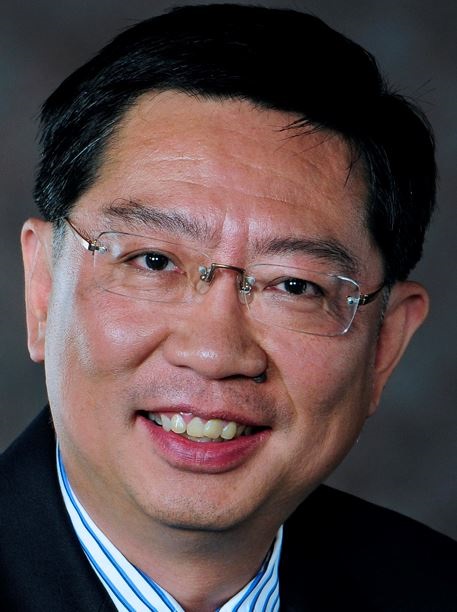 Wentong Cai合作论文数College of Computing and Data Science, Nanyang Technological University32
 Teck Meng Lim合作论文数30
 Seanglidet Yean合作论文数School of Computer Science and Engineering, Nanyang Technological University27
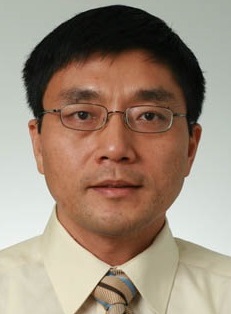 Weisi Lin合作论文数School of Computer Science and Engineering, Nanyang Technological University;College of Computing and Data Science, Nanyang Technological University26
 Chia Liang Tien合作论文数School of Computer Science and Engineering, Nanyang Technological University;Division of Computer Communications, Nanyang Technological University19
 Boon-Chong Seet合作论文数Department of Electrical and Electronic Engineering, Auckland University of Technology18
 Ryan K. L. Ko合作论文数HP Labs, Singapore16
 Bingsheng He (何丙胜)合作论文数Department of Computer Science, School of Computing, National University of Singapore13
 Yew-Soon Ong合作论文数College of Computing and Data Science, Nanyang Technological University;School of Computer Science and Engineering, Nanyang Technological University;Centre for Frontier Al Research, Agency for Science, Technology and Research13
 Markus Kirchberg合作论文数Potion;National University of Singapore;Wismut Labs;On Deck;Kommunity Ventures;Roboto Coding Academy13
 Shanjiang Tang (汤善江)合作论文数School of Computer Science and Technology, College of Intelligence and Computing, Tianjin University12
 Yang Xia合作论文数12
 Xueyan Tang合作论文数School of Computer Engineering, College of Computing and Data Science, Nanyang Technological University;School of Computer Science and Engineering, Nanyang Technological University12Chonho Lee合作论文数Cybermedia Center, Osaka University12
 Manoranjan Paul合作论文数Centre for Research in Complex Systems, Charles Sturt University12
 Zhao Min Chen合作论文数11
 Dusit (Tao) Niyato合作论文数College of Computing and Data Science, Nanyang Technological University;School of Physical and Mathematical Sciences, Nanyang Technological University;School of Computer Science and Engineering, Nanyang Technological University11
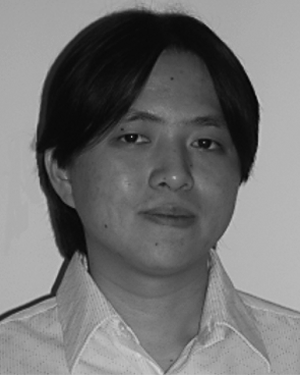 Juki Wirawan Tantra合作论文数11
 Sivadon Chaisiri合作论文数Nanyang Technological University11
 Abhik Banerjee合作论文数School of Computer Engineering, Nanyang Technological University11Weiling Chen合作论文数9
 Terence Hung合作论文数Inst High Performance Comp9
 Yi Liu合作论文数9
 Stephen John Turner合作论文数Vidyasirimedhi Institute of Science and Technology9Yu Shyang Tan合作论文数9Junwei Zhang合作论文数8
 Chuan Foh合作论文数Institute for Communication Systems, School of Computer Science and Electronic Engineering, University of Surrey8
 Amitabha Das合作论文数Independent Contractor8Peter Jagadpramana合作论文数8
 Markus Schläpfer合作论文数Laboratory for Safety Analysis8Kai-Juan Wong合作论文数University of Edinburgh, Edinburgh, United Kingdom8
 Chun Hui Suen合作论文数8Chuan-Heng Foh合作论文数School of Computer Engineering
Nanyang Technological University8
Chun Hui Suen合作论文数8Chuan-Heng Foh合作论文数School of Computer Engineering
Nanyang Technological University8 Shengbo Yang合作论文数8Shixing Yan合作论文数7Chen Zhou合作论文数Google7
 Hong Lye Oh合作论文数School of Computer Science and Engineering, College of Engineering, Nanyang Technological University7Jiaming Li合作论文数7John Felix Charles Joseph合作论文数7
 Cheng Peng Fu合作论文数7
 Verdi March合作论文数HP labs, Singapore, USA7
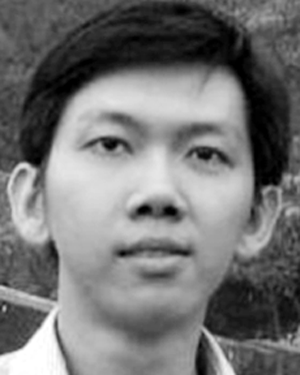 Dudy Lim合作论文数7
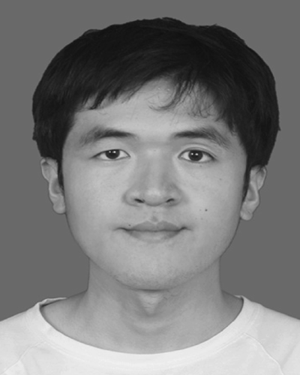 Zhouye Gu合作论文数7
 Martin J. McKeown合作论文数Division of Neurology, Department of Medicine, Faculty of Medicine, University of British Columbia;Parkinson Cana7Genping Liu合作论文数7Ming Tang合作论文数6




