BACKGROUND:The oncological impact of perioperative blood transfusions (PBTs) of patients undergoing radical cystectomy (RC) because of bladder cancer (BCa) has been a controversial topic discussed in recent years. The main cause for the contradictory findings of existing studies might be the missing consideration of the storage time of red blood cell units (BUs), donor age, and gender matching.STUDY DESIGN AND METHODS:We retrospectively analyzed BCa patients who underwent RC in our department between 2004 and 2021. We excluded patients receiving BUs before RC, >10 BUs, or RC in a palliative setting. We assessed the effect of blood donor characteristics and storage time on overall survival (OS) and cancer-specific survival (CSS) through univariate and multivariable Cox regression analysis. We also performed a propensity score matching with patients who received BUs and patients who did not on a 1:1 ratio.RESULTS:We screened 1692 patients and included 676 patients for the propensity score matching. In the multivariable analysis, PBT was independently associated with worse OS and CSS (p < .001). Postoperative transfusions were associated with better OS (p = .004) and CSS (p = .008) compared to intraoperative or mixed transfusions. However, there was no influence of blood donor age, storage time, or gender matching on prognosis.DISCUSSION:In our study of BCa patients undergoing RC, we demonstrate that PBT, especially if administered intraoperatively, is an independent risk factor for a worse prognosis. However, storage time, donor age, or gender matching did not negatively affect oncological outcomes. Therefore, the specific selection of blood products does not promise any benefits.
(1) Background: local treatment of the primary tumor has become a valid therapeutic option in de-novo oligo-metastatic prostate cancer (PC). However, evidence regarding radical prostatectomy (RP) in this setting is still subpar, and the effect of cytoreductive RP on postoperative health-related quality of life (HRQOL) is still unclear. (2) Methods: for the current study, patients with de-novo oligo-metastatic PC (cM1-oligo), defined as ≤5 bone lesions in the preoperative staging, were included, and matched cohorts using the variables age, body-mass index (BMI), and pT-stage were generated. Patient-reported outcome measures (PROMS) were assessed pre- and postoperatively using the validated EORTC-QLQ-C30, IIEF-5, and ICIQ-SF questionnaires. The primary endpoint for univariate and multivariable analysis was good general HRQOL defined by previously validated cut-off values. (3) Results: in total, 1268 patients (n = 84 (7%) cM1-oligo) underwent RP between 2012 and 2020 at one tertiary care center. A matched cohort of 411 patients (n = 79 with oligo-metastatic bone disease (cM1-oligo) and n = 332 patients without clinical indication of metastatic disease (cM0)) was created. The median follow-up was 25mo. There was no significant difference in good general HRQOL rates between cM1-oligo-patients and cM0-patients before RP (45.6% vs. 55.2%, p = 0.186), and at time of follow-up (44% vs. 56%, p = 0.811). Global health status (GHS) worsened significantly in cM0-patients compared to baseline (−5, p = 0.001), whereas GHS did not change significantly in cM1-oligo-patients (+3.2, p = 0.381). In multivariate analysis stratified for good erectile function (IIEF5 > 18; OR 5.722, 95% CI 1.89–17.36, p = 0.002) and continence recovery (OR 1.671, 95% CI 1.03–2.70, p = 0.036), cM1-oligo was not an independent predictive feature for general HRQOL (OR 0.821, 95% CI 0.44–1.53, p = 0.536). (4) Conclusions: in this large contemporary retrospective analysis, we observed no significant difference in HRQOL in patients with the oligometastatic bone disease after cytoreductive radical prostatectomy, when compared to patients with localized disease at time of surgery.
AIMS:Radical cystectomy and urinary diversion impact various dimensions of patients' health-related-quality-of-life (HRQOL). Yet, less is known about salvage cystectomy as a last-line option for treatment-refractory benign diseases. Therefore, our aim is to provide HRQOL data from a contemporary cohort of open salvage cystectomies for benign conditions. METHODS:Fifty-four consecutive patients were enrolled in one single tertiary referral center. Analysis was limited to patients undergoing urinary diversion via ileal conduit (IC). Complications were assessed via Clavien-Dindo-scale. HRQOL was measured using the validated European Organization for Research and Treatment of Cancer QLQ-C30 and QLQ-BLM30 questionnaire. HRQOL QLQ-C30 domains were measured preoperatively and up to 3 years postoperatively. Longitudinal changes were analyzed using Friedman's rank test. Primary endpoint was good general HRQOL based on QLQ-C30 global health status (GHS). Multivariate analysis was performed using logistic regression models with a step-wise backward selection procedure. RESULTS:Longitudinal analysis of HRQOL subdomains revealed significantly improved pain (p = .005) and fatigue (p = .002) scores as well as improved social functioning (p = .038). Furthermore, general HRQOL (GHS scores) improved significantly during the follow-up period (28.0 vs. 50.6 [36 months], p = .045). In multivariate analysis, the indication for salvage cystectomy could not be identified as an independent predictor for good general HRQOL. We observed a total number of 10 (41.7%) high-grade (Clavien ≥III) 90 day-complications. Limitations include limited follow-up rates at respective time-points. CONCLUSION:Salvage cystectomy and IC can be safely performed as a last-line treatment for benign conditions and increases general HRQOL in the long-term follow-up. Thus, it can play a role in a holistic approach for a challenging clinical setting.
Objective To evaluate if MRI/ultrasound fusion based targeted biopsy (FBx) leads to a reduced rate of change in Gleason score (GS) compared to prostatectomy specimen. Methods The histopathological findings of the biopsy of the prostate and the radical prostatectomy (RP) specimen of 210 patients who were referred to our hospital between 2012 and 2017 were compared retrospectively in this study. One hundred and five patients who underwent FBx combined with ultrasound-guided 12-core biopsy of the prostate (SBx) were matched with 105 patients who underwent SBx only. This study evaluated the rate of up- or downgrading in the RP specimen in both groups and compared the results via matched pair analysis. Results Concordance in Gleason grade group (GGG) was found in 52/105 patients (49.5%) in SBx and in 49/105 patients (46.7%) with FBx (p = 0.679). The rate of downgrading was statistically significant (p = 0.014) and was higher in the FBx group (14/105 patients, 13.3%) than in the SBx group (4/105 patients, 3.8%). A higher rate of upgrading was seen in SBx (49/105 patients; 46.7%) compared to FBx (42/105 patients; 40%), with no statistical significance (p = 0.331). The change in GGG from biopsy to final pathology in patients with GGG 1 and 2 at biopsy level was not statistically significant (p = 0.168). Conclusion FBx does not decrease the rate of upgrading between biopsy and final pathology in RP specimens. Our results indicate that FBx tends to overestimate the final GGG compared to SBx.
Introduction The aim of residency is to acquire medical skills and abilities. One didactic model is "Peyton's four-step approach". The aim of the present study was to develop and evaluate a modified Peytonian approach for group interactions. The aim was to develop a course for the acquisition of practical skills and training assistants in suture techniques for urology. Methods A prospective study was conducted with a total of 38 participants and 6 tutors. In a modified four-step Peytonian approach, various suturing and knotting techniques were taught in a structured manner. Tutors evaluated the procedural activity using observation sheets. In addition, the learning method was evaluated by the participants and the tutors at the end of the course. In order to check the long-term learning success, a renewed survey of the participants was conducted after 6 months. Results 80% of the participants rated the modified teaching method as useful and 83% of the tutors rated the procedural implementation as good. Fluid movement sequences were difficult independent of the technique taught. After 6 months, the participants significantly improved their procedural skills in all techniques that were taught. Conclusion This paper defines a four-step Peyton-based approach to teaching practical skills such as suturing and knotting used in urological training. The modified teaching method improved practical skills used in urology. This method should be considered in continuing education to promote self-confidence and increase the competence in surgical skills.
 Christian Stief合作论文数Department of Urology, Faculty of Medicine, Ludwig-Maximilians-Universität München;Urologische Klinik und Poliklinik, LMU Klinikum96
 Alexander Karl合作论文数24A. Kretschmer合作论文数20
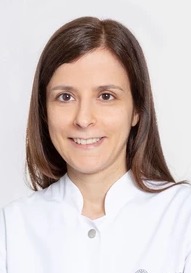 Derya Tilki合作论文数Martini-Klinik Prostate Cancer Center, University Hospital Hamburg-Eppendorf;Department of Urology, University Hospital Hamburg-Eppendorf;Department of Urology. University Hospital Grosshadern - Munich19Tobias Grimm合作论文数17
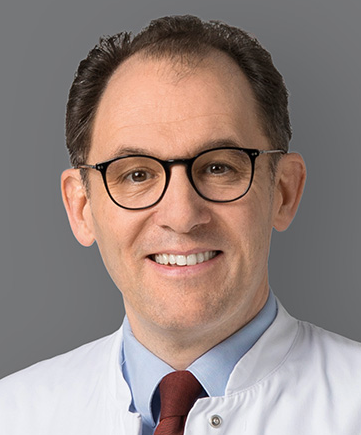 Maximilian Burger合作论文数Universität Regensburg;Urologie, Caritas Krankenhaus St. Josef16Boris Schlenker合作论文数16
 Claus Belka合作论文数Klinik und Poliklinik für Strahlentherapie und Radioonkologie, Klinikum der Universität München;Department of Radiation Oncology, Klinikum der Universität München15Axel Haferkamp合作论文数14
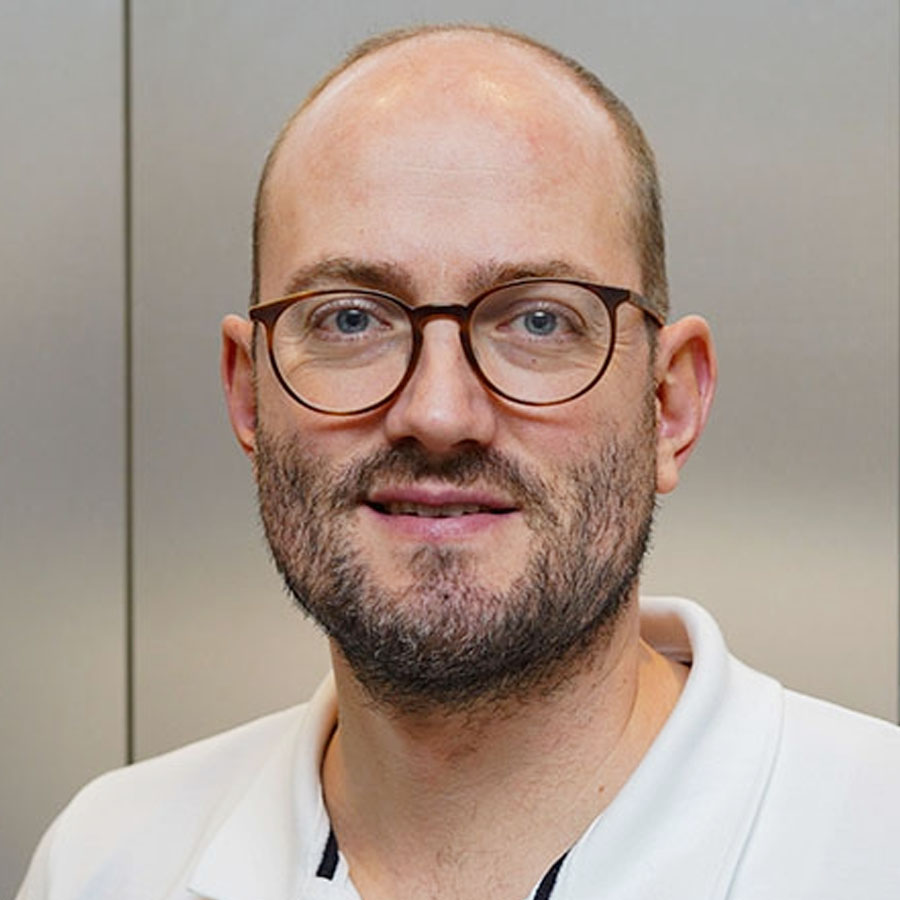 Hans-Martin Fritsche合作论文数Urologie im DEZ14
 Wolf Ferdinand Wieland合作论文数14Patrick J Bastian合作论文数13
 Markus Hohenfellner合作论文数Department of Urology, Heidelberg University Hospital13Christian Bolenz合作论文数13E. Herrmann合作论文数12
 Christian Gratzke合作论文数Department of Urology, Center for Surgery, Medical Center, University of Freiburg;Faculty of Medicine, University of Freiburg12F. Jokisch合作论文数11Maria Apfelbeck合作论文数11U. Ganswindt合作论文数11Jörg Ellinger合作论文数11Jan Roigas合作论文数11
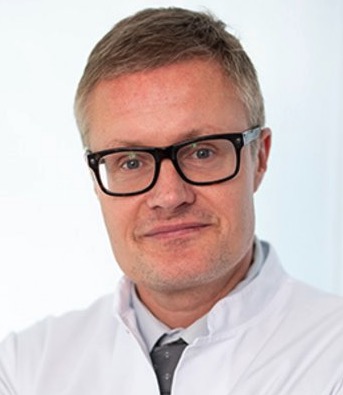 Matthias May合作论文数Department of Urology, Klinikum St. Elisabeth Straubing GmbH;Department of Urology, University of Regensburg11S. Brookman-May合作论文数10Alfons Hofstetter合作论文数10
 Christian Gilfrich合作论文数Stra10
 Lutz Trojan合作论文数University Hospital Göttingen/University Hospital Mannheim10G. Schulz合作论文数9M. Zacharias合作论文数9Minglun Li合作论文数Department of Radiation Oncology, University Hospital Tuebingen9A. Tiemann合作论文数9T. Hoefner合作论文数8Eismann L.合作论文数8T. Kirchner合作论文数8Michael Seitz合作论文数University Hospital Grosshadern, Ludwig-Maximilians University8Suzanne Rodler合作论文数8
 Michael Staehler合作论文数Department of Urology, Ludwig-Maximilians-Universität München8Ralph Oberneder合作论文数8C. Wuelfing合作论文数7
 Jozefina Casuscelli合作论文数Department of Urology, Ludwig-Maximilians-University7
 Maurice Stephan Michel合作论文数AiroMedical LLC.;Department of Urology, University Hospital Mannheim7
 Shahrokh F. Shariat合作论文数Department of Urology, Medical University of Vienna, Vienna General Hospital;University of Texas Southwestern Medical Center;Weill Cornell Medicine, Cornell University7Peter Bartenstein合作论文数7Rainer Riesenberg合作论文数7P. Pfitzinger合作论文数6S. C. Mueller合作论文数6
 Markus Grabbert合作论文数6Paul Rogowski合作论文数6Gerald B Schulz合作论文数6
 Chukwuka Eze合作论文数6




