Continued exponential growth in the number of structures resolved by single particle cryoEM, as seen in the last decade, requires ever more effective data analysis workflows. Datasets are rarely homogeneous, demanding a multistep procedure for discarding outliers. Since individual particles are very noisy, either 2D or 3D averages are normally used for discrimination. This becomes challenging when the 2D classes themselves are heterogeneous, leading to selection of contaminants or discarding useful rare views/poses. The 3D model-based discrimination requires trustworthy 3D maps and a correct assignment of Euler angles, which in turn depends on the quality of the initial data and might not be available at the very early stages of the analysis. We propose a novel deep-learning approach for improving quality of single particle datasets. The two-stage procedure consists of denoising single particle images using Variational AutoEncoder framework followed by particle quality filtering based on the score inferred for every particle by Domain Adaptation Neural Network trained on a large data set of categorised 2D averages. This approach allows an automated scoring of noisy raw images using data patterns learned from the high signal-to-noise ratio, externally derived 2D classes. Consequently, a higher quality data set enters computationally expensive steps of the data analysis, reducing the need for protracted and expensive calculations. Importantly, our method does not require any prior knowledge about the data or existence of a 3D model, making it universally applicable. Tests on publicly available datasets demonstrated that our approach largely outperformed 2D class-based particle discrimination. Smaller subsets of the top-scoring particles selected with our method were required to obtain the author-reported 3D model resolution. When applied to the user data in the automated on-the-fly data processing pipeline, the method rescued 30% of cases, which otherwise would not reach confidence threshold required for making decision to proceed to the 3D model refinement. It also led to general improvements in the quality of the 3D models for many datasets which were selected for the high-resolution processing. ### Competing Interest Statement The authors have declared no competing interest. Medical Research Council, https://ror.org/03x94j517, MR/V000403/1 Ada Lovelace Centre UKRI, EU/UKRI Fragment Screen Grant
Here, we describe the first ten years of the CCP-EM Spring Symposium, an annual conference to bring together the cryogenic-sample electron microscopy (cryoEM) community to present and discuss the latest methodological advances and applications. We quantify the growth of the event and provide a detailed breakdown of the demographics of the tenth edition.
Cell-cell communication underlies all emergent properties of the brain, including cognition, learning and memory. The physical basis for these communications is the synapse, a multi-component structure requiring coordinated interactions between diverse cell types. However, many aspects of three-dimensional (3D) synaptic organization remain poorly understood. Here, we developed an approach, seamless in situ trimming and milling (SISTM), to reliably fabricate sufficiently thin lamellae for mapping of the 3D nanoarchitecture of synapses in mouse, monkey and human brain tissue under near-native conditions via cryo-electron tomography (cryo-ET). We validated SISTM in a mouse model of Huntington's disease, demonstrating distinct 3D alterations to synaptic vesicles and mitochondria. By successfully applying SISTM to macaque brain, we described the 3D architecture of a tripartite synapse within the cortex. Subtomogram averaging (STA) enabled spatial mapping of astrocyte-neuron contacts within the tripartite synapse, revealing neurexin-neuroligin complexes as potential constituents that tether the two cell types. Finally, we showed that the defining features of synaptic nanoarchitecture were conserved across species and evident in human brain tissue obtained postmortem. Combining SISTM with cryo-ET and STA is a starting point for a new understanding of brain organization, disease-induced structural alterations and the development of rational, structure-guided therapeutics.
Ease of access to data, tools and models expedites scientific research. In structural biology there are now numerous open repositories of experimental and simulated data sets. Being able to easily access and utilize these is crucial to allow researchers to make optimal use of their research effort. The tools presented here are useful for collating existing public cryoEM data sets and/or creating new synthetic cryoEM data sets to aid the development of novel data processing and interpretation algorithms. In recent years, structural biology has seen the development of a multitude of machine-learning-based algorithms to aid numerous steps in the processing and reconstruction of experimental data sets and the use of these approaches has become widespread. Developing such techniques in structural biology requires access to large data sets, which can be cumbersome to curate and unwieldy to make use of. In this paper, we present a suite of Python software packages, which we collectively refer to as PERC (profet, EMPIARreader and CAKED). These are designed to reduce the burden which data curation places upon structural biology research. The protein structure fetcher (profet) package allows users to conveniently download and cleave sequences or structures from the Protein Data Bank or AlphaFold databases. EMPIARreader allows lazy loading of Electron Microscopy Public Image Archive data sets in a machine-learning-compatible structure. The Class Aggregator for Key Electron-microscopy Data (CAKED) package is designed to seamlessly facilitate the training of machine-learning models on electron microscopy data, including electron-cryo-microscopy-specific data augmentation and labeling. These packages may be utilized independently or as building blocks in workflows. All are available in open-source repositories and designed to be easily extensible to facilitate more advanced workflows if required.
With the advent of next-generation modelling methods, such as AlphaFold2, structural biologists are increasingly using predicted structures to obtain structure solutions via molecular replacement (MR) or model fitting in single-particle cryogenic sample electron microscopy (cryoEM). Differences between the domain–domain orientations represented in a predicted model and a crystal structure are often a key limitation when using predicted models. Slice'N'Dice is a software package designed to address this issue by first slicing models into distinct structural units and then automatically placing the slices using either Phaser, MOLREP or PowerFit. The slicing step can use the AlphaFold predicted aligned error (PAE) or can operate via a variety of Cα-atom-based clustering algorithms, extending the applicability to structures of any origin. The number of splits can either be selected by the user or determined automatically. Slice'N'Dice is available for both MR and automated map fitting in the CCP4 and CCP-EM software suites.
Learning compact and interpretable representations of data is a critical challenge in scientific image analysis. Here, we introduce Affinity-VAE, a generative model that enables us to impose our scientific intuition about the similarity of instances in the dataset on the learned representation during training. We demonstrate the utility of the approach in the scientific domain of cryoelectron tomography (Cryo-ET) where a significant current challenge is to identify similar molecules within a noisy and low contrast tomographic image volume. This task is distinct from classification in that, at inference time, it is unknown whether an instance is part of the training set or not. We trained Affinity-VAE using prior knowledge of protein structure to inform the latent space. Our model is able to create rotationally-invariant, morphologically homogeneous clusters in the latent representation, with improved cluster separation compared to other approaches. It achieves competitive performance on protein classification with the added benefit of disentangling object pose, structural similarity and an interpretable latent representation. In the context of Cryo-ET data, Affinity-VAE captures the orientation of identified proteins in 3D which can be used as a prior for subsequent scientific experiments. Extracting physical principles from a trained network is of significant importance in scientific imaging where a ground truth training set is not always feasible.
Conformational heterogeneity of biological macromolecules is a challenge in single-particle averaging (SPA). Current standard practice is to employ classification and filtering methods that may allow a discrete number of conformational states to be reconstructed. However, the conformation space accessible to these molecules is continuous and, therefore, explored incompletely by a small number of discrete classes. Recently developed heterogeneous reconstruction algorithms (HRAs) to analyse continuous heterogeneity rely on machine-learning methods that employ low-dimensional latent space representations. The non-linear nature of many of these methods poses a challenge to their validation and interpretation and to identifying functionally relevant conformational trajectories. These methods would benefit from in-depth benchmarking using high-quality synthetic data and concomitant ground truth information. We present a framework for the simulation and subsequent analysis with respect to the ground truth of cryo-EM micrographs containing particles whose conformational heterogeneity is sourced from molecular dynamics simulations. These synthetic data can be processed as if they were experimental data, allowing aspects of standard SPA workflows as well as heterogeneous reconstruction methods to be compared with known ground truth using available utilities. The simulation and analysis of several such datasets are demonstrated and an initial investigation into HRAs is presented.
The EMDataResource Ligand Model Challenge aimed to assess the reliability and reproducibility of modeling ligands bound to protein and protein/nucleic-acid complexes in cryogenic electron microscopy (cryo-EM) maps determined at near-atomic (1.9-2.5 Å) resolution. Three published maps were selected as targets: E. coli beta-galactosidase with inhibitor, SARS-CoV-2 RNA-dependent RNA polymerase with covalently bound nucleotide analog, and SARS-CoV-2 ion channel ORF3a with bound lipid. Sixty-one models were submitted from 17 independent research groups, each with supporting workflow details. We found that (1) the quality of submitted ligand models and surrounding atoms varied, as judged by visual inspection and quantification of local map quality, model-to-map fit, geometry, energetics, and contact scores, and (2) a composite rather than a single score was needed to assess macromolecule+ligand model quality. These observations lead us to recommend best practices for assessing cryo-EM structures of liganded macromolecules reported at near-atomic resolution.
In this work we present affinity-VAE: a framework for automatic clustering and classification of objects in multidimensional image data based on their similarity. The method expands on the concept of $\beta$-VAEs with an informed similarity-based loss component driven by an affinity matrix. The affinity-VAE is able to create rotationally-invariant, morphologically homogeneous clusters in the latent representation, with improved cluster separation compared with a standard $\beta$-VAE. We explore the extent of latent disentanglement and continuity of the latent spaces on both 2D and 3D image data, including simulated biological electron cryo-tomography (cryo-ET) volumes as an example of a scientific application.
The great success of single-particle electron cryo-microscopy (cryoEM) during the last decade has involved the development of powerful new computer programs and packages that guide the user along a recommended processing workflow, in which the wisdom and choices made by the developers help everyone, especially new users, to obtain excellent results. The ability to carry out novel, non-standard or unusual combinations of image-processing steps is sometimes compromised by the convenience of a standard procedure. Some of the older programs were written with great flexibility and are still very valuable. Among these, the original MRC image-processing programs for structure determination by 2D crystal and helical processing alongside general-purpose utility programs such as Ximdisp, label, imedit and twofile are still available. This work describes an updated version of the MRC software package (MRC2020) that is freely available from CCP-EM. It includes new features and improvements such as extensions to the MRC format that retain the versatility of the package and make it particularly useful for testing novel computational procedures in cryoEM.
Cryogenic electron microscopy (cryo-EM) has recently been established as a powerful technique for solving macromolecular structures. Although the best resolutions achievable are improving, a significant majority of data are still resolved at resolutions worse than 3 Å, where it is non-trivial to build or fit atomic models. The map reconstructions and atomic models derived from the maps are also prone to errors accumulated through the different stages of data processing. Here, we highlight the need to evaluate both model geometry and fit to data at different resolutions. Assessment of cryo-EM structures from SARS-CoV-2 highlights a bias towards optimising the model geometry to agree with the most common conformations, compared to the agreement with data. We present the CoVal web service which provides multiple validation metrics to reflect the quality of atomic models derived from cryo-EM data of structures from SARS-CoV-2. We demonstrate that further refinement can lead to improvement of the agreement with data without the loss of geometric quality. We also discuss the recent CCP-EM developments aimed at addressing some of the current shortcomings.
Recently, there has been a dramatic improvement in the quality and quantity of data derived using cryogenic electron microscopy (cryo-EM). This is also associated with a large increase in the number of atomic models built. Although the best resolutions that are achievable are improving, often the local resolution is variable, and a significant majority of data are still resolved at resolutions worse than 3 Å. Model building and refinement is often challenging at these resolutions, and hence atomic model validation becomes even more crucial to identify less reliable regions of the model. Here, a graphical user interface for atomic model validation, implemented in the CCP-EM software suite, is presented. It is aimed to develop this into a platform where users can access multiple complementary validation metrics that work across a range of resolutions and obtain a summary of evaluations. Based on the validation estimates from atomic models associated with cryo-EM structures from SARS-CoV-2, it was observed that models typically favor adopting the most common conformations over fitting the observations when compared with the model agreement with data. At low resolutions, the stereochemical quality may be favored over data fit, but care should be taken to ensure that the model agrees with the data in terms of resolvable features. It is demonstrated that further re-refinement can lead to improvement of the agreement with data without the loss of geometric quality. This also highlights the need for improved resolution-dependent weight optimization in model refinement and an effective test for overfitting that would help to guide the refinement process.
The severe acute respiratory syndrome coronavirus-2 (SARS-CoV-2) replication transcription complex (RTC) is a multi-domain protein responsible for replicating and transcribing the viral mRNA inside a human cell. Attacking RTC function with pharmaceutical compounds is a pathway to treating COVID-19. Conventional tools, e.g. cryo-electron microscopy and all-atom molecular dynamics (AAMD), do not provide sufficiently high resolution or timescale to capture important dynamics of this molecular machine. Consequently, we develop an innovative workflow that bridges the gap between these resolutions, using mesoscale fluctuating finite element analysis (FFEA) continuum simulations and a hierarchy of AI-methods that continually learn and infer features for maintaining consistency between AAMD and FFEA simulations. We leverage a multi-site distributed workflow manager to orchestrate AI, FFEA, and AAMD jobs, providing optimal resource utilization across HPC centers. Our study provides unprecedented access to study the SARS-CoV-2 RTC machinery, while providing general capability for AI-enabled multi-resolution simulations at scale.
This paper describes outcomes of the 2019 Cryo-EM Model Challenge. The goals were to (1) assess the quality of models that can be produced from cryogenic electron microscopy (cryo-EM) maps using current modeling software, (2) evaluate reproducibility of modeling results from different software developers and users and (3) compare performance of current metrics used for model evaluation, particularly Fit-to-Map metrics, with focus on near-atomic resolution. Our findings demonstrate the relatively high accuracy and reproducibility of cryo-EM models derived by 13 participating teams from four benchmark maps, including three forming a resolution series (1.8 to 3.1 Å). The results permit specific recommendations to be made about validating near-atomic cryo-EM structures both in the context of individual experiments and structure data archives such as the Protein Data Bank. We recommend the adoption of multiple scoring parameters to provide full and objective annotation and assessment of the model, reflective of the observed cryo-EM map density.
In 2020, cryo-EM single particle analysis achieved true atomic resolution, thanks to technological developments in hardware and software. The number of high resolution reconstructions continues to grow, increasing the importance of accurate determination of atomic coordinates. Here, a new Python package and program calledServalcatis presented that is designed to facilitate atomic model refinement.Servalcatimplements a refinement pipeline, using the programREFMAC5 from theCCP4package. After the refinement,Servalcatcalculates a weightedFo−Fcdifference map, which was derived from Bayesian statistics. This map helps manual and automatic model building in real space, as is common practice in crystallography. TheFo−Fcmap helps visualisation of weak features including hydrogen densities. Although hydrogen densities are weak, they are stronger than in electron density maps produced by X-ray crystallography, and some hydrogen atoms are even visible at ∼ 1.8 Å resolution.Servalcatalso facilitates atomic model refinement under symmetry constraints. If a point group symmetry has been applied to the map during reconstruction, the asymmetric unit model is refined with appropriate symmetry constraints.
Ensemble refinement, the application of molecular dynamics to crystallographic refinement, explicitly models the disorder inherent in macromolecular structures. These ensemble models have been shown to produce more accurate structures than traditional single-model structures. However, suboptimal sampling of the molecular-dynamics simulation and modelling of crystallographic disorder has limited the utility of the method, and can lead to unphysical and strained models. Here, two improvements to the ensemble refinement method implemented within Phenix are presented: DEN restraints, which guide the local sampling of conformations and allow a more robust exploration of local conformational landscapes, and ECHT disorder models, which allow the selection of more physically meaningful and effective disorder models for parameterizing the continuous disorder components within a crystal. These improvements lead to more consistent and physically interpretable simulations of macromolecules in crystals, and allow structural heterogeneity and disorder to be systematically explored on different scales. The new approach is demonstrated on several case studies and the SARS-CoV-2 main protease, and demonstrates how the choice of disorder model affects the type of disorder that is sampled by the restrained molecular-dynamics simulation.
This is the full dataset of the 2019 Cryo-EM Map-based Model Metrics Challenge sponsored by EMDataResource (www.emdataresource.org, challenges.emdataresource.org, model-compare.emdataresource.org). The goals of this challenge were (1) to assess the quality of models that can be produced using current modeling software, (2) to check the reproducibility of modeling results from different software developers and users, and (3) compare the performance of current metrics used for evaluation of models. The focus was on near-atomic resolution maps with an innovative twist: three of four target maps formed a resolution series (1.8 to 3.1 Å) from the same specimen and imaging experiment. Tools developed in previous challenges were expanded for managing, visualizing and analyzing the 63 submitted coordinate models, and several new metrics were introduced. File Descriptions: 2019-EMDataResource-Challenge-web.pdf: Archive of News, Goals, Timeline, Targets, Modelling Instructions, Process, FAQ, Submission Instructions, Submission Summary Statistics source from the EMDR Challenges website correlation-images.tar.gz: Pairwise correlation tables for selected metric scores from the EMDR Model Compare website maps.tar.gz: The maps used for Fit-to-Map analyses in the Challenge models.tar.gz: The 63 models submitted by the modelling teams results.tar.gz: The output logs for all of the analysis methods Scores.xlsx: Scores for each model and analysis method, compiled into spreadsheet format targets.tar.gz: The reference models used in the analysis Post submission correction to the web archive PDF document: The full list of EMDataResource members on the model committee is as follows: Cathy Lawson, Andriy Kryshtafovych, Greg Pintilie, Mike Schmid, Helen Berman, Wah Chiu.
This work focuses on the use of the existing protein-model-building software Buccaneer to provide structural interpretation of electron cryo-microscopy (cryo-EM) maps. Originally developed for application to X-ray crystallography, the necessary steps to optimise the usage of Buccaneer with cryo-EM maps are shown. This approach has been applied to the data sets of 208 cryo-EM maps with resolutions of better than 4 Å. The results obtained also show an evident improvement in the sequencing step when the initial reference map and model used for crystallographic cases are replaced by a cryo-EM reference. All other necessary changes to settings in Buccaneer are implemented in the model-building pipeline from within the CCP-EM interface (as of version 1.4.0).
This paper describes outcomes of the 2019 Cryo-EM Map-based Model Metrics Challenge sponsored by EMDataResource ( www.emdataresource.org ). The goals of this challenge were (1) to assess the quality of models that can be produced using current modeling software, (2) to check the reproducibility of modeling results from different software developers and users, and (3) compare the performance of current metrics used for evaluation of models. The focus was on near-atomic resolution maps with an innovative twist: three of four target maps formed a resolution series (1.8 to 3.1 Å) from the same specimen and imaging experiment. Tools developed in previous challenges were expanded for managing, visualizing and analyzing the 63 submitted coordinate models, and several novel metrics were introduced. The results permit specific recommendations to be made about validating near-atomic cryo-EM structures both in the context of individual laboratory experiments and holdings of structure data archives such as the Protein Data Bank. Our findings demonstrate the relatively high accuracy and reproducibility of cryo-EM models derived from these benchmark maps by 13 participating teams, representing both widely used and novel modeling approaches. We also evaluate the pros and cons of the commonly used metrics to assess model quality and recommend the adoption of multiple scoring parameters to provide full and objective annotation and assessment of the model, reflective of the observed density in the cryo-EM map.
 Martyn D. Winn合作论文数Daresbury Laboratory, Science and Technology Facilities Council12
 Colin M Palmer合作论文数9
 Kevin Cowtan合作论文数Department of Chemistry, University of York7
 Afonine Pavel V合作论文数Lawrence Berkeley Natl Lab, Univ Calif Berkeley6
 Joseph Agnel Praveen合作论文数6
 soon wen Hoh合作论文数5
 Ardan Patwardhan合作论文数5Mateusz Olek合作论文数Dept Chem, Univ York5
 Piet Gros合作论文数Bijvoet Center for Biomolecular Research, Utrecht University5Agnel P Joseph合作论文数4
 Dilip Kumar合作论文数4
 Sony Malhotra合作论文数Sci Comp Dept, Sci & Technol Facil Council4
 Daipayan Sarkar合作论文数MSU-DOE Plant Research Laboratory and Department of Biochemistry and Molecular Biology, Michigan State University4
 Pérez Alberto合作论文数Laufer Ctr Phys & Quantitat Biol, SUNY Stony Brook4
 Paul D. Adams合作论文数Department of Bioengineering, UC Berkeley;Lawrence Berkeley National Laboratory4
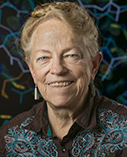 Jane Shelby Richardson合作论文数Department of Biochemistry, School of Medicine, Duke University4
 Jianlin (Jack) Cheng合作论文数Bioinformatics and Machine Learning Lab, Department of Electrical Engineering and Computer Science, College of Engineering, University of Missouri4
 Abhishek Singharoy合作论文数School of Molecular Sciences, Center for Applied Structural Discovery, Arizona State University
at TempeUnited States 4
Abhishek Singharoy合作论文数School of Molecular Sciences, Center for Applied Structural Discovery, Arizona State University
at TempeUnited States 4 M. Basham合作论文数Department of Physics, University of Reading4
 Grzegorz Chojnowski合作论文数International Institute of Molecular and Cell Biology, Trojdena 4, 02-109 Warsaw, Poland4
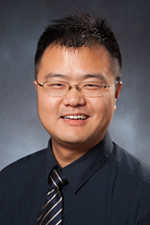 Si Dong (董思)合作论文数Department of Computer Science,Old Dominion University4
 Genki Terashi合作论文数School of Pharmacy;Kitasato University;School of Pharmacy, Kitasato University4
 Andriy Kryshtafovych合作论文数Protein Structure Prediction Center, University of California, Davis4
 Renzhi Cao合作论文数Department of Computer Science and Technology, USTC4
 Grigore Pintilie合作论文数3Michael F. Schmid合作论文数3Luisa U. Schafer合作论文数3
 Jonas Pfab合作论文数University of Washington;3
 Mrinal Shekhar合作论文数Ctr Dev Therapeut, Broad Inst3Jeyan Thiyagalingam合作论文数Rutherford Appleton Lab, STFC3
 Benjamin A. Barad合作论文数Department of Integrative Structural and Computational Biology, The Scripps Research Institute3
 Gunnar F. Schroeder合作论文数Forschungszentrum Julich3
 Paul Bond合作论文数Department of Chemistry, University of York3
 Jie Hou合作论文数Department of Computer Science, School of Science and Engineering, Saint Louis University3
 Mittal Sumit合作论文数#Max-Planck-Institut für Kohlenforschung3
 Igaev Maxim合作论文数Department of Neurobiology, University of Osnabrück3
 Wah Chiu合作论文数Departments of Bioengineering, School of Engineering, Stanford University;Department of Microbiology and Immunology, School of Medicine, Stanford University;SLAC National Accelerator Laboratory3Maya Topf合作论文数Birkbeck College, University of London3
 Daisuke Kihara (木原大亮)合作论文数Department of Biological Sciences, College of Science, Purdue University;Department of Computer Science, College of Science, Purdue University;Institute for Protein Research, Osaka University3
 Helen Berman合作论文数Department of Chemistry and Chemical Biology, School of Arts and Sciences, Rutgers, The State University of New Jersey3
 Frank Dimaio合作论文数Institute for Protein Design, School of Medicine, University of Washington;Department of Biochemistry, School of Medicine, University of Washington3Catherine L. Lawson合作论文数3
 James S. Fraser合作论文数Department of Molecular and Medical Genetics, University of Toronto3
 Matt Baker合作论文数School of Biotechnology and Biomolecular Science, The University of New South Wales3Christopher Williams合作论文数3
 Andrea C. Vaiana合作论文数Computational Molecular Biophysics;University of Heidelberg;Computational Molecular Biophysics, University of Heidelberg3Jola Mirecka合作论文数2Zhe Wang合作论文数2
 Mark Herzik合作论文数Department of Chemistry and Biochemistry, Division of Physical Sciences, University of California, San Diego2




