Robust quantum control is crucial for realizing practical quantum technologies. Energy landscape shaping offers an alternative to conventional dynamic control, providing theoretically enhanced robustness and simplifying implementation for certain applications. This work demonstrates the feasibility of robust energy landscape control in a practical implementation with ultracold atoms. We leverage a digital mirror device (DMD) to shape optical potentials, creating complex energy landscapes. To achieve a desired objective, such as efficient quantum state transfer, we formulate a novel hybrid optimization approach that effectively handles both continuous (laser power) and discrete (DMD pixel activation) control parameters. This approach combines constrained quasi-Newton methods with surrogate models for efficient exploration of the vast parameter space. Furthermore, we introduce a framework for analyzing the robustness of the resulting control schemes against experimental uncertainties. By modeling uncertainties as structured perturbations, we systematically assess controller performance and identify robust solutions. We apply these techniques to maximize spin transfer in a chain of trapped atoms, achieving high-fidelity control while maintaining robustness. Our findings provide insights into the experimental viability of controlled spin transfer in cold atom systems. More broadly, the presented optimization and robustness analysis methods apply to a wide range of quantum control problems, offering a toolkit for designing and evaluating robust controllers in complex experimental settings.
Robust control of quantum systems is an increasingly relevant field of study amidst the second quantum revolution, but there remains a gap between taming quantum physics and robust control in its modern analytical form that culminated in fundamental performance bounds. With certain exceptions such as quantum optical systems that can be modeled as linear stochastic differential equations, quantum systems are not amenable to linear, time-invariant, measurement-based robust control techniques, and thus novel gap-bridging techniques must be developed. This survey is written for control theorists to provide a review of the current state of quantum control and outline the challenges faced in trying to apply modern robust control to quantum systems. We present issues that arise when applying classical robust control theory to quantum systems, typical methods used by quantum physicists to explore such systems and their robustness, as well as a discussion of open problems to be addressed in the field. We focus on general, practical applications and recent work to enable control researchers to contribute to advancing this burgeoning field.
In recent years, sensors based on hot atomic vapor cells have emerged as a compact and highly sensitive means of measuring magnetic fields. Such sensors have been deployed in the field for the measurement of, e.g., biological systems, representing a promising practical application of quantum technologies. However, it remains challenging to obtain high-resolution magnetic field images from these sensors, and in most cases, the spatial resolution of the system is limited by the sensor size. Here, we demonstrate the combination of single-pixel imaging (SPI) techniques with an atom vapor Faraday magnetometer to achieve microscopic magnetic field imaging. We demonstrate magnetic field imaging with a spatial resolution of ≈ 62.5 μm, limited only by the resolution of our digital micromirror device projection system and the absence of magnetic shielding in our experimental setup.
The accurate determination of atom numbers is an ubiquitous problem in the field of ultracold atoms. For modest atom numbers, absolute calibration techniques are available, however, for large numbers and high densities, the available techniques neglect many-body scattering processes. Here, a spatial calibration technique for time-of-flight absorption images of ultracold atomic clouds is presented. The calibration is obtained from radially averaged absorption images and we provide a practical guide to the calibration process. It is shown that the calibration coefficient scales linearly with optical density and depends on the absorbed photon number for the experimental conditions explored here. This allows for the direct inclusion of a spatially dependent calibration in the image analysis. For typical ultracold atom clouds the spatial calibration technique leads to corrections in the detected atom number up to ≈ 12 % and temperature up to ≈ 14 % in comparison to previous calibration techniques. The technique presented here addresses a major difficulty in absorption imaging of ultracold atomic clouds and prompts further theoretical work to understand the scattering processes in ultracold dense clouds of atoms for accurate atom number calibration.
Dynamic control via optimized, piecewise-constant pulses is a common paradigm for open-loop control to implement quantum gates. While numerous methods exist for the synthesis of such controls, there are many open questions regarding the robustness of the resulting control schemes in the presence of model uncertainty; unlike in classical control, there are generally no analytical guarantees on the control performance with respect to inexact modeling of the system. In this paper a new robustness measure based on the differential sensitivity of the gate fidelity error to parametric (structured) uncertainties is introduced, and bounds on the differential sensitivity to parametric uncertainties are used to establish performance guarantees for optimal controllers for a variety of quantum gate types, system sizes, and control implementations. Specifically, it is shown how a maximum allowable perturbation over a set of Hamiltonian uncertainties that guarantees a given fidelity error, can be reliably computed. This measure of robustness is inversely proportional to the upper bound on the differential sensitivity of the fidelity error evaluated under nominal operating conditions. Finally, the results show that the nominal fidelity error and differential sensitivity upper bound are positively correlated across a wide range of problems and control implementations, suggesting that in the high-fidelity control regime, rather than there being a trade-off between fidelity and robustness, higher nominal gate fidelities are positively correlated with increased robustness of the controls in the presence of parametric uncertainties.
We demonstrate a method for determining the three-dimensional location of single atoms in a quantum gas microscopy system using a phase-only spatial light modulator to modify the point-spread function of the high-resolution imaging system. Here, the typical diffracted spot generated by a single atom as a point source is modified to a double spot that rotates as a function of the atom's distance from the focal plane of the imaging system. We present and numerically validate a simple model linking the rotation angle of the point-spread function with the distance to the focal plane. We show that, when aberrations in the system are carefully calibrated and compensated for, this method can be used to determine an atom's position to within a single lattice site in a single experimental image, extending quantum simulation with microscopy systems further into the regime of three dimensions.
We demonstrate a method for encoding Gottesman–Kitaev–Preskill (GKP) error-correcting qubits with single ultracold atoms trapped in individual sites of a deep optical lattice. Using quantum optimal control protocols, we demonstrate the generation of GKP qubit states with 10 dB squeezing, which is the current minimum allowable squeezing level for use in surface code error correction. States are encoded in the vibrational levels of the individual lattice sites and generated via phase modulation of the lattice potential. Finally, we provide a feasible experimental protocol for the realization of these states. Our protocol opens up possibilities for generating large arrays of atomic GKP states for continuous-variable quantum information.
Abstract As the second quantum revolution comes to pass with its potential to revolutionize our lives, it becomes increasingly relevant to educate the public about quantum mechanics. Quantum literacy is also a formidable challenge and opportunity for a massive cultural uplift, since it fosters the possibility for citizens to engender their creativity and practice a new way of thinking. However, quantum theory is highly counterintuitive, manifesting in a reality we have no direct experience of, and represented by mathematically difficult formalisms. Here, we propose that games can provide a playground for engaging forms of experimental and symbolic literacy accessible to anyone. We discuss the theoretical foundations underlying this idea in the framework of a global educational strategy, illustrate existing examples of its implementation along different dimensions related to educational, citizen-science, and age-related contexts, and envision future challenges.
A strictly time-domain formulation of the log-sensitivity of the error signal to structured plant uncertainty is presented and analyzed through simple but representative classical and quantum systems. Results demonstrate that across a wide range of physical systems, maximization of performance (minimization of the error signal) asymptotically or at a specific time comes at the cost of increased log-sensitivity, implying a time-domain constraint analogous to the frequency-domain identity $\mathbf{S(s) + T(s) = I}$. While of limited value in classical problems based on asymptotic stabilization or tracking, such a time-domain formulation is valuable in assessing the reduced robustness cost concomitant with high-fidelity quantum control schemes predicated on time-based performance measures.
Recent achievements in quantum control have resulted in advanced techniques for designing controllers for applications in quantum communication, computing, and sensing. However, the susceptibility of such systems to noise and uncertainties necessitates robust controllers that perform effectively under these conditions to realize the full potential of quantum devices. The time-domain log-sensitivity and a recently introduced robustness infidelity measure (RIM) are two means to quantify controller robustness in quantum systems. The former can be found analytically, while the latter requires Monte-Carlo sampling. In this letter, the correlation between the log-sensitivity and the RIM for evaluating the robustness of single excitation transfer fidelity in spin chains and rings in the presence of dephasing is investigated. We show that the expected differential sensitivity of the error agrees with the differential sensitivity of the RIM, where the expectation is over the error probability distribution. Statistical analysis also demonstrates that the log-sensitivity and the RIM are linked via the differential sensitivity, and that the differential sensitivity and RIM are highly concordant. This unification of two means (one analytic and one via sampling) to assess controller robustness in a variety of realistic scenarios provides a first step in unifying various tools to model and assess robustness of quantum controllers.
We propose a model-based reinforcement learning (RL) approach for noisy time-dependent gate optimization with reduced sample complexity over model-free RL. Sample complexity is defined as the number of controller interactions with the physical system. Leveraging an inductive bias, inspired by recent advances in neural ordinary differential equations (ODEs), we use an autodifferentiable ODE, parametrized by a learnable Hamiltonian ansatz, to represent the model approximating the environment, whose time-dependent part, including the control, is fully known. Control alongside Hamiltonian learning of continuous time-independent parameters is addressed through interactions with the system. We demonstrate an order of magnitude advantage in sample complexity of our method over standard model-free RL in preparing some standard unitary gates with closed and open system dynamics, in realistic computational experiments incorporating single-shot measurements, arbitrary Hilbert space truncations, and uncertainty in Hamiltonian parameters. Also, the learned Hamiltonian can be leveraged by existing control methods like GRAPE (gradient ascent pulse engineering) for further gradient-based optimization with the controllers found by RL as initializations. Our algorithm, which we apply to nitrogen vacancy (NV) centers and transmons, is well suited for controlling partially characterized one- and two-qubit systems.
We demonstrate a method for encoding Gottesman-Kitaev-Preskill (GKP) error-correcting qubits with single ultracold atoms trapped in individual sites of a deep optical lattice. Using quantum optimal control protocols, we demonstrate the generation of GKP qubit states with 10 dB squeezing, which is the current minimum allowable squeezing level for use in surface code error correction. States are encoded in the vibrational levels of the individual lattice sites and generated via phase modulation of the lattice potential. Finally, we provide a feasible experimental protocol for the realization of these states. Our protocol opens up possibilities for generating large arrays of atomic GKP states for continuous-variable quantum information.
There is a growing interest in searching for topology in fractal dimensions with the aim of finding different properties and advantages compared to the integer dimensional case. It has previously been shown that the Laughlin state can be adapted to fractal lattices. A key element in doing so is to replace the uniform background charge by a background charge that resides only on the lattice sites. This motivates the study of Hofstadter type models on fractal lattices, in which the magnetic field is present only at the lattice sites. Here, we study such models for hardcore bosons on finite lattices derived from the Sierpinski carpet and on square lattices with open boundary conditions. We find that the system sizes that we can investigate with exact diagonalization are generally too small to judge whether these local models are topological or not. Studying the particle densities on the lattices derived from the Sierpinski carpet, we find that the densities tend to accumulate in the regions that are locally similar to a square lattice. Such accumulation seems to be incompatible with the uniform densities in fractional quantum Hall systems, which might suggest that the models are not topological. Our computations provide guidance for future searches for topology in finite systems. We also propose a scheme to implement both fractal lattices and our proposed local Hamiltonian with ultracold atoms in optical lattices, which could allow for quantum simulators to go beyond the numerical results presented here.
Robustness of quantum operations or controls is important to build reliable quantum devices. The robustness-infidelity measure (RIM$_p$) is introduced to statistically quantify the robustness and fidelity of a controller as the p-order Wasserstein distance between the fidelity distribution of the controller under any uncertainty and an ideal fidelity distribution. The RIM$_p$ is the p-th root of the p-th raw moment of the infidelity distribution. Using a metrization argument, we justify why RIM$_1$ (the average infidelity) suffices as a practical robustness measure. Based on the RIM$_p$, an algorithmic robustness-infidelity measure (ARIM) is developed to quantify the expected robustness and fidelity of controllers found by a control algorithm. The utility of the RIM and ARIM is demonstrated by considering the problem of robust control of spin-$\tfrac{1}{2}$ networks using energy landscape shaping subject to Hamiltonian uncertainty. The robustness and fidelity of individual control solutions as well as the expected robustness and fidelity of controllers found by different popular quantum control algorithms are characterized. For algorithm comparisons, stochastic and non-stochastic optimization objectives are considered, with the goal of effective RIM optimization in the latter. Although high fidelity and robustness are often conflicting objectives, some high fidelity, robust controllers can usually be found, irrespective of the choice of the quantum control algorithm. However, for noisy optimization objectives, adaptive sequential decision making approaches such as reinforcement learning have a cost advantage compared to standard control algorithms and, in contrast, the infidelities obtained are more consistent with higher RIM values for low noise levels.
Employing scientific practices to obtain and use information is one of the central facets of next generation science standards. Especially in quantum technology education, the ability to employ such practices is an essential skill to foster both academic success and technological development. In order to help educators design effective instructions, the comparison between novices' and experts' eye movements allows the identification of efficient information extraction and integration strategies. In this work, we compare the gaze behavior of experts and novices while solving problems in quantum physics using an interactive simulation tool, Quantum Composer, which displays information via multiple external representations (numerical values, equations, graphs). During two reasoning tasks, we found that metarepresentational competences were crucial for successful engagement with the simulation tool. The analysis of the gaze behavior revealed that visual attention on a graph plays a major role and redundant numerical information is ignored. Furthermore, the total dwell time on relevant and irrelevant areas is predictive for the score in the second task. Therefore, the results demonstrate which difficulties novices encounter when using simulation tools and provides insights for how to design effective instructions in quantum technology education guided by experts' gaze behavior.
A method to quantify robust performance for situations where structured parameter variations and initial state errors rather than extraneous disturbances are the main performance limiting factors is presented. The approach is based on the error dynamics, the difference between nominal and perturbed dynamics, driven by either the unperturbed or perturbed state, rather than an artificially imposed disturbance. The unperturbed versus perturbed dichotomy can be interpreted as the relative error dynamics scaled by either the unperturbed or perturbed dynamics. The error dynamics driven by unperturbed state has the unique feature of decoupling the effect of physically meaningful uncertainties from an additive disturbance. The perturbed case offers the possibility to side-step Structured Singular Value (SSV) computations. Applications to a lightly damped mechanical system and a slowly dephasing quantum system demonstrate the usefulness of the concepts across a broad range of systems. Finally, a fixed-point algorithm specifically developed for quantum systems with state transitions depending in a nonlinear fashion on uncertainties is proposed as the substitute for classical SSV.
Alex Belsley, Marija Radulovic, Angela Stephen and Carrie Weidner say that diversity and inclusion considerations must be at the forefront of rapidly developing fields such as quantum technologies.
In this article, we provide an extensive overview of a wide range of quantum games and interactive tools that have been employed by the community in recent years. The paper presents selected tools, as described by their developers. The list includes Hello Quantum, Hello Qiskit, Particle in a Box, Psi and Delta, QPlayLearn, Virtual Lab by Quantum Flytrap, Quantum Odyssey, ScienceAtHome, and The Virtual Quantum Optics Laboratory. Additionally, we present events for quantum game development: hackathons, game jams, and semester projects. Furthermore, we discuss the Quantum Technologies Education for Everyone (QUTE4E) pilot project, which illustrates an effective integration of these interactive tools with quantum outreach and education activities. Finally, we aim at providing guidelines for incorporating quantum games and interactive tools in pedagogic materials to make quantum technologies more accessible for a wider population.
 Jacob Sherson合作论文数Departments of Management, Physics, and Cognitive Science, Aarhus University;Center for Hybrid Intelligence, Aarhus University16
 Frank C. Langbein合作论文数School of Computer Science and Informatics, Cardiff University11
 Edmond A Jonckheere合作论文数School of Engineering, University of Southern California11
 Shaeema Zaman Ahmed合作论文数8
 Sean O'Neil合作论文数6
 Sophie G. Schirmer合作论文数6
 Anne E. B. Nielsen合作论文数5
 Sourav Manna合作论文数Dept Condensed Matter Phys, Weizmann Inst Sci5Jesper Hasseriis Mohr Jensen合作论文数5
 Janet Frances Rafner合作论文数Dept Phys & Astron, Aarhus Univ5S. G. Schirmer合作论文数Quantum Processes Group;Open University;Quantum Processes Group, Open University5
 H. J. Lewandowski合作论文数National Institute of Standards and Technology;Department of Physics;University of Colorado;National Institute of Standards and Technology, University of Colorado5
 Muhammad Irtaza Khalid合作论文数School of Computer Science and Informatics, Cardiff University4
 Callum W Duncan合作论文数Univ Strathclyde4
 Dana Z. Anderson合作论文数Department of Physics, College of Arts and Sciences, University of Colorado Boulder;Infleqtion4
 Otto Eliasson合作论文数Science Institute, University of Iceland4l paul parazzoli合作论文数3
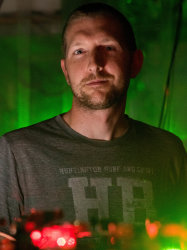 Noah J Fitch合作论文数Department of Physics, Faculty of Natural Sciences, Imperial College London3
 Ferranti Giacomo合作论文数Dipartimento di Fisica, Sapienza Università di Roma3
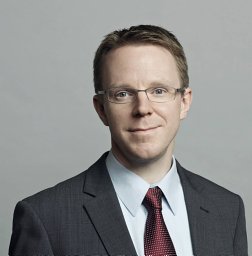 J. Arlt合作论文数Clarendon Laboratory;Department of Physics;University of Oxford;Clarendon Laboratory, University of Oxford3Hoon Yu合作论文数2Jens Jakob Sorensen合作论文数2
 Zeki Seskir合作论文数Karlsruhe Inst Technol, ITAS2
 Caterina Foti合作论文数Univ Florence, Dipartimento Fis, Via G Sansone 1, I-50019 Sesto Fiorentino, FI, Italy2
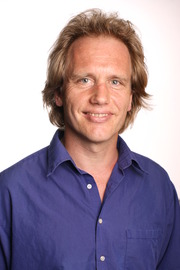 Holger Dullin合作论文数School of Mathematics and Statistics, Faculty of Science, The University of Sydney2
 Robert Heck合作论文数2
 Dieter Meschede合作论文数Institut für Angewandte Physik, Universität Bonn2
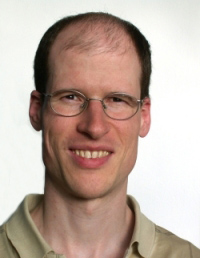 Wolfgang Alt合作论文数University Bonn2
 Arthur Hjorth合作论文数Department of Management, Aarhus University2
 Sabrina Maniscalco合作论文数Department of Physics, Faculty of Science, University of Helsinki2
 Andrea Alberti合作论文数Neuroscience Department Via E. dal Pozzo, Neurologic Clinic2Clemens Klokmose合作论文数1J. T. Monroe合作论文数1Toke Vibel合作论文数1David Dzsotjan合作论文数1M. B. Christensen合作论文数1Christian Poulsen合作论文数1Noah A. Davis合作论文数1Gautam Ramola合作论文数1Cyril Torre合作论文数1Chiara Decaroli合作论文数1Jens S Laustsen合作论文数1Romain Müller合作论文数1Linda Qerimi合作论文数1Nicky Case合作论文数1Fabio Scafirimuto合作论文数1Athanasios A. Rompokos合作论文数1
 Daniel Lobser合作论文数1
 Sophie Shermer合作论文数1




