High-energy neutrinos could be produced in the interaction of charged cosmic rays with matter or radiation surrounding astrophysical sources. Even with the recent detection of extraterrestrial high-energy neutrinos by the IceCube experiment, no astrophysical neutrino source has yet been discovered. Transient sources, such as gamma-ray bursts, core-collapse supernovae, or active galactic nuclei are promising candidates. Multi-messenger programs offer a unique opportunity to detect these transient sources. By combining the information provided by the ANTARES neutrino telescope with information coming from other observatories, the probability of detecting a source is enhanced, allowing the possibility of identifying a neutrino progenitor from a single detected event. A method based on optical and X-ray follow-ups of high-energy neutrino alerts has been developed within the ANTARES collaboration. This method does not require any assumptions on the relation between neutrino and photon spectra other than time-correlation. This program, denoted as TAToO, triggers a network of robotic optical telescopes (TAROT and ROTSE) and the Swift-XRT with a delay of only a few seconds after a neutrino detection, and is therefore well-suited to search for fast transient sources. To identify an optical or X-ray counterpart to a neutrino signal, the images provided by the follow-up observations are analysed with dedicated pipelines. A total of 42 alerts with optical and 7 alerts with X-ray images taken with a maximum delay of 24 hours after the neutrino trigger have been analysed. No optical or X-ray counterparts associated to the neutrino triggers have been found, and upper limits on transient source magnitudes have been derived. The probability to reject the gamma-ray burst origin hypothesis has been computed for each alert.
We present a search, using the Murchison Widefield Array (MWA), for electromagnetic (EM) counterparts to two candidate high-energy neutrino events detected by the ANTARES neutrino telescope in 2013 November and 2014 March. These events were selected by ANTARES because they are consistent, within 0 degrees.4, with the locations of galaxies within 20 Mpc of Earth. Using MWA archival data at frequencies between 118 and 182 MHz, taken similar to 20. days prior to, at the same time as, and up to a year after the neutrino triggers, we look for transient or strongly variable radio sources that are consistent with the neutrino positions. No such counterparts are detected, and we set a 5 sigma upper limit for low-frequency radio emission of similar to 10(37) erg s(-1) for progenitors at 20 Mpc. If the neutrino sources are instead not in nearby galaxies, but originate in binary neutron star coalescences, our limits place the progenitors at z greater than or similar to 0.2. While it is possible, due to the high background from atmospheric neutrinos, that neither event is astrophysical, the MWA observations are nevertheless among the first to follow up neutrino candidates in the radio, and illustrate the promise of wide-field instruments like MWA for detecting EM counterparts to such events.
We present optical and near-infrared (NIR) photometry for three gamma-ray burst supernovae (GRB-SNe): GRB 120729A, GRB 130215A / SN 2013ez and GRB 130831A / SN 2013fu. In the case of GRB 130215A / SN 2013ez, we also present optical spectroscopy at t − t0 = 16.1 d, which covers rest-frame 3000–6250 Å. Based on Fe ii λ5169 and Si ii λ6355, our spectrum indicates an unusually low expansion velocity of ∼4000–6350 km s−1, the lowest ever measured for a GRB-SN. Additionally, we determined the brightness and shape of each accompanying SN relative to a template supernova (SN 1998bw), which were used to estimate the amount of nickel produced via nucleosynthesis during each explosion. We find that our derived nickel masses are typical of other GRB-SNe, and greater than those of SNe Ibc that are not associated with GRBs. For GRB 130831A / SN 2013fu, we use our well-sampled R-band light curve (LC) to estimate the amount of ejecta mass and the kinetic energy of the SN, finding that these too are similar to other GRB-SNe. For GRB 130215A, we take advantage of contemporaneous optical/NIR observations to construct an optical/NIR bolometric LC of the afterglow. We fit the bolometric LC with the millisecond magnetar model of Zhang & Mészáros (2001), which considers dipole radiation as a source of energy injection to the forward shock powering the optical/NIR afterglow. Using this model we derive an initial spin period of P = 12 ms and a magnetic field of B = 1.1 × 10¹⁵ G, which are commensurate with those found for proposed magnetar central engines of other long-duration GRBs.
During the most recent LIGO-GEO-Virgo science run a number of partner telescopes performed follow-up observations of gravitational wave (GW) candidates. One of these collaborators was the ROTSE project. Consisting of four optical telescopes, ROTSE responded to GW triggers and took over 700 follow-up images. Analysis of these images is currently under way using ROTSE's own image processing pipeline. We describe the analysis used to search for transients of astrophysical significance, and steps being taken to automate and optimise the analysis for rapid identification of electromagnetic (EM) counterparts to GW candidates.
Aims. A transient astrophysical event observed in both gravitational wave (GW) and electromagnetic (EM) channels would yield rich scientific rewards. A first program initiating EM follow-ups to possible transient GW events has been developed and exercised by the LIGO and Virgo community in association with several partners. In this paper, we describe and evaluate the methods used to promptly identify and localize GW event candidates and to request images of targeted sky locations.Methods. During two observing periods (Dec. 17, 2009 to Jan. 8, 2010 and Sep. 2 to Oct. 20, 2010), a low-latency analysis pipeline was used to identify GW event candidates and to reconstruct maps of possible sky locations. A catalog of nearby galaxies and Milky Way globular clusters was used to select the most promising sky positions to be imaged, and this directional information was delivered to EM observatories with time lags of about thirty minutes. A Monte Carlo simulation has been used to evaluate the low-latency GW pipeline's ability to reconstruct source positions correctly.Results. For signals near the detection threshold, our low-latency algorithms often localized simulated GW burst signals to tens of square degrees, while neutron star/neutron star inspirals and neutron star/black hole inspirals were localized to a few hundred square degrees. Localization precision improves for moderately stronger signals. The correct sky location of signals well above threshold and originating from nearby galaxies may be observed with similar to 50% or better probability with a few pointings of wide-field telescopes.
We present observations and interpretation of the Type IIn supernova SN 2008am discovered by the ROTSE Supernova Verification Project (RSVP). SN 2008am peaked at approximately -22.3 mag at a redshift of z=0.2338, giving it a peak luminosity of 3 x 10^{44}erg/s and making it one of the most luminous supernovae ever observed. The total radiated energy is ~ 2 x 10^{51} erg. Photometric observations in the ultraviolet, optical and infrared bands (J,H,Ks) constrain the SED evolution. We obtained six optical spectra of the supernova, five on the early decline from maximum light and a sixth nearly a year later plus a very late-time spectrum (~2 yr) of the host galaxy. The spectra of SN 2008am show strong Balmer-line and He I lambda 5876A emission with intermediate widths (~25A) in the first ~40 days after optical maximum. We examine a variety of models for the line wings and conclude that multiple scattering is most likely, implying that our spectra contain no specific information on the bulk flow velocity. We examine a variety of models for the ROTSE light curve subject to the rise time and the nature of the spectra, including radioactive decay, shocks in optically-thick and optically-thin circumstellar media (CSM) and a magnetar. The most successful model is one for which the CSM is optically-thick and in which diffusion of forward shock-deposited luminosity gives rise to the observed light curve. Diffusion of the shock-deposited energy from the forward shock is found to be important to account for the rising part of the light curve. Although there are differences in detail, SN 2008am appears to be closely related to other super-luminous Type IIn supernovae, SN 2006gy, SN 2006tf and perhaps SN 2008iy, that may represent the deaths of very massive LBV-type progenitors and for which the luminosity is powered by the interaction of the ejecta with a dense circumstellar medium.
The optical-infrared afterglow of the Large Area Telescope (LAT)-detected long-duration burst, GRB 090902B, has been observed by several instruments. The earliest detection by ROTSE-IIIa occurred 80 minutes after detection by the Gamma-ray Burst Monitor instrument on board the Fermi Gamma-Ray Space Telescope, revealing a bright afterglow and a decay slope suggestive of a reverse shock origin. Subsequent optical-IR observations followed the light curve for 6.5 days. The temporal and spectral behavior at optical-infrared frequencies is consistent with synchrotron fireball model predictions; the cooling break lies between optical and XRT frequencies similar to 1.9 days after the burst. The inferred electron energy index is p = 1.8 +/- 0.2, which would however imply an X-ray decay slope flatter than observed. The XRT and LAT data have similar spectral indices and the observed steeper value of the LAT temporal index is marginally consistent with the predicted temporal decay in the radiative regime of the forward shock model. Absence of a jet break during the first 6 days implies a collimation-corrected gamma-ray energy E-gamma > 2.2 x 10(52) erg, one of the highest ever seen in a long-duration gamma-ray bursts. More events combining GeV photon emission with multiwavelength observations will be required to constrain the nature of the central engine powering these energetic explosions and to explore the correlations between energetic quanta and afterglow emission.
We report the discovery by the Robotic Optical Transient Search Experiment (ROTSE-IIIb) telescope of SN 2008es, an overluminous supernova (SN) at z = 0.205 with a peak visual magnitude of -22.2. We present multiwavelength follow-up observations with the Swift satellite and several ground-based optical telescopes. The ROTSE-IIIb observations constrain the time of explosion to be 23 +/- 1 rest-frame days before maximum. The linear decay of the optical light curve, and the combination of a symmetric, broad Ha emission line profile with broad P Cygni H beta and Na lambda 5892 profiles, are properties reminiscent of the bright Type II-L SNe 1979C and 1980K, although SN 2008es is greater than 10 times more luminous. The host galaxy is undetected in pre-supernova Sloan Digital Sky Survey images, and similar to Type II-L SN 2005ap (the most luminous SN ever observed), the host is most likely a dwarf galaxy with M-r > - 17. Swift Ultraviolet/Optical Telescope observations in combination with Palomar 60 inch photometry measure the spectral energy distribution of the SN from 200 to 800 nm to be a blackbody that cools from 14000 K at the time of the optical peak to 6400 K 65 days later. The inferred blackbody radius is in good agreement with the radius expected for the expansion speed measured from the broad lines (10000 km s(-1)). The bolometric luminosity at the optical peak is 2.8 x 10(44) erg s(-1), with a total energy radiated over the next 65 days of 5.6 x 10(50) erg. The exceptional luminosity of SN 2008es requires an efficient conversion of kinetic energy produced from the core-collapse explosion into radiation. We favor a model in which the large peak luminosity is a consequence of the core collapse of a progenitor star with a low-mass extended hydrogen envelope and a stellar wind with a density close to the upper limit on the mass-loss rate measured from the lack of an X-ray detection by the Swift X-Ray Telescope.
GRB 080810 was one of the first bursts to trigger both Swift and the Fermi Gamma-ray Space Telescope. It was subsequently monitored over the X-ray and UV/optical bands by Swift, in the optical by Robotic Optical Transient Search Experiment (ROTSE) and a host of other telescopes, and was detected in the radio by the Very Large Array. The redshift of z = 3.355 +/- 0.005 was determined by Keck/High Resolution Echelle Spectrometer (HIRES) and confirmed by RTT150 and NOT. The prompt gamma/X-ray emission, detected over 0.3-103 keV, systematically softens over time, with E-peak moving from similar to 600 keV at the start to similar to 40 keV around 100 s after the trigger; alternatively, this spectral evolution could be identified with the blackbody temperature of a quasi-thermal model shifting from similar to 60 to similar to 3 keV over the same time interval. The first optical detection was made at 38 s, but the smooth, featureless profile of the full optical coverage implies that this is originated from the afterglow component, not from the pulsed/flaring prompt emission.Broad-band optical and X-ray coverage of the afterglow at the start of the final X-ray decay (similar to 8 ks) reveals a spectral break between the optical and X-ray bands in the range of 1015-2 x 10¹⁶ Hz. The decay profiles of the X-ray and optical bands show that this break initially migrates blueward to this frequency and then subsequently drifts redward to below the optical band by similar to 3 x 10⁵ s. GRB 080810 was very energetic, with an isotropic energy output for the prompt component of 3 x 1053 and 1.6 x 1052 erg for the afterglow; there is no evidence for a jet break in the afterglow up to 6 d following the burst.
 Rudolf Thun合作论文数41
 D. Nitz合作论文数39D. Meyer合作论文数39D. Blockus合作论文数37B. Brabson合作论文数37P. Kooijman合作论文数37r j debonte合作论文数36
 H. Ogren合作论文数36
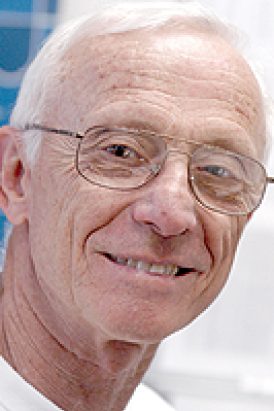 J. Chapman合作论文数Department of Physics, College of Literature, Science, and the Arts, University of Michigan36B. Musgrave合作论文数35Bruce Cork合作论文数35M. Derrick Et Al.合作论文数34
 Steven Errede合作论文数Department of Physics, The Grainger College of Engineering, University of Illinois Urbana-Champaign34
 David Koltick合作论文数Department of Physics and Astronomy Purdue University33Koji Sugano合作论文数32
 Chang Kee Jung合作论文数Department of Physics and Astronomy, College of Arts and Sciences, Stony Brook University31D. R. Rust合作论文数31Rl Mcilwain合作论文数30Philip S. Baringer合作论文数The University of Kansas, Lawrence, USA30B.G. Bylsma合作论文数30Eh Low合作论文数29Ei Shibata合作论文数29
 Shahriar Abachi合作论文数Department of Physics and Astronomy, California State University, Los Angeles;University of California, Los Angeles29Homer A. Neal合作论文数SLAC National Accelerator Laboratory27J. S. Loos合作论文数25Jean-Marie Brom合作论文数IPHC24José Repond合作论文数21Cr Ng合作论文数20
 K. K. Gan合作论文数Department of Physics, College of Arts and Sciences, The Ohio State University20
 Timothy A. McKay合作论文数Physics Department, College of Literature, Science, and the Arts, University of Michigan;Division of Undergraduate Education, College of Literature, Science, and the Arts, University of Michigan20
 Bob Tschirhart合作论文数Fermi National Acceleartor Laboratory19LK RANGAN合作论文数18Mt Ken合作论文数18FJ LOEFFLER合作论文数18P. Kesten合作论文数18L. Price合作论文数17i beltrami合作论文数16m willutzky合作论文数16Le Price合作论文数15M. J. Weiss合作论文数15t trinko合作论文数15D. Wood合作论文数15J. Schlereth合作论文数15S. W. Gray合作论文数14
 David Miller合作论文数Department of Neuromuscular Diseases, University College London14a a seidl合作论文数13M. Valdata-Nappi合作论文数13
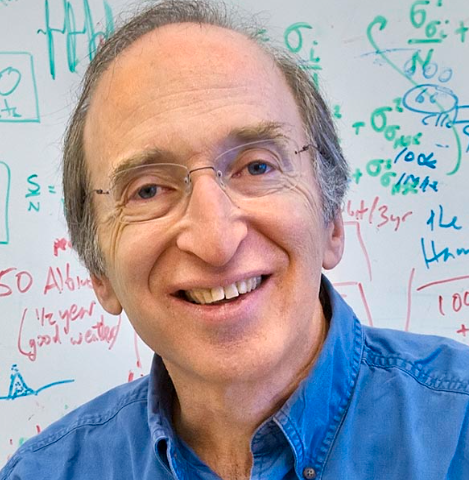 Saul Perlmutter合作论文数Lawrence Berkeley National Laboratory;Department of Physics, University of California, Berkeley11
 Giuliana Bonvicini合作论文数CEPRA11




