This paper interrogates international and domestic peer relations in two Australian schools and how they are shaped by structural, cultural and discursive dimensions of schooling. In particular, it analyses intercultural relations between domestic and international students in the context of policies promoting “internationalisation-at-home”. We argue that how international students are positioned within specific school contexts impacts their sense of inclusion in everyday social and pedagogical relations and informs their relationships with domestic students, whether viewed as a stranger or potentially as a friend raising questions as to who is responsible for intercultural relations.
This paper explores how changing digital literacy practices in educational contexts require that we continually revisit conceptualisations of digital literacy education. We begin by analysing the positions taken by stakeholders who contribute to digital literacy discourses in Australia, exploring how competing interests produce effects which manifest in ways that differently consecrate social and cultural practice in the digital age. We advocate the need for pedagogic frameworks that support digital literacy education. Existing approaches tend to privilege the operationalisation of digital technology. By contrast, teaching is needed which focusses on meaning-making and creating. However. the 'datafication of everyday life' (Barassi, 2018, p.170) has included extraordinary interventions into schooling that have significant implications for teachers and students. We argue that preparing young people for digital citizenship must include a focus on critical digital literacies that are responsive to contemporary digital forces (e.g. platformatisation, artificial intelligence, edu-apps, algorithms) as well as those digital technologies that are yet to make their way into formal schooling.
This article focuses on school staff' perspectives about the value of international students, using data from interviews with 51 teachers, school leaders and international student support officers across eight schools in Australia. The positioning of international students by the interviewees shows how hosting this cohort can assist to boost schools' symbolic positioning in international education formed by labelling the school as 'culturally diverse', 'inclusive', 'international' and 'global'. But there seems to be a gap between symbolic positioning on the one hand and the capitalization of international students on the other hand as valuable resources to realise the internationalisation of schools. The article provides insights into the perceived values of international students and the barriers to achieving these potential benefits.
Most research on international students’ experiences has focused on tertiary settings and consistently shows that this cohort negotiates significant risks during their time abroad. This paper draws on data from the first year of a three-year Australian Research Council funded study to address the un(der)examined cohort of young people who complete their secondary school education as international students and temporary sojourners in Australia. We analyse the data from the initial interviews undertaken with 60 Year 10 international students during their first year of the senior secondary schooling. Drawing upon the theoretical resources associated with the politics of belonging, we ask if, and in what ways, students felt themselves to be marked as ‘other’ to constructed educational and social norms. We note the significant role that online activity played in helping students deal with feelings of disconnect and exclusion.
There is growing interest in the incorporation of digital games as part of the suite of offerings in museum education in heritage environments. Digital games are seen as ways of recreating historic worlds, affording empathetic and affective engagement, and increasing interest in and understanding of historical periods or processes, working in complementarity with material exhibitions and artefacts on display. Stakeholders engaged in the development of digital games, however, may have different views of what constitutes significant knowledge and priorities. This paper reports on findings from a pilot study that investigated key concerns for three groups involved in designing a game - museum educators, maritime archaeologists and games designers - that foregrounded the construction of history, history as constructed and processes of historical research. The paper explores the differing values and priorities underlying the perspectives of each group, and the implications of these for museum education, and the design of the game.
Digital games offer rich and immersive worlds where communication, play, and multimodal literacies of all kinds beckon players to interact and engage. With their mix of text and action, entrancing visuals, and instant feedback, digital games provide a context in which understanding and meaning-making, the representation of self, and interaction with others are core business, central to progress through the game and the satisfactions of play. Virtual worlds and digital games work as collaborative sites where meaning is negotiated and players are engaged in experiential learning of many kinds. Activities typically include planning, problem-solving, decision-making, risk-taking, trial and error, and purposeful communication of many kinds. Research into the promise of digital games for education identifies language learning, for both first and additional languages, as one of the main curriculum areas where games can be most effective, because of such qualities and the integrated and extensive nature of the informal worlds of the game. To participate in such worlds, players need to "read" and understand information on hand, hints, and cues, the rules of the game, and the nature of the genre; what it means and what it takes to play, progress, and win, supported by the wealth of paratexts that surround the game. In addition is the cultivation of cutting-edge skills and lightning fast responses, in forms of play that range from the benign and orderly through to fast-paced, groundbreaking, anarchic, and byzantine. This chapter explores virtual worlds and "serious" games, highlighting the role of digital and multimodal literacies in the creation of meaning for players, and the purposeful and powerful context they provide for communication, interaction, and play.
As mobile and connected digital practices reshape social, interpersonal and learning relationships, it is increasingly challenging for teachers and schools to keep pace with rapid change. This paper reports on a professional learning project which set out to support teachers to learn more about how students in their classes used technologies, which technologies they used, what they thought about how they and others used them, and what they used them for. Teachers' research into students' digital use acted as a necessary intervention and prior step to developing classroom- and school-level responses to young people's use of digital technologies. The paper reports on teachers' findings, their responses to what they learnt and the implications for schools. In parallel, it reports also on the processes of the research and its deliverables as a professional learning enterprise, and the operation and value of this approach as professional learning methodology.
Increasing numbers of children are caught up in global flows of moving peoples. This movement may be voluntary or forced and is experienced within a range of settings. Coming from diverse linguistic and cultural backgrounds, and moving around the world due to their parents' employment, the children found in traditional International Schools are a case in point. This paper focuses on the experiences of two sisters in the first year of their family's global relocation. In the midst of change, the digital world Club Penguin™ offered these two globally mobile children a familiar and welcome site of continuity and belonging. This exploration of the role of digital worlds and digital literacies in these girls' experience contributes to an understanding of connections between global movement and digital literacy practices. Greater awareness of the significance of digital literacies in globally mobile children's lives provides fresh insights into how children participate in digital spaces and has implications for literacy educators supporting young people in contemporary times.
The importance of pleasure in learning and continuing to read has long been recognised as central in literacy and English education. Yet paradoxically, as the importance of reading intensifies in t...
The act of remapping pushes us to rethink the ways in which Literature education is understood. Jerry Brotton (2012), in his thesis on the history of the world as understood through maps, reminds us that "maps offer a proposal about the world, rather than just a reflection of it, and every proposal emerges from a particular culture's prevailing assumptions and preoccupations" (p. 438). The attempt to redefine the boundaries for conversations about Literature education is an attempt to interrupt common assumptions that individual readers may hold about Literature education, as situated in their own contexts of language and learning. Remapping is a way to rethink the "imagined community" (Anderson, 1983) of scholars, educators, and students of Literature education and to encourage deep and complex dialogue about Literature education in a global world.
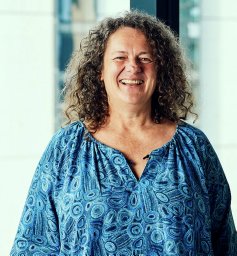 Joanne O’Mara合作论文数19
 Roberta Thompson合作论文数Sch Educ & Profess Studies, Griffith Univ8
 Leonie Rowan合作论文数Learning Research, Quality;Deakin University;Deakin University8
 Thomas Apperley合作论文数Deakin University8
 Clare Bradford合作论文数6
 Chris Walsh合作论文数6
 Amanda Gutierrez合作论文数5
 Claire Charles合作论文数Faculty of Education;Monash University;Faculty of Education, Monash University5
 Bill Green合作论文数School of Education, Charles Sturt University5
 Sandy Muspratt合作论文数Monash University5
 Aida Hurem合作论文数School of Education and Professional Studies, Griffith University3
 Trevor McCandless合作论文数Arts & Educ, Deakin Univ3Luci Pangrazio合作论文数3Helen Nixon合作论文数3
 Ly Tran合作论文数3
 Jillian Blackmore合作论文数School of Education, Faculty of Arts and Education, Deakin University3Barbara Garrick合作论文数2lisa mcneice合作论文数2
 Trang Hoang合作论文数School of Education, Deakin University2
 Kevin Larkin合作论文数Griffith University2Julia Davies合作论文数2
 Jason Zagami合作论文数2
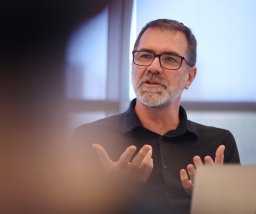 Michael Dezuanni合作论文数Queensland University of Technology Brisbane2
 Kevin Leander合作论文数Peabody College, Vanderbilt University2
 Sarah Prestridge合作论文数Centre for Applied Language;Literacy & Communication Studies;Griffith University;Centre for Applied Language, Griffith University2
 Ilana Snyder合作论文数School of Curriculum, Teaching and Inclusive Education, Faculty of Education, Monash University2Tom Apperley合作论文数1Manaia Chou-Lee合作论文数1
 Annemaree O'Brien合作论文数1
 Narelle Wood合作论文数1
 Jay Deagon合作论文数Sch Educ & Arts, CQUniversity1
 Alexander Bacalja合作论文数Univ Melbourne1
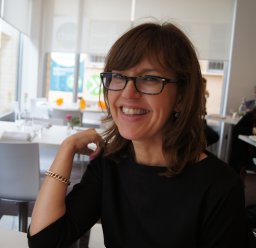 Jeanette Hannaford合作论文数Griffith Inst Educ Res, Griffith Univ1
 anne cloonan合作论文数School of Education, Deakin University1
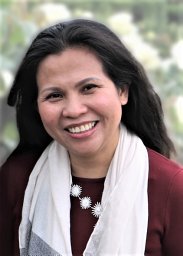 Huyen Bui合作论文数Strateg Res Ctr Educ, Res Educ Impact, Deakin Univ1
 Caroline Mahoney合作论文数Fac Arts & Educ, Res Educ Impact REDI, Deakin Univ1
 Chin Ee Loh合作论文数National Institute of Education, Nanyang Technological University1
 Shen Li Suzanne Choo合作论文数National Institute of Education, Nanyang Technological University1Geraldine Townend合作论文数School of Education, Faculty of Arts, Design & Architecture, The University of New South Wales1
 Stieler-Hunt Colleen合作论文数School of Social Sciences, University of the Sunshine Coast Sippy Downs1
 Julian Sefton-Green合作论文数Centre for the Study of Children;Media Institute of Education;University of London;Media Institute of Education, University of London1
 Lynda Kelly合作论文数1
 Kirsten Hutchison合作论文数1
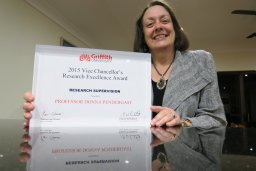 Donna Pendergast合作论文数University of Queensland1
 Christine Halse合作论文数Sch Educ, Deakin Univ1
 Gert Rijlaarsdam合作论文数University of Amsterdam1




