The time–energy information of ultrashort X-ray free-electron laser pulses generated by the Linac Coherent Light Source is measured with attosecond resolution via angular streaking of neon 1s photoelectrons. The X-ray pulses promote electrons from the neon core level into an ionization continuum, where they are dressed with the electric field of a circularly polarized infrared laser. This induces characteristic modulations of the resulting photoelectron energy and angular distribution. From these modulations we recover the single-shot attosecond intensity structure and chirp of arbitrary X-ray pulses based on self-amplified spontaneous emission, which have eluded direct measurement so far. We characterize individual attosecond pulses, including their instantaneous frequency, and identify double pulses with well-defined delays and spectral properties, thus paving the way for X-ray pump/X-ray probe attosecond free-electron laser science. Attosecond time–energy characterization of pulses generated by the Linac Coherent Light Source (LCLS) X-ray free-electron laser is enabled by angular streaking measurements.
We report on a laser locked to a silicon cavity operating continuously at 4 K with 1×10^{-16} instability and a median linewidth of 17 mHz at 1542 nm. This is a tenfold improvement in short-term instability, and a 10^{4} improvement in linewidth, over previous sub-10-K systems. Operating at low temperatures reduces the thermal noise floor and, thus, is advantageous toward reaching an instability of 10^{-18}, a long-sought goal of the optical clock community. The performance of this system demonstrates the technical readiness for the development of the next generation of ultrastable lasers that operate with an ultranarrow linewidth and long-term stability without user intervention.
Active control and cancellation of residual amplitude modulation (RAM) in phase modulation of an optical carrier is one of the key technologies for achieving the ultimate stability of a laser locked to an ultrastable optical cavity. Furthermore, such techniques are versatile tools in various frequency modulation-based spectroscopy applications. In this Letter we report a simple and robust approach to actively stabilize RAM in an optical phase modulation process. We employ a waveguide-based electro-optic modulator (EOM) to provide phase modulation and implement an active servo with both DC electric field and temperature feedback onto the EOM to cancel both the in-phase and quadrature components of the RAM. This technique allows RAM control on the parts-per-million level where RAM-induced frequency instability is comparable to or lower than the fundamental thermal noise limit of the best available optical cavities.
We present a unifying theoretical framework that describes recently observed many-body effects during the interrogation of an optical lattice clock operated with thousands of fermionic alkaline earth atoms. The framework is based on a many-body master equation that accounts for the interplay between elastic and inelastic p-wave and s-wave interactions, finite temperature effects and excitation inhomogeneity during the quantum dynamics of the interrogated atoms. Solutions of the master equation in different parameter regimes are presented and compared. It is shown that a general solution can be obtained by using the so called Truncated Wigner Approximation which is applied in our case in the context of an open quantum system. We use the developed framework to model the density shift and decay of the fringes observed during Ramsey spectroscopy in the JILA 87Sr and NIST 171Yb optical lattice clocks. The developed framework opens a suitable path for dealing with a variety of strongly-correlated and driven open-quantum spin systems.
Strongly interacting quantum many-body systems arise in many areas of physics, but their complexity generally precludes exact solutions to their dynamics. We explored a strongly interacting two-level system formed by the clock states in (87)Sr as a laboratory for the study of quantum many-body effects. Our collective spin measurements reveal signatures of the development of many-body correlations during the dynamical evolution. We derived a many-body Hamiltonian that describes the experimental observation of atomic spin coherence decay, density-dependent frequency shifts, severely distorted lineshapes, and correlated spin noise. These investigations open the door to further explorations of quantum many-body effects and entanglement through use of highly coherent and precisely controlled optical lattice clocks.
We report the generation of high power extreme ultraviolet frequency combs at 154 MHz repetition rate. The XUV combs are characterized by conducting high resolution spectroscopy and observing the heterodyne beats between two independent systems
We present full phase stabilization of an amplified Yb:fiber femtosecond frequency comb using an intra-cavity electro-optic modulator and an acousto-optic modulator. These transducers provide high servo bandwidths of 580 kHz and 250 kHz for frep and fceo, producing a robust and low phase noise fiber frequency comb. The comb was self-referenced with an f - 2f interferometer and phase locked to an ultra-stable optical reference used for the JILA Sr optical clock at 698 nm, exhibiting 0.21 rad and 0.47 rad of integrated phase errors (over 1 mHz - 1 MHz) respectively. Alternatively, the comb was locked to two optical references at 698 nm and 1064 nm, obtaining 0.43 rad and 0.14 rad of integrated phase errors respectively.
Advances in ultra-stable lasers now permit sub-Hz resolution of optical atomic transitions. At this level, weak interactions by any ordinary scale can in fact dominate the dynamics of the interrogated atoms, even for spin polarized fermions at ultralow temperatures. Contrary to results obtained in radio frequency spectroscopy of alkali fermionic atoms, optical spectroscopy of 87 Sr and 171 Yb has revealed density dependent frequency shifts of the 1 S0 - 3 P 0 “clock” transition. Understanding interactions in these systems is necessary to improve their accuracy and stability. Moreover, such an understanding will enable optical lattice clock systems to serve as quantum simulators for open, driven, strongly-interacting quantum systems at the mesoscopic scale. In this talk we presented our progress towards a comprehensive evaluation and understanding of the interactions present during spectroscopy of the 87 Sr clock transition under various operating conditions. Our studies indicate that a mean-field solution of a master equation is sufficient to capture the many-body dynamics of alkaline earth atom clocks. Entering the regime in which a treatment beyond mean-field is required for a proper description of the clock dynamics is under immediate experimental reach.
We observe two-body loss of ${}^{3}\phantom{\rule{-0.16em}{0ex}}{P}_{0}$ ${}^{87}$Sr atoms trapped in a one-dimensional optical lattice. We measure loss rate coefficients for atomic samples between 1 and 6 $\ensuremath{\mu}$K that are prepared either in a single nuclear-spin sublevel or with equal populations in two sublevels. The measured temperature and nuclear-spin preparation dependence of rate coefficients agree well with calculations and reveal that rate coefficients for distinguishable atoms are only slightly enhanced over those of indistinguishable atoms. We further observe a suppression of excitation and losses during interrogation of the ${}^{1}\phantom{\rule{-0.16em}{0ex}}{S}_{0}$--${}^{3}\phantom{\rule{-0.16em}{0ex}}{P}_{0}$ transition as density increases and Rabi frequency decreases, which suggests the presence of strong interactions in our dynamically driven many-body system.
An important question in the manufacture of superconducting electronics is how to control the two-level systems found in amorphous insulators. The present article shows that hydrogen has a marked impact on the two-level systems in thin films of reactively sputtered Al2O3, a standard tunnel oxide for Josephson junctions. The magnitude of dielectric relaxation current in Al2O3 films, believed to be caused by two-level systems, is shown to increase monotonically with the flow rate of H2 into the chamber during deposition. This points toward a potential need for controlling hydrogen during the manufacture of superconducting electronics utilizing Al2O3.
 Michael Bishof合作论文数Neuroradiology, University of Bern15
 Ana Maria Rey合作论文数Physics Department, University of Colorado;National Institute of Standards and Technology13
 Sebastian Blatt合作论文数JILA UCB, University of Colorado11
 M. D. Swallows合作论文数9
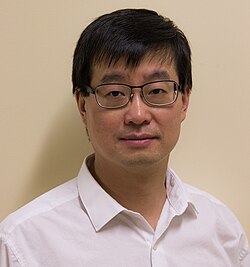 Jun Ye (叶军)合作论文数Department of Physics, College of Arts and Sciences, University of Colorado Boulder;Joint Institute for Laboratory Astrophysics, University of Colorado Boulder;National Institute of Standards and Technology, U.S. Dept. of Commerce9Swallows Matthew合作论文数6Martin M. Boyd合作论文数6
 Alexey Gorshkov合作论文数Joint Quantum Institute;Department of Physics, University of Maryland;Institute for Advanced Computer Studies, University of Maryland;Quantum Measurement Division, National Institute of Standards and Technology3T. Legero合作论文数2X. Zhang合作论文数2Wei Zhang合作论文数2
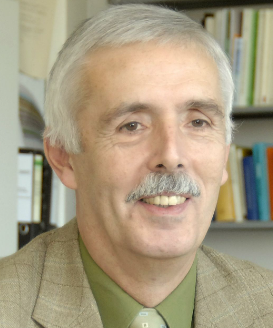 Fritz Riehle合作论文数Physikalisch-Technische Bundesanstalt;Leibniz University Hannover2
 John Hall合作论文数Joint Institute for Laboratory Astrophysics;Physics Department, University of Colorado;National Institute of Standards and Technology2
 Martin E. Fermann合作论文数IMRA America, Inc.2
 Uwe Sterr合作论文数Physikalisch-Technische Bundesanstalt, Phys.-Technische Bundesanstalt2Javier Von Stecher合作论文数Department of Physics;University of Colorado;Department of Physics, University of Colorado2
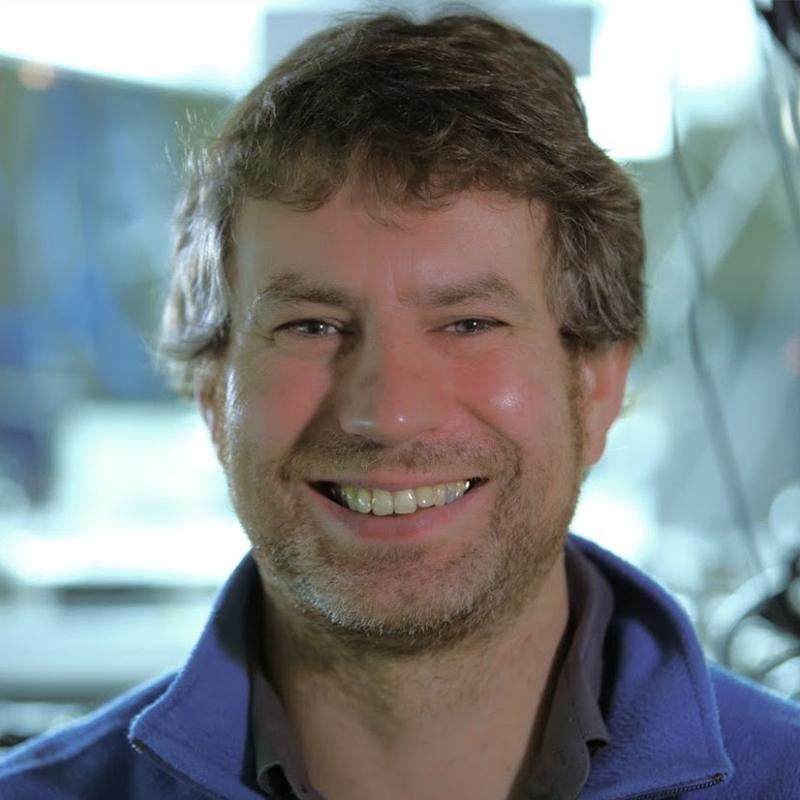 Ingmar Hartl合作论文数Deutsches Elektronen-Synchrotron2
 Axel Ruehl合作论文数Deutsch Elektronen Synchrotron DESY2A. Cingoez合作论文数1Y. Nishi合作论文数1C. V. Kraus合作论文数1G. Quéméner合作论文数1M. Planas合作论文数1M. S. Wagner合作论文数1S. P. Moeller合作论文数1
 Yves Petremand合作论文数1J Buck合作论文数1J. Grünert合作论文数1T. Maxwell合作论文数1G Hartmann合作论文数Univ Kassel, Inst Phys, Heinrich Plett Str 40, D-34132 Kassel, Germany1
 G. Mileti合作论文数1J. Liu合作论文数1
 Reinhard Kienberger合作论文数Department of Physics, Technische Universitat Munchen1Helml Wolfram合作论文数1
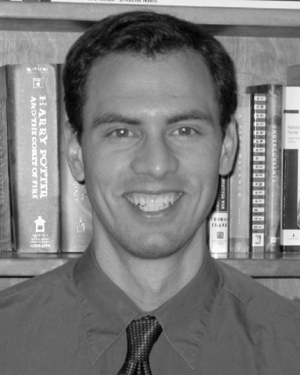 John R Jameson合作论文数Adesto Technol. Corp.;c;Adesto Technol. Corp.1Callaghan, L.合作论文数1
 Markus Aspelmeyer合作论文数Faculty of Physics, University of Vienna;Institute for Quantum Optics and Quantum Information Vienna, Austrian Academy of Sciences1
 Robinson John合作论文数1Yost D C合作论文数1Lindsay Sonderhouse合作论文数1
 Nick Hartmann合作论文数SLAC National Accelerator Laboratory, LCLS;c;SLAC National Accelerator Laboratory, LCLS1
 Alberto Lutman合作论文数SLAC National Accelerator Laboratory, Stanford University1Oelker E合作论文数LIGO - Massachusetts Institute of Technology1Yige Lin合作论文数1
 Thomas Feurer合作论文数Institute of Applied Physics, University of Bern1
 Robinson Joseph合作论文数Natl Accelerator Lab, SLAC1Hagemann C合作论文数1
 Markus Ilchen合作论文数Deutsches Elektronen-Synchrotron DESY1Heider Rupert合作论文数1




