Yttrium hydride serves as a neutron moderator material that enables compact, high temperature nuclear reactors. However, in order to accurately design and simulate a nuclear system relying upon yttrium hydride, the fundamental nuclear data of yttrium hydride must be well understood. Thermal neutron scattering law (TSL) evaluations represent an important aspect of nuclear data as thermal scattering can drastically alter the neutron multiplication factor of a system. Therefore, to support evaluation and validation of thermal neutron scattering for yttrium hydride, researchers at Rensselaer Polytechnic Institute (RPI) performed total thermal neutron cross section measurements for YH 1.68 and YH 1.85 over the energy range of 0.0005 - 3 eV. These measurements represent the first total cross section measurements for yttrium hydride that encompass the entire thermal region. Comparisons were made against the ENDF-B/VIII.0, Zerkle & Holmes and Oak Ridge National Laboratory TSL evaluations, where generally good agreement was found.
In order to test the performance of new neutron thermal scattering law (TSL) evaluations it is desirable to have experimental data that is highly sensitive to the TSL and provides high fidelity information on the energy dependent performance of TSL evaluations. Three relevant experiments are discussed including: accurate thermal total cross section measurements, thermal neutron die-away experiments, and neutron leakage experiments. The experimental setups and results are reviewed and examples provided for some moderators including polyethylene, Plexiglas, and YHx. For the experiments preformed thus far, there is generally good agreement between the measured total cross section and simulations using current TSL evaluations, however in certain energy ranges differences were observed. Similarly neutron die-away and leakage measurements for samples at room temperature are in good agreement with data computed from TSLs, however leakage measurements for polyethylene at 29K show discrepancies with TSL evaluations.
Hydrogen dense polymers, specifically polyethylene, polystyrene, and Plexiglas, have served as neutron moderator and reflector materials in hundreds of separate critical benchmark experiments because of their low cost and abundance of hydrogen. In order to accurately model and simulate these critical benchmarks, the thermal scattering law (TSL) evaluation that governs how neutrons will thermalize must be well understood and rigorously validated. To support this validation, researchers at Rensselaer Polytechnic Institute performed total neutron cross section measurements for high-density polyethylene & polystyrene over the energy range 0.0005–20 eV and for Plexiglas G & Plexiglas G-UVT over the energy range 0.0005–3 eV. Comparisons were made between the measured cross section and that predicted by the ENDF/B-VIII.0 and Oak Ridge National Laboratory/European Spallation Source/Rensselaer Polytechnic Institute TSL evaluations for polyethylene, Plexiglas, and polystyrene, as available. These experiments represent the first total neutron cross section measurements for polystyrene.
 Goran Arbanas合作论文数Oak Ridge National Laboratory35Jesse Brown合作论文数25
 Kemal Ramić合作论文数Gaerttner LINAC Ctr, Rensselaer Polytech Inst21
 Yaron Danon合作论文数Department of Mechanical Aerospace and Nuclear Engineering, Rensselaer Polytechnic Institute21Dominik Fritz合作论文数13Jordan McDonnell合作论文数12
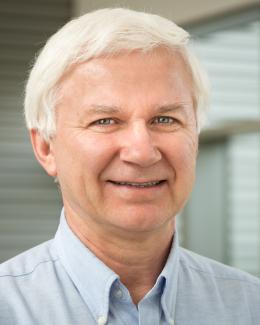 Alexander I Kolesnikov合作论文数Neutron Scattering Division, Oak Ridge National Laboratory;Institute for Integrated Cell-Material Sciences, Kyoto University12
 m t pigni合作论文数Oak Ridge National Lab. (ORNL), Oak Ridge, TN (United States)11Yongqiang Cheng合作论文数11Luke Daemen合作论文数Neutron Sciences Directorate, Oak Ridge National Laboratory11
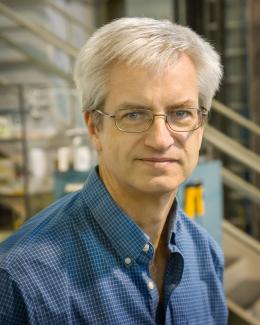 Douglas L Abernathy合作论文数Spectroscopy Section, Neutron Scattering Division, Oak Ridge National Laboratory9Dorothea Wiarda合作论文数9
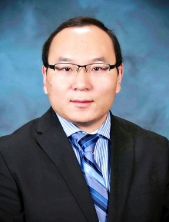 Xunxiang Hu合作论文数8Anibal Cuesta合作论文数7
 Andrew Holcomb合作论文数Oak Ridge National Lab. (ORNL), Oak Ridge, TN (United States)7
 K. H. Guber合作论文数7Peter Brain合作论文数5
 Katelyn Cook合作论文数5Benjamin Wang合作论文数5Sukhjinder Singh合作论文数5Adam Ney合作论文数4
 Daniel Siefman合作论文数Nucl Critical Safety Div, Lawrence Livermore Natl Lab4
 Anibal J Ramirez Cuesta合作论文数Oak Ridge National Laboratory4B. Marshall合作论文数3Luiz Leal合作论文数3Michael Rapp合作论文数3
 Michael Zerkle合作论文数3
 M. B. Stone合作论文数Oak Ridge Natl Lab, Quantum Condensed Matter Div, Oak Ridge, TN 37831 USA3Li Liu合作论文数3
 Boyoung Jeon合作论文数Institute of Health and Environment, Seoul National University3
 Matthew B Stone合作论文数Neutron Scattering Division, Oak Ridge National Laboratory3
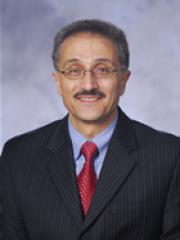 Farzad Rahnema合作论文数Georgia Institute of Technology3Timothy Trumbull合作论文数2Emily Liu合作论文数2J. Holmes合作论文数2t h trumbull合作论文数2
 A. M. Daskalakis合作论文数Gaerttner LINAC Center, Rensselaer Polytechnic Institute2
 William A. Wieselquist合作论文数2Barry Devin P合作论文数2M. J. Rapp合作论文数2
 Kang Seog Kim合作论文数Korea Atomic Energy Research Institute2Brian Ade合作论文数1L. M. Petrie合作论文数1Travis Greene合作论文数1Joseph R. Burns合作论文数1R. Gallagher合作论文数1d p heinrichs合作论文数1David Ames合作论文数1




