Addressing impacts on human health from climate change will require engaged communities capable of co-creating actionable science. This is particularly the case in Jordan, one of the most vulnerable countries to climate change with a hot, dry climate and rapidly growing population. A key demographic for building capacity to address climate-health challenges is youth. To engage Jordanian youth in developing knowledge and skills related to climate-health science, the Global Center on Climate Change and Water Energy Food Health Systems (GC3WEFH) implemented The DataJam, an annual project-based data science learning program and competition developed in the United States. The GC3WEFH enrolled 87 students from 21 schools in The DataJam Jordan. Fifty-four students in teams of three completed 18 projects over a 2-year period while 33 students started The DataJam but did not complete a project. The aim of the intervention was to build data science capacity to address issues at the intersection of climate and health. To explore the outcomes of this intervention, we used the Consolidated Framework for Implementation Research to identify the primary determinants. This analysis revealed that the complexity of The DataJam and the work infrastructure of the implementation impacted communication across the intervention, which shaped the topics students researched and their use of data science. Importantly, the DataJam increased both the confidence and interest of students in engaging in climate change related challenges facing their communities. Therefore, The DataJam is a positive example of engaging youth through the international translation of a STEM learning program.
Computational thinking is a way of reasoning about the world in terms of data. This mindset channels number crunching toward an ambition to discover knowledge through logic, models and simulations. Here we show how computational cognitive science can be used to reconstruct and analyse the structure of computational thinking mindsets (forma mentis in Latin) through complex networks. As a case study, we investigate cognitive networks tied to key concepts of computational thinking provided by: (i) 159 high school students enrolled in a science curriculum and (ii) 59 researchers in complex systems and simulations. Researchers' reconstructed forma mentis highlighted a positive mindset about scientific modelling, semantically framing data and simulations as ways of discovering nature. Students correctly identified different aspects of logic reasoning but perceived "computation" as a distressing, anxiety-eliciting task, framed with math jargon and lacking links to real-world discovery. Students' mindsets around "data", "model" and "simulations" critically revealed no awareness of numerical modelling as a way for understanding the world. Our findings provide evidence of a crippled computational thinking mindset in students, who acquire mathematical skills that are not channelled toward real-world discovery through coding. This unlinked knowledge ends up being perceived as distressing number-crunching expertise with no relevant outcome. The virtuous mindset of researchers reported here indicates that computational thinking can be restored by training students specifically in coding, modelling and simulations in relation to discovering nature. Our approach opens innovative ways for quantifying computational thinking and enhancing its development through mindset reconstruction.
This paper follows NetSci High, a decade-long initiative to inspire teams of teenage researchers to develop, execute and disseminate original research in network science. The project introduced high school students to the computer-based analysis of networks, and instilled in the participants the habits of mind to deepen inquiry in connected systems and statistics, and to sustain interest in continuing to study and pursue careers in fields involving network analysis. Goals of NetSci High ranged from proximal learning outcomes (e.g., increasing high school student competencies in computing and improving student attitudes toward computing) to highly distal (e.g., preparing students for 21st century science), with an emphasis on doing real-world research into relevant and ambiguous problems through technologically-infused and highly collaborative projects and defending them to a clear (and sometimes potentially intimidating) audience. The cognitive goals of the project covered broad areas including analyzing, synthesizing, and visualizing quantitative data, and understanding modeling and network statistics. Attitudinal outcomes included improving attitudes toward the statistical study of networks, self-efficacy, and a sense of agency for continuing to pursue further involvement in college studies and careers.
A project called Mobile City Science (MCS), a partnership between the University of Washington, New York Hall of Science, the Digital Youth Network, and two high schools, leverages young people’s proclivity for on-the-move digital engagement to re-place and mobilize learning through public, community settings that youth identify as being relevant to their daily lives. At its most fundamental level, MCS teaches and engages young people in new forms of data science, especially around collecting and interpreting spatial, real-time, and dynamic data. This digital STEAM curriculum has more ambitious objectives. Ultimately, the research team hopes this work disrupts an absence of youth input in neighborhood and community development processes, using the power of spatial data and visualizations that young people create about their communities as a ticket for entry into ongoing policy and planning conversations. As youth will be the ones making critical decisions about these same communities in due time, it is prudent to apprentice them into valued forms of civic participation. Moreover, as long as youth ideas go unheard, leaders and adult community stakeholders have an incomplete picture — and are missing potentially transformative solutions — regarding current issues. This example of a digital STEAM curriculum for youth to engage in data science with mobile technologies provides ideas for teachers to make instruction more public-facing.
Current education systems continue to be based predominantly on reductionist mindsets in which teaching is conducted on a subject-by-subject and module-by-module basis. Improvement is planned and implemented using a linear, causal, independent-problem-to-solution approach, with very little consideration given to the interconnectedness among the various components and ideas involved in these complex knowledge systems. This situation presents a need to think about how understanding these connections can improve the learning of complex ideas. It also constitutes an opportunity to provide a multifaceted intervention for communities of learners, which would, itself, be a coordinated network of collaborative efforts to develop a network literate populace. In this paper, the authors describe addressing these issues through a multi-phase, multi-year approach to professional development with formal and informal educators; the outcomes of this work; and next steps.
Our educational systems must prepare students for an increasingly interconnected future, and teachers require equipping with modern tools, such as network science, to achieve this. We held a Networks in Classroom Education (NiCE) workshop for a group of 21 K-12 teachers with various disciplinary backgrounds. The explicit aim of this was to introduce them to concepts in network science, show them how these concepts can be utilized in the classroom, and empower them to develop resources, in the form of lesson plans, for themselves and the wider community. Here we detail the nature of the workshop and present its outcomes - including an innovative set of publicly available lesson plans. We discuss the future for successful integration of network science in K-12 education, and the importance of inspiring and enabling our teachers.
This short article presents a summary of the NetSciEd (Network Science and Education) initiative that aims to address the need for curricula, resources, accessible materials, and tools for introducing K-12 students and the general public to the concept of networks, a crucial framework in understanding complexity. NetSciEd activities include (1) the NetSci High educational outreach program (since 2010), which connects high school students and their teachers with regional university research labs and provides them with the opportunity to work on network science research projects; (2) the NetSciEd symposium series (since 2012), which brings network science researchers and educators together to discuss how network science can help and be integrated into formal and informal education; and (3) the Network Literacy: Essential Concepts and Core Ideas booklet (since 2014), which was created collaboratively and subsequently translated into 18 languages by an extensive group of network science researchers and educators worldwide.
Networks have become increasingly relevant to everyday life as human society has become increasingly connected. Attaining a basic understanding of networks has thus become a necessary form of literacy for people (and for youths in particular). At the NetSci 2014 conference, we initiated a year-long process to develop an educational resource that concisely summarizes essential concepts about networks that can be used by anyone of school age or older. The process involved several brainstorming sessions on one key question: "What should every person living in the 21st century know about networks by the time he/she finishes secondary education?" Different sessions reached diverse participants, which included professional researchers in network science, educators, and high-school students. The generated ideas were connected by the students to construct a concept network. We examined community structure in the concept network to group ideas into a set of important themes, which we refined through discussion into seven essential concepts. The students played a major role in this development process by providing insights and perspectives that were often unrecognized by researchers and educators. The final result, "Network Literacy: Essential Concepts and Core Ideas", is now available as a booklet in several different languages from http://tinyurl.com/networkliteracy .
The purpose of this study was to investigate the attitudes of uni versity-level research scientists toward educational and outreach activities that aim to help the general public understand more about their scientific endeavors. Interviews, observations, and survey results from 12 university research scientists, their colleagues, students, and the individuals they interact with were used to gather data for this study. Results indicate that although some research scientists value their education and outreach activities, many encounter obstacles to such efforts. These obstacles include a lack of support or resources at their home institution, the effort required to balance their research careers and outreach activities, and needing to find ways to connect with a nonscientific audience. A generational gap was also observed, with younger, nontenured research scientists tending to be more eager to involve themselves in such activities than their older, tenured colleagues.
We present NetSci High, our NSF-funded educational outreach program that connects high school students who are underrepresented in STEM (Science Technology Engineering and Mathematics), and their teachers, with regional university research labs and provides them with the opportunity to work with researchers and graduate students on team-based, year-long network science research projects, culminating in a formal presentation at a network science conference. This short paper reports the content and materials that we have developed to date, including lesson plans and tools for introducing high school students and teachers to network science; empirical evaluation data on the effect of participation on students' motivation and interest in pursuing STEM careers; the application of professional development materials for teachers that are intended to encourage them to use network science concepts in their lesson plans and curriculum; promoting district-level interest and engagement; best practices gained from our experiences; and the future goals for this project and its subsequent outgrowth.
Education Networks are an important way for educational institutions to develop and share knowledge and resources. Yet, methods of evaluating what makes them successful have been elusive. Here, we present a network analysis of the New England Ocean Science Education Collaborative (NEOSEC), a successful ocean science literacy collaborative and an effort to reveal characteristics inherent to successful education networks. NEOSEC is a network comprised of more than 40 institutions, with a stated goal of advancing ocean literacy in the region. Analysis of the evolution of this network suggests that network analysis adds an important dimension to evaluating education networks, and that successful educational networks may exhibit network characteristics that could aid in understanding their functionality and sustainability. Preliminary results also indicate that as these networks increase in complexity they may exhibit characteristics of other kinds of complex networks.
 Stephen Miles Uzzo合作论文数New York Hall of Science11
 Lori Sheetz合作论文数6
 Hiroki Sayama (佐山弘樹)合作论文数Department of Systems Science and Industrial Engineering, State University of New York6
 Louise Hicks合作论文数2Emma K Towlson合作论文数Massachusetts Institute of Technology2Christine Kirkpatrick合作论文数San Diego Supercomp Ctr2
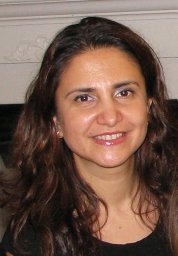 Ralucca Gera合作论文数Naval Postgraduate School2Russell Faux合作论文数1
 Adam Bell合作论文数1Pam DiBona合作论文数1
 Erin Riesland合作论文数1
 Jeremiah H. Kalir合作论文数University of Colorado Denver1
 Deborah Silvis合作论文数Instructional Technology and Learning Sciences, Utah State University1
 Anastasiya Kapuza合作论文数Inst Educ, HSE Univ1Wren Thompson合作论文数New York Hall of Science, Corona, NY, USA1lisa taylor合作论文数1
 Judy L. Cameron合作论文数Department of Neuroscience, University of Pittsburgh1
 Massimo Stella合作论文数Inst Complex Syst Simulat, Univ Southampton1
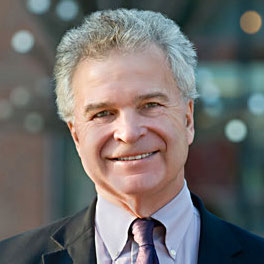 H. Eugene Stanley合作论文数Department of Physics, College of Engineering, Boston University1
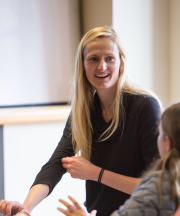 Katie Headrick Taylor合作论文数College of Education, University of Washington1
 Labriole Michaela合作论文数Center for Neuroscience, University of California, Davis1Brian M. Mccann合作论文数1
 Mason A. Porter合作论文数Department of Mathematics, University of California Los Angeles;Department of Sociology, University of California Los Angeles;External Professor, Santa Fe Institute1
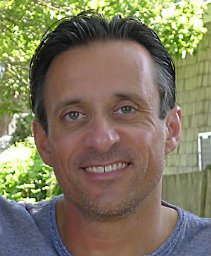 Paul Trunfio合作论文数Center for Polymer Studies, Boston University1
 Wael Al-Delaimy合作论文数Division of Global Health, Department of Family Medicine and Public Health, Herbert Wertheim School of Public Health & Human Longevity Science, Universty of California San Diego1
 Alan J. Daly合作论文数University of California Education Studies1
 Kimberly Bruch合作论文数1
 Yi-Hwa Liou合作论文数1




