Searches for hidden sector particles by the CMS Collaboration in proton-proton collisions recorded at the Large Hadron Collider at a centre-of-mass energy of root s = 13 TeV are outlined. In particular, searches for low-mass dimuon resonances targeting dark photons and for semivisible jets aiming at discovering dark QCD are presented, followed by a recent search for dark Higgs bosons decaying to two W particles. No evidence for hidden sector particles has been found, but limits have been set.
The fascinating story of a major discovery at CERN is outlined. The bold decision to convert its most powerful, and only recently inaugurated, proton accelerator to a proton-antiproton collider led to the discovery of the W and Z bosons -- mediators of the weak interaction -- in a record time, at the experiments UA1 and UA2. The decisive roles of Carlo Rubbia and Simon van der Meer, who received the 1984 Nobel Prize for physics, are underlined.
At the horizon 2050, our physics textbooks will have to be rewritten. The contributions in the first chapter of the EPS Grand Challenges explain why. Will all or many of the open questions be answered at the horizon 2050? There is justified hope, supported by a plethora of theoretical developments and experimental facilities on Earth and in space. Will new questions arise? You bet.
AbstractUsing a data sample of $$\sqrt{s}=13\,\text {TeV}$$ s = 13 TeV proton-proton collisions collected by the CMS experiment at the LHC in 2017 and 2018 with an integrated luminosity of $$103\text {~fb}^{-1}$$ 103 fb - 1 , the $$\text {B}^{0}_{\mathrm{s}} \rightarrow \uppsi (\text {2S})\text {K}_\mathrm{S}^{0}$$ B s 0 → ψ ( 2S ) K S 0 and $$\text {B}^{0} \rightarrow \uppsi (\text {2S})\text {K}_\mathrm{S}^{0} \uppi ^+\uppi ^-$$ B 0 → ψ ( 2S ) K S 0 π + π - decays are observed with significances exceeding 5 standard deviations. The resulting branching fraction ratios, measured for the first time, correspond to $${\mathcal {B}}(\text {B}^{0}_{\mathrm{s}} \rightarrow \uppsi (\text {2S})K_\mathrm{S}^{0})/{\mathcal {B}}(\text {B}^{0}\rightarrow \uppsi (\text {2S})K_\mathrm{S}^{0}) = (3.33 \pm 0.69 (\text {stat})\, \pm 0.11\,(\text {syst}) \pm 0.34\,(f_{\mathrm{s}}/f_{\mathrm{d}})) \times 10^{-2}$$ B ( B s 0 → ψ ( 2S ) K S 0 ) / B ( B 0 → ψ ( 2S ) K S 0 ) = ( 3.33 ± 0.69 ( stat ) ± 0.11 ( syst ) ± 0.34 ( f s / f d ) ) × 10 - 2 and $${\mathcal {B}}(\text {B}^{0} \rightarrow \uppsi (\text {2S})\text {K}_\mathrm{S}^{0} \uppi ^{+} \uppi ^{-})/ {\mathcal {B}}(\text {B}^{0} \rightarrow \uppsi (\text {2S})\text {K}^{0}_{\mathrm{S}}) = 0.480 \pm 0.013\,(\text {stat}) \pm 0.032\,(\text {syst})$$ B ( B 0 → ψ ( 2S ) K S 0 π + π - ) / B ( B 0 → ψ ( 2S ) K S 0 ) = 0.480 ± 0.013 ( stat ) ± 0.032 ( syst ) , where the last uncertainty in the first ratio is related to the uncertainty in the ratio of production cross sections of $$\hbox {B}^{0}_{\mathrm{s}}$$ B s 0 and $$\hbox {B}^{0}$$ B 0 mesons, $$f_{\mathrm{s}}/f_{\mathrm{d}}$$ f s / f d .
The B$^0_s$ and B$^+$ production yields are measured in PbPb collisions at a center-of-mass energy per nucleon pair of 5.02 TeV. The data sample, collected with the CMS detector at the LHC, corresponds to an integrated luminosity of 1.7 nb$^{-1}$. The mesons are reconstructed in the exclusive decay channels B$^0_s$ $\to$ J/$\psi(\mu^+\mu^-)\phi($K$^+$K$^-)$ and B$^+$ $\to$ J/$\psi(\mu^+\mu^-)$K$^+$, in the transverse momentum range 7-50 GeV/c and absolute rapidity 0-2.4. The B$^0_s$ meson is observed with a statistical significance in excess of five standard deviations for the first time in nucleus-nucleus collisions. The measurements are performed as functions of the transverse momentum of the B mesons and of the PbPb collision centrality. The ratio of production yields of B$^0_s$ and B$^+$ is measured and compared to theoretical models that include quark recombination effects.
The second-order Fourier coefficients (v2) characterizing the azimuthal distributions of Image 3 and Image 4 mesons produced in PbPb collisions at sNN=5.02TeV are studied. The Image 5 mesons are reconstructed in their dimuon decay channel, as measured by the CMS detector. The collected data set corresponds to an integrated luminosity of 1.7nb−1. The scalar product method is used to extract the v2 coefficients of the azimuthal distributions. Results are reported for the rapidity range |y|<2.4, in the transverse momentum interval 0
Measurements of differential and double-differential cross sections of top quark pair ($\text{t}\overline{\text{t}}$) production are presented in the lepton+jets channels with a single electron or muon and jets in the final state. The analysis combines for the first time signatures of top quarks with low transverse momentum $p_\text{T}$, where the top quark decay products can be identified as separated jets and isolated leptons, and with high $p_\text{T}$, where the decay products are collimated and overlap. The measurements are based on proton-proton collision data at $\sqrt{s} = $ 13 TeV collected by the CMS experiment at the LHC, corresponding to an integrated luminosity of 137 fb$^{-1}$. The cross sections are presented at the parton and particle levels, where the latter minimizes extrapolations based on theoretical assumptions. Most of the measured differential cross sections are well described by standard model predictions with the exception of some double-differential distributions. The inclusive $\text{t}\overline{\text{t}}$ production cross section is measured to be $\sigma_{\text{t}\overline{\text{t}}} = $ 791 $\pm$ 25 pb, which constitutes the most precise measurement in the lepton+jets channel to date.
 W. Waltenberger合作论文数Univ Vienna237
 Marko Dragicevic合作论文数Institut für Hochenergiephysik der OeAW, Wien, Austria237
 F. Blekman合作论文数Vrije Universiteit Brussel235C. Vander Velde合作论文数IIHE, ULB-VUB, CP230, Boulevard de la Plaine, 1050 Brussels, Belgium235
 Thomas Bergauer合作论文数Department for Detector Development, Institute of High Energy Physics, Austrian Academy of Sciences234
 Armen Tumasyan合作论文数A.I. Alikhanyan's National Science Laboratory, Yerevan Physics Institute231
 Christophe Delaere合作论文数Centre for Cosmology, Particle Physics and Phenomenology, Institut de Recherche en Mathématique et Physique, Université Catholique de Louvain;Ecole de Physique, Faculté des Sciences, Université Catholique de Louvain230M. Jeitler合作论文数Institut für Hochenergiephysik der OeAW, Wien, Austria227
 Michael Tytgat合作论文数High-Energy Physics Research Centre, Vrije Universiteit Brussel;Universiteit Gent226
 Xavier Janssen合作论文数Universiteit Antwerpen221
 Luiz Mundim合作论文数Instituto de Física Armando Dias Tavares, Universidade do Estado do Rio de Janeiro;Departamento de Física Nuclear e Altas Energias, Universidade do Estado do Rio de Janeiro214
 Nikola Godinovic合作论文数Department of Physics, University of Split213
 Andre Sznajder合作论文数Instituto de Fisica, Departamento de Física Nuclear e Altas Energias, Universidade do Estado do Rio de Janeiro212R. Hadjiiska合作论文数212
 Fotios Ptochos合作论文数Department of Physics, University of Cyprus211
 Peicho Petkov合作论文数Department of Atomic Physics, Faculty of Physics, University of Sofia211
 Barbara Clerbaux合作论文数Faculté des Sciences, Université Libre de Bruxelles211
 Jorgen D'Hondt合作论文数210
 Panos Razis合作论文数209
 Robert Schöfbeck合作论文数Institute of High Energy Physics, Austrian Academy of Sciences209
 Vasile Mihai Ghete合作论文数Institute of High Energy Physics, Austrian Academy of Sciences208
 Stefaan Tavernier合作论文数Petsys Electronics SA206
 Sandro Fonseca De Souza合作论文数Department of Nuclear and High Energy Physics, Universidade do Estado do Rio de Janeiro206
 Giacomo Bruno合作论文数Institut de Recherche en Mathématique et Physique, Ecole de Physique, Faculté des Sciences, Université Catholique de Louvain;Centre for Cosmology, Particle Physics and Phenomenology, Université Catholique de Louvain203
 Efe Yazgan合作论文数National Taiwan University;European Organization for Nuclear Research202
 B. Pavlov合作论文数University of Sofia200N. Van Remortel合作论文数Universiteit Antwerpen, Antwerpen, Belgium200D Liko合作论文数199
 Gerrit Van Onsem合作论文数Vrije Universiteit Brussel198
 Andrea Giammanco合作论文数Université Catholique de Louvain197M. Krammer合作论文数196I Mikulec合作论文数195Janos Ero合作论文数195Dilson de Jesus Damião合作论文数Departamento de Física Nuclear e Altas Energias, Universidade do Estado do Rio de Janeiro194
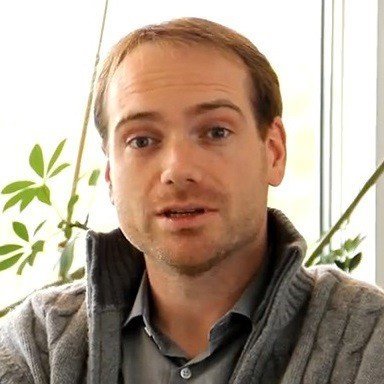 Steven Lowette合作论文数Interuniversity Institute for High Energies, Vrije Universiteit Brussel194
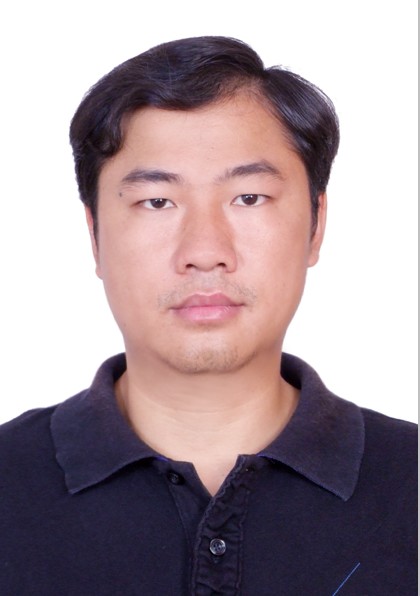 Junquan Tao (陶军全)合作论文数Institute of High Energy Physics, Chinese Academy of Sciences;University of Chinese Academy of Sciences193
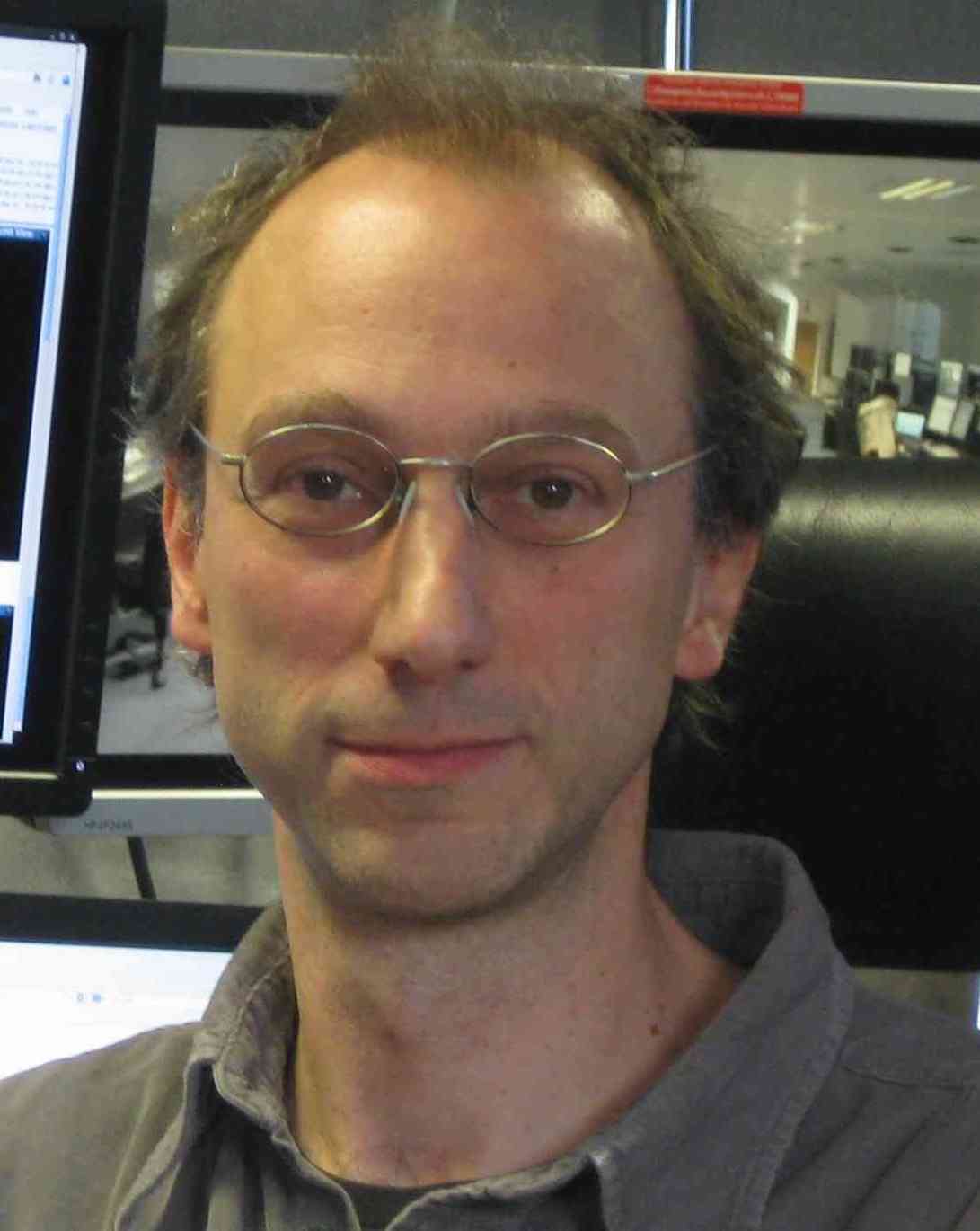 Laurent Favart合作论文数Faculté des Sciences, Université Libre de Bruxelles193J. Tuominiemi合作论文数192
 Vincent Lemaitre合作论文数Faculty of Science, Université catholique de Louvain;Institut De Recherche En Mathématique Et Physique, Université Catholique De Louvain, Université catholique de Louvain192
 Plamen Stoyanov Iaydjiev合作论文数Institute of Nuclear Research and Nuclear Energy, Bulgarian Academy of Sciences191
 Matthew Herndon合作论文数Department of Physics, University of Wisconsin–Madison189D. Denegri合作论文数188G. Sultanov合作论文数186Rudolf Frühwirth合作论文数185Carlos Avila合作论文数184
 Veikko Karimäki合作论文数Department of Physics, Faculty of Science, University of Helsinki;Helsinki Institute of Physics, University of Helsinki183H. Reithler合作论文数182
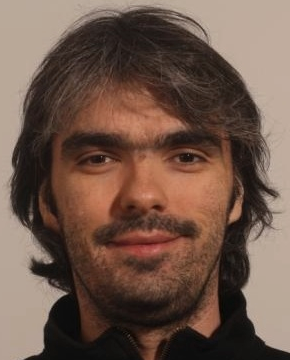 Antonio Vilela Pereira合作论文数Instituto de Física, Departamento de Física Nuclear e Altas Energias,;Universidade do Estado do Rio de Janeiro182
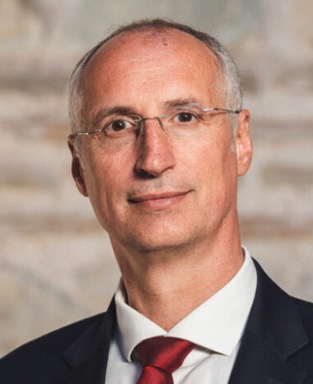 Ivica Puljak合作论文数City of Split181




