InGaN lasers in the blue and green wavelength range have opened a wide variety of applications in the past years, which all require unique properties of the employed laser chips. In this paper we will show design and process developments for various InGaN laser designs, each optimized for its specific application. For applications which are very sensitive to energy consumption, like mobile AR/VR devices, we investigated InGaN laser chips with resonator lengths as short as 50 μm. To achieve this, we developed an etched facets technology to overcome the challenges of scribing and breaking for facet generation for such short resonator lengths. The etched facets of these devices are coated on-wafer with a dielectric mirror to achieve the desired reflectivity. Depending on the reflectivity chosen, these devices show ultra-low threshold currents below 3mA and output powers above 50 mW. Combined with a flip-chip design with both contacts on one side, such chips can be integrated into silicon wafer-based beam combiners to generate RBG PIC chips for VR/AR laser projection. For high power applications, we will present data of laser bars. Bars emitting at 430 nm achieved 100 W of continuouswave output power per bar and conversion efficiencies of 50%. Together with bars emitting at 450 nm, that were shown in previous publications, wavelength-multiplexing for materials-processing systems can be realized yielding blue laser light sources with multiple kilowatts of output powers.
Industrial material processing like cutting or welding of metals is rather energy efficient using direct diode or diode pumped solid state lasers. However, many applications cannot be addressed by established infrared laser technology due to fundamental material properties of the workpiece: For example materials like copper or gold have too low absorption in the near infrared wavelength range to be processed efficiently by use of existing high power laser systems. The huge interest to enable high power kW systems with more suitable wavelengths in the blue spectral range triggered the German funded research project 'BLAULAS': Therein the feasibility and capability of CW operating high power laser bars based on the GaN material system was investigated by Osram and Laserline. High performance bars were enabled by defeating fundamental challenges like material quality as well as the chip processes, both of which differ significantly from well-known IR laser bars. The research samples were assembled on actively cooled heat sinks with hard solder technology. For the first time an output power of 98W per bar at 60A drive current was achieved. Conversion efficiency as high as 46% at 50W output power was demonstrated.
The mechanisms of injuries to the tibiofibular syndesmosis include isolated rupture and rupture in combination with ankle fractures. Current concepts of surgical treatment are fixation using bioabsorbable screws, syndesmotic stapling, syndesmotic hooks, and the widely used screw fixation. Postoperative care utilises passive motion of the ankle joint either with or without axial weight-bearing. The aim of our investigation was to quantify the motion of the mortise during axial load. Therefore, photoelastic tests, on the one hand, and biomechanical tests of cadaveric specimens, on the other, using axial loads of up to 2,000 N were used. Our photoelastic investigations showed force distribution through the screw into the cranial and caudal parts of the distal fibula. Biomechanical testing showed a progressive dehiscence in both ruptured and fixated specimens up to 2.89 (ruptured) and 2.42 mm (despite screw). Our findings strongly suggest a concept of partial weight-bearing at most to support regeneration of scar tissue and to prevent the appearance of instability in the ankle joint.
Background: The goal of this study is carry out a biomechanical evaluation of the stability of a bilateral, polyaxial, fixed-angle 2.7 mm plate system specifically designed for use on the patella. The results of this approach are then compared to the two currently most commonly used surgical techniques for patella fractures: modified anterior tension wiring with K-wires and cannulated lag screws with anterior tension wiring.Methods: A transient biomechanical analysis determining material failure points of all osteosyntheses were conducted on 21 identical left polyurethane foam patellae, which were osteotomized horizontally. Evaluated were load (N), displacement (mm) and run-time (s) as well as elastic modulus (MPa), tensile strength (MPa) and strain at failure (%).Findings: With a maximum load capacity of 2396 (SD 492) N, the fixed-angle plate proved to be significantly stronger than the cannulated lag screws with anterior tension wiring (1015 (SD 246) N) and the modified anterior tension wiring (625 (SD 84.9) N). The fixed-angle plate displayed significantly greater stiffness and lower fracture gap dehiscence than the other osteosyntheses. Additionally, osteosynthesis deformation was found to be lower for the fixed-angle plate.Interpretation: A bilateral fixed-angle plate was the most rigid and stable osteosynthesis for horizontal patella fractures with the least amount of fracture gap dehiscence. Further biomechanical trials performed under cycling loading with fresh cadaver specimen should be done to figure out if a fixed-angle plate may be an alternative in the surgical treatment of patella fractures. (C) 2009 Elsevier Ltd. All rights reserved.
Red, green and blue semiconductor lasers are of great interest for full color laser projection. Mobile applications require low power consumption and very small laser devices. InGaN lasers are the best choice for the blue color in applications with output power requirements below 100mW: (1) they have much higher wall plug efficiencies than conventional blue frequency doubled diode pumped solid state lasers and (2) they are more compact than semiconductor IR lasers with subsequent second harmonic generation. We present blue InGaN lasers with high efficiency at a power consumption of several 100mW. Excellent epitaxial quality permits low internal losses. Threshold current densities and slope efficiencies are further optimized by improving the facet coating. The laser threshold current is as low as 25mA and the slope efficiency reaches 1W/A. We present a wall plug efficiency of 15% at output power levels of 60mW.
We present measurements on an aperiodic device-specific longitudinal-mode pattern in InGaN laser diodes. The characteristic shape of this pattern occurs only if the laser is driven slightly above threshold; in addition, it tunes with temperature at exactly the same rate as the cavity modes. By careful selection of the collection optics and averaging ten rapid scans over 15 min in a high-resolution Fourier transform spectrometer, we could exclude possible explanations like beating of mode families, self-pulsation, or external reflections. A naive simulation of the longitudinal modes profiting from their individual "gain profile" along the cavity suggests that we see the signature of quantum-well thickness fluctuations.
Near- and far-field dynamics of edge-emitting (Al,In)GaN laser diodes are measured simultaneously with a 100 nm spatial and a 5 ns temporal resolution using a scanning near-field microscope. We reconstruct the phase distribution at the laser diode facet. Beam steering and near-field mode dynamics are interpreted in terms of thermal and carrier induced change of refractive index in the waveguide.
Time-resolved measurements of the spectrum and the far field of InGaN-based laser diodes show lateral-mode changes and gradual tilting of the far field on a microsecond time scale. Numerical simulations based on a microscopic theory are in good agreement with the measurements. The observed effects are attributed to lateral carrier diffusion in combination with thermal lensing.
In this work. we investigate the absorption distribution in InGaN-on-sapphire based light-emitting diodes (LEDs). We observed by photothermal deflection spectroscopy (PDS) and transmission measurements that most of the absorption takes place in a thin layer close to the sapphire substrate. The lateral intensity distribution in the surrounding of LED emitters is determined by the photocurrent measurement method. Based on the observations by PDS and transmission, a model for the lateral light propagation in the LED-wafer containing also a thin, strong absorbing layer is presented. It is shown that interference of the mode profiles with the absorbing layer leads to different modal absorption which explains the non-exponential intensity distribution. We are able to estimate the optical thickness of the absorbing layer to be 75 nm. Furthermore. this layer can be identified as one of the major loss mechanism in InGaN-LEDs grown on sapphire substrate due to the large absorption coefficient which is effective at the emission wavelength.
Different experimental and simulation techniques aiming at a better understanding of lateral mode absorption in light-emitting diodes (LEDs) are presented in this paper. A measurement of transmitted power versus propagation distance allows us to derive the absorption losses of LED layer structures at their emission wavelength. Two models for the observed intensity distribution are presented: one is based on scattering, whereas the other relies on selective absorption. Both models were applied to InGaN-on-sapphire-based LED structures. Material absorption losses of 7 cm/sup -1/ for the scattering model and 4 cm/sup -1/ for the absorbing-layer model were obtained. Furthermore, these values are independent of the emission wavelength of the layer structure in the 403-433-nm range. The losses are most likely caused by a thin highly absorbing layer at the interface to the substrate. In a second step, interference of the modal field profile with the absorbing layer can be used to determine its thickness (d=75 nm) and its absorption coefficient (/spl alpha/ /spl ap/ 3900 cm/sup -1/). This method has also been tested and applied on AlGaInP-based layer structures emitting at 650 nm. In this case, the intensity decay of /spl alpha/=30 cm/sup -1/ includes a contribution from the absorbing substrate.
The absorption of lateral guided modes in light emitting diodes is determined by the photocurrent measurement method. A theory for waveguide dispersion is presented and extended by ray-tracing simulations. Absorption coefficients of InGaN-on-sapphire and AlGaInP-based structures is evaluated by comparison with simulation curves. For nitride-based samples with emission wavelengths of 415 nm and 441 nm an absorption of 7 cm(-1) is obtained. It is found that scattering is present in the buffer layer and influences the lateral intensity distribution. The investigated AlGaInP-based sample exhibits an absorption of alpha = 30 cm(-1) at 650 nm emission wavelength.
Under pulsed operation, time dependent spectral and electro-optical measurements on GaN-based laser diodes show a considerable red shift in the emission wavelength and a decreasing voltage drop across the device. These changes appear on a rather short time scale in the microsecond range. During a 3.7 microsecond long pulse, a temperature increase of approximately 50 K is obtained using different experimental methods. This value agrees well with numerical simulations based on the thermal properties of the material. (© 2003 WILEY-VCH Verlag GmbH & Co. KGaA, Weinheim)
Different substrates for gallium nitride growth are discussed. The commercially relevant substrates, silicon carbide and sapphire, and the two most promising alternatives, silicon and gallium nitride, are compared in terms of suitability for epitaxial processes and in their effects on devices. An estimation on future market success is given.
 Alfred Lell合作论文数6
 S.-S. Schad合作论文数6
 F. Habel合作论文数5
 Daniel Hofstetter合作论文数Neuchâtel Institute of Physics5M. Scherer合作论文数4Stephan Miller合作论文数4
 Volker Harle合作论文数4
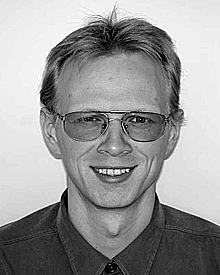 Matthias Seyboth合作论文数4
 Peter Unger合作论文数Institut für Funktionelle Nanosysteme, Universität Ulm3B. Neubert合作论文数3
 Andreas Weimar合作论文数3k streubel合作论文数2A. Balck合作论文数2M. Baumann合作论文数2H. Koenig合作论文数2V. Krause合作论文数2F. Scholz合作论文数2W. Schmid合作论文数2G. Bruederl合作论文数2
 Christian Karnutsch合作论文数Light Technology Institute;University of Karlsruhe;Light Technology Institute, University of Karlsruhe2
 Ferdinand Scholz合作论文数GaN-Group, Institute of Functional Nanosystems, Ulm University2
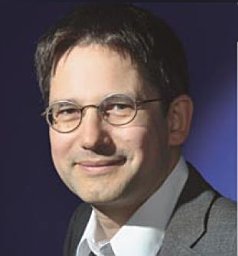 Ulrich Schwarz合作论文数Institute of Physics, Chemnitz University of Technology2
 Uwe Strauss合作论文数2D. Queren合作论文数1E. Skouras合作论文数1U. Thelen合作论文数1Chow, W.W.合作论文数1
 Muhammad Ali合作论文数1Bruno Jentzsch合作论文数Univ Kassel1M Hakimi合作论文数1B. Stojetz合作论文数1
 Damir Borovac合作论文数Lehigh University1
 M. Behringer合作论文数1Gerhard, S.合作论文数1D. Dini合作论文数1
 Frank Stefan Tautz合作论文数Peter Grünberg Institut, Forschungszentrum Jülich GmbH1Jurgen Koebke合作论文数1
 Werner Wegscheider合作论文数Laboratory for Solid State Physics, Department of Physics, ETH Zurich1
 Matthias Peter合作论文数1
 M. de Wild合作论文数1Adrian Avramescu合作论文数1
 Joachim Windolf合作论文数Heinrich-Heine-Universität Düsseldorf;Klinik für Unfall- und Handchirurgie am Universitätsklinikum Düsseldorf1Markus Kamp合作论文数1Veit Schwegler合作论文数1L. P. Müller合作论文数1Pascal Jungbluth合作论文数1Sven Thelen合作论文数1Nikolaus Gmeinwieser合作论文数1
 Michael Furitsch合作论文数1




