There is contradictory data about the consequences of isoflavone (ISO) exposure during development of female organisms. Potential impacts on tumor risk, reproduction but also altered susceptibility to develop metabolic diseases like obesity or diabetes are discussed. The aim of this study was to investigate in depth how ISO exposure during adolescence modulates the estrogen sensitivity of the uterus, vagina and visceral body fat.
There is contradictory data about the consequences of isoflavone (ISO) exposure during development of male and female organisms. Potential impacts on tumor risk, reproduction but also altered susceptibility for metabolic diseases like obesity or diabetes are discussed. An important finding in studies with females was that estrogen sensitivity evidently is affected by lifelong ISO intake. The aim of this study was to investigate whether ISOs also impact on androgen responsiveness in males. Hence we conducted a dose response experiment in male rats starting exposure in utero, maintaining it through adolescence into adulthood. Until sacrification at PND 96 rats received a diet enriched with an ISO extract in different concentrations [IDD (ISO depleted diet); IRD50 (ISO rich diet; 50 mg ISO/kg food); IRD400 (400 mg ISO/kg food)].
The effects of isoflavones (ISO) on the female breast are controversially discussed. There is evidence that ISO-rich Asian diet decreases the incidence of hormone related cancer and postmenopausal disorders. Whether chronic exposure to ISO over all critical periods of mammary gland development modulates its estrogen sensitivity was tested in a dose-dependent animal study. From in utero stages, through weaning and adolescence into adulthood female Wistar rats were exposed to different diets enriched with varying concentrations of the soy extract Novasoy650®: ISO-depleted diet (IDD), IRD50 (50 mg ISO/kg diet) and IRD400 (400 mg ISO/kg diet). Rats were ovariectomized (OVX) at day 80 and treated with 4 µg/kg BW E2 or vehicle for 3 days after 2 weeks of hormonal decline. Intact animals served as control. In a second trial adult female rats were exposed to IRD400 directly after OVX for 2 weeks and then treated with E2 as described above.
 Blei Tina合作论文数3
 Christoph Plass合作论文数Department of Epigenomics and Cancer Risk Factors, German Cancer Research Center3Patrick Diel合作论文数3
 Yassen Assenov合作论文数3Shirley Soukup合作论文数3Leane Lehmann合作论文数3
 Gunter Vollmer合作论文数Institut für Zoologie, Technische Universität Dresden3
 Sabine E Kulling合作论文数3O. Witt合作论文数2D. Weichenhan合作论文数2M. Luebbert合作论文数2J. Schott合作论文数2D. Li合作论文数2H. Bierhoff合作论文数2Alzbeta Ressnerova合作论文数2
 Michael Daskalakis合作论文数Bern Univ Hosp, Univ Bern2
 Brocks David合作论文数Division of Epigenomics and Cancer Risk Factors, DKFZ2
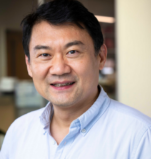 Ting Wang合作论文数Department of Genetics, Washington University School of Medicine in St. Louis;Center for Genome Sciences and Systems Biology, Washington University2Ina Oehme合作论文数2Georg Stoecklin合作论文数2
 Christopher Oakes合作论文数Department of Biomedical Informatics, College of Medicine, The Ohio State University;Department of Internal Medicine, College of Medicine, The Ohio State University2Till Milde合作论文数1K. Rippe合作论文数1
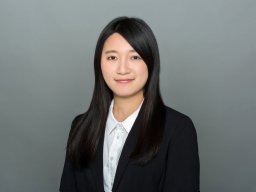 Yi-Hua Sheng合作论文数Ernest Mario School of Pharmacy, The State University of New Jersey1R. Simon合作论文数1Monika Helf合作论文数1B. Zhang合作论文数1
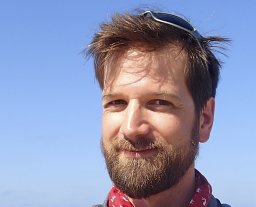 Jan-Philipp Mallm合作论文数Div Chromatin Networks, German Canc Res Ctr1
 Feuerbach Lars合作论文数Max Planck Institute, Saarbrücken, Germany. lfbach@mpi-inf.mpg.de1
 Anne Kurrat合作论文数1Lipka Daniel B合作论文数a Division of Epigenomics and Cancer Risk Factors, German Cancer Research Center (DKFZ);Heidelberg;a Division of Epigenomics and Cancer Risk Factors, German Cancer Research Center (DKFZ)1
 Essers Marieke A G合作论文数Heidelberg Institute for Stem Cell Technology and Experimental Medicine (HI-STEM gGmbH), 69120 Heidelberg, Germany;Junior Research Group Stress-induced Activation of Hematopoietic Stem Cells, DKFZ;Heidelberg Institute for Stem Cell Technology and Experimental Medicine (HI-STEM gGmbH), 69120 Heidelberg, Germany; Junior Research Group Stress-induced Activation of Hematopoietic Stem Cells, Division of Stem Cells and Cancer, DKFZ, 69120 Heidelberg, Germany.1
 Simon Haas合作论文数Heidelberg Institute for Stem Cell Technology and Experimental Medicine (HI-STEM gGmbH), 69120 Heidelberg, Germany;Junior Research Group Stress-induced Activation of Hematopoietic Stem Cells, DKFZ;Heidelberg Institute for Stem Cell Technology and Experimental Medicine (HI-STEM gGmbH), 69120 Heidelberg, Germany; Junior Research Group Stress-induced Activation of Hematopoietic Stem Cells, Division of Stem Cells and Cancer, DKFZ, 69120 Heidelberg, Germany.1
 Olga Bogatyrova合作论文数1
 Charles Imbusch合作论文数1
 Benedikt Brors合作论文数Div Appl Bioinformat, German Canc Res Ctr1
 Manfred Jung合作论文数Institute of Pharmaceutical Sciences, Faculty of Chemistry and Pharmacy, Albert-Ludwigs-Universität Freiburg1Anders Lindroth合作论文数Department of Physical Geography and Ecosystem Science, Faculty of Science, Lund University;Centre for Environmental and Climate Science, Faculty of Science, Lund University1Douglas Lipka合作论文数1
 Guido Sauter合作论文数Zentrum für Diagnostik, Universitätsklinikum Hamburg-Eppendorf;Ambulanzzentrum des UKE GmbH, Universitätsklinikum Hamburg-Eppendorf;Fachbereich Pathologie und Gynpathologie, Universitätsklinikum Hamburg-Eppendorf1




