Understanding the strengthening of small-scale materials and structures is one of the key issues in nanotechnology. Many theories exist, each addressing a small domain of experimentally observed size effects and invoking different mechanisms. Measurements of the stress–strain relationship of nickel foils in flexure by the load–unload method provide strikingly accurate data from the elastic region through the yield point and to high plastic strain. The data show that the effects on the rate of work-hardening due to crystallite size and sample size interact, whereas in existing theories they should be independent. Existing theories cannot be complete. The symmetry of the dependence of flow stress on grain size and structure size suggests that strengthening effects are due to a finite strained volume, however this is delimited.
The strength of a material increases either when the structure is small or when only a small volume is under strain. The term 'size effect' covers generically all the ways in which this may happen. One manifestation of the size effect is in epitaxial growth of strained layers, for which critical thickness theory provides a satisfactory explanation. We have extended critical thickness theory to the bending and torsion of foils and wires of soft metals, and have built instruments for measuring the stress-strain curves of soft metal foils with unprecedented accuracy to test this. Experimentally, semiconductor epitaxial growth provides structures with tailored internal strain distributions, ideal for helping to understand these problems. We have found that internal strains can reduce the strength of a superlattice by a factor of two at room temperature, but on the other hand can increase the strength by a factor of a hundred at high temperature. Nanoindentation on the semiconductor structures also reveals the size effect very clearly. All of these effects are clearly related to the finite volume required for the initiation of plasticity. New data is crucial to reconciling the various theoretical approaches to these problems. (C) 2007 WILEY-VCH Verlag GmbH & Co. KGaA, Weinheim.
The effect of increasing planting unit size and stabilizing sediment was examined for two seagrass planting methods at Carnac Island, Western Australia in 1993. The staple method (sprigs) was used to transplant Amphibolis griffithii (J. M. Black) den Hartog and the plug method was used to transplant A. griffithii and Posidonia sinuosa Cambridge and Kuo. Transplant size was varied by increasing the number of rhizomes incorporated into a staple and increasing the diameter of plugs. Planting units were transplanted into bare sand, back into the original donor seagrass bed, or into a meadow of Heterozostera tasmanica , which is an important colonizing species. Sprigs of A. griffithii were extracted from a monospecific meadow; tied into bundles of 1, 2, 5, and 10 rhizomes; and planted into unvegetated areas. Half the units were surrounded by plastic mesh and the remainder were unmeshed. All treatments were lost within 99 days after transplanting, and although larger bundles survived better than smaller ones, no significant differences could be attributed to the effects of mesh or sprig size. Plugs of P. sinuosa and A. griffithii were extracted from monospecific meadows using polyvinyl chloride pipe of three diameters, 5, 10, and 15 cm, and planted into unvegetated areas nearby. Half the units were surrounded by plastic mesh and the remainder were unmeshed. Posidonia sinuosa plugs were also placed within a meadow of H. tasmanica (Martens ex Aschers.) den Hartog. Only 60% of A. griffithii plug sizes survived 350 days after transplanting back into the donor bed; however, survival of transplants at unvegetated areas varied considerably, and analysis of variance indicated a significant two-way interaction between treatment and plug size. Transplants survived better when meshed (90% survived) and survival improved with increasing plug size. Posidonia sinuosa transplants survived poorly (no plugs survived beyond 220 days in bare or meshed treatments) regardless of size. Survival of 10- and 15-cm plugs was markedly better than the 5-cm plugs in vegetated areas, including the H. tasmanica meadow. The use of large seagrass plugs may be appropriate for transplantation in high-energy wave environments.
The molecular configuration and long-range order at the surface of spin-cast poly(ethylene terephthalate) (PET) thin films spin-cast onto an etched Si(001) surface during crystallisation from the amorphous state has been investigated for a range of annealing temperatures. The structural ordering at the surface of the film was compared directly with that in the bulk of the film by employing grazing-incidence X-ray diffraction with incident angles below, at and above the critical angle for total reflection. Ordering was observed at the surface at annealing temperatures of 80–95°C, lower than that in the bulk, involving local parallel alignment of chains in the plane of the surface with the benzene rings oriented preferentially with the ring plane parallel to the surface. Comparison with atomic-force microscopy images enables the fold configuration at the surface to be deduced.
Direct slurry analysis by FI ICP-AES has been tested on seven iron-containing and five zinc-containing minerals. Results indicate that the method can be applied for traces and majors in a range of different materials.
 Tingting Zhu合作论文数2
 Xiaodong Hou合作论文数2K. M. Y. P'Ng合作论文数2W. L. Schmidt合作论文数2
 Andy Bushby合作论文数School of Engineering and Materials Science, Queen Mary University of London2
 David Dunstan合作论文数School of Physical and Chemical Sciences, Queen Mary University of London2P.C. Jukes合作论文数1M. Durell合作论文数1ral jones合作论文数Univ Sheffield, Dept Phys & Astron, Sheffield S3 7RH, S Yorkshire, England1
 J. Emyr Macdonald合作论文数Sch Phys & Astron, Cardiff Univ1
 Bruno Ehrler合作论文数Centre for Materials Research, University of London1
 Eric I. Paling合作论文数Marine and Freshwater Research Laboratory, Murdoch University1Ian C Hamilton合作论文数1A. Wehrum合作论文数1
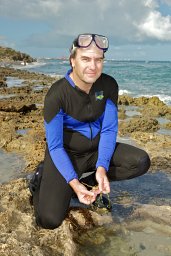 Mike van Keulen合作论文数Marine and Freshwater Research Laboratory, Murdoch University1D. Trolley合作论文数1




