In order to clarify the origin of the cocrystallization and phase segregation phenomena observed for a series of polyethylene blends between the deuterated and hydrogeneous species, time-resolved Fourier-transform infrared spectroscopic measurements have been performed under isothermal crystallization conditions by controlling the degree of undercooling or the temperature jump depth from the molten state to the isothermal crystallization temperature. A closeness of the crystallization rate between the pure D and H species was found to correlate well with the occurrence of the cocrystallization phenomenon. In the cocrystallizable blend sample, the crystallization rates of the D and H components were found to be almost the same and accelerated remarkably when compared with those of the individual pure components. The mechanism of cocrystallization and phase segregation was discussed from the viewpoints of both thermodynamics and kinetics.
Liquid-crystalline benzoic acid derivatives, 4-pentylbenzoic acid and 4-hexylbenzoic acid, have been examined by infrared spectroscopy. These benzoic acids show nematic phases. In the crystalline state, only the dimeric form is observed. However, the monomeric non-hydrogen-bonded benzoic acid appears once the temperature reaches the crystal-nematic transition (melting) point. The fraction of the monomeric moiety increases upon heating and an abrupt increase is observed at the isotropization temperature. These results suggest that the stability of the hydrogen bonds is not simply a function of the temperature, but greatly depends on the molecular orientation.
Abstract The stability of a hydrogen-bonded complex built through inter-molecular hydrogen bonding between carboxylic acid and pyridine fragments has been examined using infrared spectroscopy. Infrared spectra as a function of temperature have been recorded for the 1:1 complex of 4-hexyloxybenzoic acid and trans-4-propoxy-4′-stilbazole from the crystalline state to the isotropic state. A dependence of the stability of the hydrogen bond on molecular orientation is observed clearly in the infrared spectra. The spectra also suggest that the hydrogen bond is an unionized type with a double minimum potential energy.
Mesogenic structures have been built from 2:1 (molar ratio) mixtures of 4-alkoxy- or 4-alkylbenzoic acid (nOBA or nBA; n is the carbon number of the alkyl chain) and 4,4'-bipyridine (BPy)or trans-1,2-bis(4-pyridyl)ethylene(BPyE). In these complexes, the benzoic acid derivative functions as an H-bond donor and the bipyridyl compound operates as a bifunctional H-bond acceptor. Well-defined structures of the mesogenic complexes are formed from independent and different molecules. These complexes exhibit stable mesophases that are not observed for each of the single components. For example, a 2:1 (molar ratio) complex prepared from 4-ethoxybenzoic acid (20BA) and 4,4'-bipyridine (BPy) shows a nematic phase from 150 to 169-degrees-C while both individual compounds are nonmesogenic. The liquid-crystalline phase is induced by the hydrogen bonding. The 2:1 complex of 4-butoxybenzoic acid (40BA) and bis(4-pyridyl)ethylene (BPyE) exhibits a smectic A phase (146-168-degrees-C) and a nematic phase trans-1,2-(168-177-degrees-C). The smectic phase displayed by the complex is not observed for 4OBA and BPyE. The isotropization temperature is increased by the complexation through the H bonds. The effect of the terminal alkyl chain length on thermal properties has been examined for the 2:1 H-bonded complexes of a series of the benzoic acids and the bipyridyl compound. The type of mesophases obtained is affected by the alkyl chain length. Infrared study suggests that the hydrogen bond is an un-ionic type with a double minimum potential energy and its stability is greatly dependent on the order of the molecular complexes. Phase diagrams have been obtained for the binary mixture of H-bond donor and acceptor moieties. The isotropization temperature curves show significant positive deviations because of the intermolecular H-bond interaction.
 Fumiko Kaneuchi合作论文数4
 Takashi Kato (加藤隆史)合作论文数Department of Chemistry and Biotechnology, School of Engineering, The University of Tokyo;Shinshu University3Toshiyuki Uryu合作论文数3
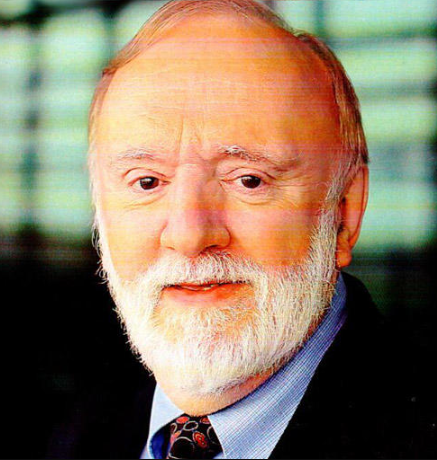 Jean M. J. Fréchet合作论文数Department of Chemical and Biomolecular Engineering, College of Chemistry, University of California, Berkeley;King Abdullah University of Science and Technology2A. Fujishima合作论文数1
 Paul Wilson合作论文数Department of Chemistry, Faculty of Science, Engineering and Medicine, The University of Warwick1Kohji Tashiro (田代孝二)合作论文数Tashiro Laboratory, Toyota Technological Institute1
 Richard S. Stein合作论文数Department of Polymer Science and Engineering, College of Natural Sciences, University of Massachusetts Amherst1Masamichi Kobayashi合作论文数Department of Macromolecular Science, Faculty of Science, Osaka University1Masaaki Izuchi合作论文数1




