Hard x-rays are widely used for plasma diagnosis, nondestructive inspection, and high-resolution x-ray imaging. A typical x-ray source is a tabletop micro-focus x-ray source. Here, a bifocal photon sieve (PS) with the smallest diameter of 59.6 nm was designed and fabricated by electron-beam lithography to focus hard x-rays on variable-resolution array images. An imaging experiment at 8.39 keV demonstrates that the designed and fabricated PS has two different focal lengths. The numerous pinholes that can be optimized provide richer degrees of freedom to realize considerably more functionalities. A multi-focal PS provides the possibility of splitting x-rays and further extends interferometry from visible light to hard x-rays.
We report the first measurement of laser-wakefield-accelerated electron beam transverse emittance, as well as its evolution, performed via a novel, non-destructive, and single-shot technique employing spectroscopic imaging of x-rays produced by inverse-Compton scattering.
The recent combination of ultra-intense lasers and laser-accelerated electron beams is enabling the development of a new generation of compact x-ray light sources, the coherence of which depends directly on electron beam emittance. Although the emittance of accelerated electron beams can be low, it can grow due to the effects of space charge during free-space propagation. Direct experimental measurement of this important property is complicated by micron-scale beam sizes, and the presence of intense fields at the location where space charge acts. Reported here is a novel, non-destructive, single-shot method that overcame this problem. It employed an intense laser probe pulse, and spectroscopic imaging of the inverse-Compton scattered x-rays, allowing measurement of an ultra-low value for the normalized transverse emittance, 0.15 (±0.06) π mm mrad, as well as study of its subsequent growth upon exiting the accelerator. The technique and results are critical for designing multi-stage laser-wakefield accelerators, and generating high-brightness, spatially coherent x-rays.
在传统四位置寻北方案基础上,针对光纤陀螺寻北仪提出了一种新的转位方案,将传统水平面内相互垂直转动寻北改为Ψ型转动寻北.相对传统转位方案,不仅保持了原有的优势,同时能够减少25%的转位时间.在不同情况下,通过巧妙的公式构造和选取对应位置下的陀螺输出,能有效避免光纤陀螺死区造成的寻北误差,并且可以提高某些特定角度范围的寻北精度.
We report experimental results on the production and characterization of asymmetric and composite supersonic gas flows, created by merging independently controllable flows from multiple nozzles. We demonstrate that the spatial profiles are adjustable over a large range of parameters, including gas density, density gradient, and atomic composition. The profiles were precisely characterized using three-dimensional tomography. The creation and measurement of complex gas flows is relevant to numerous applications, ranging from laser-produced plasmas to rocket thrusters.
The maximum achievable photon energy of compact, conventional, Compton-scattering X-ray sources is currently limited by the maximum permissible field gradient of conventional electron accelerators1,2. An alternative compact Compton X-ray source architecture with no such limitation is based instead on a high-field-gradient laser–wakefield accelerator3,4,5,6. In this case, a single high-power (100 TW) laser system generates intense laser pulses, which are used for both electron acceleration and scattering. Although such all-laser-based sources have been demonstrated to be bright and energetic in proof-of-principle experiments7,8,9,10, to date they have lacked several important distinguishing characteristics of conventional Compton sources. We now report the experimental demonstration of all-laser-driven Compton X-rays that are both quasi-monoenergetic (∼50% full-width at half-maximum) and tunable (∼70 keV to >1 MeV). These performance improvements are highly beneficial for several important X-ray radiological applications2,11,12,13,14,15. Quasi-monoenergetic Compton X-rays tunable in the range ∼70 keV to >1 MeV are generated in a laser-driven scheme.
We report the generation of MeV x rays using an undulator and accelerator that are both driven by the same 100-terawatt laser system. The laser pulse driving the accelerator and the scattering laser pulse are independently optimized to generate a high energy electron beam (>200 MeV) and maximize the output x-ray brightness. The total x-ray photon number was measured to be ∼1×10(7), the source size was 5 μm, and the beam divergence angle was ∼10 mrad. The x-ray photon energy, peaked at 1 MeV (reaching up to 4 MeV), exceeds the thresholds of fundamental nuclear processes (e.g., pair production and photodisintegration).
A bright, narrow band MeV γ-ray source-ray source based on Thomson scattering using a laser-driven electron accelerator has been developed. We discuss the application of this source for selective activation in regions of high particle (neutron or gamma) production, with minimal absorption in intervening materials.
This paper reports our experimental research on the laser contrast ratio enhancement in the XL-III (eXtreme Light III) facility with the technology of cross-polarized wave (XPW) generation. Based on the theoretical analysis of the relerant principles, we introduced an XPW filter in the facility, which was upgraded with a double chirped pulse amplification (DCPA) scheme. Under optimized system design and alignment, we measured the conversion efficiency from fundamental wave to cross-polarized wave to be higher than 10%. The pre-pulses in nanosecond scale were deeply suppressed and the contrast ratio in picosecond scale was enhanced from 10(-5) to 10(-7). Our results show the XPW generation provides an effective technique to improve the contrast ratio of a Chirped-pulse amplification laser system, which is a key issue in ultrahigh intensity laser-matter researches.
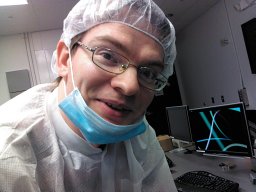 Grigory Golovin合作论文数11
 Shouyuan Chen合作论文数Dept . Computer Science and Technology11
 Sudeep Banerjee合作论文数Bradley Shadwick & Donald Umstadter Dept. of Phys. & Astron., Nebraska Univ.;c;Bradley Shadwick & Donald Umstadter Dept. of Phys. & Astron., Nebraska Univ.10
 Donald Umstadter合作论文数Department of Physics and Astronomy, College of Arts and Sciences, University of Nebraska–Lincoln10
 Nathan Powers合作论文数5Isaac Ghebregziabher合作论文数Physics and Astronomy Department, University of Delaware5J Zhang合作论文数4
 Sara A. Pozzi合作论文数Department of Nuclear Engineering and Radiological Sciences, University of Michigan;College of Engineering, University of Michigan4
 Shaun Clarke合作论文数Nuclear Engineering and Radiological Sciences, College of Engineering, University of Michigan-Ann Arbor3Chad Petersen合作论文数2
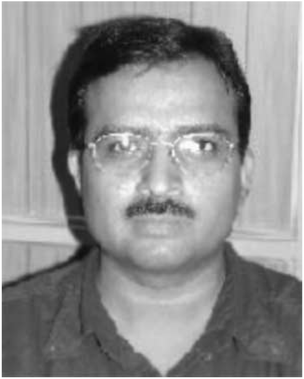 Anand Moorti合作论文数Raja Ramanna Centre for Advanced Technology2
 Wilson, Matthew D.合作论文数STFC Rutherford Appleton Laboratory, Harwell Campus, Didcot, OX11 0QX, UK2Ping Zhang合作论文数2Jared Mills合作论文数2
 Haden Daniel合作论文数2
 Zhiyi Wei (魏志义)合作论文数Key Lab for Optical Physics, Institute of Physics, Chinese Academy of Sciences2
 Zhaohua Wang (王兆华)合作论文数Beijing National Laboratory For Condensed Matter Physics, Institute of Physics, Chinese Academy of Sciences;University of Chinese Academy of Sciences2
 Jianmin Zhang (张建民)合作论文数Department of Hydraulic Engineering, School of Civil Engineering, Tsinghua University2Hugon J. Karwowski合作论文数Department of Physics and Astronomy, College of Arts & Sciences, University of North Carolina at Chapel Hill2Paul Seller合作论文数2
 Matthew C. Veale合作论文数Rutherford Appleton Laboratory, Science and Technology Facilities Council2Chakra Maharjan合作论文数J. R. Macdonald Laboratory;Physics Department;Kansas State University2j silano合作论文数1kevin j brown合作论文数1Huiya Liu合作论文数1li weichang合作论文数1D Haden合作论文数1
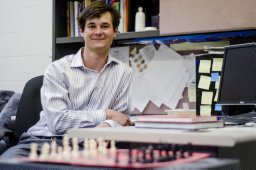 Colton Fruhling合作论文数Elmore Family Sch Elect & Comp Engn, Purdue Univ1
 Wenchao Yan (闫文超)合作论文数School of Physics and Astronomy, Shanghai Jiao Tong University1
 Nathaniel J. Cunningham合作论文数1
 Feng Liu (刘峰)合作论文数Key Laboratory for Laser Plasmas, Ministry of Educatlon, School of Physics and Astronomy, Shanghai Jiao Tong University1Jun Zhang合作论文数1
 Liu Feng合作论文数⊥College of Engineering, University of Georgia1Cunningham N合作论文数1
 Jack Silano合作论文数1Zeng Ming (曾明)合作论文数1Junyong Zhang (张军勇)合作论文数Shanghai Institute of Optics and Fine Mechanics, Chinese Academy of Sciences;University of Chinese Academy of Sciences1
 Baozhen Zhao (赵宝珍)合作论文数第二军医大学第一附属医院超声科1
 Changwei Li (李常伟)合作论文数Nanjing Institute of Astronomical Optics & Technology, Chinese Academy of Sciences;University of Chinese Academy of Sciences1




