The amount of hydrogen stored in the Earth's interior is important for a range of issues, including the volatile incorporation during the Earth formation and the co-evolution of the atmosphere, the hydrosphere, and the interior. Recent experiments found titanium bearing epsilon-FeOOH in a hydrous basaltic system at 12-19 GPa and 1300 K. Pyrite-type FeOOH was found to be stable at pressures higher than 80 GPa. These discoveries suggest possible hydrogen storage in the mantle transition zone and in the mantle below 1800 km depths, respectively. However, it remains uncertain how the potential deep hydrogen storage can be connected to the shallower storage. Here, we report a new hydrous iron oxide (eta-Fe12O18+x/2Hx, x approximate to 2) stable at pressures between the stability fields of the s- and the pyrite-type FeOOH. Our experiment also shows that the new eta phase can exist together with the major lower mantle minerals including bridgmanite and periclase, making it an important hydrogen-bearing phase in the Earth's deep interior. Because of its limited H2O storage capacity, which is less than 1/6 of the storage capacity of the pyrite-type phase and the epsilon phase, the stability of the eta phase would result in H2O loss during water transport in the mid mantle and therefore limit the amount of H2O potentially stored in the Fe-O-H system of the lower mantle. The large channel in the crystal structure of the eta phase could provide potential storage sites for other volatile elements in the deep mantle. (C) 2020 Elsevier B.V. All rights reserved.
riors of Uranus and Neptune. S.-H. Shim1, C. Nisr1, T. Kim2, Y. Lee2, H. Chen1, K. Leinenweber1, A. V. G. Chizmeshya1, S. Speziale3, V. B. Prakapenka4, C. Prescher4, S.Tkachev4, Y. Meng5, and Z. Liu6, 1Arizona State University, Tempe, Arizona, USA (shdshim@asu.edu), 2Yonsei University, Seoul, Korea. 3Helmholtz-Zentrum Potsdam, Germany, 4University of Chicago, Chicago, IL, USA, 5rgonne National Lab, IL, USA, 6George Washington University, Washington, DC, USA.
Significance Astrophysical observations have shown that Neptune-like planets are common in our galaxy (sub-Neptunes). Some of these exoplanets are believed to be covered with a thick H 2 O layer (100 to 1,000 km in thickness) above the rocky mantle (“waterworlds”). In order to understand the inner workings of the water-rich planets, it is important to understand the state of matter incorporating ice- and rock-forming elements at high-pressure and high-temperature conditions. Here, we report experimental evidence that silica and water have significant mutual solubility at high pressure and high temperature, forming new phases containing substantial amounts of both H and Si in oxide forms. Therefore, the boundary between rock and ice layers may be “fuzzy” at the deep interiors of water-rich planets.
9 Recent studies have shown that mineral end-member phases (δ-AlOOH phase, phase H and 10 stishovite) with rutile-type or modified rutile-type crystal structures and solid solutions between 11 them in the MgO-Al2O3-SiO2 system can store large amounts of water and can be stable at high 12 pressures and high temperatures relevant to the Earth’s lower mantle. The Al-H charge coupled 13 substitution (Si " Al+ H) has been proposed to explain the storage capacity found in some 14 of these phases. However, the amount of H found in some recent examples does not match the 15 expected value if such substitution is dominant, and it is difficult to explain the larger water 16 storage in stishovite with such a mechanism alone. An octahedral version of the hydrogarnet-like 17 substitution (Si " 4H) has been proposed to explain the incorporation of protons in Al-free, 18 water-rich stishovite. Yet, the high-pressure structural behavior of OH in this phase has not yet 19 been measured. In this study, we report high-pressure Raman spectroscopy measurements on Al20
This paper describes a methodology for characterizing the orientation and position of grains of an orthorhombic polycrystalline material at high pressure in a diamond anvil cell. The applicability and resolution of the method are validated by simulations and tested on an experimental data set collected on MgSiO 3 post-perovskite at 135 GPa. In the simulations, ∼95% of the grains can be indexed successfully with ∼80% of the peaks assigned. The best theoretical average resolutions in grain orientation and position are 0.02° and 1.4 µm, respectively. The indexing of experimental data leads to 159 grains of post-perovskite with 30% of the diffraction peaks assigned with a 0.2–0.4° resolution in grain orientation. The resolution in grain location is not sufficient for in situ analysis of spatial relationships at high pressure. The grain orientations are well resolved and sufficient for following processes such as plastic deformation or phase transformation. The paper also explores the effect of the indexing parameters and of experimental constraints such as rotation range and step on the validity of the results, setting a basis for optimized experiments.
Recent astrophysical observations have shown that some stars have sufficiently high carbon-to-oxygen ratios and may host planets composed mainly of carbides instead of silicates and oxides. From the low thermal expansion of SiC at 1bar, it can be inferred that the buoyancy force of thermal anomalies is much lower in the carbide planets than in the silicate planets. However, numerous studies have shown that high pressure in planetary interiors can fundamentally change the physical properties of materials. We have measured the pressure-volume-temperature relations of two SiC polymorphs (3C and 6H) at pressures and temperatures up to 80GPa and 1900K and 65GPa and 1920K, respectively, in the laser-heated diamond anvil cell combined with synchrotron X-ray diffraction. We found no evidence of dissociations of these phases up to our maximum pressure condition, supporting the stability of SiC to 1900km depth in Earth-size Si-rich carbide planets. Following the Mie-Gruneisen approach, we fit our data to the Birch-Murnaghan or the Vinet equations of state combined with the Debye approach. We found that the pressure-induced change in the thermal expansion parameter of SiC is much smaller than that of Mg silicate perovskite (bridgmanite). Our new measurements suggest that the thermal buoyancy force may be stronger in the deep interiors of Si-rich carbide exoplanets than in the Earth-like silicate planets.
Although it has previously been considered to be essentially anhydrous, Al-free stishovite can contain up to similar to 1.3 wt % of H2O, perhaps through the direct substitution (Si4+ -> 4H(+)), according to recent studies. Yet the stability of such substitution and its impact on the properties of silica and rutile-structured hydrous phases (such as delta-AlOOH and phase H) are unknown at the conditions of the deeper mantle. We have synthesized hydrous and anhydrous Al-free stishovite samples at 723 K and 9 GPa, and 1473 K and 10 GPa, respectively. Synchrotron X-ray diffraction patterns show that the unit cell volume of hydrous stishovite is 1.3% greater than that of anhydrous stishovite at 1 bar, suggesting significant incorporation of OH in the crystal structure (3.2 +/- 0.5 wt % H2O). At 300 K, we found a lower and broader transition pressure from rutile type to CaCl2 type (28-42 GPa) in hydrous dense silica. We also found that hydrous silica polymorphs are more compressible than their anhydrous counterparts. After the phase transition, the unit cell volume of hydrous silica becomes the same as that of anhydrous silica, showing that the proton incorporation through a direct substitution can be further stabilized at high pressure. The lower pressure transition and the pressure stabilization of the proton incorporation in silica would provide ways to transport and store water in the lower mantle in silica-rich heterogeneities, such as subducted oceanic crust.
Recent studies have shown that mineral end-member phases (delta-AlOOH phase, phase H, and stishovite) with rutile-type or modified rutile-type crystal structures and solid solutions between them in the MgO-Al2O3-SiO2 system can store large amounts of water and can be stable at high pressures and high temperatures relevant to the Earth's lower mantle. The Al-H charge-coupled substitution (Si4+ -> Al3+ + H+) has been proposed to explain the storage capacity found in some of these phases. However, the amount of H+ found in some recent examples does not match the expected value if such substitution is dominant, and it is difficult to explain the larger water storage in stishovite with such a mechanism alone. An octahedral version of the hydrogarnet-like substitution (Si4+ -> 4H(+)) has been proposed to explain the incorporation of protons in Al-free, water-rich stishovite. Yet, the high-pressure structural behavior of OH in this phase has not yet been measured. In this study, we report high-pressure Raman spectroscopy measurements on Al-free hydrous stishovite with 3.2 +/- 0.5 wt% water up to 55 GPa. At ambient pressure, we find that the OH stretching modes in this phase have frequencies lying in between those in low-water aluminous stishovite and those in delta-AlOOH, suggesting a strength of the hydrogen bonding intermediate between these two cases. After decompression to 1 bar, we observe modes that are similar to the IR-active modes of anhydrous and hydrous stishovite, suggesting that the existence of Si defects in the crystal structure can activate the inactive modes. For both lattice and OH-stretching modes, our data show a series of changes at pressures between 24 and 28 GPa suggesting a phase transition (likely to CaCl2-type). While some of the lattice mode behaviors are similar to what was predicted for the AlOOH polymorphs, the OH mode of our hydrous stishovite shows a positive frequency shift with pressure, which is different from delta-AlOOH. All our spectral observations suggest that water-rich pure dense silica has a distinct proton incorporation mechanism from aluminous low-water stishovite and delta-AlOOH, supporting the proposed direct substitution.
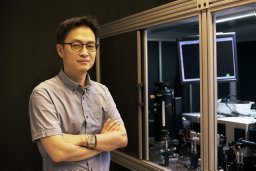 Sang-Heon Dan Shim合作论文数Department of Earth, Atmospheric, and Planetary Sciences, Massachusetts Institute of Technology15
 Sebastien Merkel合作论文数CNRS, Universite Lille 114
 Tamás Ungár合作论文数Department of Materials Physics, Institute of Physics, Eotvos Lorand University10
 Gabor Ribarik合作论文数Department of General Physics, Eötvös University10Gavin B.M. Vaughan合作论文数European Synchrotron Radiation Facility9
 Vitali Prakapenka合作论文数University of Chicago9
 Patrick Cordier合作论文数Plasticité du Comportement de l'Homme Adulte, Ecole Pratique des Hautes Etudes9
 A. Chizmeshya合作论文数Arizona State University;Center for Solid State Science;Center for Solid State Science, Arizona State University8
 Kurt Leinenweber合作论文数School of Molecular Sciences, Arizona State University8
 Clemens Prescher合作论文数Univ Chicago, Ctr Adv Radiat Sources, Chicago, IL 60632 USA5
 Zhenxian Liu合作论文数National Synchrotron Light Source II, Brookhaven National Laboratory5Sergio Speziale合作论文数4Stella Chariton合作论文数3Sergey Tkachev合作论文数3
 Yue Meng合作论文数HPCAT),, HPCAT3
 Byeongkwan Ko合作论文数3
 Huawei Chen合作论文数School of Mechanical Engineering and Automation, Beihang University3
 Yongjae Lee合作论文数Department of Earth System Sciences, Yonsei University;Korea Academy of Science and Technology3
 Carmen Sanchez-Valle合作论文数Laboratoire de Sciences de la Terre, CNRS–ENS Lyon–UCB Lyon 13Taehyun Kim合作论文数2
 Alastair MacDowell合作论文数Lawrence Berkeley National Laboratory2
 Joseph G. O'Rourke合作论文数Sch Earth & Space Explorat, Arizona State Univ1Harrison Allen-Sutter合作论文数1Christopher Langrand合作论文数1
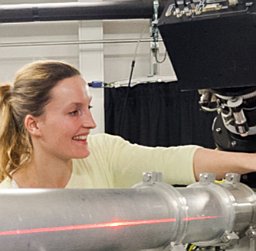 Angelika Rosa合作论文数European Synchrotron Radiat Facil1
 Helene Piet合作论文数Inst Phys Globe Paris, Sorbonne Paris Cite, UMR CNRS 7154, F-75005 Paris, France1
 Wenli Bi合作论文数1Dongzhou Zhang合作论文数GeoSoilEnviroCARS, University of Chicago1
 Régis Debord合作论文数Universite Claude Bernard Lyon 1(),1Pagano Michael合作论文数1
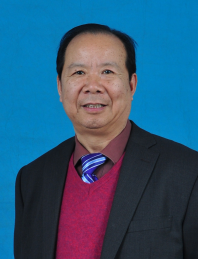 Hong Chen (陈宏)合作论文数College of Animal Science and Technology, Northwest A&F University1Shaun Evans合作论文数1
 Steven N. Evans合作论文数Department of Statistics, University of California, Berkeley1
 Yong-Seok Lee合作论文数College of Natural Sciences, Seoul National University1
 Bin Chen合作论文数Hawai'i Institute of Geophysics and Planetology1
 E. E. Alp合作论文数Argonne National Laboratory Advanced Photon Source Argon1
 Shengyi Xie (谢声意)合作论文数School of Physics & Electronics, Hunan University1Sergey N. Tkachev合作论文数1
 Mathieu Roskosz合作论文数CRPG, CNRS UPR 23001Steve Desch合作论文数1Patrick A. Young合作论文数1Eran Greenberg合作论文数Applied Physics Department, Soreq Nuclear Research Center1Clyde J. Bollinger合作论文数1Jinyuan Yan合作论文数1Nadege Hilairet合作论文数Center for Advanced Radiation Sources, The University of Chicago1




