We report a set of measurements of particle production in inelastic p (p) over bar collisions collected with a minimum-bias trigger at the Tevatron Collider with the CDF II experiment. The inclusive charged particle transverse momentum differential cross section is measured, with improved precision, over a range about ten times wider than in previous measurements. The former modeling of the spectrum appears to be incompatible with the high particle momenta observed. The dependence of the charged particle transverse momentum on the event particle multiplicity is analyzed to study the various components of hadron interactions. This is one of the observable variables most poorly reproduced by the available Monte Carlo generators. A first measurement of the event transverse energy sum differential cross section is also reported. A comparison with a PYTHIA prediction at the hadron level is performed. The inclusive charged-particle differential production cross section is fairly well reproduced only in the transverse momentum range available from previous measurements. At higher momentum the agreement is poor. The transverse energy sum is poorly reproduced over the whole spectrum. The dependence of the charged particle transverse momentum on the particle multiplicity needs the introduction of more sophisticated particle production mechanisms, such as multiple parton interactions, in order to be better explained.
The results of the CMS tracker alignment analysis are presented using the data from cosmic tracks, optical survey information, and the laser alignment system at the Tracker Integration Facility at CERN. During several months of operation in the spring and summer of 2007, about five million cosmic track events were collected with a partially active CMS Tracker. This allowed us to perform first alignment of the active silicon modules with the cosmic tracks using three different statistical approaches; validate the survey and laser alignment system performance; and test the stability of Tracker structures under various stresses and temperatures ranging from +15 °C to −15 °C. Comparison with simulation shows that the achieved alignment precision in the barrel part of the tracker leads to residual distributions similar to those obtained with a random misalignment of 50 (80) μm RMS in the outer (inner) part of the barrel.
We present a search for a narrow scalar or vector resonance decaying into Zγ with a subsequent Z boson decay into a pair of electrons or muons. The data for this search were collected with the DØ detector at the Fermilab Tevatron pp¯ collider at a center of mass energy s=1.96TeV. Using 1.1 (1.0) fb−1 of data, we observe 49 (50) candidate events in the electron (muon) channel, in good agreement with the standard model prediction. From the combination of both channels, we derive 95% C.L. upper limits on the cross section times branching fraction (σ×B) into Zγ. These limits range from 0.19 (0.20) pb for a scalar (vector) resonance mass of 600 GeV/c2 to 2.5 (3.1) pb for a mass of 140 GeV/c2.
In March 2007 the assembly of the Silicon Strip Tracker was completed at the Tracker Integration Facility at CERN. Nearly 15% of the detector was instrumented using cables, fiber optics, power supplies, and electronics intended for the operation at the LHC. A local chiller was used to circulate the coolant for low temperature operation. In order to understand the efficiency and alignment of the strip tracker modules, a cosmic ray trigger was implemented. From March through July 4.5 million triggers were recorded. This period, referred to as the Sector Test, provided practical experience with the operation of the Tracker, especially safety, data acquisition, power, and cooling systems. This paper describes the performance of the strip system during the Sector Test, which consisted of five distinct periods defined by the coolant temperature. Significant emphasis is placed on comparisons between the data and results from Monte Carlo studies.
The subsystems of the CMS silicon strip tracker were integrated and commissioned at the Tracker Integration Facility (TIF) in the period from November 2006 to July 2007. As part of the commissioning, large samples of cosmic ray data were recorded under various running conditions in the absence of a magnetic field. Cosmic rays detected by scintillation counters were used to trigger the readout of up to 15% of the final silicon strip detector, and over 4.7 million events were recorded. This document describes the cosmic track reconstruction and presents results on the performance of track and hit reconstruction as from dedicated analyses.
Received 25 December 2007DOI:https://doi.org/10.1103/PhysRevLett.100.049902©2008 American Physical Society
The Tracker detector took data with cosmics rays at the Tracker Integration Facility (TIF) at CERN. First on-line monitoring tasks were executed at the Tracker Analysis Centre (TAC) which is a dedicated Control Room at TIF with limited computing resources. A set of software agents were developed to perform the real-time data conversion in a standard format, to archive data on tape at CERN and to publish them in the official CMS data bookkeeping systems. According to the CMS computing and analysis model, most of the subsequent data processing has to be done in remote Tier-1 and Tier-2 sites, so data were automatically transferred from CERN to the sites interested to analyze them, currently Fermilab, Bari and Pisa. Official reconstruction in the distributed environment was triggered in real-time by using the tool currently used for the processing of simulated events. Automatic end-user analysis of data was performed in a distributed environment, in order to derive the distributions of important physics variables. The tracker data processing is currently migrating to the Tier-0 CERN as a prototype for the global data taking chain. Tracker data were also registered into the most recent version of the data bookkeeping system, DBS-2, by profiting from the new features to handle real data. A description of the dataflow/workflow and of the tools developed is given, together with the results about the performance of the real-time chain. Almost 7.2 million events were officially registered, moved, reconstructed and analyzed in remote sites by using the distributed environment.
During summer 2006 a fraction of the CMS silicon strip tracker was operated in a comprehensive slice test called the Magnet Test and Cosmic Challenge (MTCC). At the MTCC, cosmic rays detected in the muon chambers were used to trigger the readout of all CMS sub-detectors in the general data acquisition system and in the presence of the 4 T magnetic field produced by the CMS superconducting solenoid. This document describes the operation of the Tracker hardware and software prior, during and after data taking. The performance of the detector as resulting from the MTCC data analysis is also presented.
We present a study of events with Z bosons and associated jets produced at the Fermilab Tevatron collider in pp¯ collisions at a center of mass energy of 1.96 TeV. The data sample consists of nearly 14 000 Z/γ∗→e+e− candidates corresponding to an integrated luminosity of 0.4 fb−1 collected with the DØ detector. Ratios of the Z/γ∗+⩾n jet cross sections to the total inclusive Z/γ∗ cross section have been measured for n=1–4 jets, and found to be in good agreement with a next-to-leading order QCD calculation and with a tree-level QCD prediction with parton shower simulation and hadronization.
We present a study of eey and mu mu gamma events using 1109 (1009) pb-(1) of data in the electron (muon) channel, respectively. These data were collected with the DO detector at the Fermilab Tevatron pp collider at Is = 1.96 TeV. Having observed 453 (515) candidates in the eey (jtAy) final state, we measure the Z gamma production cross section for a photon with transverse energy ET > 7 GeV, separation between the photon and leptons Delta Rey > 0.7, and invariant mass of the di-lepton pair Mee > 30 GeV/(2)(c), to be 4.96 0.30(stat. + syst.) zE 0.30(lumi.) pb, in agreement with the Standard Model prediction of 4.74 0.22 pb. This is the most precise Zy cross section measurement at a hadron collider. We set limits on anomalous trilinear Zyy and ZZy gauge boson couplings of -0.085 < h(30)(y) < 0.084, -0.0053 < h(40)(y) < 0.0054 and -0.083 < h(30)(Z) < 0.082, 30 40 30 -0.0053 < h(40)(Z) < 0.0054 at the 95% C.L. for the form-factor scale A = 1.2 TeV. 40 Published by Elsevier B.V.
V. M. Abazov, B. Abbott, M. Abolins, B. S. Acharya, M. Adams, T. Adams, E. Aguilo, S. H. Ahn, M. Ahsan, G. D. Alexeev, G. Alkhazov, A. Alton,* G. Alverson, G. A. Alves, M. Anastasoaie, L. S. Ancu, T. Andeen, S. Anderson, B. Andrieu, M. S. Anzelc, Y. Arnoud, M. Arov, A. Askew, B. Åsman, A. C. S. Assis Jesus, O. Atramentov, C. Autermann, C. Avila, C. Ay, F. Badaud, A. Baden, L. Bagby, B. Baldin, D. V. Bandurin, P. Banerjee, S. Banerjee, E. Barberis, A.-F. Barfuss, P. Bargassa, P. Baringer, J. Barreto, J. F. Bartlett, U. Bassler, D. Bauer, S. Beale, A. Bean, M. Begalli, M. Begel, C. Belanger-Champagne, L. Bellantoni, A. Bellavance, J. A. Benitez, S. B. Beri, G. Bernardi, R. Bernhard, L. Berntzon, I. Bertram, M. Besançon, R. Beuselinck, V. A. Bezzubov, P. C. Bhat, V. Bhatnagar, M. Binder, C. Biscarat, G. Blazey, F. Blekman, S. Blessing, D. Bloch, K. Bloom, A. Boehnlein, D. Boline, T. A. Bolton, G. Borissov, K. Bos, T. Bose, A. Brandt, R. Brock, G. Brooijmans, A. Bross, D. Brown, N. J. Buchanan, D. Buchholz, M. Buehler, V. Buescher, S. Burdin, S. Burke, T. H. Burnett, E. Busato, C. P. Buszello, J. M. Butler, P. Calfayan, S. Calvet, J. Cammin, S. Caron, W. Carvalho, B. C. K. Casey, N. M. Cason, H. Castilla-Valdez, S. Chakrabarti, D. Chakraborty, K. Chan, K. M. Chan, A. Chandra, F. Charles, E. Cheu, F. Chevallier, D. K. Cho, S. Choi, B. Choudhary, L. Christofek, T. Christoudias, S. Cihangir, D. Claes, B. Clément, C. Clément, Y. Coadou, M. Cooke, W. E. Cooper, M. Corcoran, F. Couderc, M.-C. Cousinou, S. Crépé-Renaudin, D. Cutts, M. Ćwiok, H. da Motta, A. Das, G. Davies, K. De, P. de Jong, S. J. de Jong, E. De La Cruz-Burelo, C. De Oliveira Martins, J. D. Degenhardt, F. Déliot, M. Demarteau, R. Demina, D. Denisov, S. P. Denisov, S. Desai, H. T. Diehl, M. Diesburg, A. Dominguez, H. Dong, L. V. Dudko, L. Duflot, S. R. Dugad, D. Duggan, A. Duperrin, J. Dyer, A. Dyshkant, M. Eads, D. Edmunds, J. Ellison, V. D. Elvira, Y. Enari, S. Eno, P. Ermolov, H. Evans, A. Evdokimov, V. N. Evdokimov, A. V. Ferapontov, T. Ferbel, F. Fiedler, F. Filthaut, W. Fisher, H. E. Fisk, M. Ford, M. Fortner, H. Fox, S. Fu, S. Fuess, T. Gadfort, C. F. Galea, E. Gallas, E. Galyaev, C. Garcia, A. Garcia-Bellido, V. Gavrilov, P. Gay, W. Geist, D. Gelé, C. E. Gerber, Y. Gershtein, D. Gillberg, G. Ginther, N. Gollub, B. Gómez, A. Goussiou, P. D. Grannis, H. Greenlee, Z. D. Greenwood, E. M. Gregores, G. Grenier, Ph. Gris, J.-F. Grivaz, A. Grohsjean, S. Grünendahl, M. W. Grünewald, F. Guo, J. Guo, G. Gutierrez, P. Gutierrez, A. Haas, N. J. Hadley, P. Haefner, S. Hagopian, J. Haley, I. Hall, R. E. Hall, L. Han, K. Hanagaki, P. Hansson, K. Harder, A. Harel, R. Harrington, J. M. Hauptman, R. Hauser, J. Hays, T. Hebbeker, D. Hedin, J. G. Hegeman, J. M. Heinmiller, A. P. Heinson, U. Heintz, C. Hensel, K. Herner, G. Hesketh, M. D. Hildreth, R. Hirosky, J. D. Hobbs, B. Hoeneisen, H. Hoeth, M. Hohlfeld, S. J. Hong, R. Hooper, P. Houben, Y. Hu, Z. Hubacek, V. Hynek, I. Iashvili, R. Illingworth, A. S. Ito, S. Jabeen, M. Jaffré, S. Jain, K. Jakobs, C. Jarvis, R. Jesik, K. Johns, C. Johnson, M. Johnson, A. Jonckheere, P. Jonsson, A. Juste, D. Käfer, S. Kahn, E. Kajfasz, A. M. Kalinin, J. M. Kalk, J. R. Kalk, S. Kappler, D. Karmanov, J. Kasper, P. Kasper, I. Katsanos, D. Kau, R. Kaur, V. Kaushik, R. Kehoe, S. Kermiche, N. Khalatyan, A. Khanov, A. Kharchilava, Y. M. Kharzheev, D. Khatidze, H. Kim, T. J. Kim, M. H. Kirby, B. Klima, J. M. Kohli, J.-P. Konrath, M. Kopal, V. M. Korablev, J. Kotcher, B. Kothari, A. Koubarovsky, A. V. Kozelov, D. Krop, A. Kryemadhi, T. Kuhl, A. Kumar, S. Kunori, A. Kupco, T. Kurča, J. Kvita, D. Lam, S. Lammers, G. Landsberg, J. Lazoflores, P. Lebrun, W. M. Lee, A. Leflat, F. Lehner, V. Lesne, J. Leveque, P. Lewis, J. Li, L. Li, Q. Z. Li, S. M. Lietti, J. G. R. Lima, D. Lincoln, J. Linnemann, V. V. Lipaev, R. Lipton, Z. Liu, L. Lobo, A. Lobodenko, M. Lokajicek, A. Lounis, P. Love, H. J. Lubatti, M. Lynker, A. L. Lyon, A. K. A. Maciel, R. J. Madaras, P. Mättig, C. Magass, A. Magerkurth, N. Makovec, P. K. Mal, H. B. Malbouisson, S. Malik, V. L. Malyshev, J. Mans, H. S. Mao, Y. Maravin, B. Martin, R. McCarthy, A. Melnitchouk, A. Mendes, L. Mendoza, P. G. Mercadante, M. Merkin, K. W. Merritt, A. Meyer, J. Meyer, M. Michaut, H. Miettinen, T. Millet, J. Mitrevski, J. Molina, R. K. Mommsen, N. K. Mondal, J. Monk, R. W. Moore, T. Moulik, G. S. Muanza, M. Mulders, M. Mulhearn, O. Mundal, L. Mundim, E. Nagy, M. Naimuddin, M. Narain, N. A. Naumann, H. A. Neal, J. P. Negret, P. Neustroev, H. Nilsen, C. Noeding, A. Nomerotski, S. F. Novaes, T. Nunnemann, V. O’Dell, D. C. O’Neil, G. Obrant, C. Ochando, V. Oguri, N. Oliveira, D. Onoprienko, N. Oshima, J. Osta, R. Otec, G. J. Otero y Garzón, M. Owen, P. Padley, M. Pangilinan, N. Parashar, S.-J. Park, S. K. Park, J. Parsons, R. Partridge, N. Parua, PHYSICAL REVIEW D 76, 012003 (2007)
We combine the D0 measurement of the width difference between the light and heavy B-s(0) mass eigenstates and of the CP-violating mixing phase determined from the time-dependent angular distributions in the B-s(0)-> J/psi phi decays along with the charge asymmetry in semileptonic decays also measured with the D0 detector. With the additional constraint from the world average of the flavor-specific B-s(0) lifetime, we obtain Delta Gamma(s)equivalent to(Gamma(L)-Gamma(H))=0.13 +/- 0.09 ps(-1) and vertical bar phi(s)vertical bar=0.70(-0.47)(+0.39) or Delta Gamma(s)=-0.13 +/- 0.09 ps(-1) and vertical bar phi(s)vertical bar=2.44(-0.39)(+0.47). The data sample corresponds to an integrated luminosity of 1.1 fb(-1) accumulated with the D0 detector at the Fermilab Tevatron Collider.
A measurement of the top quark pair production cross section in proton antiproton collisions at an interaction energy of root s=1.96 TeV is presented. This analysis uses 405 +/- 25 pb(-1) of data collected with the D0 detector at the Fermilab Tevatron Collider. Fully hadronic t (t) over bar decays with final states of six or more jets are separated from the multijet background using secondary vertex tagging and a neural network. The t (t) over bar cross section is measured as sigma(t (t) over bar)=4.5(-1.9)(+2.0)(stat)(-1.1)(+1.4)(syst)+/- 0.3(lumi) pb for a top quark mass of m(t)=175 GeV/c(2).
 R. Demina合作论文数118
 Philip S. Baringer合作论文数Department of Physics & Astronomy, College of Liberal Arts & Sciences, University of Kansas117
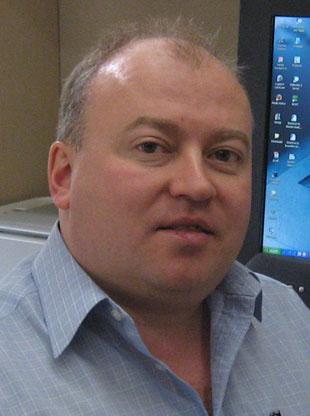 Greg Landsberg合作论文数Department of Physics, Brown University117
 Alice L. Bean合作论文数Department of Physics & Astronomy, College of Liberal Arts & Sciences, University of Kansas116L. Christofek合作论文数116B. Kothari合作论文数115
 Miloš Lokajíček Jr合作论文数Division of Elementary Particle Physics, Particle Physics Department, Institute of Physics of the Czech Academy of Sciences114Eric Kajfasz合作论文数Centre de Physique des Particules de Marseille, Aix-Marseille University114
 Nirmalya Parua合作论文数Bank of America114Miroslav Kopál合作论文数114Alex Melnitchouk合作论文数114
 Andrei Nomerotski合作论文数Dipartimento di Fisica, Università di Padova and INFN114Paul L. G. Lebrun合作论文数Experimental Beam Physics Department, Fermi National Accelerator Laboratory114Amit N. Patwa合作论文数114
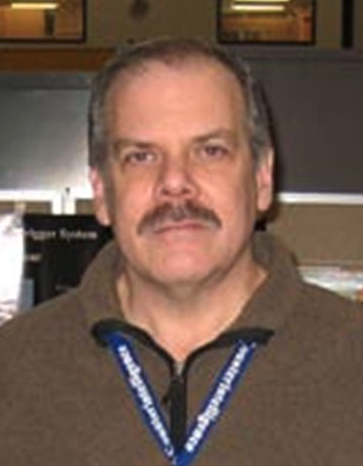 Michael Diesburg合作论文数Fermi National Accelerator Laboratory113Kurca T合作论文数113Carlos Avila合作论文数113
 Alexander Kupčo合作论文数Institute of Physics, Czech Academy of Sciences113Michael Begel合作论文数Department of Physics, Brookhaven National Laboratory113J. Barreto合作论文数113
 Bernard Andrieu合作论文数113H. Eugene Fisk合作论文数Fermilab113
 G. N. Patrick合作论文数113
 a ross合作论文数Fermi National Accelerator Laboratory113T. Ferbel合作论文数113
 Arnaud Duperrin合作论文数Centre de Physique des Particules de Marseille, Aix-Marseille Universite113
 Andy Haas合作论文数Department of Physics, College of Arts & Science, New York University113
 Yurii Maravin合作论文数Department of Physics, Kansas State University;Abastumani Astrophysical Observatory, Ilia State University113Alexander S. Dyshkant合作论文数113Boris Yu Baldin合作论文数113
 Andrew Brandt合作论文数Department of Physics, College of Science, The University of Texas at Arlington113Herbert B. Greenlee合作论文数Fermilab113
 Gustaaf Brooijmans合作论文数Department of Physics, Columbia University113
 Gerald C. Blazey合作论文数Department of Physics, College of Liberal Arts and Sciences, Northern Illinois University113P. Bargassa合作论文数Laboratório de Instrumentação e Física Experimental de Partículas, Lisboa, Portugal113
 Aurelio Juste合作论文数Institut de Física d'Altes Energies, The Barcelona Institute of Science and Technology113H. Thomas Diehl合作论文数Fermilab113
 John Molina合作论文数Universidade do Estado do Rio de Janeiro113A. Alton合作论文数113
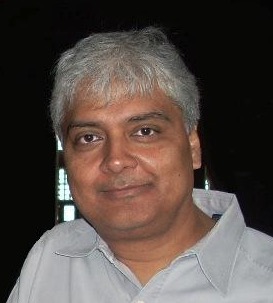 Kaushik De合作论文数Department of Physics, College of Science, Univeristy of Texas at Arlington113
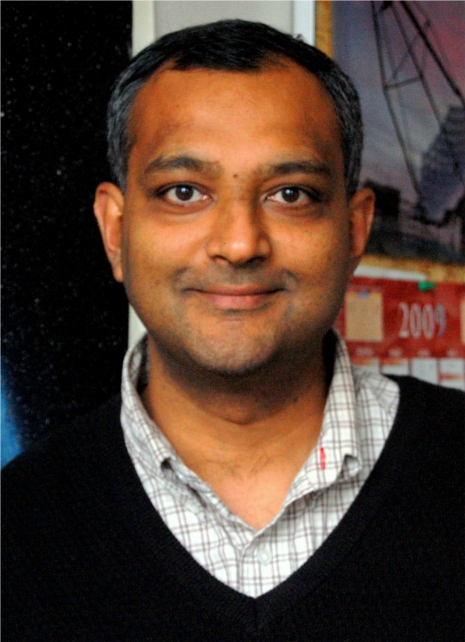 Dhiman Chakraborty合作论文数Department of Physics, Northern Illinois University113
 Sergey Burdin合作论文数Department of Physics, School of Physical Sciences, Faculty of Science and Engineering, University of Liverpool113
 Anna Goussiou合作论文数Department of Physics, University of Washington113M. Eads合作论文数112G. Ginther合作论文数112K. Bos合作论文数112Justin S. Dyer合作论文数112
 Stuart Fuess合作论文数Scientific Computing Division, Fermi National Accelerator Laboratory112
 Vipin Bhatnagar合作论文数Department of Physics, Panjab University112




