Aims: Ectopic fat is reduced by effective weight management, but difficult to assess clinically. Methods: We evaluated paired data on 42 participants in the intervention group of the Diabetes Remission Clinical Trial (DiRECT) at baseline, 12 and 24 months after weight loss as indicators of liver fat content measured by 3-point Dixon MRI. Results: Baseline liver fat was elevated at 13.0 [7.8-23.3]% with fasting plasma glucose 7.9 [7.1-10.1] mmol/L. Prevalence of baseline MASLD was 86.4%. After weight loss of 11.9 +/- 1.2 kg (0-37 kg) at 12 months, remission of MASLD occurred in 74% and liver fat normalised for many (1.8 [1.2-5.2]%; p < 0.0001) as did fasting glucose (5.9 [5.5-7.2] mmol/L; p < 0.0001). Alanine aminotransferase (ALT) and gamma glutamyl transferase (GGT) decreased at 12 months by 38 [19-60]% (p < 00001) and 38 [16-53]% (p < 0.0001) respectively. The positive predictive value for decrease in liver fat, with baseline values of >40 IU/L, was 100% for ALT and 87.5% for GGT. As expected, change in liver fat correlated with change in ALT (r = 0.64; p < 0.0001), GGT (r = 0.38; p = 0.013), AST (r = 0.36; p = 0.018), fatty liver index (r = 0.50; p < 0.0001) and hepatic steatosis index (r = 0.44; p < 0.0001). Conclusion: Metabolic dysfunction-associated steatotic liver disease, an important marker of ill-health is improved by intentional weight loss. If enzyme levels are raised at baseline, following weight loss, changes in ALT and GGT usefully reflect change in liver fat content, with high positive predictive value. Monitoring liver enzymes can provide a simple way to assess change in liver fat following weight loss in day-to-day clinical practice.
Background: DiRECT reported diabetes remission at one year for 46% of participants allocated to an integrated structured weight management programme. We now assess two-year findings. Methods: DiRECT is an open-label, cluster-randomised, controlled trial in primary care practices randomised to a weight management programme (intervention) or best-practice care by guidelines (control). We recruited individuals aged 20–65 years, with <6 years duration of type 2 diabetes, body-mass index 27–45 kg/m, and not receiving insulin. The intervention comprised withdrawal of anti-diabetes and antihypertensive drugs, total diet replacement (825–853 kcal/day formula diet) for 12-20 weeks, stepped food reintroduction (2–8 weeks), and then structured support for weight loss maintenance. Co-primary outcomes, analysed hierarchically, were weight loss >15 kg, and remission of diabetes, defined as HbA1c <6·5% (<48 mmol/mol) with no anti-diabetes medications. Findings: At 24 months, 53/149 (35·6%) of those commencing the intervention and 5/149 (3·4%) in the control group (adjusted odds ratio 25·8, 95% CI 8·3,80·8; p<0·0001) had remission, and 11·4% of intervention and 2·0% of the control group (adjusted odds ratio 8·2 (2·2,30·0), p=0·0015) had weight loss ≥15kg. Of those maintaining ≥10kg weight loss (45/272), 64% (29/45) achieved remission, and 24.2% (36/149) of the intervention group maintained ≥10kg weight loss. Adjusted mean differences between groups were, in changes in body weight -5·4 kg, (-6·9,-4·0), p<0·0001, in HbA1c -4·8 mmol/mol, (-8·3,-1·4), p=0·0063 despite >50% fewer anti-diabetes agent use in intervention group, and SBP -3·4 mmHg, (-6·7,-0·2), p=0·0397. Serious adverse events were similar at 12 months, but fewer occurred in intervention than control in the second year (9 vs. 22). Quality of life improved more from baseline in the intervention than the control group, adjusted mean difference 4·6 (0·4,8·9, p=0·032). Interpretation: This programme sustained remissions at 24 months for over a third of people with type 2 diabetes. Weight loss of ≥10 kg provides remission for two thirds. Funding: Diabetes UK.
Aims:To provide a qualitative evaluation of a 12-week TDR stage of the DiRECT intervention delivered in UK primary care,aiming to reverse Type 2 diabetes. Methods:Participants matched for gender and socioeconomic status across trial sites were interviewed at baseline (T1), six weeks into the TDR (T2) and two weeks after food reintroduction (FR)(T3). The interviews were semi-structured, audio-recorded, transcribed verbatim and analysed using the framework approach. Results: Out of 34 intervention participants interviewed at T1, 27 were available for a follow-up at T2 and 25 were available at T3. Eight participants withdrew from the study during the TDR. Narratives of 21 participants with complete data were analysed. Desiring normality in the form of normal blood glucose levels,body mass index or the ability to wear normal clothes and eat normal food were the main drivers to taking part in the study. The TDR phase was perceived as challenging but somewhat easier than anticipated. Willpower, use of behaviour–regulation strategies,social roles, behavioural independence and social and clinical support were vital determinants of adherence. Both the TDR and FR stages required resolving cognitive and emotional goal conflicts. Transition to regular food was perceived as destabilising and required increased effort, re-designing of one’s ‘Foodrobe’ and continuous support. Summary: Experience with the weight loss stage of the DiRECT intervention for diabetes remission was positive for most participants, but clinical and social support proved essential for a successful completion.
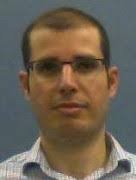 Al-Mrabeh Ahmad合作论文数19
 Roy Taylor合作论文数Newcastle Magnetic Resonance Centre, Newcastle University19
 Kieren G. Hollingsworth合作论文数Department of Radiology, University of Newcastle19
 Michael Lean合作论文数School of Medicine, Dentistry & Nursing, University of Glasgow15
 Naveed Sattar合作论文数School of Cardiovascular & Metabolic Health, University of Glasgow;Institute of Cardiovascular and Medical Sciences, University of Glasgow12
 A. C. Barnes合作论文数10A. Barnes合作论文数9S. Zhyzhneuskaya合作论文数8H. Pilkington合作论文数8
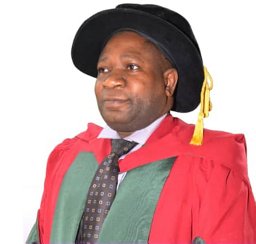 Aribisala Benjamin S合作论文数Brain Res Imaging Ctr, Univ Edinburgh6M Lean合作论文数4Shaden Melhem合作论文数3Paul Welsh合作论文数2
 Rachel Taylor合作论文数The University of Manchester;Columbia University Medical Center2
 Lucia Rehackova合作论文数Institute of Health and Society, Newcastle University2
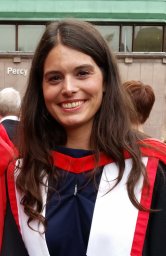 Rodrigues Angela M合作论文数Institute of Health and Society, Newcastle University2
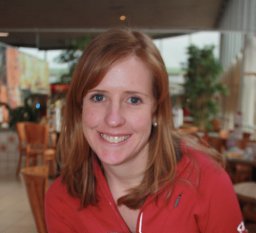 Naomi Brosnahan合作论文数2
 Ashley Adamson合作论文数Population Health Sciences Institute, Faculty of Medical Sciences, Newcastle University2
 Falko Sniehotta合作论文数Institute of Health and Society, Newcastle University;Population Health Science Institute, Faculty of Medical Sciences, Newcastle University;Faculty of Medicine Mannheim and Clinic Mannheim, Heidelberg University2S Kean合作论文数1Y McIlvenna合作论文数1M E Lean合作论文数1Mej Lean合作论文数1I Ford合作论文数1
 George Thom合作论文数Human Nutr, Univ Glasgow1Messow Claudia-Martina合作论文数Robertson Ctr Biostat, Univ Glasgow1Ross Hazel合作论文数1
 John Mathers合作论文数Faculty of Medical Sciences, Newcastle University;Human Nutrition & Exercise Research Centre, Population Health Sciences Institute, Newcastle University1
 Wilma Leslie合作论文数Glasgow Royal Infirm, Univ Glasgow1
 Alex Mcconnachie合作论文数Robertson Centre for Biostatistics, University of Glasgow;School of Health & Wellbeing, University of Glasgow1Louise Mccombie合作论文数1




